
A Warm Patio When the Air Turns Cold
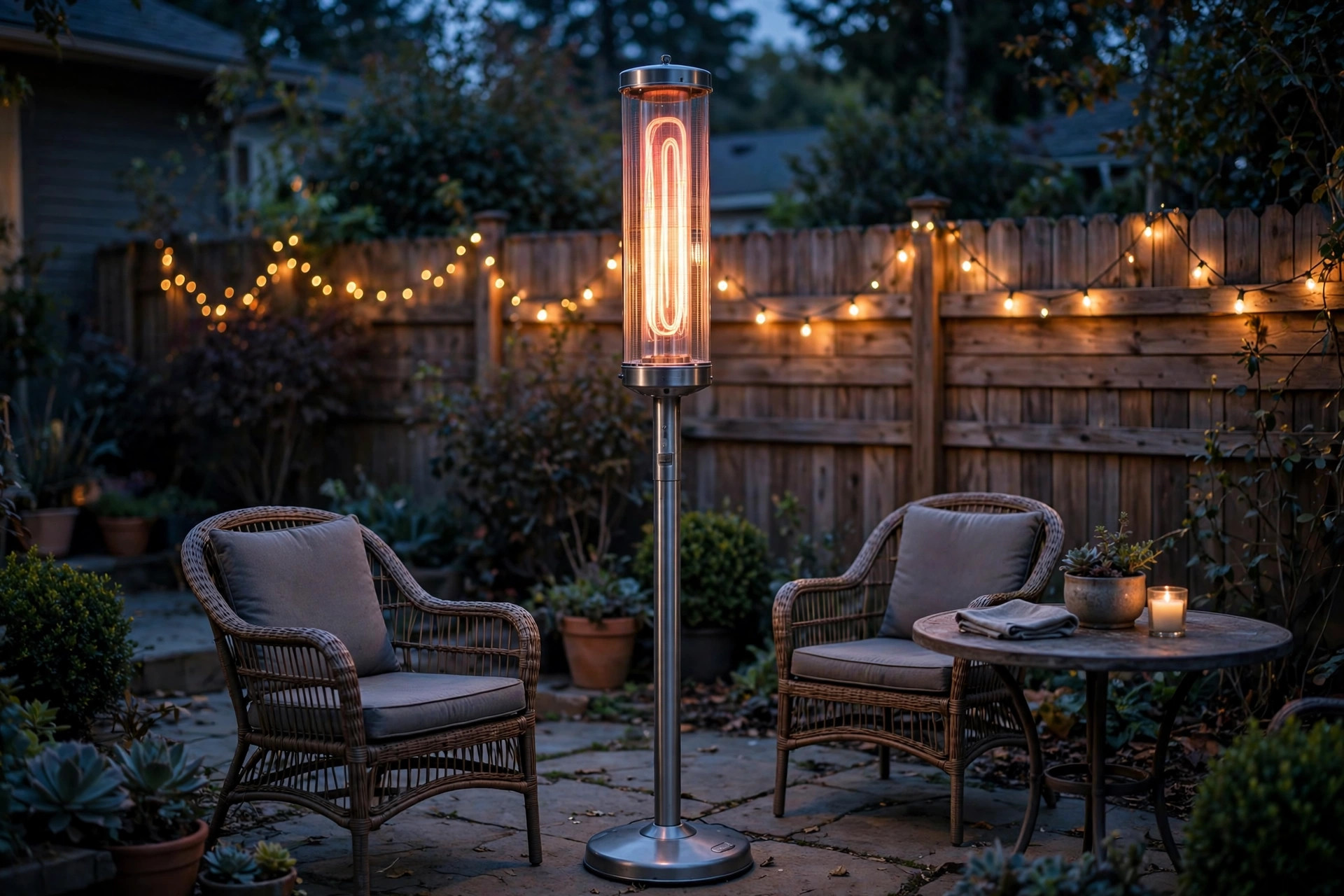
The best electric patio heaters for sale can turn a cold evening into a pleasant one. Many families love their patios in spring and summer. When autumn comes, the cool air drives them back inside. An electric patio heater can add weeks or months to the outdoor season. It gives off steady warmth with no smoke and no fuel tank to refill.
Electric heaters are simple to use. You plug them in and switch them on. Heat reaches your skin within a minute or two. There is no waiting for coals to catch. There is no strong smell of gas. For covered patios, decks, and balconies, electric heat is often the cleanest choice.
This guide explains what to look for before you buy. It covers the types of heaters, the wattage you need, the costs, care, and safety. It will help you pick a model that fits your space and your budget.
Why an Electric Patio Heater Matters: Best Electric Patio Heaters for Sale
Outdoor space is valuable. A deck or patio can serve as a dining room, a reading corner, or a place for guests. In many parts of the country, cool evenings arrive early and stay late. A good heater lets you use this space more of the year.
Electric models have clear advantages over gas and wood options. They need no propane tank. They give off no flame. They run quietly. Most can be moved from place to place. Many towns and cities also have rules against open flames on balconies or near wooden decks. Electric heaters often pass these rules because they have no flame at all.
Running costs are another point. Electricity prices differ by state, but a mid-size heater running a few hours a week costs far less than a new propane refill every month. For people who use their patio a few evenings a week, electric heat is a sensible long-term choice.
How to Choose the Right Model
Buying well means matching the heater to your space. A unit that is too small will leave you shivering. One that is too large will waste power. Use the points below to narrow your search.
Heat Type: Infrared or Convection
Most electric patio heaters use infrared heat. Infrared rays warm people and objects directly, not the air. You feel warmth on your skin the moment you step into range. This makes infrared models the top pick for open patios, where wind would carry warm air away.
A smaller group of models uses fan-driven convection heat. These warm the air around them. They work best in enclosed or semi-enclosed spaces, such as a screened porch or a covered deck with side walls. If your patio is open on three sides, choose infrared.
Shoppers comparing heat types may also want to read our affordable infrared outdoor heaters buying guide for more detail on how infrared technology works.
Wattage and Coverage
Wattage sets how much heat the unit can give. Most plug-in models draw 1,200 to 1,500 watts, which is the safe limit for a standard household outlet. A 1,500-watt heater warms a zone of about 50 to 100 square feet, enough for a small seating group.
Hardwired models can draw 3,000 to 6,000 watts. These cover larger patios but need an electrician to install a dedicated circuit. Measure your patio first. A 10-by-10-foot area needs roughly 1,500 watts in mild weather. In colder regions, plan for more.
Guidance on heating capacity and energy use is easy to find through the U.S. Department of Energy, which explains how electric heating loads add up in a home.
Style and Placement
Electric patio heaters come in several shapes:
– Freestanding towers. Tall posts with a heating head at the top. They move easily and cover a wide arc. – Hanging heaters. They mount to the ceiling of a covered patio or pergola. They save floor space and stay out of the way. – Wall-mounted heaters. They attach to a wall or post. A good pick for narrow decks where floor space is tight. – Tabletop models. Small units for a coffee table. They warm one or two chairs.
Match the style to how you use the space. A dining set needs heat spread wide. A single reading chair needs a focused beam.
Controls and Features
Look for a remote control or a wall switch so you do not have to reach up to adjust the heat. Multiple heat settings let you dial warmth up or down. A timer shuts the unit off if you forget it. These small features matter on cold nights when you want comfort without fuss.
Build Quality and Weather Rating
Outdoor heaters live outside. Check the weather rating, often shown as an IP code such as IPX4 or IPX5. This means the unit resists rain and splashing water. Powder-coated aluminum and stainless steel bodies last longer than plain steel. If you plan to leave the heater out all season, a fitted cover adds years to its life.
Hands-on advice on materials and outdoor ratings appears often in project guides at Family Handyman, which covers long-term care of outdoor gear.
Types of Electric Patio Heaters
Shoppers will meet three main designs. Each suits a different setting.
Quartz and Carbon Infrared Heaters
Quartz lamps glow bright orange and heat up in seconds. Carbon fiber tubes glow more softly and give off less harsh light. Both are true infrared heaters. Quartz models are often the least costly. Carbon models are quieter to the eye and spread heat more evenly.
Ceramic Infrared Heaters
Ceramic elements give off deep infrared heat with very little visible light. They are a good choice for restaurants and homes where bright glare is unwanted. They cost more than quartz but feel gentler over long evenings.
Radiant Panel Heaters
Flat panels mount on walls or ceilings. They blend into the space and warm a wide zone. Panels work well under pergolas and covered porches. They need a firm mounting point and, for larger panels, a dedicated circuit.
If you are weighing electric against gas, our top rated propane patio heaters buying guide compares fuel types side by side.
Cost and Price
Prices vary by type, wattage, and brand. Use these ranges as a guide:
– Tabletop models: 60 to 150 dollars – Freestanding towers: 120 to 400 dollars – Wall-mounted and ceiling models: 150 to 500 dollars – Large hardwired panels: 400 to 900 dollars, plus installation
Running costs depend on your electric rate. At 16 cents per kilowatt-hour, a 1,500-watt heater costs about 24 cents per hour. Three evenings a week for four hours each comes to about 12 dollars a month. That is modest for regular outdoor comfort.
Installation adds cost for hardwired units. An electrician may charge 150 to 400 dollars to add a dedicated 240-volt circuit. Plug-in models need no installation at all. When you shop, large home centers such as The Home Depot list full prices with delivery options, which makes comparison simple.
Buyers who want a full view of the market can also read our top rated outdoor patio heaters buying guide before they decide.
Care and Upkeep
Electric heaters need little care, but a small routine keeps them safe and strong.
Wipe the reflector and heating element with a dry cloth once a month during the season. Dust and insects cut down heat output. Do not use water on the element unless the manual allows it. Check cords for nicks, cracks, or stiff spots. A damaged cord must be replaced, not taped.
Store portable heaters under a cover or in a shed when winter ends. Water and freezing weather shorten the life of heating elements. Wall-mounted units can stay in place, but turn off the circuit breaker at season end. Once a year, test the tip-over switch on freestanding models. Lay the unit gently on its side while it is unplugged, then set it back up and run it for a minute. If it does not shut off when tipped, stop using it and call the maker. This quick check takes two minutes and guards against a common failure.
The EPA publishes broad guidance on safe home heating practices, and ENERGY STAR offers tips on choosing efficient electric products for the home.
Safety
Electric heaters are safer than open-flame models, but they still need respect. Heat elements run hot enough to burn skin or light dry material.
Keep the heater at least three feet from curtains, wood railings, plants, and furniture. Never hang clothing or towels over a heater to dry. Place freestanding units on a level surface where they cannot tip. Many models include a tip-over switch that cuts power if the unit falls. Check that this feature works before the season starts.
Use outdoor-rated extension cords only, and keep cords away from walkways where people trip. Do not run a heater on the same circuit as a hot tub or a large appliance. If the breaker trips often, call an electrician.
The Consumer Product Safety Commission tracks heater recalls and publishes safety alerts. A quick check of their site before you buy can flag any known problems. Fire prevention basics, including clearance rules for space heaters, are also covered by the National Fire Protection Association.
Manufacturer pages can confirm safety certifications. Heatilator, a long-standing fireplace and heating brand, shows how modern heating products are tested and listed. Reviews and comparison articles at The Spruce can help you see how owners rate safety features in real use.
Frequently Asked Questions
How much area can one electric patio heater warm?
A standard 1,500-watt plug-in heater warms 50 to 100 square feet, enough for two to four chairs. Larger patios need two units or one hardwired model of 3,000 watts or more.
Can I use an electric patio heater under a covered patio?
Yes, most models are made for covered patios. Keep the clearances shown in the manual, often two feet above and three feet to the sides. Never place a heater under a low canvas canopy or a plastic roof.
Are electric patio heaters costly to run?
They are modest. A 1,500-watt unit at average U.S. rates costs about 20 to 30 cents per hour. Occasional evening use adds only a few dollars a month to your bill.
Do electric patio heaters work in wind?
Infrared models work better in wind than convection heaters because they warm people directly. A strong wind still carries comfort away, so a windbreak or glass panel helps on open decks.
Can I leave my heater out in the rain?
Only if it has an outdoor weather rating such as IPX4 or higher. Even then, a fitted cover in heavy storms adds life. Bring tabletop models inside during storms.
Electric or propane: which is better?
Electric is cleaner, quieter, and simpler. Propane gives more raw heat per dollar in large open spaces. For covered patios and small decks, electric usually wins on ease and safety.
Final Word
The best electric patio heaters for sale share a few traits: the right wattage for your space, a sturdy weather-rated body, simple controls, and strong safety features. Measure your patio, set your budget, and pick a style that fits how you gather. With the right unit, cool evenings become your favorite time to be outside. Read owner reviews, compare prices at two or three stores, and check the warranty before you pay. A careful buy today gives you many warm seasons ahead.
References
ENERGY STAR. (n.d.). Energy efficient products. https://www.energystar.gov Family Handyman. (n.d.). DIY home repair and maintenance. https://www.familyhandyman.com Heatilator. (n.d.). Fireplaces and fireplace products. https://www.heatilator.com National Fire Protection Association. (n.d.). Fire safety information and codes. https://www.nfpa.org The Home Depot. (n.d.). Home improvement products. https://www.homedepot.com The Spruce. (n.d.). Home and garden advice. https://www.thespruce.com U.S. Consumer Product Safety Commission. (n.d.). Product safety information. https://www.cpsc.gov U.S. Department of Energy. (n.d.). Energy efficiency and renewable energy. https://www.energy.gov U.S. Environmental Protection Agency. (n.d.). Protecting human health and the environment. https://www.epa.gov
Was this guide helpful?

About Lisa Anderson
The My Garden US editorial team writes practical, in-depth home and garden guides for American homeowners — tested advice, no fluff.
You May Also Like
Ethanol Wall Fireplaces Price Comparison USA: What Buyers Should Know
January 22, 2026 0 views
Best Fireplace Screens With Doors for Southern States
February 27, 2026 0 views
Where to Buy Firewood Storage Racks in Arizona
May 10, 2026 0 views