
Evenings on the patio often end early when the air turns cold. A top rated outdoor patio heaters buying guide can help you choose a heater that adds weeks, or even months, to the outdoor season. A patio heater does not heat the air the way a furnace heats a room. It warms people, chairs, and nearby surfaces. That simple idea shapes every choice in this guide.
Many American homes now have an outdoor space that gets used from spring through fall. Some owners want it to stay usable into winter. A heater makes that possible. But not every heater suits every patio. Fuel type, size, heat output, and safety rules all matter. The sections below walk through each point in plain terms, so you can buy with confidence and use the heater with care.
Why a Patio Heater Matters
An outdoor living space is a real investment. Furniture, lighting, and a grill cost real money. If cold weather shuts the patio down for five months, much of that value goes unused. A heater changes the math. Even one good heater can make a dining set comfortable on a crisp October evening.
Heat outside works in a direct way. Indoors, walls hold the warmth in. Outdoors, warm air rises and drifts away. Patio heaters solve this by sending heat out in waves, much like the sun. This kind of warmth is called radiant heat. It lands on people and objects rather than on the air. That is why a person near the heater feels warm while the air a few feet away stays cool.
A heater also adds to the mood of the space. A soft glow over the table makes a backyard dinner feel calm and easy. Many owners say the heater becomes the center of the patio, the spot where guests gather. This social value is hard to measure but easy to notice.
What to Look For When You Choose: Top Rated Outdoor Patio Heaters Buying Guide
Shopping lists of top rated models can be useful, but the right choice depends on your space. Start with these five points.
Heat Output
Heat output is measured in British thermal units, or BTU. One BTU is a small amount of heat. Patio heaters are rated in the tens of thousands. A tall freestanding propane heater often gives about 40,000 to 48,000 BTU. A small tabletop model may give only 10,000 to 12,000 BTU.
More BTU means more warmth, but only up to a point. A heater that is too strong for a small enclosed patio can feel harsh. A weak heater on a large open deck will do little. Match the BTU rating to the size of your space. Retailers such as The Home Depot list BTU ratings on most product pages, which makes side-by-side comparison easy.
Coverage Area
Coverage area tells you how much ground the heater can serve. A tall standing heater often covers a circle about 12 to 15 feet across. A wall-mounted infrared unit may cover a smaller, fixed zone. Think about where people sit. One heater can serve one table well. A large patio may need two.
Measure your patio before you shop. Write down the length and width. Then compare those numbers with the coverage figures in the product details. This simple step prevents the most common mistake, which is buying a heater too small for the space.
Fuel Type and Cost to Run
Heaters burn propane, connect to natural gas, or use electricity. Each fuel has a cost and a trade. Propane is common and easy to find. A 20-pound tank lasts about 8 to 10 hours on high. Refill costs vary by region but stay modest. Natural gas is cheaper to run over time but needs a gas line installed by a plumber. Electric infrared models cost little to install but add to the power bill, and they give off no open flame.
Think about long-term cost, not just the price tag. A cheap propane heater with high fuel use can cost more over two years than a pricier electric model. Consumer Reports often breaks down operating costs in its outdoor heating reviews, and those figures help with the math.
Safety Features
A safe heater has an automatic shutoff valve. If the flame blows out, the gas must stop. It should also have a tip-over switch that cuts the fuel if the unit falls. These features are standard on quality models and should never be missing. Look for them in the product specs before you buy anything else.
Check that the model is listed by a recognized testing lab. A listing mark shows the heater was tested to a safety standard. The U.S. Consumer Product Safety Commission publishes safety notes on outdoor heating products, and those notes are worth a read before your first season.
Build Quality and Weather Resistance
A patio heater lives outside. It faces rain, wind, sun, and sometimes snow. Stainless steel parts resist rust better than plain steel. A sturdy base keeps the unit steady in wind. A weather cover adds years to its life when the heater is not in use.
Read reviews that mention use over more than one season. A heater that still works well after two winters is built well. Sites such as Lowe’s carry owner reviews that cover long-term use.
Types of Outdoor Patio Heaters
There are four main types. Each fits a different patio and a different budget.
Freestanding Propane Heaters
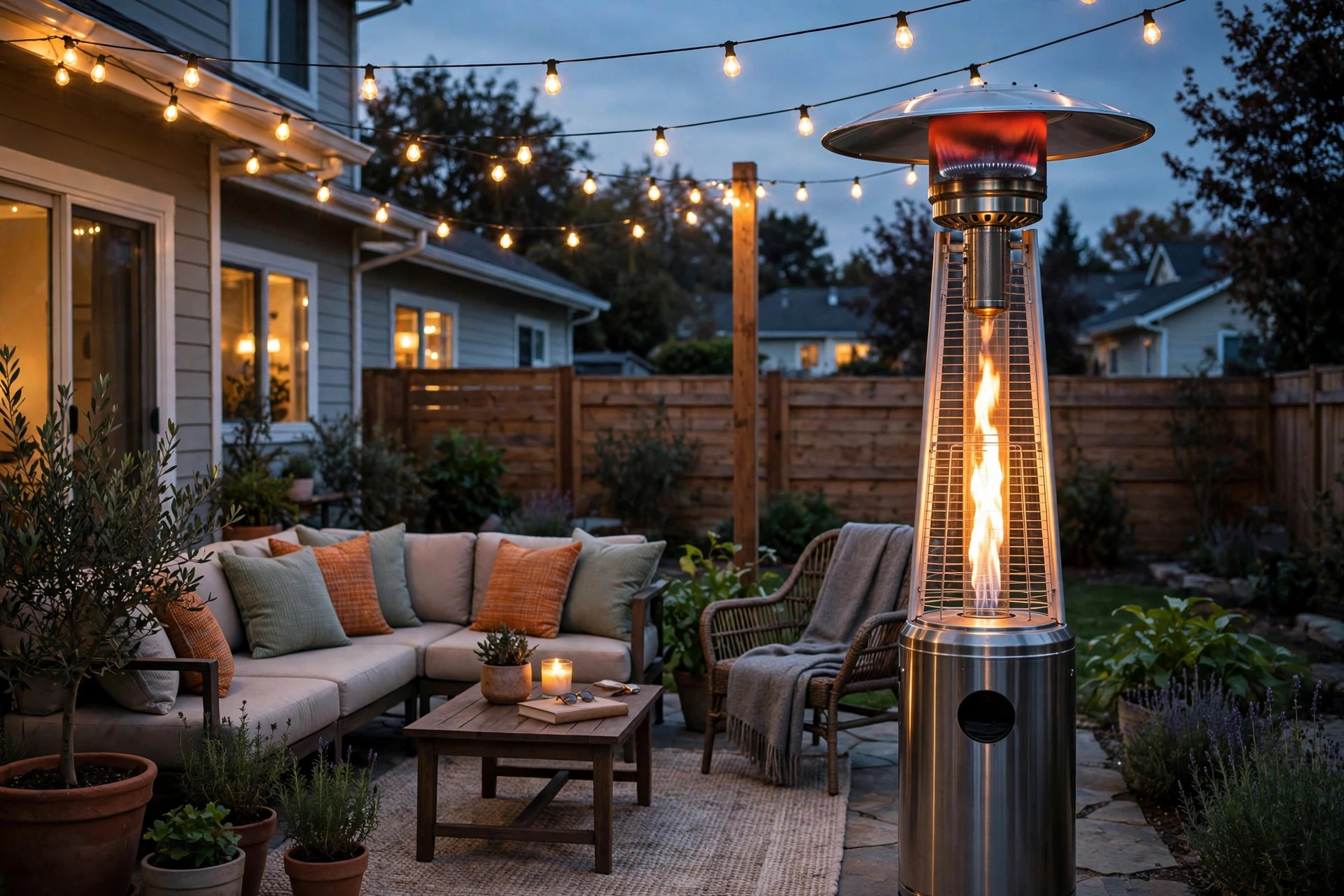
This is the classic tall heater with a mushroom-shaped top. It stands about seven feet tall and runs on a propane tank hidden in its base. Heat output is strong, often above 40,000 BTU. It can warm a dining area of 100 to 200 square feet.
Pros: strong heat, no wires or gas lines, easy to move. Cons: the tank needs refills, and the unit takes up floor space. These models are the most popular choice for medium to large patios. If you want one heater that covers a full table, start here. Shoppers looking for affordable infrared outdoor heaters as a second heat source often pair them with a freestanding propane unit.
Natural Gas Heaters
Natural gas heaters connect to a home gas line. They look much like propane models but never need a tank refill. The fuel costs less per hour than propane. The catch is the hookup. A licensed plumber must run the gas line, and the heater then stays in one place.
Pros: low running cost, no tank to swap. Cons: fixed location, upfront install cost. This type suits owners who use the patio often and want heat at the turn of a dial. Guides on This Old House explain the gas-line work involved so you know what to ask a plumber.
Electric Infrared Heaters
Electric infrared heaters use radiant elements to warm people and objects. They mount on a wall, hang from a pergola, or stand on a pole. They give off no flame and no fumes. They are quiet and need almost no care.
Pros: safe, clean, low upkeep, instant heat. Cons: they need an outlet, and some models draw a lot of power. Heat output is often lower than gas models, so they fit best in smaller or partly enclosed spaces. The Spruce covers infrared models in its patio guides with clear notes on coverage limits.
Tabletop Heaters
Tabletop heaters are small propane units that sit on an outdoor table. They give modest heat, enough for two or three people seated close. They are cheap and easy to move.
Pros: low price, portable, simple. Cons: small coverage, tip-over risk on crowded tables, frequent refills. They work as a spot solution but not as the main heater for a large patio.
Fire Tables and Fire Pits
Some owners prefer an open flame centerpiece. A fire table combines a table with a gas fire feature in the middle. Wood burning fire pits give a traditional campfire feel. If that style appeals to you, a wood burning fire pits reviews and buying guide can help you compare them, and owners in damp regions may want to read about the best outdoor fire pits for humid climates before choosing.
Cost and Price
Patio heaters sell at a wide range of prices. A small tabletop model can cost under 100 dollars. A good freestanding propane heater usually runs 200 to 500 dollars. High-end natural gas units and designer electric models can pass 1,000 dollars.
Price often tracks quality. Cheap heaters may rust fast or have weak safety valves. Mid-range models from known makers tend to last longer. Makers like Napoleon and Heatilator build heating products to a high standard, and their dealer networks can service what they sell.
Budget for the full cost. A natural gas heater needs a plumber. Any propane heater needs a tank and refills. An electric model may need a new circuit if your patio outlets are shared with other loads. Add a weather cover to the budget too. It costs little and protects the unit.
Care and Upkeep
A patio heater needs little care, but regular upkeep keeps it safe and strong.
Clean the burner and the reflector each season. Dust and spider webs can clog the pilot light. Use a soft cloth and mild soap on the steel parts. Never use harsh chemicals on the heating element or the emitter screen.
Check the gas hose and fittings for cracks before each season. A simple leak test takes minutes. Mix dish soap with water, brush it on the fittings, and turn on the gas without lighting the burner. Bubbles mean a leak. Fix it before use.
Store the heater covered when it is not in use. If your winters are harsh, store it in a garage or shed. Remove the propane tank and store it upright outdoors, never in a closed room. How-to guides on Family Handyman show these steps with photos.
For electric models, check the cord and plug for damage. Keep the unit dry. Replace any cracked housing before use.
Safety
Heat and fuel demand respect. Follow these rules every time.
Keep the heater at least three feet from walls, railings, furniture, and anything that can burn. Never use a propane or natural gas heater indoors, in a garage, or under a low enclosed roof. The fumes can build up and cause harm. Use gas heaters only in open air.
Set the heater on flat, stable ground. Do not place it on a slope or a wobbly table. Keep children and pets at a distance. The surfaces near the burner get very hot.
Turn the heater off when you leave the patio. Do not leave it running overnight or when no one is watching. The EPA offers general guidance on outdoor combustion products, and its pages are a solid source on clean burning.
Learn the pilot light and ignition steps for your model. If the heater does not light after two tries, turn the gas off and wait five minutes before trying again. This clears built-up gas.
Frequently Asked Questions
How long does a propane tank last on a patio heater?
A standard 20-pound propane tank lasts about 8 to 10 hours on the high setting. On a medium or low setting, it can last 15 to 20 hours. Wind and cold air make the heater work harder, which shortens the time. Keep a spare tank so an evening is never cut short.
Can a patio heater be used in the rain?
Light rain is usually fine for a heater built for outdoor use, but heavy rain is not. Water can damage the burner and the ignition. Wind-blown rain can also cool the heater and waste fuel. Turn the unit off in a storm and cover it once it cools.
What is the difference between a patio heater and a fire pit?
A patio heater sends radiant heat downward and outward over a set area. It runs on propane, natural gas, or electricity. A fire pit gives open flames that people gather around. Fire pits give strong heat in a small circle but less even coverage. Heaters warm a wider area more evenly. Some owners use both.
How close can people sit to a patio heater?
Most makers suggest keeping people at least two to three feet from the heater’s hot surfaces. The comfortable zone is usually five to ten feet away, where the warmth spreads. Let guests adjust their own distance. Children should stay farther back.
Do electric patio heaters cost a lot to run?
An electric infrared heater often uses 1,500 to 2,000 watts. At average U.S. power rates, that is roughly 20 to 30 cents per hour. That is cheaper per hour than propane in most areas. But electric models often cover less space, so a large patio may need two or three of them.
Is a permit needed to install a natural gas patio heater?
Many towns require a permit for new gas lines. The rules differ by state and city. Call your local building office before the work starts. A licensed plumber will usually know the local rules and can pull the permit for you.
Final Word
The top rated outdoor patio heater for your home is the one that fits your space, your fuel choice, and your budget. Measure the patio. Pick the fuel you are willing to live with. Check the BTU rating and the safety features. Then buy from a maker with a real service network. Do that, and your patio stays warm long after the season should have ended.
References
Consumer Reports. (n.d.). Product reviews and ratings. https://www.consumerreports.org Family Handyman. (n.d.). DIY home repair and maintenance. https://www.familyhandyman.com Heatilator. (n.d.). Fireplaces and fireplace products. https://www.heatilator.com Lowe’s. (n.d.). Home improvement products. https://www.lowes.com Napoleon. (n.d.). Fireplaces, grills, and heating products. https://www.napoleon.com The Home Depot. (n.d.). Home improvement products. https://www.homedepot.com The Spruce. (n.d.). Home and garden advice. https://www.thespruce.com This Old House. (n.d.). Home renovation guidance. https://www.thisoldhouse.com U.S. Consumer Product Safety Commission. (n.d.). Product safety information. https://www.cpsc.gov U.S. Environmental Protection Agency. (n.d.). Protecting human health and the environment. https://www.epa.gov
Was this guide helpful?

About Emily Rodriguez
The My Garden US editorial team writes practical, in-depth home and garden guides for American homeowners — tested advice, no fluff.
You May Also Like

Best Outdoor Fire Pits for Humid Climates
June 8, 2026 0 views
Buy Stone Fireplace Surrounds Online in Colorado
July 28, 2026 0 views
Fireplace Hearth Rugs Price Comparison USA: A Complete Buyer’s Guide
September 24, 2026 0 views