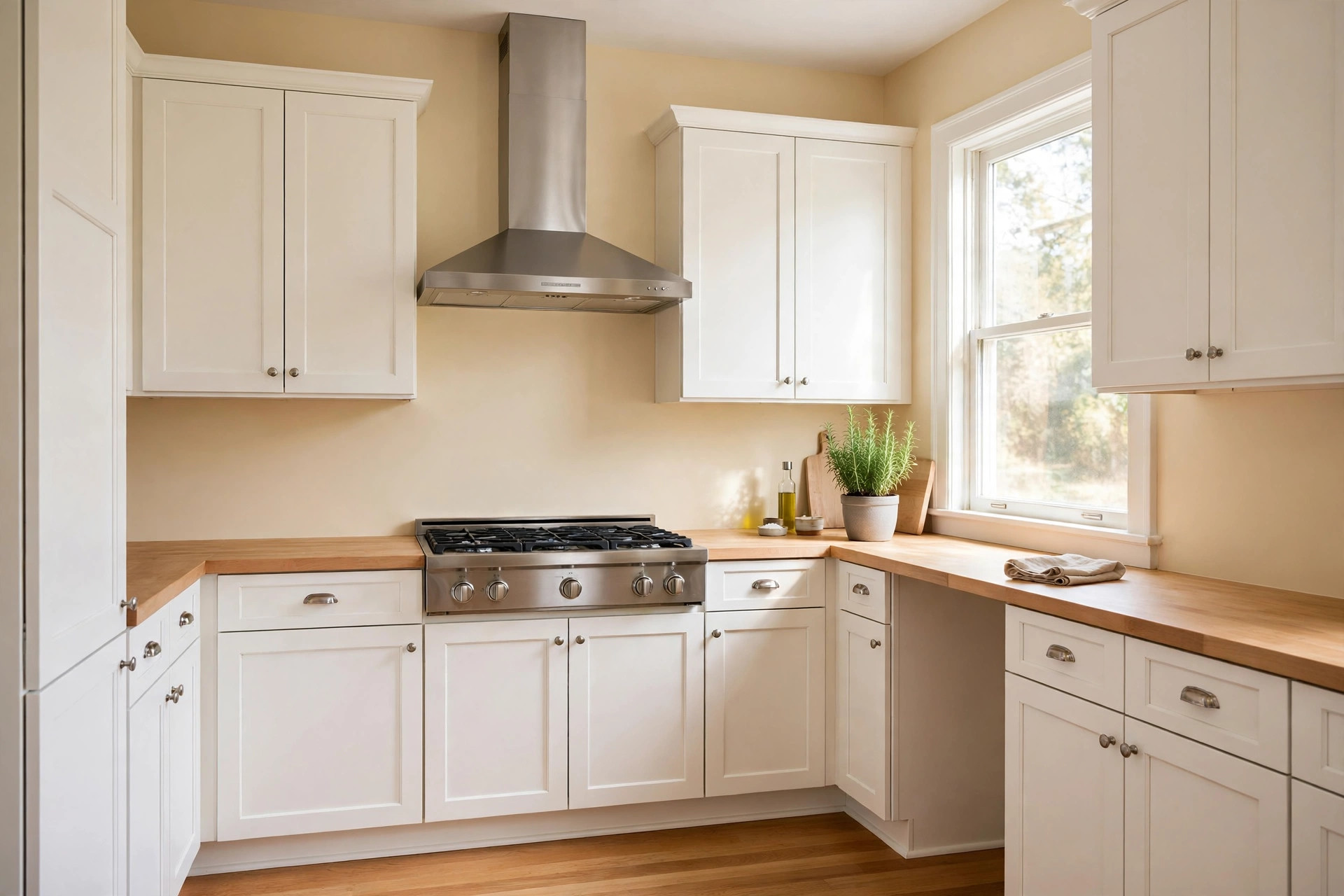

Choosing the best paint finish for kitchen walls in the USA takes more thought than choosing a paint color. The kitchen is the hardest working room in the house. Steam rises from boiling pots. Grease spatters from the frying pan. Steam from the dishwasher settles on every surface. A finish that works well in a bedroom can fail fast on a kitchen wall. Paint sheen, the amount of shine in dried paint, decides how well the wall stands up to water, grease, and scrubbing. It also shapes the way the room looks in natural and artificial light.
Many American homeowners repaint their kitchens every five to seven years. The right finish can stretch that time and make cleaning far easier between paint jobs. This guide walks through the main finish options, the way each one behaves in a real kitchen, what each costs, and how to keep the painted walls looking good year after year. By the end, you will know which sheen fits your kitchen best and why.
Why the Finish Matters in a Kitchen
A kitchen wall lives a different life from a wall in the hallway or the living room. Cooking fills the air with fine grease droplets. Boiling water and hot dishes release steam that condenses on cool walls. Sinks splash. Children and pets brush against lower walls. All of this means the finish must do two jobs at once: it must look good, and it must survive daily wear.
Flat paint hides small dents and uneven spots on the wall. It also soaks up grease and stains, and it does not take well to scrubbing. Glossy paint resists stains and wipes clean with ease, but it shows every bump and patch in the drywall. Kitchen walls call for the middle ground, a finish that gives good cleaning power without making the wall look harsh or showing every flaw. That is why most paint makers and professional painters in the United States steer kitchen buyers toward satin, eggshell, or semi-gloss. Helpful product guidance from BEHR explains how each sheen level performs on interior walls.
The finish also changes how a color reads. The same can of pale yellow paint can look soft and calm in eggshell and bright and hard in high gloss. In a small kitchen, a finish with a mild shine can bounce light around the room and make it feel larger. In a large, bright kitchen, the same shine can feel too cold. Finish and color work as a pair, so pick them together rather than apart.
How to Choose the Right Finish: Best Paint Finish for Kitchen Walls Usa
Consider the Sheen Level
Sheen runs on a scale from flat to high gloss. Flat and matte sit at one end. Eggshell comes next, with a soft glow like the surface of an egg. Satin adds a bit more shine. Semi-gloss steps up further, and gloss and high gloss shine the most. For kitchen walls, the sweet spot is eggshell, satin, or semi-gloss. Each one wipes clean better than flat, and each one resists water better.
Think about where the wall sits. The wall behind the stove takes grease and heat. The wall near the sink takes water. The far wall of a large kitchen takes almost nothing. Many painters use semi-gloss on the working walls around the stove and sink, and satin on the rest of the kitchen. This mixed approach keeps costs down and gives each wall the protection it needs. Planning advice on This Old House shows how rooms with heavy use call for higher sheen paints.
Consider the Paint Type
In most American stores today, interior wall paint is water-based latex or acrylic. These paints dry fast, smell less, and clean up with soap and water. They work well in kitchens. Older oil-based paints give a hard, glossy coat, but they take long to dry, carry strong fumes, and are harder to find now because of rules in many states. For a kitchen, a quality water-based paint with a scrubbable finish is the common and sensible choice.
Paint quality matters as much as sheen. A premium can of paint often holds more resin and more pigment than a cheap can. That means better stain resistance, better hiding, and a tougher film once dry. Reviews and buying guides on The Spruce compare popular interior paints and show how price and quality line up.
The Main Finish Options for Kitchen Walls
Eggshell
Eggshell gives a soft, low shine. It covers small wall flaws better than higher sheens. It wipes clean with a damp cloth for light marks. It suits large kitchen walls and ceilings of dining areas that open to the kitchen. In a kitchen with heavy cooking, eggshell may need more care than satin. Grease spots can sink in if left for long. Still, for a tidy kitchen with good ventilation, eggshell is a fine and attractive choice. It reads as calm and soft, and it flatters most wall colors.
Satin
Satin is the most popular finish for kitchen walls in the United States. It has a gentle glow that looks warm under kitchen lights. It resists water and grease better than eggshell. It stands up to light scrubbing, so splashes and fingerprints come off without harming the paint film. Satin hides small flaws almost as well as eggshell. For most kitchens, satin is the safest all-around pick. It balances looks, cleaning power, and price. Color charts from Sherwin-Williams often mark satin as the recommended sheen for kitchens and bathrooms.
Semi-Gloss
Semi-gloss shines clearly and gives the toughest, most scrubbable surface of the three. It fights water, grease, and steam well. It works best on trim, doors, cabinets, and the wall sections that take the worst wear. On full walls, semi-gloss can show bumps, patches, and drywall tape lines, so the wall surface should be smooth and well prepared. If your kitchen has flat, well-finished walls, semi-gloss looks crisp and bright. If the walls are old and uneven, test a small patch first before committing to the whole room.
Flat and Matte
Flat and matte paints have no shine. They hide flaws the best of all. In a kitchen, though, they are the weakest choice for walls. Grease soaks in, stains stay, and hard scrubbing can wear the paint away. Some paint makers sell washable matte paints that resist stains better than old-style flat paint. These can work in a low-use kitchen, such as one where most meals are reheated rather than cooked. For a busy family kitchen, stick with eggshell or higher. Renovation explainers on HGTV note that washable matte formulas have improved, but they still lag behind satin and semi-gloss for cleaning power.
Cost and Price
Paint finish itself adds little to the price. A gallon of a given paint line costs about the same in eggshell, satin, or semi-gloss. What moves the price is the quality of the paint and the size of the job. In the United States in 2026, a gallon of basic interior latex paint runs about 25 to 40 dollars. A gallon of premium paint runs about 45 to 75 dollars. A standard kitchen with four walls needs roughly two to four gallons for two coats, plus primer if the walls are new, stained, or very dark.
Tools add to the cost: rollers, brushes, painter’s tape, drop cloths, and a small repair kit for holes and cracks. A do-it-yourself job for a kitchen of average size often lands between 150 and 400 dollars in materials. Hiring a professional painter usually costs 300 to 800 dollars for the same kitchen, depending on the region, the condition of the walls, and the number of coats. Prices on retailer sites such as Home Depot and Lowe’s let you compare paint lines side by side before you buy.
Two coats are worth the money. The first coat seals and covers. The second coat builds the full color and the full protective film. Skipping the second coat saves little and leaves the finish weaker against grease and scrubbing.
Care and Upkeep
A good finish only pays off if it is kept clean. Wipe kitchen walls every few weeks with a soft cloth or sponge dampened with warm water and a drop of mild dish soap. Work from the bottom of the wall upward so drips do not leave streaks. Rinse with a clean damp cloth. Avoid harsh cleaners, scouring pads, and strong solvents. They can dull the sheen and wear through the paint film.
Grease near the stove needs faster action. Wipe fresh splatters within a day when you can. Old grease hardens and takes more scrubbing, which wears any finish faster. A range hood that vents to the outside cuts grease and steam at the source and keeps walls cleaner for longer. If your hood only recirculates air through a filter, clean or replace the filter on schedule.
Touch up marks as they appear. Keep a small jar of the exact paint, labeled with the brand, color name, and sheen, for quick fixes. Small scuffs can be dabbed with a brush or a foam roller. Large areas may need a full coat so the sheen matches across the wall. With steady care, a quality satin or semi-gloss kitchen paint job can look good for six to eight years.
Safety
Painting a kitchen calls for basic care. Open windows and run the range hood while you paint and while the paint dries. Keep food covered or stored away from the work area. Keep pets out of the room until the paint is dry to the touch. Latex paints are low in odor, but any paint gives off fumes while drying, and the kitchen is where food is prepared.
Older homes carry one extra risk. Houses built before 1978 may have lead-based paint under the surface. Sanding or scraping old paint can release lead dust, which is harmful, above all to children and pregnant women. If your home dates from before 1978, test for lead before you sand, and follow safe work rules. Home improvement guides on Bob Vila describe how to test for lead and how to work safely around old paint.
Read the paint can label for drying times and for safe use. Let the final coat cure for a few days before heavy scrubbing. Paint feels dry in hours but hardens fully over days.
Frequently Asked Questions
What is the most popular paint finish for kitchen walls?
Satin is the most popular finish for kitchen walls across the United States. It gives a soft glow, resists grease and steam, and stands up to light scrubbing. It suits most kitchens, from small apartments to large family homes.
Is semi-gloss too shiny for kitchen walls?
Semi-gloss is not too shiny for most kitchens, but it does show wall flaws more than satin or eggshell. On smooth, well-prepared walls it looks clean and bright. On bumpy or patched walls, test a small area first. Many homeowners use semi-gloss on trim and the walls nearest the stove and sink, with satin elsewhere.
Can I use eggshell paint in the kitchen?
Yes. Eggshell works in kitchens with moderate cooking and good ventilation. It has a calm look and hides small flaws well. It needs quicker cleanup of grease spots than satin or semi-gloss, since stains can set if left sitting.
Should kitchen walls and kitchen cabinets use the same finish?
They can differ. Cabinets get touched daily, so many painters use semi-gloss or gloss on cabinets for a hard, wipeable surface. Walls do well in satin or eggshell. Pairing cabinet paint with wall paint is common; you can read more in this guide to the best paint for kitchen cabinets.
How do I pick a wall color with the right finish?
Pick the color and the sheen together. Test large swatches on the wall and look at them in daylight and under your kitchen lights at night. A finish with more shine will make the color look brighter and slightly lighter. For white and pale kitchens, see these notes on the best white paint for interior walls.
How long does kitchen wall paint last?
A quality satin or semi-gloss job lasts about six to eight years in a normal kitchen with regular cleaning. Heavy cooking, poor ventilation, or harsh cleaning can shorten that time. Repaint when the walls look dull, when grease stains no longer wash out, or when the sheen has worn uneven.
A Final Word
The best paint finish for kitchen walls in the USA comes down to how you cook and what your walls look like. For most households, satin is the right answer. It cleans well, looks warm, and forgives small flaws. Choose semi-gloss for the hardest-working walls or for a crisp, bright look on smooth surfaces. Choose eggshell for a soft look in a low-wear kitchen with good airflow. Match the finish to the paint quality, put on two coats, and keep the walls clean. Do that, and your kitchen walls will stay handsome through years of daily meals.
If you are also planning color changes beyond the kitchen, these accent wall painting ideas for living rooms show how sheen and color can reshape an adjoining space.
References
Behr. (n.d.). Paints, primers, and stains. https://www.behr.com Bob Vila. (n.d.). Home improvement advice. https://www.bobvila.com HGTV. (n.d.). Home and garden ideas. https://www.hgtv.com Lowe’s. (n.d.). Home improvement products. https://www.lowes.com Sherwin-Williams. (n.d.). Paints and coatings. https://www.sherwin-williams.com The Home Depot. (n.d.). Home improvement products. https://www.homedepot.com The Spruce. (n.d.). Home and garden advice. https://www.thespruce.com This Old House. (n.d.). Home renovation guidance. https://www.thisoldhouse.com
Was this guide helpful?

About James Carter
The My Garden US editorial team writes practical, in-depth home and garden guides for American homeowners — tested advice, no fluff.
You May Also Like

How to Use a Two Story House Painting Cost Calculator USA Homeowners Trust
February 24, 2026 0 views
Grasscloth Wallpaper Installation Near Me: A Plain Guide
January 4, 2026 0 views
Pool Deck Paint Reviews for Hot Climates
January 19, 2026 0 views