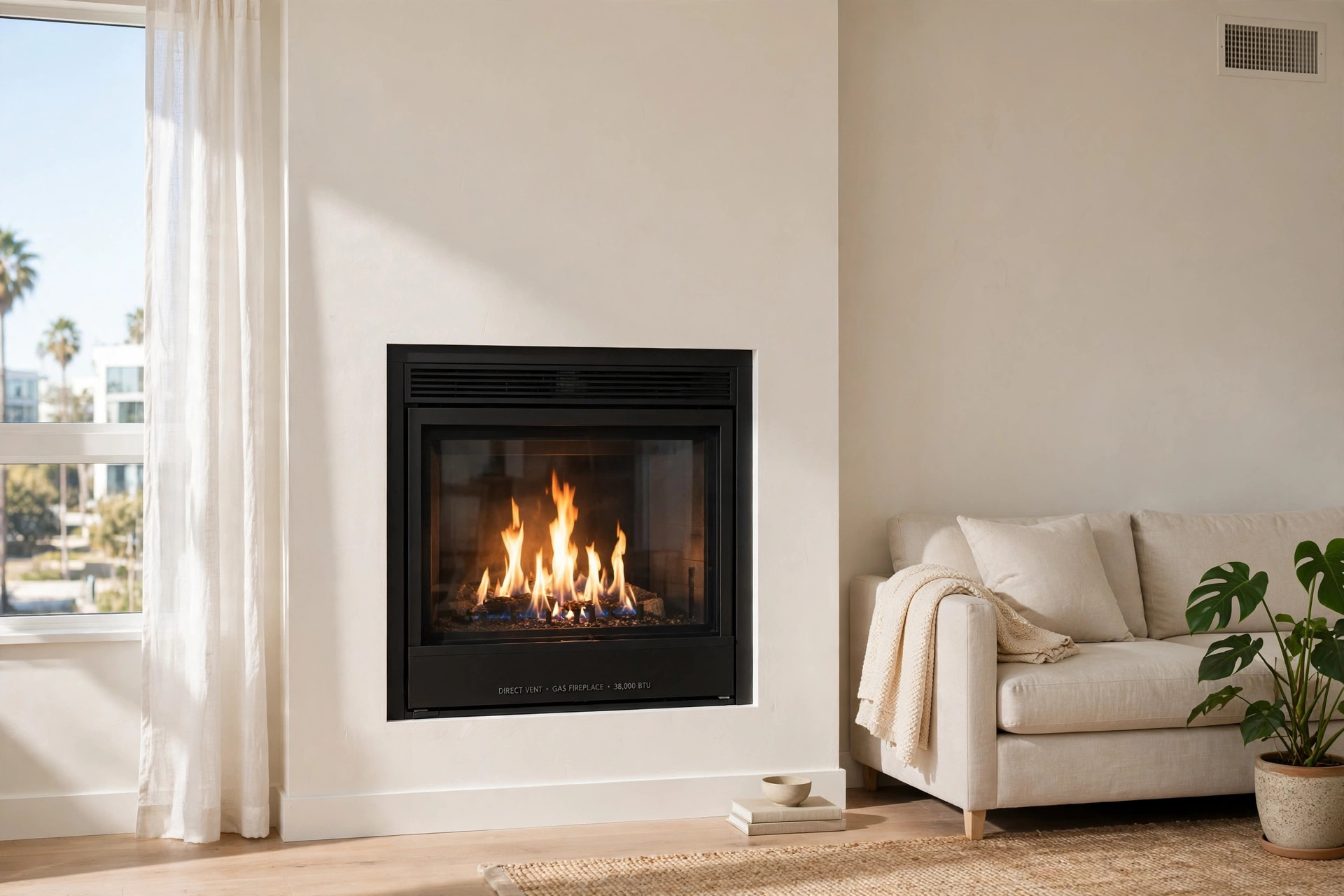

The best direct vent gas fireplaces for California apartments solve a common problem. Most apartments in the state have no chimney. Many leases forbid wood burning. A direct vent gas fireplace draws air from outside and sends its exhaust straight back outside through a sealed pipe. The flames stay behind glass. The room air stays clean. That makes this fireplace a practical heating choice for apartment life in California.
Apartment living in California has its own rules. Landlords set limits on what tenants may change. Local building codes set rules for gas appliances. Some air quality districts in Southern California limit certain types of gas equipment. This article explains what a direct vent gas fireplace is, why it suits an apartment, what to look for when buying, and how to keep it safe and clean. The goal is plain advice, so you can make a sound choice.
Why a Direct Vent Fireplace Suits an Apartment
A direct vent gas fireplace is a sealed unit. It has two pipes, or one pipe split in two. One channel pulls fresh air in from outside for the fire to burn. The other channel pushes the exhaust out. The two streams never mix with the air in your room. This sealed design is the key reason it works well in an apartment.
Older fireplaces pull room air up the chimney to feed the fire. That wastes heated air and can cause drafts. A direct vent unit does not do this. Your warm air stays in the room. This matters in apartments, where heating space is small and every dollar of gas counts. The sealed design also keeps soot and odors out of the living space, which helps keep walls, drapes, and furniture clean.
California winters are mild in most places, but nights in the high desert, the Central Valley, and the mountain towns can be cold. Many apartments rely on wall furnaces or central heaters that are old and loud. A fireplace adds steady, quiet heat to the main room. It also adds a focal point to a small living space. Renters who cannot remodel much can still enjoy the look and feel of a real fire.
What to Look For When You Choose: Best Direct Vent Gas Fireplaces for California Apartments
Venting and Placement
The vent is the first thing to plan. A direct vent fireplace must sit on or near an exterior wall, so the vent pipe can reach outside in a short, straight run. Corner units and freestanding models also work if the wall behind them faces the outdoors. Talk to a licensed installer before you buy. The installer will confirm that your wall and vent path meet the local code.
Most units can vent through a wall or through the roof. In an apartment, a horizontal wall vent is the common choice. The vent cap on the outside of the building must sit a set distance from windows, doors, and air intakes. These clearance rules protect your neighbors as much as you. Your building manager will want to see the vent plan in writing.
Size and Heat Output
Fireplaces list their output in British thermal units, or BTU. A typical direct vent apartment unit puts out 10,000 to 25,000 BTU per hour. For a living room of 300 to 500 square feet, a unit near the middle of that range is often enough. A unit that is too large will cycle on and off and feel stuffy. A unit that is too small will run all day without warming the room.
Measure your room before you shop. Note the ceiling height as well, because tall ceilings hold more air. If your apartment has thin walls or single-pane windows, you may need a little more output. An installer can help you match the unit to the space. Buying more heat than you need wastes money twice, once at the store and once on the gas bill.
Efficiency and Controls
Look for the efficiency rating on the label. Direct vent units often reach 60 to 80 percent efficiency. In a mild climate, the difference between 65 and 75 percent matters less than it would in a cold one. Guidance from the Environmental Protection Agency on clean heating can help you read the ratings.
Modern units offer electronic ignition, which lights the pilot only when needed. Older units keep a small pilot burning all the time. Electronic ignition saves gas and is a smart pick for a rental. Many models now work with a wall thermostat or a hand remote. If you like automated comfort, you may also want to read about smart thermostat controlled gas fireplaces for sale to see how modern controls pair with vented units.
Types and Options
Direct vent gas fireplaces come in a few common forms. They suit older apartments that have a sealed-off wood fireplace. Built-in models sit in a new framed opening in the wall. They look like part of the room and need a contractor to install. Freestanding models stand on legs or a small base and look like a wood stove. They are easy to remove when a lease ends, which renters like.
Glass fronts come in flat, bay, and corner shapes. A bay front gives a wider view of the flames. A corner unit can tuck into a small room. The glass stays cool enough to touch on many models, but it still gets warm. Ask about heat-rated glass if you have small children or pets.
Fuel choices matter too. Most California apartments have natural gas service. Some rural areas and older buildings use propane tanks instead. Buy the unit set up for the fuel you have. Converting a unit from one fuel to the other takes a certified kit and a professional. Never try to convert it yourself.
Interior choices change the look. Ceramic logs look like real wood. Modern glass beads and river stones suit a newer apartment. The burner design changes how the flames spread. See them burn in a showroom if you can. A short visit can tell you more than any catalog.
Cost and Price
A direct vent gas fireplace for an apartment usually costs between 1,500 and 4,000 dollars for the unit itself. Smaller models and simple designs sit at the low end. Larger units with stone surrounds and fancy fronts reach the high end. Installation adds another 1,000 to 3,000 dollars, depending on the vent run, the gas line work, and any framing needed.
Ask installers for written quotes that list each cost. The gas line work often surprises buyers, so get that number early. A clear quote keeps the budget honest.
Running costs are modest. Natural gas in California is not cheap, but a sealed fireplace uses it well. A 20,000 BTU unit running three hours an evening costs a small amount per month in the heating season. Electronic ignition trims the cost further by killing the standing pilot. Compare this to electric space heaters, which often cost more to run and heat less evenly. For a broader view of electric options, see the guide on freestanding electric stoves reviews and buying guide.
Installing in a California Apartment
Permission comes first. Most apartment leases require written approval from the landlord for any gas appliance. Write a short request that names the model, describes the vent plan, and names the licensed installer you will use. Offer to restore the wall when you leave if the landlord wants that. A calm, complete request wins more approvals than a quick phone call.
Permits come next. California cities require a permit for gas line work and for cutting a vent through an exterior wall. The installer usually pulls the permit. Ask who handles the paperwork before the work starts. Do not skip the permit. An unpermitted gas appliance can void your renter’s insurance and create real trouble after a fire.
Only a licensed contractor should install the unit. Gas work is not a weekend project. The installer will set the clearances, seal the vent joints, test for leaks, and show you how to use the controls. Ask for the manual and the warranty papers. Keep them in a folder with your lease. Good resources on home project planning appear at This Old House and Family Handyman.
Building rules vary by city. Some older buildings have rules against any new exterior penetrations. Some homeowners associations limit the look of vent caps on shared walls. Check these rules early, before you spend money on the unit. A five-minute call to the building office can save a five-thousand-dollar mistake.
Care and Upkeep
A direct vent fireplace needs little care, but it needs regular care. Once a year, have a technician clean the burner, check the glass gasket, and inspect the vent for nests or debris. Birds and insects love vent caps, and a blocked vent is a safety risk. Annual service keeps the warranty valid on most brands.
Clean the glass as needed with a cleaner made for fireplace glass. Regular glass cleaner can leave a film that bakes on. Wipe the glass only when the unit is fully cool. Touching hot glass can burn you and crack the glass. Keep the area around the fireplace clear of papers, blankets, and pet beds.
Watch the flames from time to time. Healthy flames are mostly blue at the base with warm tips. Tall, lazy, yellow flames can mean dirty burners or poor air flow. If you see soot building up on the glass, call a technician. Soot is a sign that something needs attention. You can find general upkeep advice from home guides at The Spruce.
Decorative glass and log sets wear slowly. Ceramic logs can crack after many seasons. Replacement sets are easy to find. If your unit has a fan, vacuum the fan blades once a year so dust does not build up. A dusty fan is a noisy fan. For ideas on finishing the look around the hearth, browse the selection of fireplace glass doors reviews and buying guide for matching trim styles.
Safety
Safety is the heart of this choice. The sealed design of a direct vent unit is safe by nature, but safe habits still matter. Keep a working carbon monoxide detector in the room with the fireplace. Test it each month. Carbon monoxide is colorless and odorless, and a detector is your best guard.
Keep children and pets away from the glass when the fire burns. The glass gets hot enough to burn skin. Use a screen or gate if toddlers live in the home. Teach older children to treat the fireplace with respect. Never hang clothes or towels on the unit to dry.
Never block the vent cap outside. Do not store boxes against the exterior wall near the cap. In wildfire season, keep brush and dry leaves clear of the vent area. If you smell gas, leave the apartment and call the gas company from outside.
Have the unit inspected if the building has an earthquake. California shakes, and gas connections can loosen. A quick check after a strong quake is cheap insurance. Your gas company can tell you what to look for.
Frequently Asked Questions
Can a renter install a direct vent gas fireplace?
A renter can, but only with written landlord approval and a licensed installer. The lease, the building rules, and the city permit office all have a say. Start with the landlord. If the answer is no, ask about electric options that need no vent at all.
Does a direct vent fireplace need a chimney?
No. That is its main advantage. It vents through a short sealed pipe that runs through an exterior wall or the roof. Apartments without chimneys are exactly the places where these units make sense. Retailers like The Home Depot and Lowe’s carry models and show venting kits so you can see the parts.
How long does installation take?
Most apartment installs take one to two days. The gas line work takes the most time. Framing a new opening adds a day. A simple swap into an existing opening can finish in a single day. Ask your installer for a written schedule.
Will it heat the whole apartment?
It heats the room it sits in very well. Heat will drift into nearby rooms, but a single unit will not replace a central heater in a large apartment. Many owners use the fireplace as the main heat for the living area and let the building heat handle the bedrooms. Brands such as Napoleon and Heatilator publish room-size guides for their models.
Is a direct vent fireplace allowed during California air quality restrictions?
Direct vent gas units are sealed and burn clean, so they are generally fine. They are very different from open wood-burning fireplaces, which face burn bans on poor air days in some districts. Still, check your local air district rules. Rules can change, and a quick check keeps you safe.
What does it cost to run each month?
A typical unit costs a modest amount per month in the heating season when used a few hours each evening. Exact cost depends on your gas rate and how often you run it. Electronic ignition and a thermostat keep the cost down by shutting the fire off when the room is warm.
A Final Word
The best direct vent gas fireplaces for California apartments earn their place with clean, quiet, sealed heat. They need no chimney. They waste little warm air. They suit renters who plan ahead, get approval, and hire a licensed installer. Measure your room, pick the right size, and keep up with yearly service. Do that, and your fireplace will give you many seasons of safe comfort in your California home.
References
Family Handyman. (n.d.). DIY home repair and maintenance. https://www.familyhandyman.com Heatilator. (n.d.). Fireplaces and fireplace products. https://www.heatilator.com Lowe’s. (n.d.). Home improvement products. https://www.lowes.com Napoleon. (n.d.). Fireplaces, grills, and heating products. https://www.napoleon.com The Home Depot. (n.d.). Home improvement products. https://www.homedepot.com The Spruce. (n.d.). Home and garden advice. https://www.thespruce.com This Old House. (n.d.). Home renovation guidance. https://www.thisoldhouse.com U.S. Environmental Protection Agency. (n.d.). Protecting human health and the environment. https://www.epa.gov
Was this guide helpful?

About Emily Rodriguez
The My Garden US editorial team writes practical, in-depth home and garden guides for American homeowners — tested advice, no fluff.
You May Also Like
Buy Tile Fireplace Surrounds Online in Texas: A Plain Guide for Homeowners
May 27, 2026 0 views
Best Fireplace Log Holders for First Time Homeowners
January 25, 2026 0 views
Top Rated Chimineas for Patios for Cold Climates
April 4, 2026 0 views