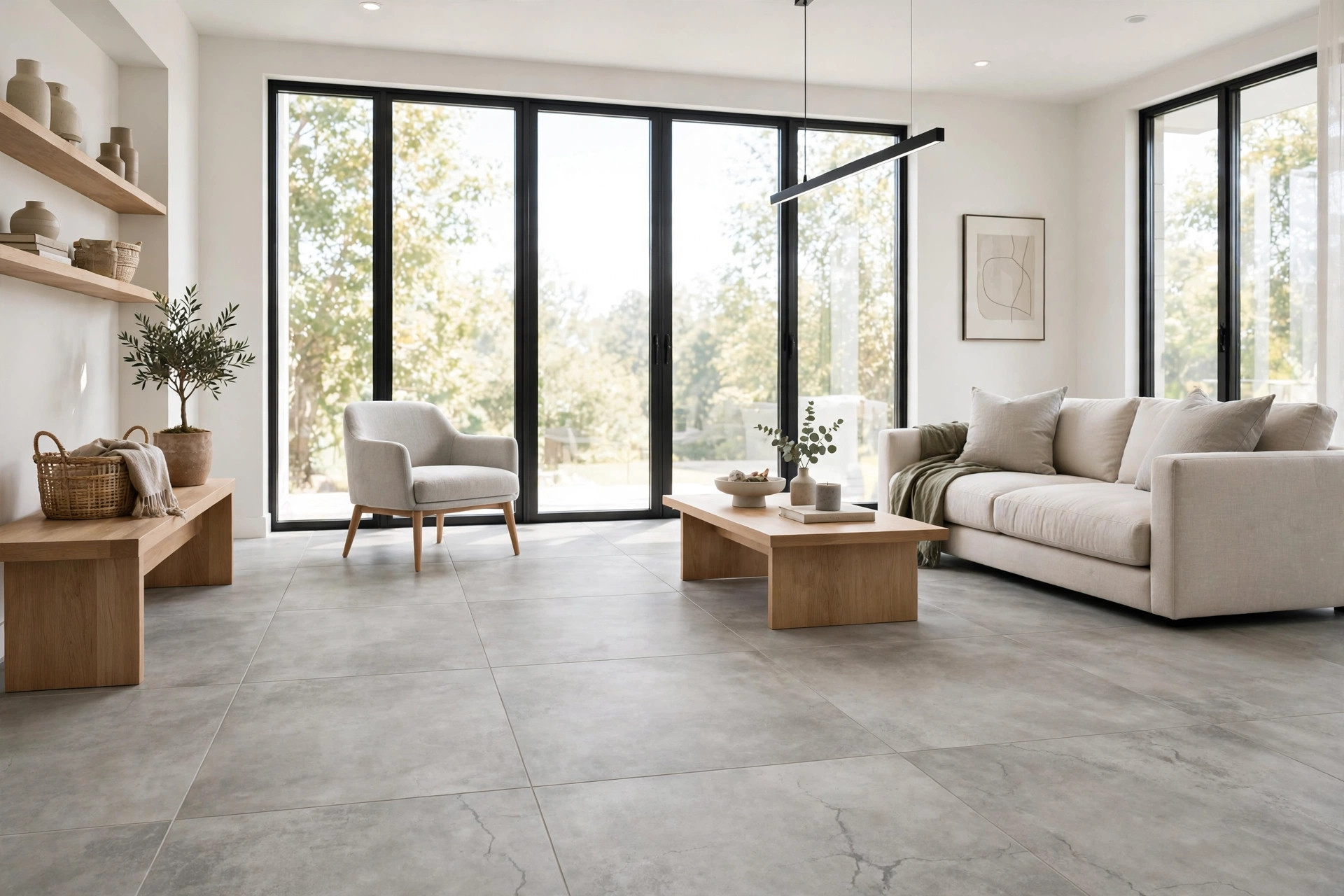

Modern homes in America favor clean lines and open rooms. Concrete look tile for modern homes USA buyers has become one of the most asked-for floor choices in that style. It gives the cool gray face of poured concrete without the cracks, the cold feel, or the high price of a real concrete slab.
This guide explains what the tile is, why it suits modern homes, how to choose it, what it costs, and how to keep it looking good. Every fact is stated in plain words. No special knowledge is needed to follow along.
Why Concrete Look Tile Matters in Modern Homes
Modern homes prize light, space, and simple shapes. Big windows, tall doors, and bare walls need a floor that does not fight for attention. Concrete look tile gives a quiet gray base. It keeps rooms calm and lets the architecture speak.
Real concrete floors have a known set of problems. They crack with age. They feel cold under bare feet. They stain from oil and wine. They are hard to lay over wood subfloors upstairs. Concrete look tile answers each of these problems. It is made of porcelain or ceramic. It is fired hard in a kiln. It resists stains. It can be laid over any sound subfloor.
The look itself comes from new printing methods. Ink is laid on the tile surface with great detail. Veins, pits, and soft color shifts copy real concrete. Tile makers such as Daltile now print with a level of detail that was not possible years ago. From a standing height, many guests cannot tell the difference. The home gets the modern loft feel at a normal price.
Concrete look tile also fits the way Americans use homes today. Pets run across floors. Kids drop toys. Shoes carry grit. A hard porcelain surface takes this daily wear and still looks neat. It suits kitchens, baths, entry halls, and open living areas. It suits warm states where cool floors feel welcome, and cold states where it can be paired with radiant heat.
What to Look for When You Choose: Concrete Look Tile for Modern Homes Usa
Start with the body of the tile. Porcelain is the safer pick for most homes. It is dense. It takes little water. It resists chips. Makers like Shaw Floors and Mohawk Flooring sell wide porcelain lines made for busy homes. Ceramic costs less, but it is softer and suits walls more than floors. For floors, ask for porcelain.
Next, check the PEI rating. PEI measures how well the glaze resists foot traffic. PEI 3 suits most rooms. PEI 4 or 5 suits halls and kitchens with heavy use. The box or the spec sheet will list it. If the number is missing, ask the seller.
Color matters more than people expect. Real concrete runs from pale ash to deep charcoal. Light grays open up small rooms. Mid grays hide dust. Dark grays give a bold gallery feel, but they show every crumb. Take samples home. Look at them in morning light and in lamp light. A gray that looks warm at the store can look blue at home.
Finish is the next choice. Matte finishes look most like real concrete. They also hide footprints. Polished finishes shine, but they show dust and can feel slick. In kitchens and baths, a matte or light-textured finish gives better footing.
Size shapes the room. Large tiles, such as 24 by 24 inch or 24 by 48 inch, make rooms feel bigger. They need fewer grout lines, which suits the plain modern look. Small rooms can still take large tile if the layout is planned well. Rectified edges, which are cut straight after firing, allow tight grout joints of one sixteenth of an inch. That tight joint is a mark of the modern style.
Slip resistance is a must in wet rooms. Look for a DCOF rating above 0.42 for bathroom floors and entry areas. The spec sheet will show it. For living rooms and bedrooms, this number matters less, but a lightly textured tile still feels safer.
Match the dye lots. Tiles from different factory runs can vary in shade. Buy ten to fifteen percent more than the room needs. Use boxes from the same lot. Big-box sellers such as The Home Depot and Lowe’s stock common concrete look lines, while specialty sellers like LL Flooring carry harder-wearing grades. Mix tiles from several boxes as you lay them. This blends small color shifts and looks natural.
Types and Options on the Market
Concrete look tile comes in a few clear types. Each has a place in the modern home.
Porcelain floor tile is the workhorse. It is strong, stain-proof, and comes in the largest sizes. Most concrete look tile sold today is porcelain. It works in every room, indoors and outdoors in warm climates.
Ceramic wall tile copies the concrete look for walls. It is lighter and easier to cut. It suits shower walls, backsplashes, and accent walls. It is not meant for floors that see daily foot traffic. Many homeowners match wall and floor tile from the same line for a seamless look. If you are planning a shower, read up on the best tile for shower walls reviews usa before you buy.
Outdoor concrete look pavers are thick porcelain made for patios and pool decks. They resist frost and sun. They give the same gray modern face outside the house. They pair well with indoor tile of the same line, so the floor seems to flow out the door.
Peel-and-stick vinyl planks are a budget choice. They copy the gray look at a low price and lay fast. But they are not real tile. They dent, they lift at edges, and they do not last like porcelain. They suit a rental or a short-term fix, not a forever home.
Within porcelain itself, you will see three style families. True concrete copies show small pits and form marks, like a cast wall. Soft stone blends borrow from limestone, with gentle clouds of tone. Industrial mixes add dark veins and rusty marks for a loft feel. All three suit modern homes. Pick the one that matches your furniture.
Edge and layout choices finish the plan. A straight stack grid keeps the modern look clean. A running bond pattern feels softer and more classic. Many installers lay large concrete look tile in a grid with tight joints. That is the look most often shown in home magazines.
Cost and Price in the USA
Price depends on the tile, the size, and the labor. Here is a plain breakdown.
The tile itself. Basic concrete look porcelain runs about three to seven dollars per square foot at big stores. Mid-range lines with better printing and rectified edges run seven to twelve dollars. High-end imported lines run twelve to twenty dollars. Large formats cost more per foot than small ones, but they need fewer tiles and less grout work.
Labor. Setting tile is skilled work. Labor for a straight grid layout runs about eight to fifteen dollars per square foot in most US markets. Large tiles and tight joints push the price up. Floors that need leveling, old tile removal, or waterproofing add more. To plan your budget, check tile installation cost per square foot usa for current labor ranges.
Extras. Thin-set mortar, grout, and sealer add about one to two dollars per square foot in material. Baseboards may need removal and reset. In cold regions, adding electric heat under the tile adds cost but makes gray floors warm underfoot. Terrazzo tile flooring cost per square foot gives a useful point of comparison if you are weighing patterned looks against plain concrete.
A 200 square foot living room might break down like this. Tile at six dollars a foot is twelve hundred dollars. Labor at ten dollars a foot is two thousand dollars. Extras add three hundred dollars. The total lands near thirty-five hundred dollars. Prices vary by city. Always get three written quotes.
Ways to save money are simple. Keep the layout simple. Choose a mid-range tile with a good printed face. Lay tile in one large area rather than many small rooms, which cuts set-up time.
Care and Upkeep
Concrete look tile is easy to keep. That is one reason it wins in modern homes.
Sweep or vacuum once a week. Grit is the main enemy. It works like sandpaper under shoes. A soft broom or a vacuum with the beater bar off does the job.
Mop with warm water and a mild cleaner. Use a cleaner made for tile or a few drops of dish soap. Rinse well. Soap left on the floor leaves a film that dulls the gray. Change the mop water when it looks cloudy.
Avoid harsh acids and bleach. They do not harm porcelain, but they can wear down grout and some sealers. Avoid oil soaps, which leave a sticky layer. For tough spots, a paste of baking soda and water lifts most marks.
Seal the grout once a year in kitchens and baths. Porcelain tile itself needs no sealer. Grout does. A sealed grout line resists stains from coffee, wine, and pet food. Wipe spills soon. Even sealed grout thanks you for quick action.
Mats help in key spots. A mat at each door catches grit. A mat under the dog bowls catches water. Felt pads under chair legs stop scratches on the glaze. Guides like The Spruce and Family Handyman list the same small steps, and they add years to the floor.
Long term, the floor needs little. Unlike wood, it never needs sanding or refinishing. Unlike carpet, it never needs deep cleaning to look fresh. A well-laid concrete look tile floor can serve twenty years or more with basic care.
Safety Notes
Tile is hard. That is good for wear and bad for falls. In homes with small children or older adults, pair concrete look tile with rugs in play and walking areas. Rugs also warm the look and cut echo in open rooms.
Wet gray tile can be slick. Choose tile with a DCOF above 0.42 for baths, entries, and pool areas. Wipe standing water. Use a bath mat outside the shower. These steps matter more than the brand of tile.
Dust from cutting tile harms lungs. This is a job-site note, but it matters to homeowners who hire or who do their own work. Tile saws should run wet to hold dust down. Workers should wear masks rated for fine dust. Keep children and pets out of the work area.
Furniture weight is rarely a problem. Porcelain carries heavy loads well. But dragging a fridge or a piano can chip edges. Lift, do not drag. Lay cardboard or hardboard on the floor during moves.
Check floor height at doors and transitions. Thick large-format tile with mortar can raise the floor by half an inch or more. Doors may need trimming. Plan this before the tile goes down.
FAQ
Is concrete look tile colder than other floors? Tile feels cooler than wood or carpet because it pulls heat from feet faster. In warm climates this is a plus. In cold climates, many owners add electric radiant heat under the tile. Socks and rugs also solve the problem for most people.
Does concrete look tile crack like real concrete? No. The tile itself does not crack from normal house movement. Cracks can show in grout lines if the subfloor moves, but a sound subfloor and the right mortar stop this. Real concrete slabs crack as they cure and age. Tile avoids that whole problem.
Can I lay it over my old floor? Sometimes. Tile can go over old tile if the old floor is sound, flat, and well stuck. It cannot go over carpet, cushioned vinyl, or loose material. Wood subfloors need a cement backer board first.
What grout color works best? A grout that closely matches the tile keeps the modern look clean. Gray on gray hides the joints. White grout with gray tile shows every line and needs more cleaning. Many designers pick a grout one shade darker than the tile. Epoxy grout stains less than cement grout, but it costs more.
Is it good for homes with dogs? Yes. This is one of the best floors for dogs. Claws do not scratch hard porcelain. Accidents wipe up without staining. The tile does not hold pet odor the way carpet does. Choose a mid-tone gray with some texture so paw prints show less.
How long does it last? A well-laid porcelain floor lasts twenty to thirty years in a home. The printed face does not wear off under normal use. Grout may need resealing or touch-up over the years, but the tile itself stays. This long life is part of why the total cost compares well with cheaper floors that need replacing.
A Short Final Word
Concrete look tile for modern homes USA shoppers keeps growing in appeal because it solves a real problem. It gives the calm gray face of concrete with the easy care of porcelain. Choose a true porcelain tile. Pick a size and shade that suit your rooms. Buy from one dye lot with ten percent extra. Study the trade guides at This Old House before you hire a setter or start the job yourself. Keep grit off the floor and seal the grout each year. Do these simple things, and the floor will serve the home for decades.
References
Daltile. (n.d.). Ceramic and porcelain tile. https://www.daltile.com Family Handyman. (n.d.). DIY home repair and maintenance. https://www.familyhandyman.com LL Flooring. (n.d.). Hardwood, vinyl, and tile flooring. https://www.llflooring.com Lowe’s. (n.d.). Home improvement products. https://www.lowes.com Mohawk Flooring. (n.d.). Flooring products. https://www.mohawkflooring.com Shaw Floors. (n.d.). Flooring products. https://www.shawfloors.com The Home Depot. (n.d.). Home improvement products. https://www.homedepot.com The Spruce. (n.d.). Home and garden advice. https://www.thespruce.com This Old House. (n.d.). Home renovation guidance. https://www.thisoldhouse.com
Was this guide helpful?

About Michael Thompson
The My Garden US editorial team writes practical, in-depth home and garden guides for American homeowners — tested advice, no fluff.
You May Also Like
Schluter Trim for Tile Edges: Reviews and Buying Guide for USA Homes
April 17, 2026 0 views
The Best Doormat for Rainy Climates USA: A Practical Buying Guide
April 21, 2026 0 views
Best Flooring Nailer for DIYers Reviews USA: A Plain Guide
January 28, 2026 0 views