
A pool deck takes more wear than almost any other surface in an American home. Sun, water, bare feet, and harsh chemicals attack it year after year. When it starts to crack, fade, or grow rough under foot, many owners begin to study pool deck resurfacing options and costs usa guides like this one. The good news is that most decks do not need to be torn out. A sound concrete base can be given a fresh surface that looks new, feels safe, and lasts for many more years.
Resurfacing means putting a new wearing surface over the old deck. It is faster and far less costly than a full replacement. This guide explains the main options, what each one costs in the United States, and how to choose the right one for your home.
Why Pool Deck Resurfacing Matters
A pool deck is not just a place to walk. It is the main safety surface around the water. Children run on it. Guests carry food and drinks across it. Swimmers step onto it with wet feet. When the surface fails, the risks are real.
Cracked concrete can catch a toe and cause a fall. A surface worn smooth can become dangerously slick when wet. Rough, spalling concrete hurts bare feet and sheds loose bits into the pool. Resurfacing fixes all of these problems at once. It seals small cracks, renews the texture, and gives you a surface you can walk on with confidence.
What to Look for Before You Resurface: Pool Deck Resurfacing Options and Costs Usa
Not every deck is a good candidate for resurfacing. Start with an honest look at the base slab.
Check the Structure
Walk the deck and look for wide cracks, heaving, or areas that rock when you step on them. Hairline cracks are normal and can be filled. Cracks wider than a quarter of an inch, or slabs that have settled unevenly, point to ground problems. A coating cannot fix a moving slab. If you find these signs, have a concrete contractor check the base first.
Test for Moisture
A resurfacer will not bond to a slab that is damp from below. On a dry day, tape a two-foot square of plastic sheeting to the deck and leave it for a day. If water beads under the plastic, fix the moisture source before any coating goes down.
Plan the Slope
Pool decks must slope gently away from the pool so water drains off and does not puddle. Resurfacing is a good time to correct small low spots, but it cannot fix a bad overall slope. A contractor can build up low areas with the overlay material itself.
Consider the Old Finish
Loose paint, peeling sealers, and old thin coatings usually have to be stripped or ground off before new material bonds well. A clean, rough concrete face is the best base for any new surface. Budget a little extra time for this preparation work.
Main Pool Deck Resurfacing Options
There are five main ways to resurface a pool deck. Each has its own look, feel, and price point.
Acrylic Spray Deck Coating
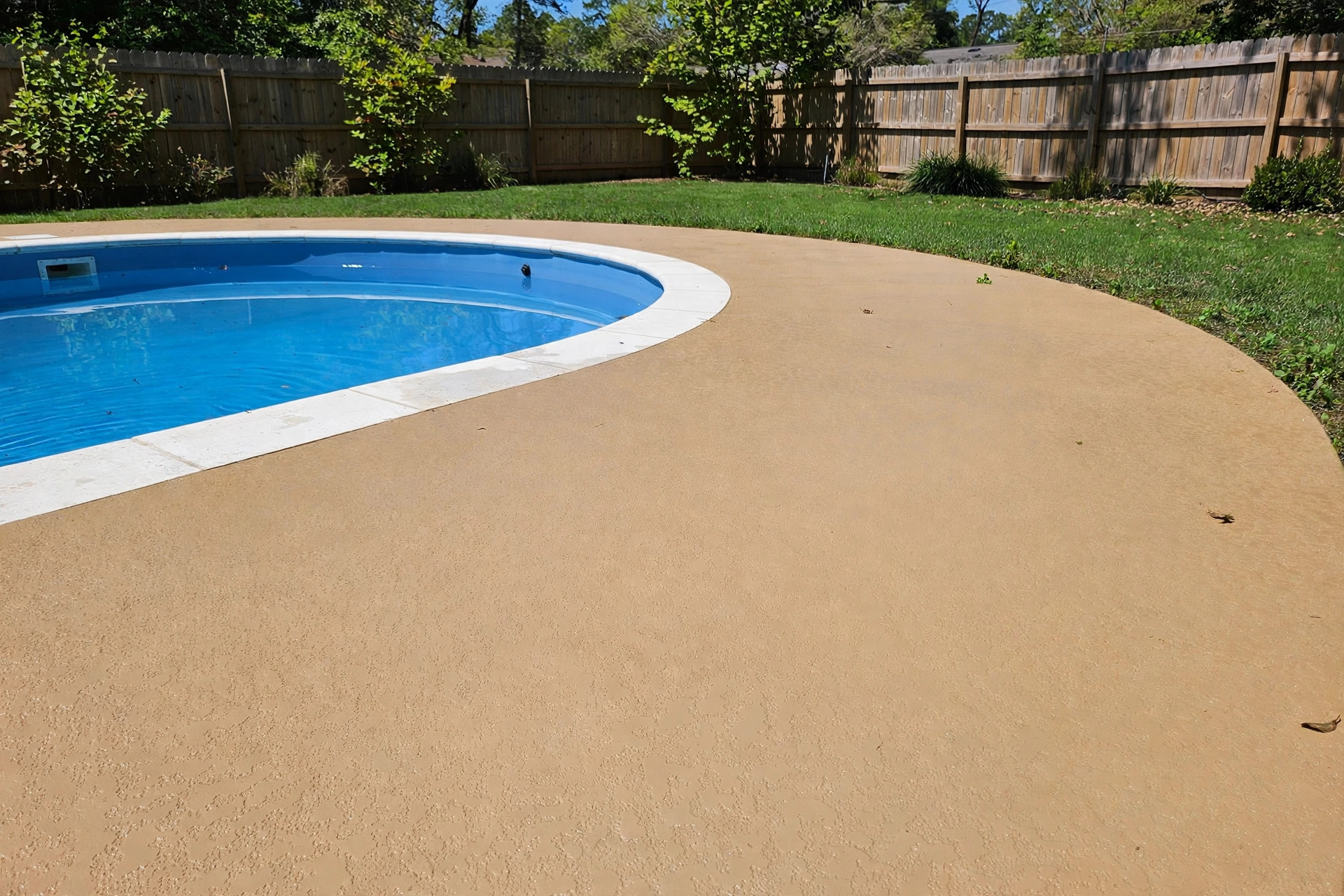
Acrylic spray decking is one of the most common choices in the warm states. A thin acrylic mix is sprayed or rolled onto the prepared concrete, then a texture is knocked down with a trowel or float. The result is a soft, colored, slightly pebbled surface that stays cool under the sun.
Pros: It is light on the feet, it resists fading, and it comes in many colors. It is one of the least costly choices. Cons: It is thin, so it shows the shape of the old slab. It may need a fresh sealer every few years in hot sun.
Stamped Concrete Overlay
A polymer-modified overlay, about a quarter to a half inch thick, is troweled over the old deck and then stamped with patterns that look like stone, slate, or brick. The surface is colored and sealed. Many owners who like the look of stone choose a stamped overlay, and it is worth comparing with stamped concrete patio cost per square foot pricing to see how the two match up.
Pros: It can look very rich, and the pattern hides small stains and marks. Cons: It needs a skilled crew. If the stamp lines are not sealed well, they can wear.
Knockdown or Splash Texture Coating
This is a cousin of the spray deck. A thicker cement mix is troweled on and “knocked down” with a wide trowel to make a low, rounded texture. It is popular in the southern states because it feels soft and stays cool.
Cool Deck Cement Coating
Cool deck cement is a lime-based coating made for pool areas in hot climates. It is famous in states like Arizona, Texas, and Florida because the light colors reflect heat. Bare feet can stand on it at midday when bare concrete would burn.
Pros: Very cool to the touch and quite cheap. Cons: It stains easily and wears faster than acrylic in heavy traffic.
Interlocking Pavers or Tile Over the Slab
Some decks are best finished with real non slip outdoor tile for pool deck usa choices or with thick interlocking pavers laid over the old concrete. Tile must be frost rated and rated for wet bare feet; check tile ratings and outdoor lines when you shop. Pavers can be set on a sand bed over the slab or laid with thin mortar.
Pros: Long life, easy to replace a single piece, and a high-end look. If you are weighing a full stone look, the numbers in travertine pavers for pool deck cost usa give a useful point of comparison. Cons: This is the most costly option, and the old slab must be sound and well drained.
Pool Deck Resurfacing Costs in the USA
Prices change from state to state, and a big deck always costs less per square foot than a small one. The table below gives plain ranges that cover most American markets in recent years. Material and labor are both included.
| Option | Typical Cost per Sq. Ft. | |—|—| | Acrylic spray deck coating | $4 to $9 | | Knockdown texture coating | $4 to $10 | | Cool deck cement coating | $3 to $7 | | Stamped concrete overlay | $7 to $15 | | Tile or paver overlay | $12 to $30 |
For a typical 500 square foot pool deck, that means:
– A cool deck or basic acrylic job may run $2,000 to $4,500. – A knockdown or better acrylic system often runs $3,000 to $6,000. – A stamped overlay usually lands between $4,500 and $9,000. – A tile or paver overlay can run $8,000 to $18,000 or more.
What moves the price up? Stripping old coatings, crack repair, leveling, custom colors, borders and banding, and sealing are the common add-ons. Labor in the Northeast, California, and the big coastal cities tends to run higher than in the South and Midwest.
Get at least three written bids, and compare material prices and tool rentals ahead of time so you know what a fair bid looks like. Be wary of any bid that is much lower than the others. It often means the prep work has been cut, and poor prep is the top reason coatings fail.
How to Choose the Right Option
Start with your climate. In hot, sunny states, a light-colored cool deck or acrylic spray is a smart pick because it keeps bare feet safe. In states with freeze and thaw, avoid cool deck cement and thin paints. Choose a thicker overlay or tile with a frost rating.
Think about how the deck is used. A busy family pool with many children needs top grip and a soft feel. A quiet adult pool can take a smoother, more dressed-up finish like stamped stone.
Match the look to the house, using flooring style guides for ideas. The deck should sit well with the siding, the roof, and the pool coping. Most contractors will bring color charts and pour small test patches for approval.
Check the maintenance you are willing to do. All coatings last longer with a fresh sealer every two to four years. Tile and pavers need grout or joint care but rarely need sealing as often.
Care and Upkeep After Resurfacing
A resurfaced deck is easy to keep, but a few habits make it last much longer.
Wash the deck often with a garden hose and a soft brush. Use a mild soap for body oil and sunscreen film. Never use muriatic acid or bleach at full strength on a coated deck. They can fade color and eat the sealer.
Keep a soft nozzle on the pressure washer. Hold it back at least a foot and keep the pressure low, especially on acrylic and cool deck. A hard blast can strip the texture.
Seal when the water stops beading. On most coatings, a fresh clear sealer every two to four years keeps the color rich and the surface tight. Ask the contractor which sealer fits the product they used, and stick with that brand line.
Fix chips early. A small nick in the coating is easy to touch up with the leftover material. Left alone, water gets under the edge and the spot grows with each freeze.
Watch the joints. Caulk joints between the deck and the coping, and around drains, must stay sound. When caulk cracks, water runs under the coating and can lift it. Check and renew it each spring.
Safety Around the Resurfaced Deck
Safety is the first reason to resurface, and a few rules keep it that way.
Pick a finish with real grip. Ask the contractor for the slip rating of the surface and the sealer, and read up on flooring safety ratings before you choose. Never add a high-gloss sealer to a pool deck. It may look wet and rich, but it turns the deck into a skating rink when splashed.
Keep the deck clean of algae. Shaded, damp spots can grow a green film that is very slick. A light scrub with deck cleaner and a good rinse fixes it. Trim bushes that keep the deck in deep shade and stop air from moving.
Make the edges easy to see. If the deck meets steps or a drop, use a contrasting border color or a strip of tile to mark the edge. Many falls happen where a guest did not see the step down.
Check drains and coping as part of the job. Loose coping stones and clogged drains make any deck unsafe.
DIY or Hire a Contractor
For simple projects, small acrylic kits are sold to homeowners, and a handy owner can coat a small, sound deck over a weekend. The work is simple but fussy: the slab must be very clean, the weather must be right, and the coats must go down evenly. A bad DIY job often has lap marks, thin spots, and poor bonding.
Hire a pro for decks over a few hundred square feet, for stamped overlays, and for any deck with cracks, old coatings, or drainage problems. A good contractor brings the right grinders, knows the local weather window, and backs the work with a written warranty. For help judging a pro, the renovation guides are a solid starting point. Ask for photos of past pool decks, not just driveways. Pool work is its own trade.
Frequently Asked Questions
How long does a resurfaced pool deck last? A well-done acrylic or knockdown coating lasts about 5 to 10 years before it needs a fresh sealer or a recoat. Cool deck lasts 5 to 8 years. Stamped overlays often last 10 to 15 years. Tile and pavers can last 20 years or more. Prep quality and sun exposure decide where you land in each range.
Can you resurface a pool deck that has cracks? Yes, if the cracks are small and the slab is not moving. The contractor fills the cracks, bridges them with fabric or a flexible crack filler, and then coats over them. Wide, shifting cracks mean the ground under the slab is moving. That problem must be fixed first.
What is the cheapest way to resurface a pool deck? A basic cool deck cement coating or a simple acrylic spray is usually the least costly, at roughly $3 to $7 per square foot installed. A DIY acrylic kit costs less in cash but takes a full weekend of labor and may not last as long as a pro job.
Does a resurfaced deck stay cool in summer? Light-colored acrylic, knockdown, and cool deck coatings are made to stay cooler than plain concrete. They can cut the surface heat by a large margin on a sunny day. Dark colors and dark sealers hold more heat, so pick light tones for the main field.
Can you change the color of a pool deck when resurfacing? Yes. Color is one of the main reasons people resurface. Acrylic and overlay systems come in wide color charts, and most contractors will pour a small test patch so you can approve the shade in real daylight before the full job starts.
How soon can you walk on it and swim after resurfacing? Most coatings allow light foot traffic in 24 to 48 hours and full use in three to seven days, depending on the product and the weather. Do not drag furniture or roll heavy grills on the new surface for at least a week.
A Short Final Word
A tired pool deck does not have to mean a big tear-out. For most American homes, one of the five systems in this guide will bring the deck back to life at a fair price. Match the option to your climate, your budget, and the way your family uses the pool. Put the money into good preparation, pick a light cool color, and keep up with sealing. Do those simple things, and your new deck will serve your family safely for many years.
References
Daltile. (n.d.). Ceramic and porcelain tile. https://www.daltile.com LL Flooring. (n.d.). Hardwood, vinyl, and tile flooring. https://www.llflooring.com Lowe’s. (n.d.). Home improvement products. https://www.lowes.com Mohawk Flooring. (n.d.). Flooring products. https://www.mohawkflooring.com Shaw Floors. (n.d.). Flooring products. https://www.shawfloors.com The Home Depot. (n.d.). Home improvement products. https://www.homedepot.com The Spruce. (n.d.). Home and garden advice. https://www.thespruce.com This Old House. (n.d.). Home renovation guidance. https://www.thisoldhouse.com
Was this guide helpful?

About Emily Rodriguez
The My Garden US editorial team writes practical, in-depth home and garden guides for American homeowners — tested advice, no fluff.
You May Also Like

Heated Tile Floor for Sunroom Cost USA: A Plain Guide
July 14, 2026 0 views
Tub to Shower Conversion Cost Calculator USA: A Plain 2026 Guide
April 2, 2026 0 views
Ruggable vs Revivo Rug Comparison USA: Which Washable Rug Brand Wins
August 25, 2026 0 views