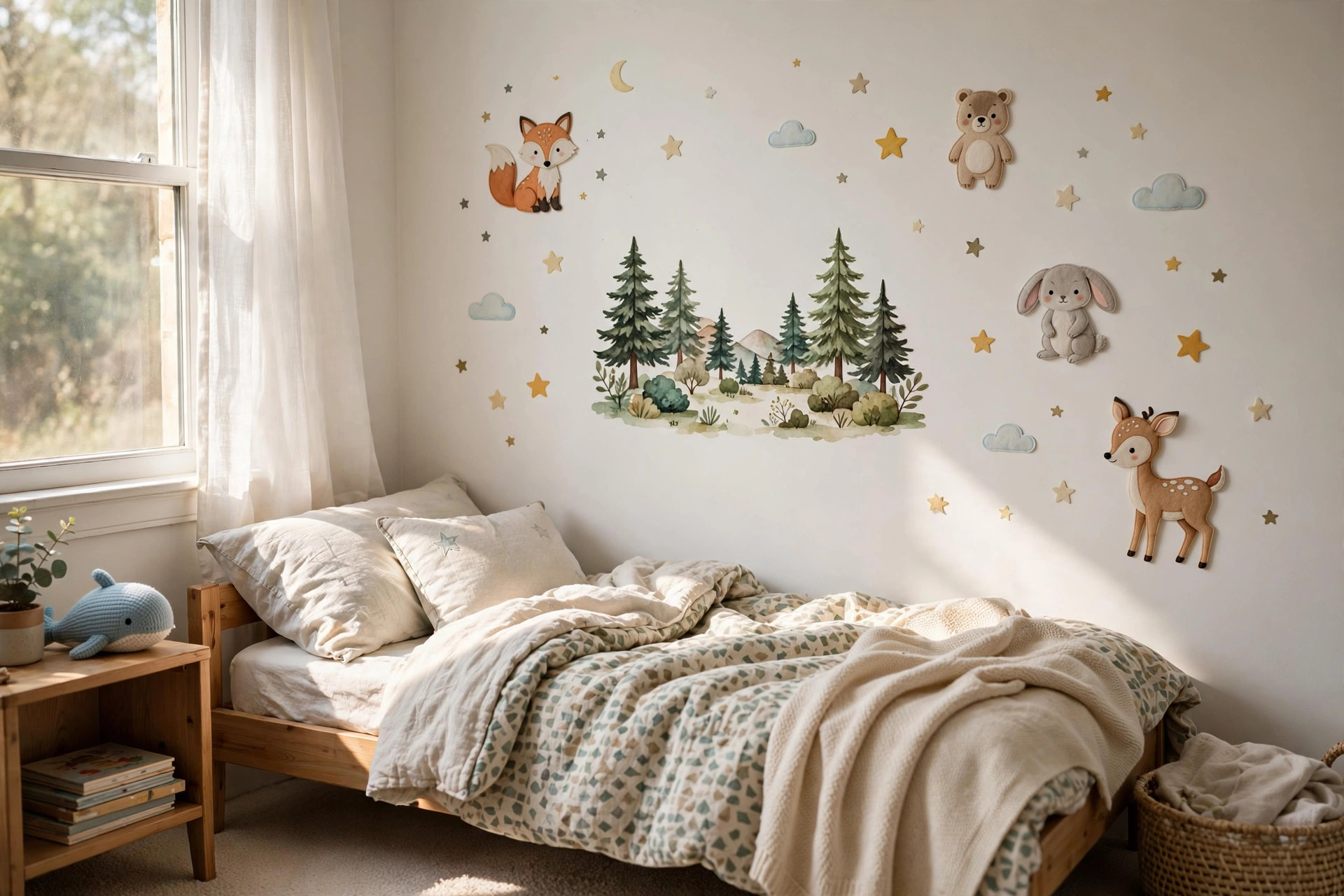

Renters often feel stuck with plain white walls. Leases forbid paint. Nails leave holes that cost money at move-out. Kids bedroom wall decals removable for renters solve this common problem. They press on by hand. They peel off without damage. They bring color, story, and play into a child’s room. This guide explains how to pick them, apply them, and take them down the right way.
Why Renters Choose Removable Wall Decals
Most rental agreements ban paint and wall damage. A landlord may allow one or two small holes. Ten walls of color are not on the table. Decals fill the gap. They give a child’s bedroom a finished look without a single drop of paint.
Children outgrow themes fast. A toddler who loves dinosaurs becomes a school-age fan of space travel. Paint would demand a new color every two years. Decals swap out in an afternoon. You peel off the old set. You press on the new set. The wall looks fresh. Your deposit stays safe.
Cost matters too. A gallon of paint costs money. So do rollers, drop cloths, and time. Decals cost less than a full repaint. They also cost less than the repair bill for holes and scuffs. For families on a budget, they are the smart choice.
How to Choose the Right Decals: Kids Bedroom Wall Decals Removable for Renters
Not all decals behave the same. Some peel off cleanly. Some leave marks. Some fail to stick at all. A little homework keeps you safe.
Know Your Wall Surface
Decals stick best to smooth, clean walls. Eggshell and satin paint give the best grip. Flat paint is harder. The rougher surface holds less. Textured walls are the hardest of all. Deep texture may stop decals from lying flat.
Check your wall paint before you buy. Press a small piece of tape on the wall. Pull it off. If paint comes with the tape, the wall may be too fragile for decals. In that case, test one decal in a hidden spot first. Behind the door works well. Behind the dresser works too.
Wipe the wall with a dry cloth before you apply decals. Dust and lint weaken the bond. Wait a full day after wiping if you used a damp cloth. Moisture under a decal causes bubbles.
Check the Adhesive
Look for words like “removable,” “repositionable,” or “renter friendly.” These terms mean the glue is made to release. Avoid the word “permanent” on the package. Permanent vinyl can tear paint when you remove it.
Static cling decals use no glue at all. They hold by static charge. They work on windows and mirrors. They suit smooth glass. They suit glossy tile. They do not work well on painted drywall.
Peel and stick fabric decals are a strong option for renters. They are thick. They are easy to move. They rarely damage paint. They also forgive mistakes. You can pull one up and try again.
Read reviews before you order. Look for buyers who mention rental homes. Their words tell you how the decals behave on real walls. Product safety rules for children’s rooms, such as those published by the Consumer Product Safety Commission, also help you judge whether a product suits a child’s space.
Match the Size to the Room
Measure the wall before you shop. A small bedroom needs small sets. A large empty wall can take a big mural. Tape the shape of the decal layout on the wall with painter’s tape. Step back. Look at it from the door. This simple test saves many returns.
Think about the child’s age. Babies need high-contrast shapes placed where they can see them. Toddlers like decals at their eye level. Older children like themes tied to their interests. Pediatric health guidance, like the tips on HealthyChildren.org, reminds parents that a calm, simple sleep space helps children rest. Do not cover every inch of wall. A few well-placed designs beat a crowded mess.
Types of Removable Decals for a Child’s Bedroom
Shops sell many kinds of decals. Each type suits a different need.
Vinyl Decals
Thin vinyl cut into shapes is the classic choice. Stars, dots, and animal shapes come in packs. They cost little. They apply fast. They suit ceilings too. Glow-in-the-dark stars on a ceiling turn bedtime into a small show.
Vinyl works best on smooth walls. It resists moisture. It wipes clean. On the downside, cheap vinyl can shrink over time. Edges may curl in a warm room. Buy from a trusted brand to avoid this.
Fabric Decals
Fabric decals feel like thick stickers. They stick, pull up, and stick again. You can wash them with water and reuse them. They suit renters best because they rarely harm paint. They cost more than vinyl. They also look softer and warmer on the wall.
Fabric sets come in big panels. A single panel can fill a whole wall. If you want a bold look without paint, this is the path. Many decor ideas on The Spruce show fabric decals used as a full-wall scene.
Peel and Stick Murals
Murals turn one wall into a forest, a sky, or a city. They come in strips that line up edge to edge. They cover more wall than any other decal type. They take more time to apply. A second pair of hands helps a lot.
Murals suit a child’s bedroom that feels plain and cold. A woodland scene can calm a restless child. A skyline can spark curiosity. Plan the layout on the floor first. Number the strips on the back with pencil. Then mount them one by one.
Static Cling Decals
Static cling suits windows and glass doors. They need no glue. They move with ease. They are cheap. Use them on a bedroom window to soften harsh light. Use them on a closet mirror to add fun.
They do not suit painted walls. Do not try. They will fall in a day.
Chalkboard and Whiteboard Decals
These turn a wall into a drawing space. A chalkboard panel lets a child draw with chalk. A whiteboard panel works with dry-erase markers. Both peel off when the child outgrows them. They give the child a creative outlet that paper cannot match. Children’s wall decor collections and nursery setup advice on What to Expect often pair these panels with wall art sets for a baby boy’s room or a peel and stick forest mural for a nursery.
Cost and Price
Prices vary by type and size. Small vinyl packs cost a few dollars. A pack of wall dots may cost less than a pizza. A large fabric mural can cost as much as a night out for the family. Most families spend between ten and sixty dollars per room.
Vinyl is the cheapest option. Fabric costs more. Murals cost the most per square foot. Static cling is the cheapest of all. Chalkboard panels sit in the middle.
Compare prices across stores before you buy. Big home stores carry wall supplies and often stock decal brands. Browse paint and wall supplies to see what is on the shelf near you. Online stores show more designs. Kids’ decor collections and children’s room furniture pages often list matching items. Home product testing from Good Housekeeping can help you judge quality claims.
Do not forget the hidden cost. A bad decal set can ruin paint. A ruined wall can cost a renter part of the deposit. Spending a little more on a trusted brand protects your money.
How to Apply Decals the Right Way
Good prep makes good results. Follow these steps.
First, clean the wall. Wipe it with a dry cloth. Let it dry fully. Mark the center of the wall with a light pencil dot. Plan the layout on the floor first. Lay the decals out. Take a photo of the layout with your phone. Use the photo as a guide.
Start from the top or the center. Peel a small part of the backing. Press the decal to the wall. Smooth it with your hand or a soft cloth. Work from the center outward. Push air bubbles to the edge. If a bubble stays, lift the decal and try again. Small bubbles fade as the decal settles.
For large murals, work with a partner. One person holds the strip. The other smooths it down. Keep the strips aligned. A one-inch gap looks like a mile. Take your time. Haste shows on the wall.
Wait 24 hours before you judge the bond. Most adhesives grow stronger as they sit. Do not place furniture against the wall the same day. Give the decals one full night.
Care and Upkeep
Decals need little care. Dust them with a dry cloth now and then. Wipe marks with a damp cloth. Do not soak them. Water seeps under edges and weakens the glue.
Keep the room at a steady temperature. Heat loosens adhesive. A vent that blows hot air on the wall can curl vinyl edges. Cold is less of a problem. Humidity is the real enemy. In a damp room, run a fan or a dehumidifier.
Check edges every few months. Press down any that lift. A lifted edge collects dust. Dust kills the stick. If one decal fails, replace it. Keep the spare pieces from the pack in a folder. Match them later when you need a swap.
Safety First
A child’s bedroom must be safe before it is pretty. Follow these rules.
Buy decals made for children’s rooms. They should be non-toxic. They should be free of lead and phthalates. Read the label. If the label says nothing about safety, pick another brand.
Place decals out of a baby’s reach. Babies pull at anything. A peeled decal can become a choking hazard. Keep decals high on the wall in a nursery. Move them lower as the child grows.
Watch for loose pieces. A decal that starts to peel can fall on a sleeping child. Press edges flat. Replace decals that will not stay. If paint starts to bubble under a decal, stop. The wall may have moisture. Fix the moisture first.
Renter-friendly decorating ideas from Apartment Therapy stress the same point. A safe room beats a stylish room. Decor ideas should never risk a child’s health.
Frequently Asked Questions
Will removable decals damage my rental walls? Most will not, if you buy the right kind. Fabric decals and repositionable vinyl peel off cleanly from sound paint. Test one decal in a hidden spot first. Wait a day. Peel it off. Check the paint. If the test is clean, the rest will be fine.
How long do wall decals last? Two to five years is normal. Vinyl lasts longer than cheap brands. Fabric decals last well if the room stays dry. Heat, sun, and humidity shorten the life. Direct sun on the decal fades colors. Move decals away from sunny windows.
Can I reuse decals after I peel them off? Fabric decals often survive a move. Keep the backing sheets. Stick the decals back on the sheets when you pack. Vinyl decals rarely survive a second use. They stretch and lose their shape. Plan to buy fresh vinyl for the next home.
Do decals work on textured walls? Light texture is fine. Heavy texture is not. The bumps stop the decal from touching the wall. If your wall has deep texture, choose a smooth spot. The space beside the door or above the bed may be smooth enough. Test first.
Can I paint over wall decals? No. Paint will not stick to vinyl or fabric. It will peel and crack. Remove the decals first. Clean the wall. Then paint. This rule matters if you ever buy the home and want to change the look.
Are there decals that match other nursery items? Yes. Many brands sell matching sets. A forest mural pairs well with wall shelves that hold books and toys. A star pack pairs well with a space-themed lamp. Match colors, not brands. Two shades of the same blue pull a room together.
A Short Final Word
Kids bedroom wall decals removable for renters turn limits into freedom. They ask no paint. They leave no holes. They cost little and they forgive mistakes. Pick the right type for your wall. Test first. Apply with care. Keep safety ahead of style. When the lease ends, peel them off and walk away with your deposit. The child’s room was still full of color while you lived there. That is the point.
References
American Academy of Pediatrics. (n.d.). HealthyChildren.org. https://www.healthychildren.org Apartment Therapy. (n.d.). Home design ideas and inspiration. https://www.apartmenttherapy.com Good Housekeeping. (n.d.). Product reviews and home advice. https://www.goodhousekeeping.com IKEA. (n.d.). Home furnishings. https://www.ikea.com Pottery Barn Kids. (n.d.). Kids furniture and decor. https://www.potterybarnkids.com The Home Depot. (n.d.). Home improvement products. https://www.homedepot.com The Spruce. (n.d.). Home and garden advice. https://www.thespruce.com U.S. Consumer Product Safety Commission. (n.d.). Product safety information. https://www.cpsc.gov Wayfair. (n.d.). Furniture and home goods. https://www.wayfair.com What to Expect. (n.d.). Pregnancy and parenting guidance. https://www.whattoexpect.com
Was this guide helpful?

About James Carter
The My Garden US editorial team writes practical, in-depth home and garden guides for American homeowners — tested advice, no fluff.
You May Also Like

A Nursery Floor Lamp with Dimmer for Nursing: A Quiet Guide
June 12, 2026 0 views
Crib Sheet Set Organic Cotton for Sensitive Skin: What Parents Should Know
May 28, 2026 0 views
Kids Bean Bag Chair for Reading Corner: A Plain Guide
February 12, 2026 0 views