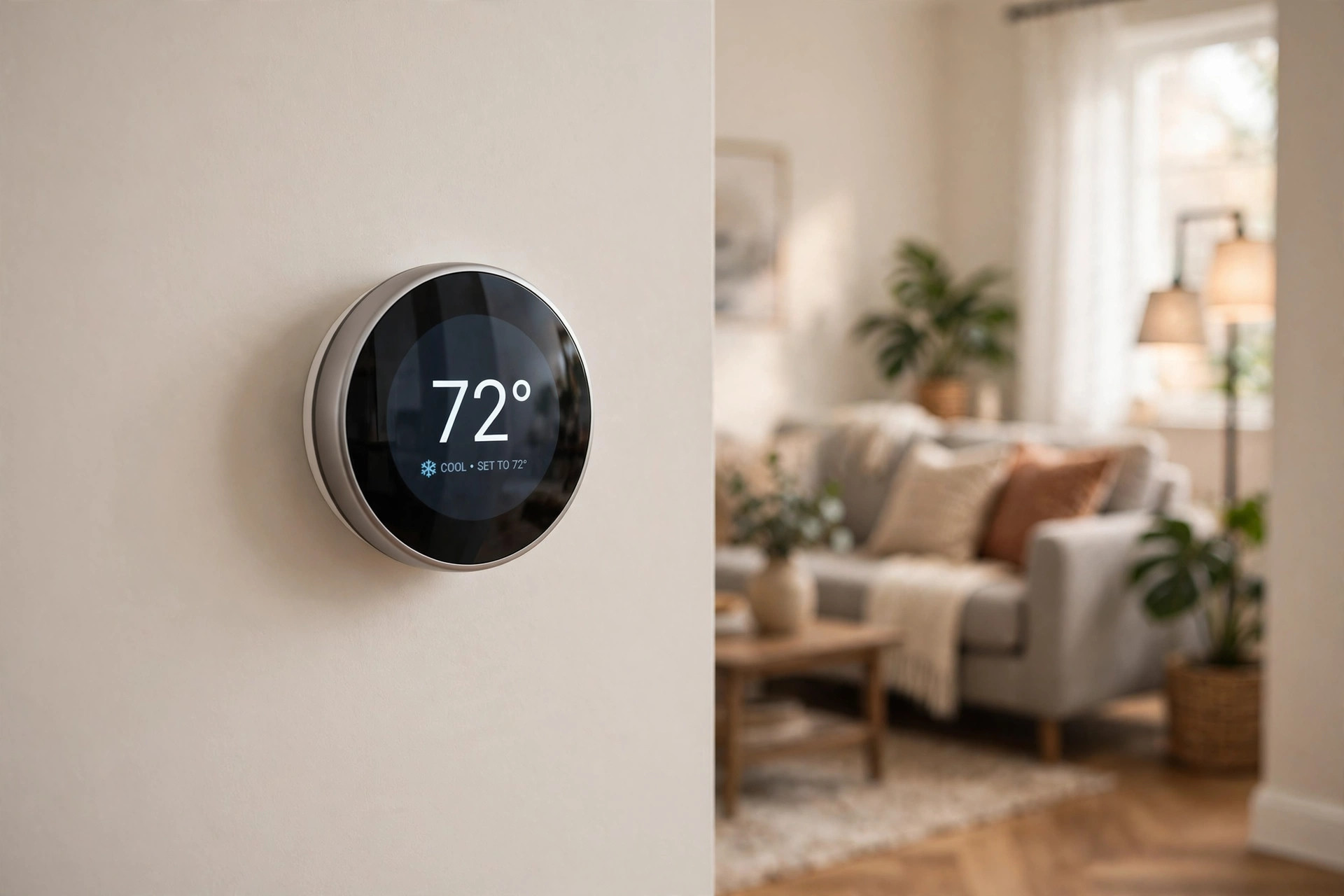

This ecobee vs honeywell thermostat comparison usa guide walks through the two brands side by side. Many American homes now use a smart thermostat to cut heating and cooling bills. ecobee and Honeywell stand out as the two most trusted names in the field. Both brands have served homes in the United States for years. Both offer models with Wi-Fi control, phone apps, and energy reports. Yet the two brands take different paths to comfort. ecobee is the younger company and leans hard on room sensors and voice control. Honeywell is the old hand in American heating controls and leans on broad model choice and simple setup. This article compares them across the points that matter most to a home owner: features, price, installation, room comfort, energy savings, and support. By the end you will know which brand suits your house.
Why This Comparison Matters
A thermostat runs your heating and cooling system. A poor one wastes money. A smart one learns your habits and adjusts the temperature when you are away. Studies cited by the U.S. Department of Energy show that careful temperature setback can cut annual heating and cooling costs by a meaningful share. Both ecobee and Honeywell make that setback automatic.
The two brands suit different buyers. ecobee appeals to the tech minded home owner who wants room-by-room comfort and data. Honeywell appeals to the practical buyer who wants a solid unit, a familiar brand, and a wide range of prices. Some buyers simply want the cheapest path to remote control from a phone. Others want a system that manages a two story home without hot or cold spots. Knowing the strengths of each brand saves you from a poor purchase.
Many buyers also shop for smart home bundles. A thermostat often sits beside a video doorbell in the same app ecosystem. If you plan a full smart home, the brand you pick for the thermostat may shape your later choices.
How to Choose a Smart Thermostat: Ecobee vs Honeywell Thermostat Comparison Usa
Before you compare brands, set your own needs in order. Start with your heating and cooling system. Most American homes use forced air furnaces, heat pumps, or boilers. Both ecobee and Honeywell support these systems, but some models need a common wire, called a C-wire, for power. Homes built before the 1980s often lack a C-wire. ecobee ships a Power Extender Kit in the box for such cases. Honeywell offers an adapter for many of its models.
Next, count your rooms and floors. A single story ranch with an open plan needs less than a two story colonial with a cold upstairs bedroom. ecobee ships room sensors with many models, and it averages the temperature across them. Honeywell offers room sensors on select models too, but it built its name on one strong wall unit.
Voice control matters to many buyers. ecobee built Amazon Alexa into several of its thermostats. You can speak to the thermostat itself. Honeywell units work with Alexa, Google Assistant, and Apple HomeKit, but they act through a smart speaker, not the unit itself.
Look at the app. You will use the phone app far more than the wall unit. Both brands offer free apps for iPhone and Android. Reviews of app ease of use run slightly in favor of ecobee, but Honeywell has closed the gap in recent years.
Finally, check rebates. Many U.S. utilities give rebates for smart thermostats that meet ENERGY STAR standards. A rebate can cut the real price in half. Check your utility before you buy.
ecobee: What It Offers
The Product Line
ecobee sells a short, clear line. The flagship is the ecobee Smart Thermostat Premium. Below it sits the Smart Thermostat Enhanced. Both include voice control and a SmartSensor for one room. Older models, such as the ecobee3 lite, still sell well and cost less. The company also sells add-on sensors in pairs. The line is easy to understand: two current models and one budget model.
The units look sharp. The Premium has a glass front and a modern metal frame. The screen is bright and responds to touch. The design earned praise from reviewers at sites such as CNET and PCMag.
Room Sensors and Comfort
Room sensors are the heart of ecobee. Each small sensor reads temperature and occupancy. You place them in bedrooms, offices, or nurseries. The thermostat then averages the readings. If your upstairs bedroom runs cold at night, the system heats a bit more to even it out. The app lets you favor certain rooms at certain times of day. This feature solves the old problem of the one cold room.
The Premium model also reads air quality and sends alerts about poor indoor air. It tracks humidity as well. For buyers with allergies, these extra readings have real value.
Energy Reports and Savings
The ecobee app sends a monthly Home IQ report. It shows how long the system ran, how weather affected the bill, and how your use compares to similar homes. ecobee claims average savings near one quarter of heating and cooling costs for typical U.S. users. Independent testing from Consumer Reports gives ecobee high marks for real world savings.
Honeywell: What It Offers
The Product Line
Honeywell sells under two names: Honeywell Home, made by Resideo, and the older Honeywell Home and Building Technologies lines. The range is wide. The T9 and T10 Pro are the top smart models and support room sensors. The T5 and T6 Pro cost less and cover the basics. The RCHT9510WF, known as the Wi-Fi Smart Color, has been a best seller for years. For renters or budget buyers, the simple RTH6580WF costs far less and still gives phone control.
The breadth of the line is a strength. A buyer can spend under one hundred dollars or over two hundred. Few brands offer that span.
Installation and Ease of Use
Honeywell built its name on thermostats that a home owner can install with a screwdriver. The apps walk you through each wire with photos. Many models include wiring labels in the box. The company also has a deep base of professional installers across the country. If you would rather pay a pro, a Honeywell certified tech is easy to find.
The wall units use plain menus and large type. For buyers who want simple controls, that matters. A learning thermostat for seniors often means a Honeywell, because the face is easy to read and the schedule is easy to set.
Platform Support
Honeywell units work with Amazon Alexa, Google Assistant, Apple HomeKit, and Samsung SmartThings. The newer T9 and T10 models also support the Matter standard, which lets devices from many brands work together. The company has kept pace with the smart home standards that matter in the United States.
Head to Head: Price, Features, and Savings
Price sets the first divide. The ecobee Smart Thermostat Premium sells near 250 dollars. The Enhanced model sits near 190 dollars. The ecobee3 lite costs near 150 dollars. Honeywell spans a wider band. The T10 Pro sells near 250 dollars. The T9 sits near 200 dollars. The T5 and T6 Pro models fall between 100 and 170 dollars. The basic Wi-Fi models drop under 100 dollars. If your budget is tight, Honeywell wins on price.
Features favor ecobee at the top end. The Premium includes a built-in Alexa speaker, an air quality monitor, and a metal body. The Honeywell T10 Pro answers with strong sensor support and professional grade setup tools. Both top models support room sensors. ecobee includes one sensor in the box on its two current models. Honeywell includes one sensor with the T9.
Savings claims run close. Both brands cite ENERGY STAR certification and third party studies. ecobee publishes the Home IQ report, which many users find clear and useful. Honeywell gives usage reports too, though they read plainer. Real savings depend more on your habits than the brand. A home owner who sets a firm schedule and uses setbacks will save with either unit.
App quality leans slightly to ecobee. The app feels modern and fast. Honeywell offers two apps, the Honeywell Home app and the older Total Connect Comfort app, depending on the model. Two apps can confuse a new buyer. Resideo has worked to merge the lines, but the split still exists.
Voice control favors ecobee on the wall unit itself. You speak to the Premium and it answers. Honeywell needs a separate smart speaker. If you already own an Echo or a Google Nest speaker, the difference means little. If you want the thermostat to be the speaker, ecobee stands alone.
Smart home ties are close. Both work with the big platforms. ecobee also ties into Apple HomeKit, Google Home, and SmartThings. Honeywell adds Matter on newer models, which gives it an edge for buyers who plan a mixed brand home. News and reviews on smart home standards appear often at The Verge.
Cost and Price
Look past the sticker price. Installation cost matters. A DIY install costs nothing but your time. A professional install runs from 100 to 250 dollars in most U.S. markets. ecobee and Honeywell both suit DIY buyers, so most homes skip the pro.
Operating cost is near zero for both. The units draw a trickle of power from the HVAC system. The apps are free. No monthly fee exists for either brand. That point matters to buyers who dislike subscriptions. A smart thermostat for a vacation rental often wins on this point alone, since remote lock of the temperature range costs nothing extra.
Rebates change the math. Many U.S. utilities rebate 50 to 100 dollars for an ENERGY STAR smart thermostat. Some utilities give the unit free through marketplaces. Both brands appear on most rebate lists. Check the ENERGY STAR product finder and your local utility before you buy. A 190 dollar ecobee can cost under 100 dollars after a rebate.
Long term value rests on lifespan. A good thermostat lasts ten years or more. ecobee supports its units with updates for years. Honeywell has units in the field from a decade ago that still work. Both brands show strong build quality in tests run by Consumer Reports.
Care and Upkeep
A smart thermostat needs little care. Wipe the screen with a soft dry cloth. Keep the unit out of direct sun and away from drafts. A thermostat placed over a heat register will read wrong and waste energy.
Room sensors need fresh batteries every year or two. ecobee sensors use small coin cells. Honeywell sensors vary by model. The apps warn you when a battery runs low.
Keep the software current. Both brands push updates over Wi-Fi. Updates fix bugs and add features. Leave the unit connected to your home network. If you change your Wi-Fi password, rejoin the thermostat to the network through the app.
Once a year, check the schedule. Life changes. A new job or a new school term shifts the times you are home. A five minute review of the schedule keeps savings high. The U.S. Department of Energy offers plain guidance on setback schedules at Energy.gov.
Safety
A thermostat is a low voltage device and poses little risk. Still, follow basic rules. Turn off power to the HVAC system at the breaker before you touch any wires. Label each wire as you remove the old unit. Both brands include labels.
Do not mount the unit where small children can reach it and change settings at will. Use the app lock or PIN feature if the brand offers one. ecobee and Honeywell both offer lock options.
If your system uses a heat pump, set the changeover and auxiliary heat settings with care. Wrong settings can run costly backup heat all winter. When in doubt, call a licensed HVAC technician. Product safety recalls for home devices are posted by the U.S. Consumer Product Safety Commission.
For rental properties, a smart thermostat adds a layer of remote safety. A landlord can spot a furnace failure in winter before pipes freeze. Our guide to the best smart thermostat for vacation rental usa covers remote limits and alerts in detail.
Frequently Asked Questions
Do ecobee and Honeywell work without a C-wire?
Many models need a C-wire for steady power. ecobee includes a Power Extender Kit that adds C-wire function at the furnace. Honeywell offers a C-wire adapter for many models. Some basic Honeywell Wi-Fi models can run on batteries with limited features. Check the wiring guide for your model before you buy.
Which brand saves more on energy bills?
Both brands carry ENERGY STAR certification and claim similar savings. Real results depend on your climate, your system, and how you set the schedule. Room sensors help in homes with uneven temperatures. The monthly reports from either brand help you spot waste.
Can I install either thermostat myself?
Most home owners can. The job takes 30 to 60 minutes with basic tools. Turn off the breaker first. Follow the in-app wiring steps. Homes with complex systems, such as dual fuel or zone panels, may need a pro. Both brands list installers on their sites.
Do these thermostats work with Alexa and Google?
Yes. Both brands work with Amazon Alexa and Google Assistant. ecobee builds Alexa into its Premium and Enhanced models, so the unit itself answers voice commands. Honeywell units need a separate smart speaker. Both also support Apple HomeKit on most current models.
Which is better for a two story home?
ecobee holds a small edge because room sensors come in the box and the averaging logic is simple to set. Honeywell T9 and T10 models also support sensors and work well in two story homes. Either brand beats a single sensor thermostat in a tall house. A yard with smart irrigation, such as the units in our smart sprinkler controller reviews 2026 usa guide, pairs well with either brand for full home control.
Do I need a smart home hub to use them?
No. Both brands connect straight to your Wi-Fi router. A hub helps only if you want deep ties with many brands through one system. Newer Honeywell models support Matter, which reduces the need for a hub.
A Short Final Word
This ecobee vs honeywell thermostat comparison usa ends with a simple rule. Pick ecobee if you want the sharpest app, built-in voice control, and strong room sensors in the box. Pick Honeywell if you want the widest choice of prices, plain simple controls, and a brand with deep roots in American heating. Both will cut your bills. Both will let you change the temperature from your phone. For most homes, the right pick is the one that fits the budget and the wiring. Check rebates, count your rooms, and choose with confidence.
For broader home security pairings, a monitored alarm from providers such as SimpliSafe or ADT can round out the system. A phone from the Google Store runs either thermostat app well. Tech reviews that track new models appear regularly at CNET and PCMag.
References
ADT. (n.d.). Home security and automation. https://www.adt.com CNET. (n.d.). Technology news and reviews. https://www.cnet.com Consumer Reports. (n.d.). Product reviews and ratings. https://www.consumerreports.org ENERGY STAR. (n.d.). Energy efficient products. https://www.energystar.gov Google Store. (n.d.). Smart home devices. https://store.google.com PCMag. (n.d.). Technology product reviews. https://www.pcmag.com SimpliSafe. (n.d.). Home security systems. https://www.simplisafe.com The Verge. (n.d.). Technology news and reviews. https://www.theverge.com U.S. Consumer Product Safety Commission. (n.d.). Product safety information. https://www.cpsc.gov U.S. Department of Energy. (n.d.). Energy efficiency and renewable energy. https://www.energy.gov
Was this guide helpful?

About Lisa Anderson
The My Garden US editorial team writes practical, in-depth home and garden guides for American homeowners — tested advice, no fluff.
You May Also Like
Interconnected Smoke Alarms Code Requirements USA
March 10, 2026 0 views
Smart Padlock for Gate Reviews 2026 USA: A Plain Guide to Buying the Right One
April 19, 2026 0 views
Roborock vs iRobot Comparison 2026 USA: Which Robot Vacuum Fits Your Home
June 15, 2026 0 views