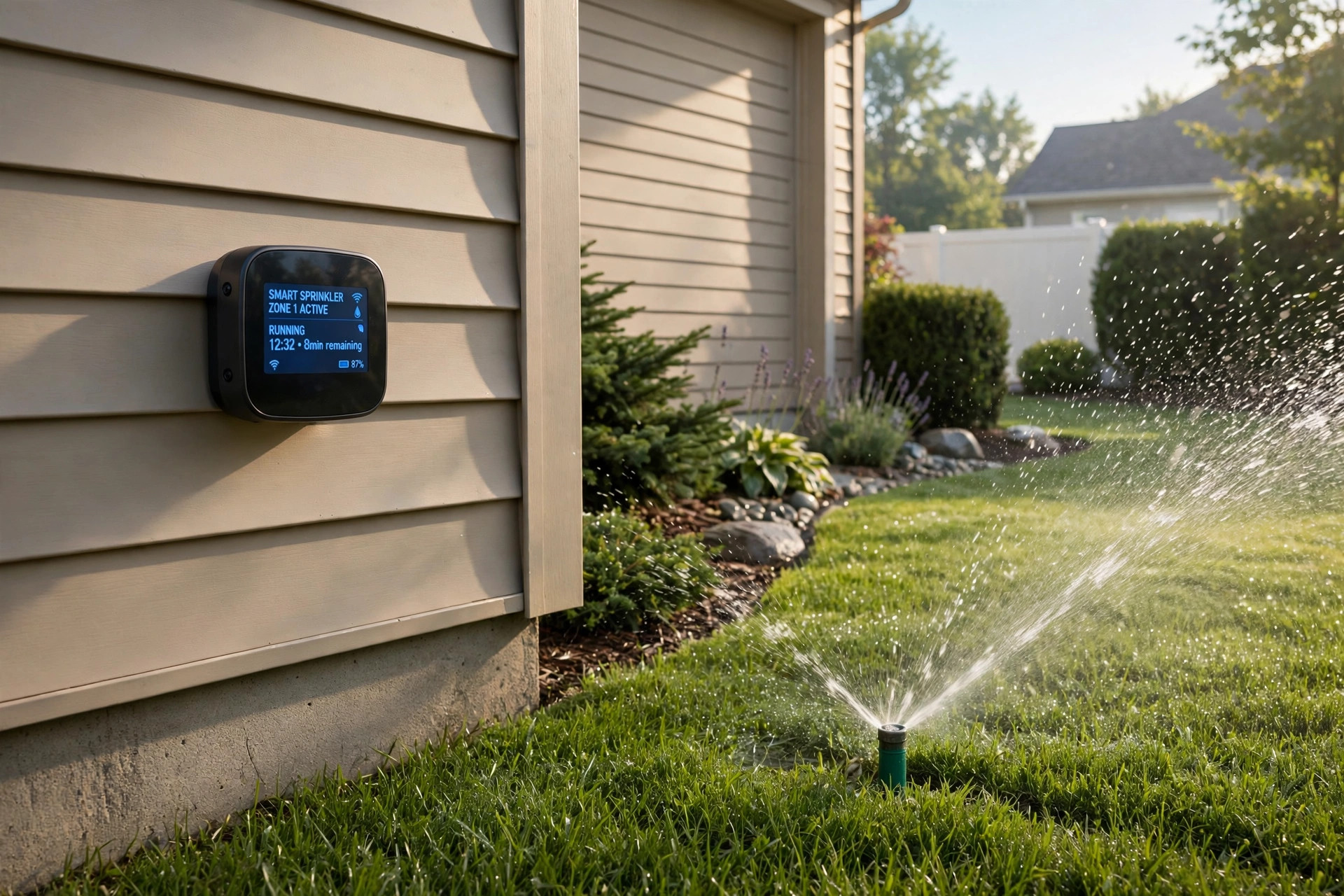

A smart sprinkler controller reviews 2026 usa search brings up a crowded field of choices. Homeowners across the country want the same thing. They want a green lawn. They want a lower water bill. They want a system that thinks for itself. This guide walks through what matters, what to look for, and how the top models compare.
Why Smart Sprinkler Controllers Matter
Water is precious. Much of the western and southern United States faces drought rules. Many cities set limits on when residents may water their lawns. A smart sprinkler controller helps you follow these rules without thinking about them.
An old timer runs on a fixed schedule. It waters on the same days at the same hour. It waters even when rain is falling. A smart controller is different. It checks the weather. It skips a cycle when rain is on the way.
It also protects the local water supply.
What To Look For When Choosing: Smart Sprinkler Controller Reviews 2026 Usa
Not every smart controller fits every home. A few key factors separate the good from the rest.
Zone Count
A zone is one watering area. A front lawn is one zone. A flower bed is another. Small lots need four to eight zones. Large properties may need twelve or sixteen. Count your zones before you shop. Most controllers support eight or sixteen zones. Some models let you expand later.
Wi-Fi Connection
Every smart controller needs Wi-Fi. A strong signal in the garage is important. Controllers often mount in garages or basements. These spots have weak signals. Check your signal strength before you buy. A weak signal causes missed updates and failed schedules.
Local Weather Data
The best controllers use local weather stations. They pull data from stations near your home. Some models use one national forecast. Others use hyperlocal data from private weather networks. Local data means better rain skip and frost skip. It also means watering matches your street, not your state.
EPA WaterSense Label
Look for the WaterSense label. The U.S. Environmental Protection Agency runs this program. Labeled controllers pass independent tests. They prove real water savings. Many water utilities give rebates for WaterSense models. Check with your local utility before you buy. The rebate may cut your cost in half.
App Quality
You will use the phone app daily during setup. You will use it weekly during the season. A clear app makes setup easy. It should show each zone on a map of your yard. It should explain why it skipped or added a watering. Read app reviews in the app store. Poor app design is the most common complaint in owner reviews.
Voice And Smart Home Integration
Many owners link their controller to a voice assistant. Amazon Alexa and Google Assistant both work with most models. You can start a zone with a voice command. Apple HomeKit support is rarer. Check compatibility if you run a HomeKit home. A hub like Samsung SmartThings adds more options.
Flow Monitoring
A flow sensor measures water moving through the pipes. It spots leaks. It spots broken sprinkler heads. It can shut off a zone before damage spreads. Some controllers have a built-in flow meter. Others accept an add-on sensor. Flow monitoring adds cost. It also prevents the worst lawn disasters.
Top Smart Sprinkler Controllers For 2026
These smart sprinkler controller reviews 2026 usa cover the models most often praised by testers and owners. Each has strengths. Each has limits.
Rachio 3
Rachio is the most reviewed brand in this category. The Rachio 3 supports eight or sixteen zones. It uses hyperlocal weather data from thousands of private stations. The app is clean and easy to use. Setup walks you through soil type, plant type, sun exposure, and slope. The controller then builds a schedule for each zone.
Owners praise the flexibility. You can set fixed schedules, flexible monthly schedules, or fully flexible daily schedules. The daily option adjusts to weather each morning. Rachio supports Alexa, Google, HomeKit, SmartThings, and IFTTT. That is wider support than most rivals.
The weak points are known. The controller needs a common wire. Some older systems lack one. The price sits in the mid to upper range. But rebates are common. Water utilities across the country list Rachio as an approved product.
Learn more at the official Rachio site, where the company lists models, specs, and rebate partners.
Orbit B-hyve
Orbit B-hyve is the value pick. It costs less than Rachio. It still carries the WaterSense label. The eight and twelve zone models cover most homes. The app is simple. It may feel less polished than Rachio, but it gets the job done.
B-hyve uses weather data to adjust schedules. It supports smart watering, rain delay, and soil-based watering. It works with Alexa and Google Assistant. It lacks HomeKit support. Some owners report connection drops. A strong Wi-Fi signal solves most of these problems.
If budget matters most, B-hyve deserves a look. Check current models and pricing at The Home Depot, which carries the full B-hyve line in most stores.
Rain Bird ST8
Rain Bird is a trusted name in irrigation. The ST8 is its smart model. It supports eight zones. It uses local weather data for adjustments. The app is straightforward. Contractors know this brand well. If you plan to hire an installer, many recommend Rain Bird.
The ST8 works with Alexa and Google. It lacks some advanced features of Rachio. There is no flow monitoring built in. The schedule options are simpler. For many homeowners, simpler is better. Fewer settings means fewer chances to set something wrong.
Product details live on the official Rain Bird website.
Hunter Hydrawise
Hunter targets the professional market. The Hydrawise line includes controllers for home and commercial use. The home models support six, twelve, and more zones. Contractors favor Hunter for its build quality. The wiring terminals are sturdy. The outdoor enclosures are tough.
The Hydrawise software is powerful. It handles complex landscapes. It supports flow monitoring with an add-on sensor. It works with Alexa and Google. The app feels more technical than Rachio. That is fine for hands-on owners. Beginners may prefer a simpler app.
Wyze Sprinkler Controller
Wyze entered this market with a low price. The Wyze controller supports eight zones. It uses weather data for smart schedules. It works in the Wyze app alongside Wyze cameras and sensors. That is a plus if you already use Wyze gear.
The trade-off is features. Fewer schedule types. No flow monitoring. Limited smart home support beyond Alexa and Google. But the price is hard to beat. For a simple yard, it may be all you need.
Read independent lab tests of these and other models at Consumer Reports, which rates irrigation controllers on water savings, ease of use, and reliability. For broader smart home context, CNET and PCMag both run yearly smart home roundups. The Verge covers smart home standards and voice assistant news.
Cost And Price Breakdown
A smart sprinkler controller costs between one hundred and three hundred dollars. The Rachio 3 sits near the top of this range. The B-hyve and Wyze models sit near the bottom. Professional installation adds one hundred to two hundred dollars. Most handy homeowners install it themselves in under an hour.
Do not forget the rebates. Many water districts offer fifty to one hundred fifty dollars back for WaterSense models. Some districts cover the full cost. Check your utility website first. A two hundred dollar controller can cost fifty dollars after the rebate.
Running costs are low. The controller uses little power. The app is free. No model in this guide charges a monthly fee. That is worth noting. Some smart home gear locks features behind a subscription. Sprinkler controllers do not. Once you buy it, you own it.
Water savings pay for the unit fast. A household that saves thirty percent on outdoor water may save two hundred dollars in one summer. In dry states with high water rates, the payback is even faster.
Installation Basics
Most controllers mount on a wall near the old timer. Turn off power to the old unit first. Take a photo of the old wiring. Label each wire by zone. Connect the wires to the matching terminals on the new unit. The common wire is the most important. Without it, the unit will not work.
Download the app. Create an account. Connect the controller to Wi-Fi. The app will guide you through zone setup. Walk your yard. Note what each zone waters. Enter the soil type if you know it. Sandy soil drains fast. Clay soil holds water. Loam sits in the middle. Your county extension office can tell you your soil type for free.
Run a test on each zone. Watch the sprinklers. Fix broken heads now. A smart controller cannot fix bad hardware. It can only control what is there.
If wiring feels risky, hire a pro. An irrigation contractor charges a modest fee for a swap. Many also tune the sprinkler heads. That service alone is worth the cost.
Care And Upkeep
A smart controller needs little care. Check the app each spring. Update the schedule for the new season. Winterize the system if you live in a cold state. Drain the pipes before the first hard freeze. Water left in pipes can crack them.
Clean the rain sensor if your model has a physical one. Most smart models skip the physical sensor. They use internet weather data instead. Still, check that the location in the app is correct. If you moved the controller, update the address.
Replace the backup battery if your model has one. Some units keep the clock during power outages. A dead battery means the schedule resets. Check the manual once a year.
Watch for firmware updates. Makers push updates that fix bugs and add features. The app usually installs them on its own. If a zone acts strange, check for an update first.
Safety And Security Notes
A sprinkler controller is a connected device on your home network. Treat it like any smart home gear. Use a strong Wi-Fi password. Keep the router firmware updated. Use a unique password for the controller app. Enable two-step sign-in if the app offers it.
Review the privacy policy. The app collects your address and watering data. Most makers use it to improve weather models. You should know what you share. For general product safety guidance, the U.S. Consumer Product Safety Commission offers advice on connected home devices.
Electrical safety matters during install. Always cut power at the breaker. Do not work on wiring with wet hands. If the old transformer looks damaged, replace it. A faulty transformer can overheat.
Backflow prevention is a legal issue in many areas. A backflow preventer stops lawn chemicals from flowing back into the drinking water. Many cities require one by law. A licensed plumber can install and test it. Your water utility can confirm the local rules.
How Smart Sprinkler Controllers Fit Your Whole Smart Home
A sprinkler controller is one piece of a larger smart home. Many owners start with one device and add more. A smart water leak detector guards the inside of the house while the controller guards the yard. Both report to your phone. Both prevent water damage.
Fire safety matters too. Read our best smart smoke detector reviews to protect the home itself. And for the yard at night, our best solar security camera reviews cover cameras that need no wiring.
Voice control ties it all together. The Google Store lists speakers and displays that work with most controllers. You can ask for a zone status while making coffee. Smart home platforms like Ring, SimpliSafe, and ADT focus on security, but their apps sit on the same phone. One phone runs the whole home.
Frequently Asked Questions
Do smart sprinkler controllers really save water?
Yes. The WaterSense program requires at least twenty percent savings. Most studies find thirty to fifty percent. The controller skips rainy days. It adjusts for heat and season. An old timer cannot do either.
Will it work with my existing sprinkler system?
In most cases, yes. The controller replaces the timer box only. The valves, pipes, and heads stay the same. You need a common wire. Most systems have one. If your system is very old, a contractor can check in minutes.
Does it need internet to water?
The schedule runs on the device. If Wi-Fi drops, the last schedule keeps running. You lose remote control and weather updates until the connection returns. The lawn still gets water. No model stops watering just because the internet is down.
Can it handle watering restrictions?
Yes. Most apps let you set allowed watering days. The controller then works inside those limits. Some models download local restriction rules on their own. Check the app settings for your city. This feature is popular in drought states.
Is professional installation worth it?
For a simple swap, most owners do it themselves. The wiring is low voltage. The app guides each step. Hire a pro if the wiring is a mess, if you lack a common wire, or if you want the heads tuned at the same time. The fee is modest.
How long do these controllers last?
Expect eight to twelve years. The electronics are simple. Outdoor models face sun and rain. Indoor garage models last longer. Software support matters more than hardware. Buy from a brand with a strong track record of app updates.
A Short Final Word
The right smart sprinkler controller pays for itself. It saves water. It saves money. It keeps the lawn healthy with less effort. Start with your zone count. Check your Wi-Fi. Look for the WaterSense label. Read the app reviews. Then pick the model that fits your yard and your budget. Your lawn and your water bill will both improve.
References
ADT. (n.d.). Home security and automation. https://www.adt.com CNET. (n.d.). Technology news and reviews. https://www.cnet.com Consumer Reports. (n.d.). Product reviews and ratings. https://www.consumerreports.org Google Store. (n.d.). Smart home devices. https://store.google.com PCMag. (n.d.). Technology product reviews. https://www.pcmag.com Rachio. (n.d.). Smart sprinkler controllers. https://www.rachio.com Rain Bird Corporation. (n.d.). Residential irrigation products. https://www.rainbird.com The Home Depot. (n.d.). Home improvement products. https://www.homedepot.com The Verge. (n.d.). Technology news and reviews. https://www.theverge.com U.S. Consumer Product Safety Commission. (n.d.). Product safety information. https://www.cpsc.gov U.S. Environmental Protection Agency. (n.d.). Protecting human health and the environment. https://www.epa.gov
Was this guide helpful?

About Robert Taylor
The My Garden US editorial team writes practical, in-depth home and garden guides for American homeowners — tested advice, no fluff.
You May Also Like
Home Automation Installer Near Me Cost: A Plain Guide for American Homeowners
August 10, 2026 0 views
Solar Panel Cleaning Service Cost Near Me: What to Pay
July 26, 2026 0 views
Best Perimeter Alarm for Yard Reviews USA
March 26, 2026 0 views