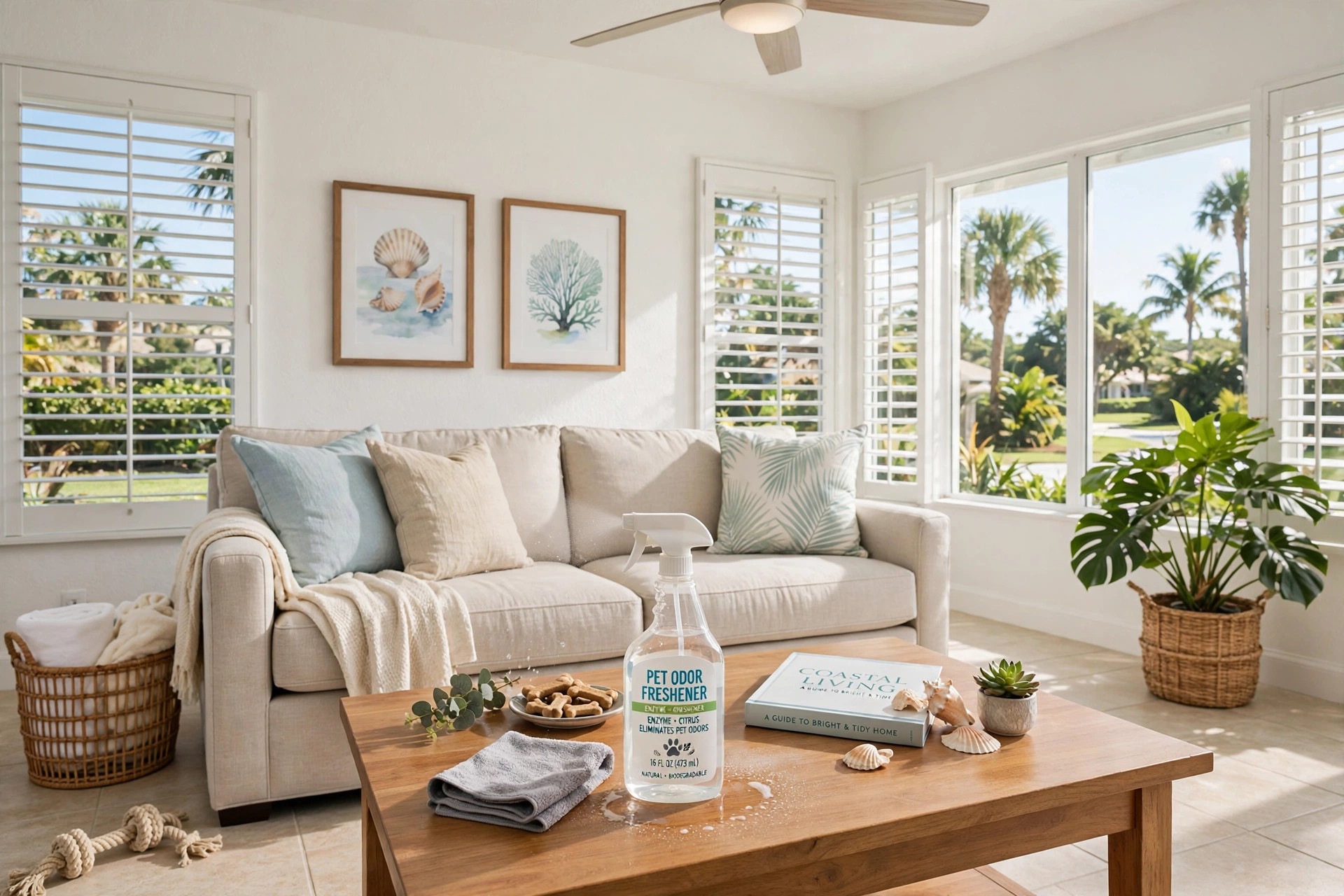

Florida homes face a hard mix. Hot air. Wet air. Dogs and cats that come in from the rain. Carpets that hold damp. When you look for the best pet odor eliminator sprays for florida homes, you need a product built for these real conditions. A light air freshener will not do the job. You need a spray that breaks down the source of the smell, not one that only covers it for an hour.
This guide walks through everything in plain words. You will learn why pet odor is harder to beat in Florida, how these sprays work, what to look for on the label, and how to use them the right way. You will also find price ranges, care tips, safety notes, and answers to common questions.
Why Pet Odor Is Harder to Beat in Florida
Florida has long summers and high humidity. Warm wet air helps bacteria grow. Bacteria are one main cause of bad smells from pet urine, wet fur, and dirty bedding. In dry states, a spot may dry fast. In Florida, a damp spot can stay damp all day. That gives the smell more time to set.
Many Florida homes use air conditioning. Closed doors and windows keep the air cool, but they also trap smells inside. The house airs out less than a house in a mild climate. Pet odor builds up on carpets, rugs, sofas, and curtains.
Storms add to the trouble. Dogs come home wet. Cats stay indoors more. Mud, sweat, and wet paws carry smell deep into floors. Owners who want the best antibacterial disinfectant sprays for humid climates often buy them for the same reason: humidity makes every small smell bigger.
Mold is another Florida fact. A damp carpet pad can grow mold. Mold has its own musty smell. It can mix with pet odor and make a room smell worse than either one alone. That is why some Florida pet owners also look into powerful mold removal sprays for texas homes, because hot, humid states share the same mold problem.
How Pet Odor Eliminator Sprays Work: Best Pet Odor Eliminator Sprays for Florida Homes
Not all sprays work the same way. It helps to know the three main kinds.
Some sprays use enzymes. Enzymes are natural proteins that break down the parts of urine, saliva, and sweat that cause odor. They eat the smell at the source. They need time to work, often ten to thirty minutes. They also need damp to stay active, so you spray enough to soak the spot.
Other sprays use bacteria or friendly microbes. These tiny living things break down organic waste. They keep working after the spray dries. They are common in products made for deep carpet spots.
A third group uses oxidizers. These chemicals react with odor molecules and change them into odorless forms. They act fast. They work well on hard floors and washable fabrics. They can be strong, so you must follow the label.
The weakest kind is a simple fragrance spray. It adds a nice smell but leaves the source alone. When the perfume fades, the pet odor comes back. The best pet odor eliminator sprays for florida homes belong to the first three groups. They remove the cause instead of hiding it.
What to Look For When You Buy
Start with the label. Look for words like “enzymatic,” “bio-based,” or “odor eliminator.” Be careful with words like “freshener.” A freshener only adds scent. An eliminator breaks down the smell.
Check what surfaces the spray is safe for. Carpet, rugs, upholstery, hardwood, tile, and pet bedding all react in different ways. Some sprays harm wood finish. Some leave marks on silk or wool. Test on a hidden spot first. This is a wise habit in Florida homes, where damp can push a stain deeper if you use the wrong product.
Look at the scent level. Heavy perfume can bother pets and people with asthma. Many buyers prefer a light scent or no scent at all. Enzyme sprays with low scent are often the best choice for homes with cats, because cats react strongly to strong smells.
Check the size and the spray head. A small trigger bottle is fine for spot use. A large jug with a fine mist suits whole-room use. Some brands sell a refill jug. That saves money over time.
Look for safety claims. “Safe for pets” should mean safe once dry, and the label should say so. If a product claims it is non-toxic, it should list real facts to back that up. You can read guidance from the U.S. Environmental Protection Agency about safe cleaning products for homes with pets and children.
Types of Pet Odor Eliminator Sprays
Enzymatic Sprays
These are the most loved type. Enzymes break down urine, vomit, and saliva. They work best on carpet and fabric. Give them time. Do not scrub the spot dry too soon. Blot up extra liquid first, then spray well, then let it sit.
Probiotic and Microbe Sprays
These use live cultures. They keep eating odor long after the surface feels dry. They suit old stains that other sprays missed. They often cost a bit more. They are a good pick for Florida homes where old carpet smells keep coming back in the humid months.
Oxidizing Sprays
These act fast on hard surfaces. They help with tile grout lines, baseboards, and litter box areas. Some contain hydrogen peroxide. These can lighten dark fabrics, so always test first. For very dirty grout, some owners pair the spray with a professional grade tile grout cleaning machine for sale to lift both the stain and the smell.
Plant-Based and Low-Scent Sprays
These use ingredients from plants. They tend to be gentle. They may work slower than enzyme sprays. They are a good choice for homes with birds, small pets, or family members who dislike strong chemicals.
Cost and Price in 2026
Prices are modest. Most trigger bottles of sixteen to thirty-two ounces cost between six and twenty dollars. Large refill jugs of one gallon cost between twenty and forty dollars. Probiotic brands sit at the high end. Store brands sit at the low end.
Think about cost per use. A bottle that costs eighteen dollars and treats fifty spots costs about thirty-six cents per spot. That is cheaper than hiring a carpet cleaner. It is also cheaper than replacing a rug.
Do not buy only by price. A cheap fragrance spray that fails will cost more in repeat buys. Read the type on the label first. An enzyme or microbe spray at a middle price often beats a cheap freshener.
Buying guides from sources like Consumer Reports can help you compare brands on value and safety before you spend.
How to Use the Sprays the Right Way
Good method matters as much as a good product. Follow these steps.
First, find the source. Pet odor often hides under furniture or in corners. Use your nose in the morning when the house has been closed all night. Mark each spot.
Second, clean off loose waste. Blot urine with paper towels. Pick up solid waste. Do not rub, because rubbing pushes the mess deeper into fibers.
Third, spray the area well. For carpet, spray enough to reach the pad below. A light mist on top will not reach the true source. For hard floors, cover the spot fully and let the liquid sit in the grain.
Fourth, wait. Give enzyme and microbe sprays at least fifteen minutes. For old stains, cover the spot with a damp towel and wait a few hours. Keep pets away while the spot is wet.
Fifth, blot and dry. Remove extra liquid with a clean towel. In Florida, help the spot dry fast. Run the air conditioner or a fan. Fast drying stops new bacteria from growing. This step matters more in Florida than in dry climates.
Sixth, repeat if needed. Old urine spots may need two or three rounds. Each round removes one more layer of the smell.
For whole-room freshness, mist curtains, sofa backs, and pet beds. Do not soak electronics or paper. Light, even passes work best.
Practical cleaning advice from The Spruce and Bob Vila covers these same steps and can help you build a weekly routine.
Care and Upkeep for a Fresh Home
Sprays work best as part of a routine. Wash pet bedding every one to two weeks in Florida. Humidity makes bedding smell faster than in dry places. Use hot water and dry it fully.
Vacuum carpets twice a week if you have a dog or cat. Vacuum pulls up hair and dander that feed odor. Empty the vacuum outside so the smell does not drift back into the house.
Clean litter boxes daily. Scoop solid waste and change litter on schedule. Place the box in a spot with air flow, not in a closed closet.
Wipe paws when pets come inside. Keep a towel by the door. Wet paws carry mud and bacteria across the floor. This one small habit cuts down on smell more than most people expect.
Run the air conditioner with a clean filter. A dirty filter can spread musty air through the whole house. Change filters on the schedule printed on the filter box. Advice from Family Handyman and This Old House shows how simple filter care keeps indoor air fresher.
In the rainy season, check under rugs for damp. Lift rug corners once a month. If the pad feels damp, dry it with a fan. Damp pads are a top hidden source of odor in Florida homes.
Safety for Pets, Children, and Plants
Most pet odor sprays are safe once dry. Still, take care. Keep pets out of the room while you spray. Let the surface dry fully before pets walk or lie on it.
Read the warning panel. Some oxidizers can harm fish tanks, birds, or small reptiles. Move cages and tanks away from the spray zone. Cover fish tanks during use.
Never mix products. Do not mix an oxidizer with bleach or ammonia. Mixed chemicals can make harmful fumes. Use one product at a time and rinse between products if you switch.
Store bottles up high. Keep them away from children. A trigger lock or a closed cabinet adds safety.
If your pet licks a treated spot, watch for drooling or upset stomach. Call your vet if signs last. You can also check pet safety basics at PetMD and the ASPCA.
For homes with birds, use unscented enzyme products and give the room extra air time. Birds have very tender lungs. Advice on safe products for pet owners appears often in Good Housekeeping test reports.
FAQ
Will one spray work on both dog and cat urine?
Most enzyme sprays work on both. Cat urine is stronger and may need two rounds. Treat the spot well, wait longer, and repeat if the smell remains after full drying.
Can I use these sprays on hardwood floors?
Many brands say yes, but test first. Some oxidizers can dull the finish. Use a small test spot near a wall. Wipe up extra liquid fast so it does not soak into the wood.
Do sprays stop pets from marking the same spot again?
They help a lot. Enzymes break down the scent marks that draw pets back. But no spray trains a pet. Clean vet checks and steady training matter too. If marking continues, talk to your vet.
Are unscented sprays better for Florida homes?
Often, yes. Florida homes stay closed with air conditioning for months. Strong perfume builds up in closed air. Unscented or light-scent enzyme sprays keep the air easier to breathe.
How long does the fresh result last?
A fully treated spot should stay fresh for weeks or months. If the smell returns in a few days, the source is still deep in the pad or the pet used the spot again. Treat deeper or look for a new spot nearby.
Where can I buy these sprays near me?
Most pet and home stores in Florida carry them. Large pet shops, home centers, and grocery stores stock the main brands. Online pet shops like Chewy list many options with buyer reviews, which can help you pick before you buy.
A Short Final Word
Florida heat and humidity make pet odor a real test. The best pet odor eliminator sprays for florida homes pass that test by breaking down the source of the smell. Pick an enzyme or microbe spray, use it with a good method, dry the spot fast, and keep up a simple weekly routine. Your home will smell fresh, your pets will stay happy, and your guests will notice the difference the moment they walk in.
References
ASPCA. (n.d.). Pet care and animal welfare resources. https://www.aspca.org Bob Vila. (n.d.). Home improvement advice. https://www.bobvila.com Chewy. (n.d.). Pet supplies. https://www.chewy.com Consumer Reports. (n.d.). Product reviews and ratings. https://www.consumerreports.org Family Handyman. (n.d.). DIY home repair and maintenance. https://www.familyhandyman.com Good Housekeeping. (n.d.). Product reviews and home advice. https://www.goodhousekeeping.com PetMD. (n.d.). Pet health information. https://www.petmd.com The Spruce. (n.d.). Home and garden advice. https://www.thespruce.com This Old House. (n.d.). Home renovation guidance. https://www.thisoldhouse.com U.S. Environmental Protection Agency. (n.d.). Protecting human health and the environment. https://www.epa.gov
Was this guide helpful?

About Lisa Anderson
The My Garden US editorial team writes practical, in-depth home and garden guides for American homeowners — tested advice, no fluff.
You May Also Like
Top Rated Same Day Appliance Repair Services Reviews
May 14, 2026 0 views
How to Buy Robot Vacuum Cleaners Online in Florida
January 17, 2026 0 views
Cordless Air Duct Cleaning Services Near Me
January 27, 2026 0 views