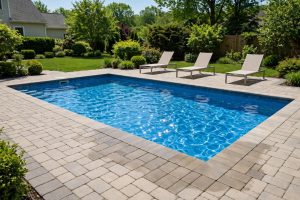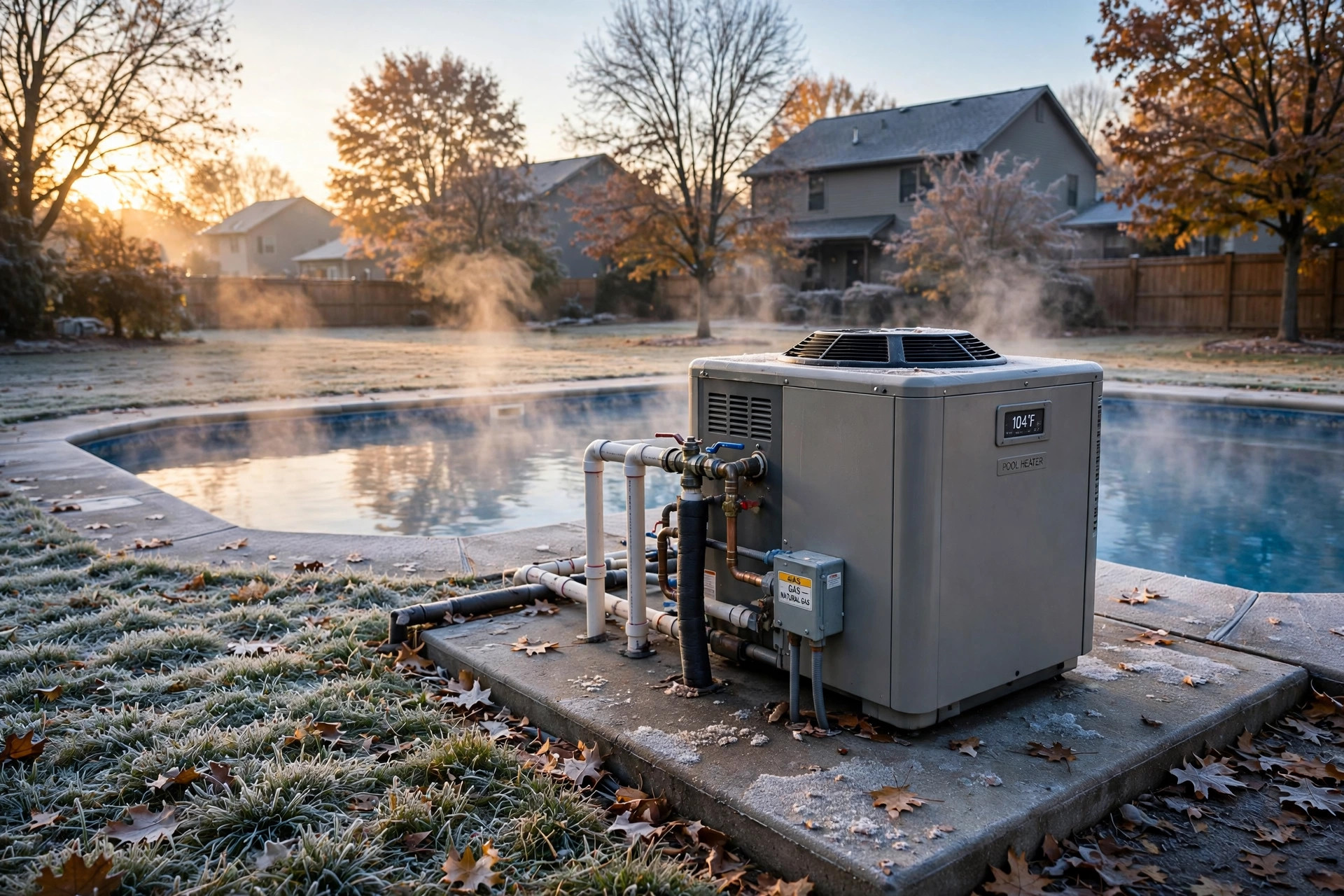

Finding the best pool heater for cold climates takes more care than picking one for a warm state. Cold air steals heat from the water fast. Wind cuts across the surface. A small heater that works well in Florida will struggle in Minnesota or Maine. This guide walks you through the choice step by step. You will learn the three main heater types, how to size a unit for your pool, what each option costs to buy and run, and how to keep the system safe through the cold months.
Why a Heater Matters in Cold Climates
In a warm climate, the sun does much of the work. The water holds heat through the night. The swim season stretches from spring to fall with little help. In a cold climate, none of that is true. Air temperatures drop into the forties and fifties even in early summer. Night air can be cold in July. Every hour of darkness pulls warmth from the water.
A pool heater changes that picture. It adds heat faster than the night can take it away. It lets you swim in May and again in October. It turns a pool from a two-month luxury into a five-month habit. The best pool heater for cold climates is the one that can hold the water near 80 degrees even when the air is far colder.
What to Look for When You Choose: Best Pool Heater for Cold Climates
Choosing the best pool heater for cold climates comes down to a few simple facts about your home and your pool.
First, know your pool size. A heater is sized in British Thermal Units, or BTUs. A small above-ground pool may need only 100,000 BTUs. A large in-ground pool in a cold region may need 400,000 BTUs or more. If the heater is too small, it will run all day and never reach the set temperature. If it is far too large, you will pay for power you do not need. A good rule is to match the BTU output to the surface area of the pool and the coldest month you plan to swim in. A pool equipment retailer can help you run the numbers, and pool sizing guides explain the math in plain terms.
Second, think about your fuel. Gas heaters burn natural gas or propane. Heat pumps and electric heaters use electricity. Check your utility bills for the price of gas and electricity. That one step will shape your whole decision.
Third, look at the season you want. Some owners only want to stretch the season by a few weeks. Others want warm water from April to November. A longer season needs a bigger, stronger heater. Buying for the season you truly want saves money in the long run.
Fourth, consider your climate zone. A heat pump works by pulling warmth from the air. In mild cold, say air above 50 degrees, it runs well and costs little. When the air drops into the forties or below, a standard heat pump loses strength fast. If you live where fall nights fall near freezing, gas is usually the safer pick. Cold-climate heat pumps exist, but they cost more up front.
Sizing the Heater
Sizing is the most common mistake buyers make. A heater that is too small is the number one cause of buyer regret. To size your unit, measure the pool surface area in square feet. Then find the rise in temperature you need. If you want 80-degree water when nights are 55 degrees, you need a 25-degree rise.
In a cold climate, go one size up from what a mild-climate chart suggests. The extra capacity means the heater reaches temperature in hours, not days. It also means the unit does not run at full power all the time, which adds years to its life. If you own an above-ground pool, read our guide to a pool heater for above ground pools for sizing tips specific to smaller pools.
Efficiency Ratings
Gas heaters carry a thermal efficiency rating, often near 82 to 95 percent. Higher is better. Heat pumps carry a COP, or coefficient of performance. A COP of 5 means the unit moves five units of heat for every unit of electricity it uses. The catch is that COP falls as the air gets colder. Always check the COP at the lowest air temperature you expect.
Types of Pool Heaters
There are three main types. Each has a place. The best pool heater for cold climates is usually one of the first two, but the right pick depends on your pool and your fuel prices.
Gas Heaters
Gas heaters are the workhorses of cold climates. They burn natural gas or propane and heat the water fast, often raising the temperature several degrees in a single hour. They work in any air temperature because they do not depend on outdoor warmth. That makes them the top choice where winters bite hard.
The trade-off is running cost: gas costs more per hour than a heat pump, but in truly cold air the gas heater finishes the job while the heat pump strains. For an in-ground pool that you want to heat quickly on weekends, gas is hard to beat. Our guide to the best pool heater for inground pools compares gas models side by side with other types.
Heat Pump Heaters
A heat pump does not make heat. It moves heat from the air into the water, much like an air conditioner in reverse. When the air is warm, this is the cheapest way to heat a pool.
In cold climates, the limits matter. Standard heat pumps need air above about 50 degrees to work well. Below that, they slow down and may shut off to protect themselves.
Electric Resistance Heaters
Electric resistance heaters work like a giant tea kettle. Electricity runs through a heating element, and the water picks up the heat. They are cheap to buy, simple to install, and quiet.
The catch is the electric bill. Resistance heating uses three to five times more electricity than a heat pump for the same heat. For a small spa or a tiny plunge pool, that is fine. For a full-size pool in a cold climate, it is too costly to run. Electric heaters suit small bodies of water and short seasons. They are rarely the best pool heater for cold climates when the pool is large.
Cost and Price
A pool heater is a two-part cost: the price to buy it and the price to run it. Both matter, and the cheaper unit to buy is often the dearer one to run.
Gas heaters usually cost the least up front, often between two and four thousand dollars installed. Running one through a cold-climate season can add several hundred dollars a month to the gas bill. Heat pumps cost more to buy, often three to six thousand dollars installed, but they cost less per month to run in mild weather.
Installation adds to the total. Gas units need a gas line and proper venting. Heat pumps need a solid pad and enough airflow around the cabinet. Get two or three quotes from local installers.
One more cost is easy to miss: the cover. A solar or insulated pool cover cuts heat loss at night by half or more. It is the cheapest way to lower every other cost on this list. Many owners find that a good cover plus a mid-size heater beats a giant heater with no cover. Retailers like The Home Depot carry solar and insulated covers, so compare prices before you buy. You can shop covers and other pool supplies at a pool supply store.
Care and Upkeep
A pool heater in a cold climate needs steady care. The good news is that the work is simple and most of it takes minutes.
Keep the filter clean. A dirty filter chokes water flow, and low flow makes the heater work harder or shut down. Check the pressure gauge weekly. Backwash or clean the filter when the pressure rises.
Watch the chemistry. Low pH eats metal parts inside the heater. High pH leaves scale on the heat exchanger. Test the water two or three times a week during the season. Keep the pH between 7.2 and 7.6.
Clear the area around the unit. Leaves, snow, and ice block airflow. In the fall, sweep leaves away from a heat pump weekly. In winter, brush snow off the top of the cabinet.
Winterize on time. If you close the pool for winter, drain the heater fully. Trapped water freezes, expands, and cracks the heat exchanger. That one repair can cost more than a year of heating. Follow the maker’s manual step by step, or pay a pool service to do the closing. Many owners also review winter pool equipment tips before the first freeze.
Service the unit once a year. A technician can check the burners, the ignition, the wiring, and the seals in under an hour. Yearly service catches small problems before they become winter failures. Think of it like a furnace tune-up.
Safety First
Heat and water and fuel demand respect. A few safety habits keep the whole family safe.
Keep children away from the heater. The cabinet, the pipes, and the vent get hot during operation. Set a clear rule: the equipment pad is not a play area.
Vent gas heaters properly. A gas heater makes exhaust, and that exhaust must go up and away from windows and doors. Never run a gas heater inside a closed shed. If you smell gas, turn the unit off, leave the area, and call your gas company. The Consumer Product Safety Commission publishes pool and spa safety guidance every owner should read.
Use a pool alarm and a fence. Warm water draws children in even late in the season. A fence with a self-closing gate and a water alarm adds layers of protection. Safety rules do not change because the water is warm.
Handle chemicals with care. Store chlorine and acid away from the heater, in a dry, locked spot. Never mix chemicals. Add them to the pool with the pump running.
If you heat a hot tub through winter instead of a pool, the same rules apply. Hot tub makers like Bullfrog Spas and Hot Spring design their shells and covers for cold weather, but the water still needs testing and the cover still needs to stay on between soaks. Our guide to the best hot tub for cold climates covers that topic in full.
Frequently Asked Questions
What size pool heater do I need for a cold climate? Size depends on pool surface area and the temperature rise you want. In a cold climate, choose a unit with more BTUs than a mild-climate chart suggests. For a typical in-ground pool of 400 to 600 square feet, 300,000 to 400,000 BTUs is a common pick.
Are heat pumps any good in cold weather? They are good in mild cold and poor in deep cold. A standard heat pump works well when the air stays above 50 degrees. Below that, output drops fast. If your swim season ends before the first hard frost, a heat pump can be the cheapest option to run. If you want warm water into late fall, gas is the stronger choice.
How much does it cost to heat a pool in a cold climate? It depends on the pool size, the heater type, fuel prices, and how warm you keep the water. A gas heater on a medium pool might add a few hundred dollars a month during the season. A heat pump in mild weather costs less. A pool cover cuts the bill by a large share. Get local fuel prices first, then ask an installer for a seasonal estimate.
Can I leave my pool heater outside all winter? You can leave the cabinet outside, but you must winterize it. Drain all water from the unit and the pipes. Cover the unit if the maker offers a winter cover. Water left inside will freeze and crack the heat exchanger, which is one of the costliest pool repairs.
Is a gas or electric pool heater better for cold climates? Gas is usually better for full-size pools in cold climates because it heats fast and works in any air temperature. Electric resistance heat suits only small spas and plunge pools because the running cost is high. A heat pump sits between the two: cheap to run in mild air, weak in deep cold.
How long does a pool heater last? A well-kept heater lasts 7 to 12 years. Gas heaters often last 7 to 10 years. Heat pumps can reach 10 to 12 years with yearly service. Hard water, poor chemistry, and skipped winterizing shorten the life.
A Final Word
The best pool heater for cold climates is the one that fits your pool, your fuel, and your season. Gas heats fast and never fears the cold. A heat pump sips electricity when the air is mild. Electric heat suits small spas. Size the unit with care, cover the pool at night, keep the water balanced, and service the unit each year. Do those things and the heater will pay you back in warm water and a longer season. For general pool and home guidance, The Spruce keeps a large library of how-to articles, and equipment makers like Pentair publish detailed manuals for their heaters.
References
Bullfrog Spas. (n.d.). Hot tubs and spas. https://www.bullfrogspas.com Hot Spring Spas. (n.d.). Hot tubs and spas. https://www.hotspring.com Leslie’s Pool Supplies. (n.d.). Pool supplies and equipment. https://www.lesliespool.com Pentair. (n.d.). Pool and spa equipment. https://www.pentair.com Pool Warehouse. (n.d.). Pool equipment and supplies. https://www.poolwarehouse.com Swim University. (n.d.). Pool and hot tub care guides. https://www.swimuniversity.com The Home Depot. (n.d.). Home improvement products. https://www.homedepot.com The Spruce. (n.d.). Home and garden advice. https://www.thespruce.com U.S. Consumer Product Safety Commission. (n.d.). Product safety information. https://www.cpsc.gov
Was this guide helpful?

About Lisa Anderson
The My Garden US editorial team writes practical, in-depth home and garden guides for American homeowners — tested advice, no fluff.
You May Also Like
Best Pool Steps for Above Ground Pools: A Plain Buyer’s Guide
June 27, 2026 0 views
Salt Water vs Chlorine Pool Pros Cons: A Plain Guide for Homeowners
September 16, 2026 0 views
The Best Pool Filter for Above Ground Pools: A Complete Buyer’s Guide
June 27, 2026 0 views