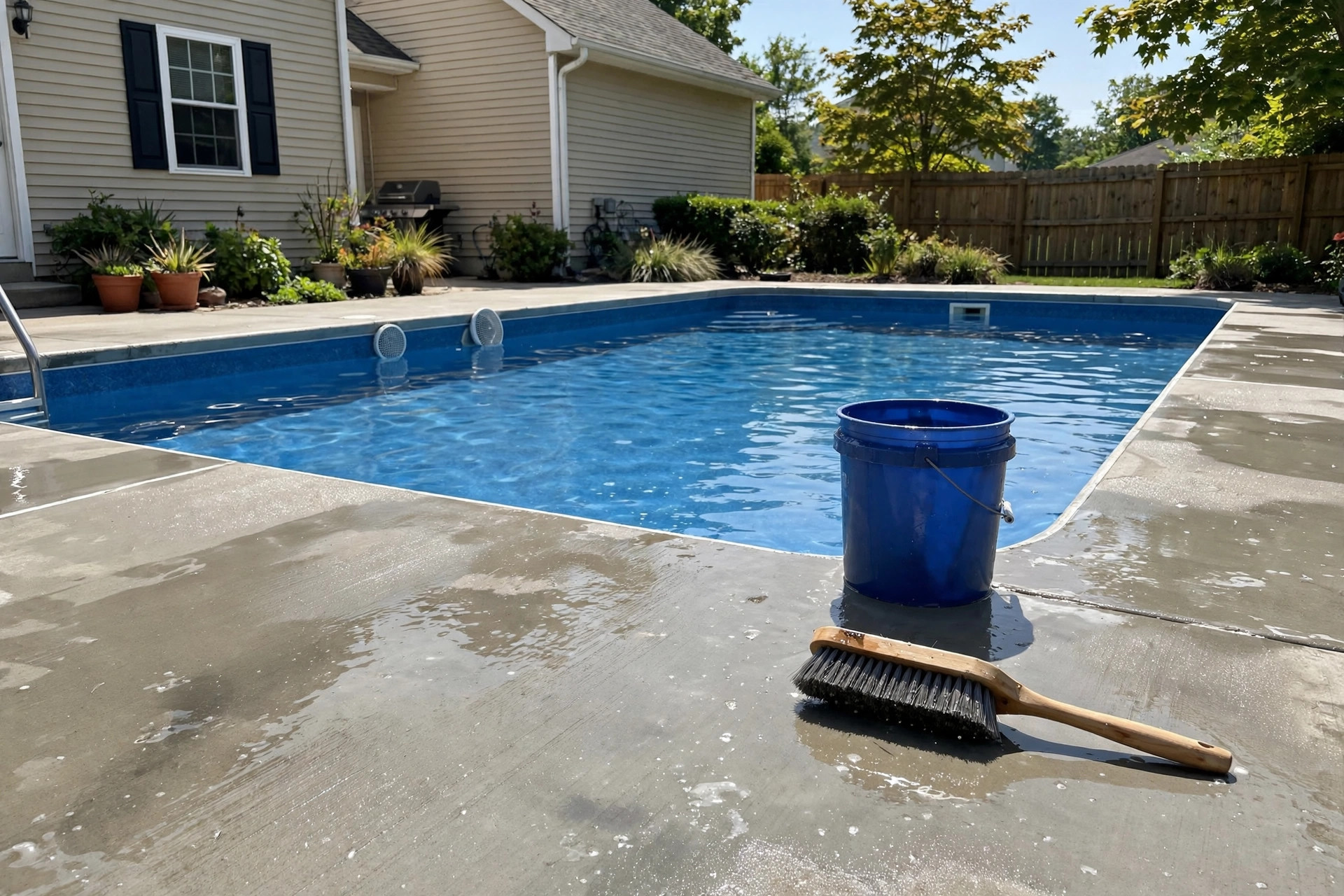

A concrete pool deck takes hard use. Bare feet, pool water, sunscreen, leaves, and sun wear it down all season. The best pool deck cleaner for concrete lifts that grime away without harming the surface. This guide explains how to choose one, how to use it, and how to keep the deck safe and good to look at.
Why a Clean Pool Deck Matters
The deck around a pool is the first thing guests see and the surface children run across all summer. When concrete is stained or slick with algae, it looks neglected and can become unsafe. A regular wash keeps the finish bright and cuts the risk of slips and falls.
Pool decks also carry chemicals. Chlorine splashes out of the water daily. Sunscreen and body oil settle into the pores of the concrete. Over time these leave dark films and gray stains that plain water cannot move. A proper cleaner breaks them down before they set for good.
There is also the matter of cost. Concrete costs money to pour and finish. Pool deck resurfacing is a larger job than most owners expect. Routine cleaning with the right product is the cheap way to protect that investment.
What Makes Concrete Around a Pool Different: Best Pool Deck Cleaner for Concrete
Pool deck concrete is not like driveway concrete. It gets wet all day and dries under full sun. It may have a textured or cool-deck finish to stay comfortable underfoot. Many decks are sealed with a clear sealer that can be damaged by harsh acids.
That is why the cleaner you pick matters more here than on a walkway. A product strong enough for an oil-stained garage floor can etch a pool deck, bleach a colored finish, or strip the sealer. The best pool deck cleaner for concrete is strong on dirt but gentle on the finish.
What to Look for in a Cleaner
Not all cleaners work the same way. Read the label with these points in mind.
pH and strength
Mild alkaline cleaners handle sunscreen, oils, and leaf tannins well. They are kind to sealed concrete. Acid-based cleaners cut mineral scale and rust, but they can bite into the surface if left too long. Most pool deck owners do best with a mild alkaline or neutral product.
Algae and mildew control
Shade corners and damp joints grow green algae fast. If your deck turns green between cleanings, look for a cleaner with an algaecide or mildewcide agent. This keeps the kill time longer than soap alone.
Slip safety
Some cleaners leave a soapy film. A film on wet concrete is a fall hazard, especially for children. Pick products that rinse clean with a garden hose. The Consumer Product Safety Commission publishes general guidance on pool safety around the home, and a non-slick surface is part of that picture.
Sealer compatibility
Check whether your deck has a sealer. Drop a little water on dry concrete. If it beads, the sealer is working. Choose a cleaner the sealer maker approves. When in doubt, test a small hidden spot first.
Ease of use
Granules that mix in a bucket work fine for small decks. Concentrated liquids with a pump sprayer save time on large ones. Ready-to-use sprays cost more per square foot but suit quick touch-ups.
Types of Cleaners for Concrete Pool Decks
The market offers several forms. Each has its place.
Oxygen-based cleaners use sodium percarbonate. Mixed with water, they release oxygen that lifts stains out of the pores. They are safe for colored and sealed concrete and kind to plants at the deck edge. Many owners call these the best pool deck cleaner for concrete for routine washes.
Alkaline degreasers cut sunscreen, oil, and grill grease near the deck. They are a good pick when the concrete looks dark and greasy rather than green.
Acidic cleaners handle calcium scale, rust stains, and efflorescence. Use them with care. Dilute as the label says, keep the dwell time short, and rinse hard. They are a spot treatment, not an every-month product.
Enzyme or bio cleaners use living cultures to eat organic film. They work slowly, often overnight, but need no scrubbing. They suit owners who prefer a low-chemical approach.
All-purpose concrete cleaners blend surfactants for general dirt. They work for light soil but may not touch deep stains or algae. Retailers such as The Home Depot and Lowe’s carry a wide range of these on the cleaning aisle.
For stubborn green growth, advice from pool care educators such as Swim University can help you tell algae from simple dirt before you buy.
How to Choose the Best Pool Deck Cleaner for Concrete
Follow these steps to match the product to your deck.
First, name the problem. Is the deck gray with age, green with algae, dark with oil, or white with scale? Match the cleaner type to the stain. Gray age stains respond to oxygen cleaners. Green growth needs an algaecide cleaner. Dark grease needs an alkaline degreaser. White mineral film needs a mild acid.
Second, check the finish. Stamped, stained, or colored concrete needs a gentle product. Plain broom-finish concrete can take a stronger wash. If the deck was sealed in the last two years, protect that sealer with a neutral or mild alkaline cleaner.
Third, think about drainage. Cleaner rinses off the deck somewhere. If the rinse water flows into planting beds, choose a phosphate-free, biodegradable formula. If it flows to a storm drain, check local rules about wash water. A short guide to responsible pool water care from a national pool supplier covers runoff basics.
Fourth, weigh size and price. A small deck may need only one jug a season. A large deck around a full pool may need concentrate that mixes to many gallons. Price per mixed gallon matters more than price per bottle.
Cost and Price
Most concrete pool deck cleaners cost between 12 and 40 dollars for a container that treats 500 to 2,000 square feet. Concentrates give the best value. Ready-to-use spray bottles run 8 to 15 dollars and suit spot work.
A stiff deck brush adds 15 to 30 dollars. A pump sprayer for even coverage runs 25 to 50 dollars. Many owners already own both from garden work. Pool supply specialists such as Pool Warehouse and Leslie’s stock deck care lines alongside pool chemicals, which lets you compare prices in one stop.
Professional deck washing services charge 150 to 400 dollars for a typical residential pool deck. Doing it yourself with a good cleaner costs a fraction of that each season.
Step-by-Step: Washing the Deck
A simple routine gives the best result. Work on a cloudy day or in the morning so the cleaner does not dry on the surface.
1. Clear the deck. Move chairs, toys, and the best pool vacuum for leaves out of the way. 2. Sweep or blow off loose leaves and grit. This keeps the cleaner on the stains, not on loose dirt. 3. Wet the concrete with a garden hose. Damp concrete takes the cleaner more evenly. 4. Mix or pour the cleaner as the label directs. Spread it with a pump sprayer or watering can. 5. Let it dwell. Most products need 5 to 15 minutes. Do not let it dry. 6. Scrub with a stiff deck brush. Work in sections, pushing the loosened grime toward the drain or lawn edge. 7. Rinse hard with the hose or a pressure washer on a wide fan tip. Keep pressure under 1,500 psi on sealed or stamped concrete to avoid damage. 8. Check for missed spots. Treat stubborn stains a second time rather than raising the strength.
Home how-to resources such as This Old House and The Spruce publish step-by-step outdoor cleaning guides that pair well with your product label.
Care and Upkeep Through the Season
One deep wash in spring sets the tone. After that, a light wash each month keeps the deck from going gray again. Sweep weekly so leaves do not stain. Hose off sunscreen-heavy spots after big swim days.
Watch the joints and the waterline edge. These hold moisture and grow algae first. A quick scrub there each month stops green film from spreading. If you keep fighting algae on the pool walls, the deck usually needs the same attention, since spores travel between the two.
Reseal the concrete when water stops beading. Most sealers last two to four years around a pool. A fresh seal makes each future cleaning easier and keeps stains from setting.
Winter care matters too. In cold climates, clean the deck before closing the pool so stains do not set over winter. In warm climates, keep the monthly rinse going year-round.
Safety Notes
Pool deck cleaners are chemicals. Treat them with respect.
– Wear rubber gloves and eye protection when mixing and spreading. – Keep children and pets off the wet deck until it is rinsed and dry. – Never mix an acid cleaner with a chlorine-based product. The fumes can be dangerous. – Store cleaners away from pool chemicals, especially chlorine and shock, to avoid mix-ups. – Rinse plants at the deck edge before and after cleaning to protect them from runoff.
Slip safety deserves its own note. Wet concrete is slick even when clean. A cleaner that rinses fully leaves no film. After washing, walk the deck in bare feet while it is damp to check grip before the family returns. Spa and pool makers such as Hot Spring and Bullfrog Spas stress slip-aware surfaces in their own deck guidance, and the same habit serves any home pool.
Frequently Asked Questions
Can I use bleach on a concrete pool deck? Household bleach can kill algae, but it is harsh. It can bleach colored concrete, harm plants, and leave a slippery film if not rinsed well. A purpose-made deck cleaner is safer and usually works better.
Will a pressure washer damage my concrete pool deck? It can if the pressure is too high or the tip is too narrow. Use a wide 25 or 40-degree tip and stay under 1,500 psi on sealed, stamped, or older concrete. Let the cleaner do the work so the washer only rinses.
How often should I clean my pool deck? A deep clean once or twice a year plus a light wash monthly in swim season keeps most decks in good shape. Shady, damp decks may need more frequent attention.
What is the best pool deck cleaner for concrete with algae? Pick a cleaner with an algaecide or mildewcide ingredient, or an oxygen-based cleaner followed by a pool algaecide rinse on the joints. Scrub the green areas well and rinse hard so spores do not resettle.
Can deck cleaner harm my pool water? It can if rinse water flows into the pool. Dam the pool edge with towels or a hose berm while you wash, and rinse away from the water. If some cleaner reaches the pool, test the water and adjust the chemistry after.
Is it worth sealing the deck after cleaning? Yes. A clean deck is the right base for a fresh sealer. Sealing blocks stains, slows algae, and makes the next cleaning much easier. Most owners reseal every two to four years.
A Final Word
The best pool deck cleaner for concrete is the one that matches your stains, respects your finish, and rinses clean. Start gentle, test a hidden spot, and wash on a regular schedule. A clean, safe deck makes every swim day better and keeps the concrete looking new for years.
References
Bullfrog Spas. (n.d.). Hot tubs and spas. https://www.bullfrogspas.com Hot Spring Spas. (n.d.). Hot tubs and spas. https://www.hotspring.com Leslie’s Pool Supplies. (n.d.). Pool supplies and equipment. https://www.lesliespool.com Lowe’s. (n.d.). Home improvement products. https://www.lowes.com Pool Warehouse. (n.d.). Pool equipment and supplies. https://www.poolwarehouse.com Swim University. (n.d.). Pool and hot tub care guides. https://www.swimuniversity.com The Home Depot. (n.d.). Home improvement products. https://www.homedepot.com The Spruce. (n.d.). Home and garden advice. https://www.thespruce.com This Old House. (n.d.). Home renovation guidance. https://www.thisoldhouse.com U.S. Consumer Product Safety Commission. (n.d.). Product safety information. https://www.cpsc.gov
Was this guide helpful?

About James Carter
The My Garden US editorial team writes practical, in-depth home and garden guides for American homeowners — tested advice, no fluff.
You May Also Like
Best Pool Filter for Small Pools: How to Choose the Right One
April 15, 2026 0 views
How to Raise Pool Alkalinity Levels the Safe Way
September 7, 2026 0 views
Best Pool for Entertaining Guests Ideas: Choosing a Backyard Pool Built for Parties
May 4, 2026 0 views