---
Table of Contents
Table of Contents
- Toilet Tank Filling Slowly: How a Toilet Tank Refills
- Step 1: Check the Supply Valve
- Step 2: Check Whether It Is Just This Toilet
- Step 3: Clean the Fill Valve
- Step 4: Check the Supply Line
- Step 5: Adjust the Float and Water Level
- Step 6: Replace the Fill Valve
- Hard Water Makes Everything Worse
- When to Call a Plumber
- References
You flush, and then you wait. And wait. The tank trickles full at a snail's pace while the rest of the house gets on with its day. A toilet that takes forever to refill is more than an annoyance. It means the next flush might be weak, and it often signals a small problem that is easy to fix before it gets bigger. Here is what to know about toilet tank filling slowly before you start.
A slow-filling toilet tank almost always comes down to restricted water flow. Something between the supply pipe and the tank is choking the flow: a half-closed valve, a clogged fill valve, sediment in the line, or a worn-out valve that needs replacing. This guide walks you through the diagnosis in order, from the thirty-second checks to the full valve replacement.
Toilet Tank Filling Slowly: How a Toilet Tank Refills
When it comes to toilet tank filling slowly, getting the details right makes all the difference.
Many homeowners find that toilet tank filling slowly is easier than they expected once they know the basics.
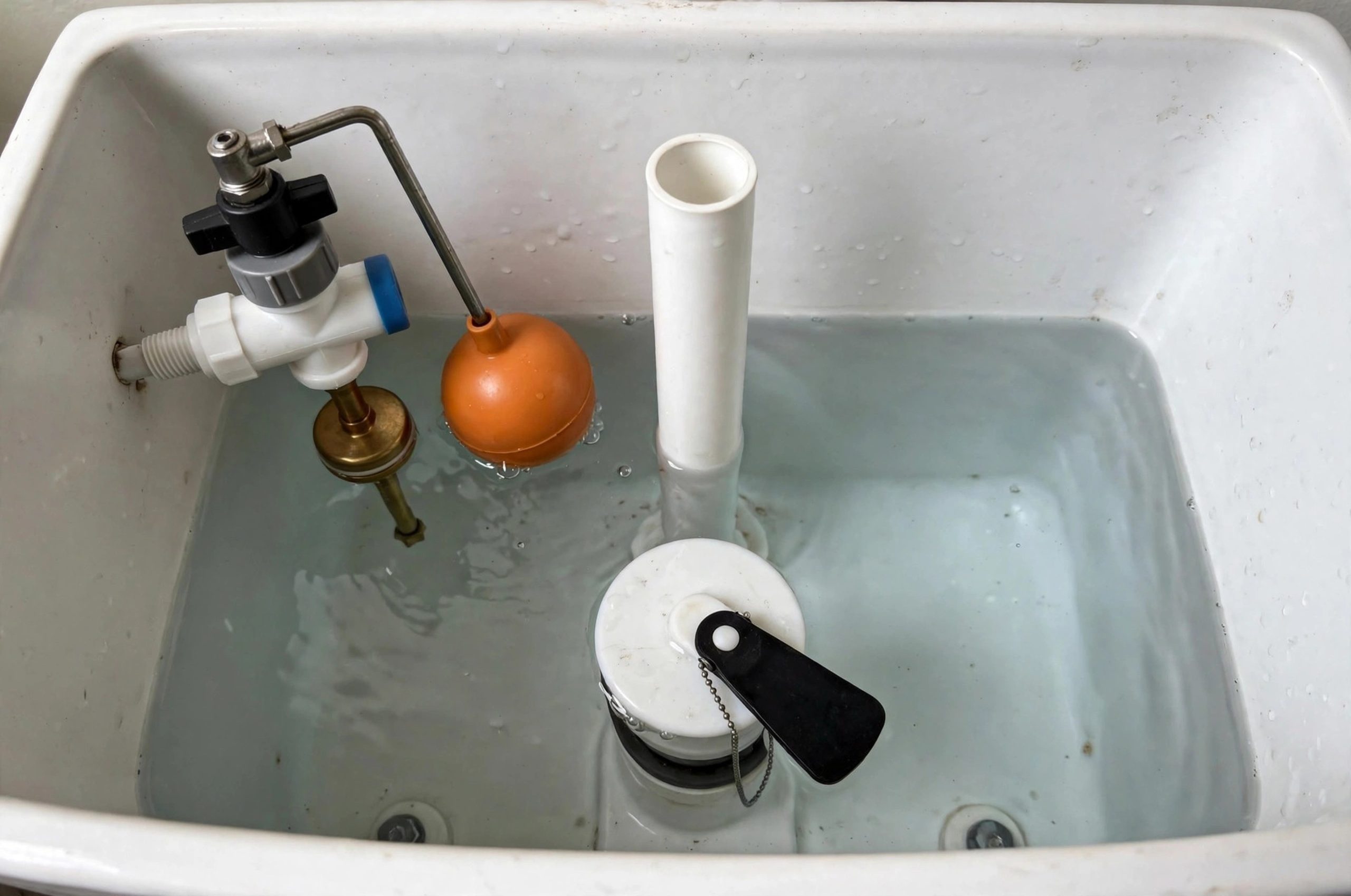
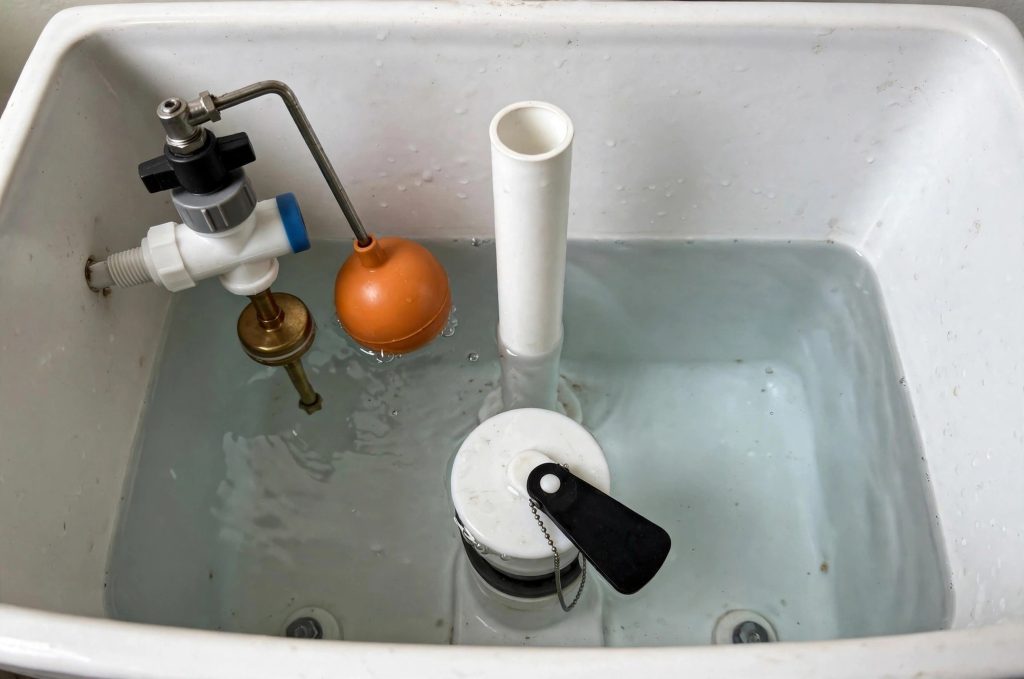
Understanding the parts makes the diagnosis easy. Inside the tank there are two main assemblies. The flush valve in the center, with the flapper or canister, releases water into the bowl when you flush. The fill valve on the side refills the tank afterward. The fill valve has a float that rises with the water level and shuts the valve off when the tank is full.
Water reaches the fill valve through a supply line connected to a shutoff valve on the wall or floor. That shutoff valve, the supply line, and the fill valve itself are the three places where flow gets restricted. A normal tank refills in about three minutes, depending on your home's water pressure. If yours takes much longer, or barely fills at all, one of those three spots is the problem.
Step 1: Check the Supply Valve
Many homeowners find that toilet tank filling slowly is easier than they expected once they know the basics.
The key to toilet tank filling slowly is choosing the right approach for your space and budget.
Start with the simplest cause. Find the shutoff valve where the supply line meets the wall or floor behind the toilet. It is usually a small oval handle or a lever. Make sure it is fully open. For a round handle, turn it counterclockwise until it stops. For a lever, it should sit parallel to the pipe.
These valves get bumped during cleaning or left half-closed after other plumbing work. A half-open valve is one of the most common reasons for a slow fill, and the fix takes five seconds. This Old House lists a partially closed supply valve as the first thing to check when a toilet fills slowly [1].
If the valve is old and crusty, turn it gently. Forcing a corroded valve can snap it or start a leak. If it will not turn, or if it drips when you touch it, leave it alone and plan to have a plumber replace it.
Step 2: Check Whether It Is Just This Toilet
The key to toilet tank filling slowly is choosing the right approach for your space and budget.
With a little planning, toilet tank filling slowly can fit even a busy schedule.
Run the other faucets in the house. If every fixture has weak flow, the problem is not the toilet. It is the main supply, a pressure issue, or a partially closed main valve. If only the toilet is slow, the restriction is in the toilet's own supply line or fill valve. This one test tells you where to focus.
Step 3: Clean the Fill Valve
With a little planning, toilet tank filling slowly can fit even a busy schedule.
Before you start, it helps to understand how toilet tank filling slowly works in real homes.
If the supply valve is fully open and the toilet is still slow, the fill valve is the prime suspect. Fill valves clog with sediment, mineral scale, and tiny debris. In homes with hard water, the buildup happens faster. The good news is that most modern fill valves can be cleaned without removing them.
The procedure below works for the common Fluidmaster-style fill valves found in most American toilets. The general idea is the same for other brands: open the top, flush out the debris, and reassemble.
1. Turn off the water at the supply valve behind the toilet. 2. Flush the toilet to empty the tank. Hold the handle down to drain as much as possible. 3. Look at the top of the fill valve. There is a cap with a small arm. Lift the float cup up with one hand and hold the valve shaft steady. 4. With your other hand, twist the cap counterclockwise about an eighth of a turn. It unlocks and lifts off. 5. Inspect the rubber seal under the cap. Rinse off any grit or scale. If the seal is torn or hardened, replace it. 6.
Hold a cup upside down over the open valve. Turn the water supply back on for ten to fifteen seconds. The blast of water flushes debris out of the valve inlet. Keep the cup over the opening or you will get soaked. 7. Turn the water off, replace the cap, and twist it clockwise to lock. 8. Turn the supply back on and let the tank fill. Time it.
This cap-and-flush cleaning fixes a surprising number of slow fills. Fluidmaster's own troubleshooting guides describe the same debris-flush as the first remedy when a fill valve will not refill the tank properly [6]. A video walkthrough of the cap removal shows each step for the widely used 400A valve [4].
A little planning makes toilet tank filling slowly much easier.
Step 4: Check the Supply Line
Before you start, it helps to understand how toilet tank filling slowly works in real homes.
A good plan for toilet tank filling slowly saves time, money, and frustration.
If cleaning the valve did not help, look at the supply line itself. Flexible braided lines can kink behind the toilet, especially if the toilet was moved for cleaning or a remodel. A kinked line strangles flow. Straighten any kinks or replace the line.
Disconnect the line at the toilet end to test it. Put the end in a bucket, turn the supply valve on briefly, and watch the flow. Strong flow from the line means the problem is in the fill valve. Weak flow from the line means the restriction is in the valve on the wall or in the pipe feeding it. If the flow from the wall valve is weak, that valve may be clogged with sediment or failing internally, and it likely needs replacement by a plumber.
Some supply lines and fill valves have small mesh screens or filters where the line connects. Pull them out, rinse them clean, and reinstall. A screen packed with sediment looks innocent and causes exactly this symptom.
Step 5: Adjust the Float and Water Level
A good plan for toilet tank filling slowly saves time, money, and frustration.
For most people, toilet tank filling slowly comes down to a few smart choices.
A misadjusted float can make a fill look slow when the real problem is the water level. If the float sits too low, the valve shuts off before the tank is full, and the next flush is weak. If it sits too high, water runs constantly into the overflow tube.
The water level should sit about an inch below the top of the overflow tube. On a float-cup valve, squeeze the adjustment clip and slide the float up or down the shaft. On an older ball-and-arm valve, bend the arm gently or turn the adjustment screw. Flush and watch the level settle. This Old House notes that a misaligned float is a common finding when a toilet still fills slowly after other fixes [2].
Step 6: Replace the Fill Valve
For most people, toilet tank filling slowly comes down to a few smart choices.
If cleaning did not restore normal flow, the valve is worn out. Fill valves are inexpensive, universal parts. A standard replacement fits almost any toilet and costs less than a pizza. Here is the replacement in brief:
1. Turn off the supply valve and flush to empty the tank. Sponge out the remaining water. 2. Disconnect the supply line from the bottom of the fill valve. 3. Unscrew the lock nut under the tank and lift out the old valve. 4. Set the new valve to the right height. It should stand so the top sits above the overflow tube per the instructions. 5. Drop it in, tighten the lock nut by hand plus a small turn with pliers. Do not overtighten. Cracking the tank turns a cheap repair into an expensive one. 6. Reconnect the supply line and the refill tube, which clips to the overflow pipe. 7. Turn the water on, check for leaks at every connection, and adjust the water level.
This Old House's fill valve replacement guide walks through the full swap and warns against the classic mistake of overtightening the tank hardware [2].
Hard Water Makes Everything Worse
If you are new to toilet tank filling slowly, start with the simplest option and build from there.
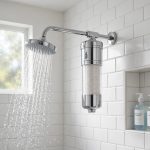
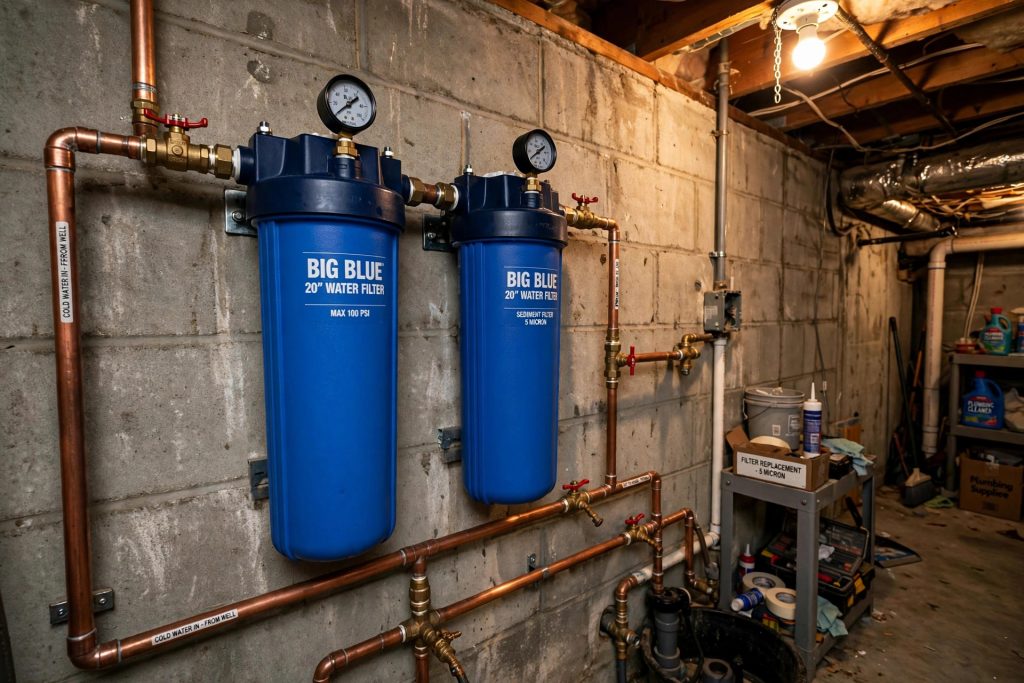
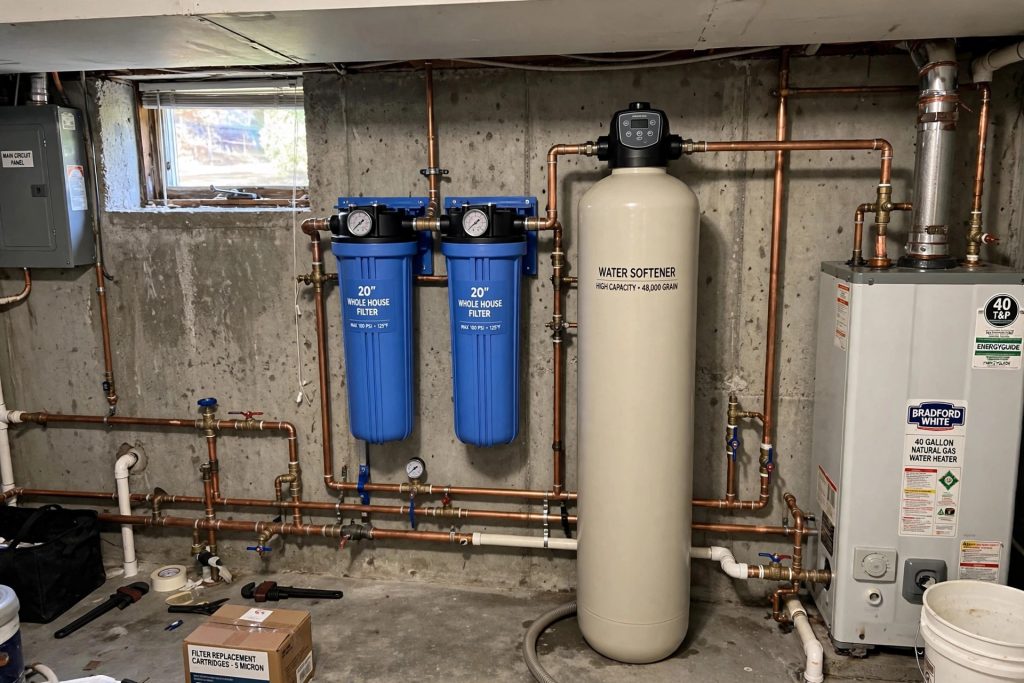
If you clean or replace fill valves often, look at your water. Hard water leaves mineral scale inside valves, supply lines, and screens. It clogs the small passages in a fill valve faster than anything else. A whole house water filter system catches sediment before it reaches the toilet, and looking into water softener installation cost makes sense if scale is a house-wide problem. Fixing the water extends the life of every valve in the house, not just the toilet's.
When to Call a Plumber
When it comes to toilet tank filling slowly, getting the details right makes all the difference.
Call a professional if the supply valve on the wall is stuck, corroded, or leaking. Call if the flow from the wall pipe is weak even with the valve open, which can mean a blockage or corrosion deeper in the supply line. And call if you have replaced the fill valve and the tank still fills slowly. At that point the restriction is in the pipes, and finding it takes professional tools.
A slow-filling toilet is usually a twenty-minute fix. Open the supply valve all the way, clean the fill valve, and check the line. Most of the time the tank is roaring back to full before you have put the tools away. If the toilet is old and inefficient anyway, a dual-flush converter kit installed during the repair saves water with every flush from then on. Once you try it, toilet tank filling slowly gets easier each time.
References
Many homeowners find that toilet tank filling slowly is easier than they expected once they know the basics.
This Old House. (n.d.). Toilet leaking? Identify the problem with this guide. https://www.thisoldhouse.com/bathrooms/how-to-fix-a-leaky-or-runny-toilet
This Old House. (n.d.). How to replace your toilet fill valve. https://www.thisoldhouse.com/plumbing/replace-toilet-fill-valve
Lowe's. (n.d.). How to fix a slow-filling toilet. https://www.lowes.com/n/how-to/fix-slow-filling-toilet
YouTube. (n.d.). How to fix a toilet that is not filling up: How to remove 400A cap assembly [Video]. https://www.youtube.com/watch?v=m4JvWIzDm20
DoItYourself.com. (n.d.). Slow filling toilet tank [Forum thread]. https://www.doityourself.com/forum/toilets-sinks-showers-dishwashers-tubs-garbage-disposals/387661-slow-filling-toilet-tank.html
ManualsPro. (n.d.). Fluidmaster 400H-002 PerforMax universal toilet fill valve installation guide. https://manualspro.net/567107-fluidmaster-400h-002-performax-universal-toilet-fill-valve-installation-guide
ManualsPro. (n.d.). Fluidmaster K-400A-023 Mansfield toilet fill valve and flush valve seal repair kit installation guide. https://manualspro.net/567104-fluidmaster-k-400a-023-mansfield-toilet-fill-valve-and-flush-valve-seal-repair-kit-installation-guide
YouTube. (n.d.). This toilet is taking too long to fill! [Video]. https://www.youtube.com/watch?v=ZsUYwKNpegI
Was this guide helpful?

About My Garden US
The My Garden US editorial team writes practical, in-depth home and garden guides for American homeowners — tested advice, no fluff.
You May Also Like
Septic Safe Toilet Paper Reviews USA: Which Brands Keep Your Tank Healthy
May 23, 2026 5 views
WaterSense Toilet Rebates Near Me 2026
October 2, 2026 5 views
Water Softener Regeneration Frequency Guide USA
September 13, 2026 6 views