An apple tree is a long-term relationship, and one of the best a gardener can have. A well-chosen tree fruits for decades, shades the yard, and perfumes the air with blossom every spring. And no store apple, bred for shipping and storage, tastes like one picked ripe off your own tree.
Table of Contents
Table of Contents
This guide explains how to grow apples in backyards across zones 4 through 8. They need full sun, well-drained soil, and several hundred chill hours, which most of the country provides. The keys are choosing the right rootstock for your space, planting two compatible varieties for pollination, pruning yearly, and thinning the young fruit. Dwarf trees can fruit within three years. blueberries and elderberries fruit in the same sunny yard.

Photo: Wikimedia Commons
Choosing a Variety
When it comes to how to grow apples, getting the details right makes all the difference.
Many homeowners find that how to grow apples is easier than they expected once they know the basics.
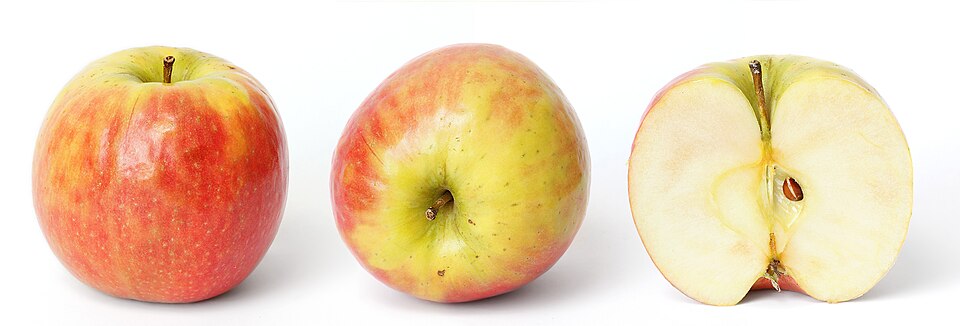
Choose varieties proven in your region; your local extension service keeps lists. Honeycrisp, Gala, Fuji, and Granny Smith suit different tastes and climates. For disease resistance, look to Liberty, Enterprise, and Freedom, which shrug off apple scab. Crabapples like Dolgo pollinate standard trees and make superb jelly.
Most apples need a second, different variety blooming at the same time for cross-pollination. Check pollination charts before buying; some popular varieties are poor pollinators. Buy grafted trees from a reputable nursery. The USDA PLANTS Database lists Malus domestica with its cultivated forms.
For the home orchard, disease-resistant varieties like Liberty and Enterprise save more work than any other choice; they shrug off apple scab that defoliates susceptible trees. Flavor matters too, so plant at least one variety you love to eat fresh. The Missouri Botanical Garden fruit pages compare disease resistance among apple varieties.
When and How to Plant
Many homeowners find that how to grow apples is easier than they expected once they know the basics.
The key to how to grow apples is choosing the right approach for your space and budget.
Plant grafted apples in early spring as soon as the ground can be worked. Space according to rootstock: eight to ten feet for dwarfs, twelve to fifteen for semi-dwarfs, up to twenty-five for standards. Dig a wide hole, set the graft union two inches above the soil line, and water deeply. Never bury the graft union.
Rootstock choice matters more than variety for home growers. Dwarf rootstock keeps trees eight to ten feet tall, fruits years earlier, and never needs a ladder. Semi-dwarf suits most homes. Plant two compatible varieties within fifty feet for pollination. check your USDA zone planting dates to time your planting week. The Old Farmer's Almanac fruit-tree guides cover rootstock selection.
On dwarfing rootstock, the graft union must stay well above the soil; if the scion roots, you lose the size control and gain a standard tree. Plant with the union three inches high and mulch without burying it. The Gardenia.net tree-planting guides illustrate proper union height.
Soil and Sun
The key to how to grow apples is choosing the right approach for your space and budget.
With a little planning, how to grow apples can fit even a busy schedule.
Apples want full sun and well-drained loam, slightly acidic. Eight hours of direct sun gives the best fruit color and flavor. Drainage is essential; apples in soggy ground develop root rot and crown diseases. A gentle slope is ideal.
Test the soil and aim for a pH around 6.0 to 6.5. Work compost into the planting area but skip fresh manure in the hole. Good air circulation reduces disease pressure. The University of Minnesota Extension lists apples among the hardiest and most reliable home-orchard trees.
Watering and Feeding
With a little planning, how to grow apples can fit even a busy schedule.
Before you start, it helps to understand how how to grow apples works in real homes.
Water young trees deeply through their first two seasons while roots establish. A deep soaking once a week in dry weather builds deep roots. Established trees need only moderate water, with extra during dry spells as fruit sizes.
Feed young trees lightly in spring with a balanced fertilizer. Mature trees in decent soil often need little beyond compost mulch. Overfeeding pushes soft, disease-prone growth. If the tree grows six to twelve inches of new wood yearly and crops well, feeding is right. The Clemson HGIC fruit pages give the same restrained schedule.
Care Through the Season
Before you start, it helps to understand how how to grow apples works in real homes.
A good plan for how to grow apples saves time, money, and frustration.
Prune yearly to a central leader, removing crossing, inward, and overly vigorous branches in late winter. Good pruning lets light into the canopy, which colors the fruit and reduces disease. Thin the young fruitlets to one per cluster in early summer; unthinned trees produce masses of small apples and may bear only every other year.
Watch for codling moth worms in the fruit; pheromone traps and sanitation help. Apple scab spots the leaves and fruit in wet springs; resistant varieties largely solve it. Fire blight blackens shoot tips; prune out affected wood well below the damage. Bagging individual fruits is an effective organic defense against insects. hardy kiwis nearby share the sunny site. The Clemson Cooperative Extension home-orchard guides detail pest timing.
Bagging individual fruits in paper or nylon bags is the most effective organic defense against codling moth and apple maggot. Bag after the natural fruit drop, when fruitlets are marble-sized. It is fiddly work that gives worm-free apples. The UF IFAS Gardening Solutions organic orchard pages describe bagging technique.
Harvest
A good plan for how to grow apples saves time, money, and frustration.
For most people, how to grow apples comes down to a few smart choices.
Dwarf trees can fruit in three years; standards take six or more. Pick when the seeds turn brown, the background color changes, and the fruit lifts off the spur with an upward twist. Taste is the final test.
Harvest over several weeks as fruits ripen. Handle gently to avoid bruising. Store in a cool, humid place; many varieties keep for months refrigerated. A mature semi-dwarf can produce several bushels. The USDA National Agricultural Library hosts apple storage references.
For storage, variety choice matters as much as technique. Late-ripening, firm varieties like Fuji, Granny Smith, and Arkansas Black keep for months, while early, tender varieties like Gala are best eaten fresh within weeks. Pick storage apples slightly underripe, when the seeds have just turned brown and the fruit is still firm; they finish ripening slowly in the cold. Wrap each apple in newspaper or place them in trays so they do not touch, since one rotting apple truly does spoil its neighbors. A refrigerator crisper, an unheated garage that stays above freezing, or a proper root cellar all work.
Check the stored fruit monthly and remove any that soften. Well-stored apples from your own tree taste better in midwinter than anything the store sells in fall.
Troubleshooting
For most people, how to grow apples comes down to a few smart choices.
If you are new to how to grow apples, start with the simplest option and build from there.
No fruit on a healthy tree usually means a pollination problem or frost on the blossoms. Confirm compatible varieties bloom together, and consider frost risk on the site. Biennial bearing, fruit only every other year, means you skipped thinning; thin fruitlets yearly.
Fire blight strikes fast in warm, wet springs. Prune out blackened shoots immediately, disinfecting tools between cuts, and avoid heavy nitrogen that pushes susceptible growth. Apple scab needs resistant varieties or a spray program; there is no cure once it appears. If the tree declines in wet soil, drainage is the issue; apples cannot be saved in standing water.
In warm-winter regions past zone 8, most varieties will not fruit reliably for lack of chill hours. Apples need long, cold winters, and only low-chill varieties have any chance in the warmest zones.
Pruning Young Trees Year by Year
If you are new to how to grow apples, start with the simplest option and build from there.
When it comes to how to grow apples, getting the details right makes all the difference.
Apple pruning is a multi-year project, and knowing the timeline helps. In the first spring after planting, head the whip back to about three feet and select three or four well-spaced branches as the future scaffold; remove the rest. This feels severe on a new tree and sets its shape for life.
In years two and three, keep the central leader dominant, remove crossing and inward-growing branches, and spread young limbs to wide angles with clothespins or spreaders. Wide angles bear better and break less. By year four, the framework is set and pruning becomes annual maintenance: thin the canopy for light, remove water sprouts, and renew fruiting wood. Always prune in late winter while the tree is dormant, cutting just outside the branch collar. A well-pruned dwarf tree takes twenty minutes a year and fruits heavily; a neglected one becomes a thicket of shaded, diseased wood. The Old Farmer's Almanac orchard calendars place dormant pruning in the late-winter task list.
Thinning for Annual Crops
When it comes to how to grow apples, getting the details right makes all the difference.
Many homeowners find that how to grow apples is easier than they expected once they know the basics.
Apples thin themselves a little in early summer, dropping excess fruitlets in the natural early-summer drop, but the tree always keeps too many. Follow up by hand: when the remaining fruitlets are marble-sized, thin each cluster to a single fruit, spacing fruits six to eight inches apart along the branch. On a young dwarf tree this takes twenty minutes; on a mature semi-dwarf, an hour.
Thinning does three things that matter. It gives you full-size, well-colored apples instead of a mass of small ones. It prevents branches from breaking under overloaded clusters. And it breaks the biennial bearing cycle, where an exhausted tree crops heavily one year and barely the next; thinned trees bear steadily every year. Remove the smallest, the damaged, and the poorly placed fruits first.
The first thinning feels like throwing away your harvest. But a thinned tree's apples are the ones worth eating, storing, and giving away, while an unthinned tree's crop is mostly compost. Thin once, thin thoroughly, and the tree thanks you with better fruit every single year.
An apple tree is a gift to your future self. Choose the rootstock for your space, plant two compatible varieties, prune yearly, and thin the fruit. In a few years you will be picking crisp, juicy apples that no store can match, from a tree that will outlive your mortgage. Few garden investments pay off like this one.
References
Many homeowners find that how to grow apples is easier than they expected once they know the basics.
University of Minnesota Extension. (n.d.). Growing apples in home gardens. https://extension.umn.edu/
Clemson Cooperative Extension. (n.d.). HGIC: Apples. https://hgic.clemson.edu/
USDA National Agricultural Library. (n.d.). Fruit storage references. https://www.nal.usda.gov/
Old Farmer's Almanac. (n.d.). Growing apples: planting guide. https://www.almanac.com/
Was this guide helpful?

About My Garden US
The My Garden US editorial team writes practical, in-depth home and garden guides for American homeowners — tested advice, no fluff.
You May Also Like
How to Grow Elderberries: Native Fruit Bush
October 8, 2026 10 views
Dahlia Bulbs Bulk Buying Guide USA: Save Money and Grow Showy Flowers
June 14, 2026 5 views
Seed Starting Trays: A Plain Guide for American Homes
April 8, 2026 5 views