
Florida is not the first state that comes to mind when people think of garlic. The crop has deep roots in colder lands, where long winters shape the bulb. Yet garlic bulbs planting florida homes usa gardens can succeed with the right plan. The Sunshine State asks gardeners to work with heat, sand, and short winters. Those who learn the rules grow full, sweet bulbs in their own back yards.
This guide walks through the whole process. It covers why garlic suits Florida kitchens, what to buy, which kinds to plant, how to set each clove in the ground, what it costs, and how to care for the crop until harvest. It also answers the questions new growers ask most often. By the end, any Florida homeowner will know how to turn a small bed or a few pots into a steady supply of home-grown garlic.
Why Garlic Planting Matters for Florida Homes
Garlic is one of the oldest crops known to man. People have grown it for thousands of years across Asia, Europe, and the Middle East. In America it is a staple of the kitchen. Cooks use it in sauces, soups, roasts, and dressings. A fresh bulb from the garden beats a store bulb in flavor and strength.
For Florida homes, garlic offers more than taste. It grows in the cool months, when the summer garden has gone quiet. From October to May the Florida garden can stay green and busy. Garlic fits this window. It asks little space. A row along the fence or a set of large pots is enough for a family.
The crop also teaches patience and care. Children learn how a single clove becomes a whole bulb. Neighbors trade varieties. The harvest feels like a small event. And the cost of entry is low. For a few dollars, a homeowner can plant enough garlic to last through the summer.
What to Look for When You Buy Garlic Bulbs: Garlic Bulbs Planting Florida Homes Usa
Good garlic starts with good seed. Gardeners do not plant seeds when they grow garlic. They plant cloves from a bulb. Each clove grows into a full new bulb. So the quality of the bulb you buy shapes the whole crop.
Look for firm, heavy bulbs with tight, clean wrappers. The cloves should feel plump under the skin. Avoid bulbs that feel soft or hollow. Avoid any bulb with green mold or dark spots on the wrappers. These signs point to rot, and rot spreads in Florida soil.
Buy seed garlic from garden suppliers, not the grocery store. Store garlic often comes from far away and may carry disease. It may also be treated to stop sprouting. Seed garlic is grown for planting. It is tested and clean. Burpee and Gurney’s both sell seed garlic suited to American gardens, and Park Seed carries planting stock each fall.
Check the variety name on the package. In Florida, variety choice is the single most important factor. Softneck types do best in warm zones. The label should say softneck, Creole, or artichoke. If the label only says garlic, with no variety name, pass it by. You want to know what you are planting.
Size matters too. Larger cloves grow larger bulbs. When you break a bulb into cloves, plant the big outer ones. Save the small inner cloves for the kitchen. One pound of seed garlic holds about 35 to 50 cloves, enough to fill a bed four feet by eight feet.
Types of Garlic That Grow Best in Florida
Garlic comes in two main families. Softneck garlic has a soft stem and keeps well in storage. Hardneck garlic has a hard stem and makes a flower stalk called a scape. Florida gardens do best with softneck. Hardneck needs long, cold winters to form bulbs. Florida winters are too mild and too short.
Softneck Artichoke Types
Artichoke garlic is the workhorse of warm climates. The name comes from the way the cloves layer like an artichoke. These varieties form large bulbs with many cloves. They store for six to nine months in a cool, dry place. Early California Early and Lorz Italian are two artichoke types that Florida growers trust. They handle heat and resist the rots that strike in sandy soil.
Creole Garlic
Creole garlic was born in warm lands. It loves the Gulf Coast. These varieties need less cold than most garlic. They form smaller bulbs, but the flavor is rich and sharp. Creole types also store well. Ajo Rojo and Burgundy are common names to look for. For south Florida, where winter cold is weakest, Creole garlic is often the best bet.
Elephant Garlic
Elephant garlic is not true garlic. It is a close cousin of the leek. But it grows the same way and many Florida gardeners plant it. The bulbs are huge, mild, and easy to grow. They handle Florida winters with ease. If you want big, gentle bulbs for roasting, elephant garlic is worth a try. Read more about related fall crops in our garlic bulbs planting Texas homes guide and our onion sets planting Florida homes guide, which cover the same cool-season window.
How to Plant Garlic in Florida: Step by Step
Timing is everything. In most of Florida, plant garlic between mid-October and mid-November. North Florida can plant a little earlier. South Florida should plant in November. The goal is simple. The cloves need cool soil to root, then cool air to grow leaves through winter. The Old Farmer’s Almanac publishes fall planting dates by region, and The Spruce offers clear planting guides for beginners.
Garlic needs a cold spell to form bulbs. Florida gives only a mild one. Some growers give their seed garlic a head start. They chill the bulbs in the refrigerator for four to six weeks before planting. This trick, called vernalization, tells the clove that winter has passed. It improves bulb size in zones with weak winters. Put the bulbs in a paper bag in the fridge, not the freezer, and plant them after the chill.
Choose a sunny spot. Garlic wants at least six hours of sun each day. Florida garden soil is often sand. Sand drains fast and holds little food. Work the bed before planting. Mix in three to four inches of compost or aged manure. Add a balanced garden fertilizer at the rate on the bag. Aim for loose soil that drains well but holds some moisture.
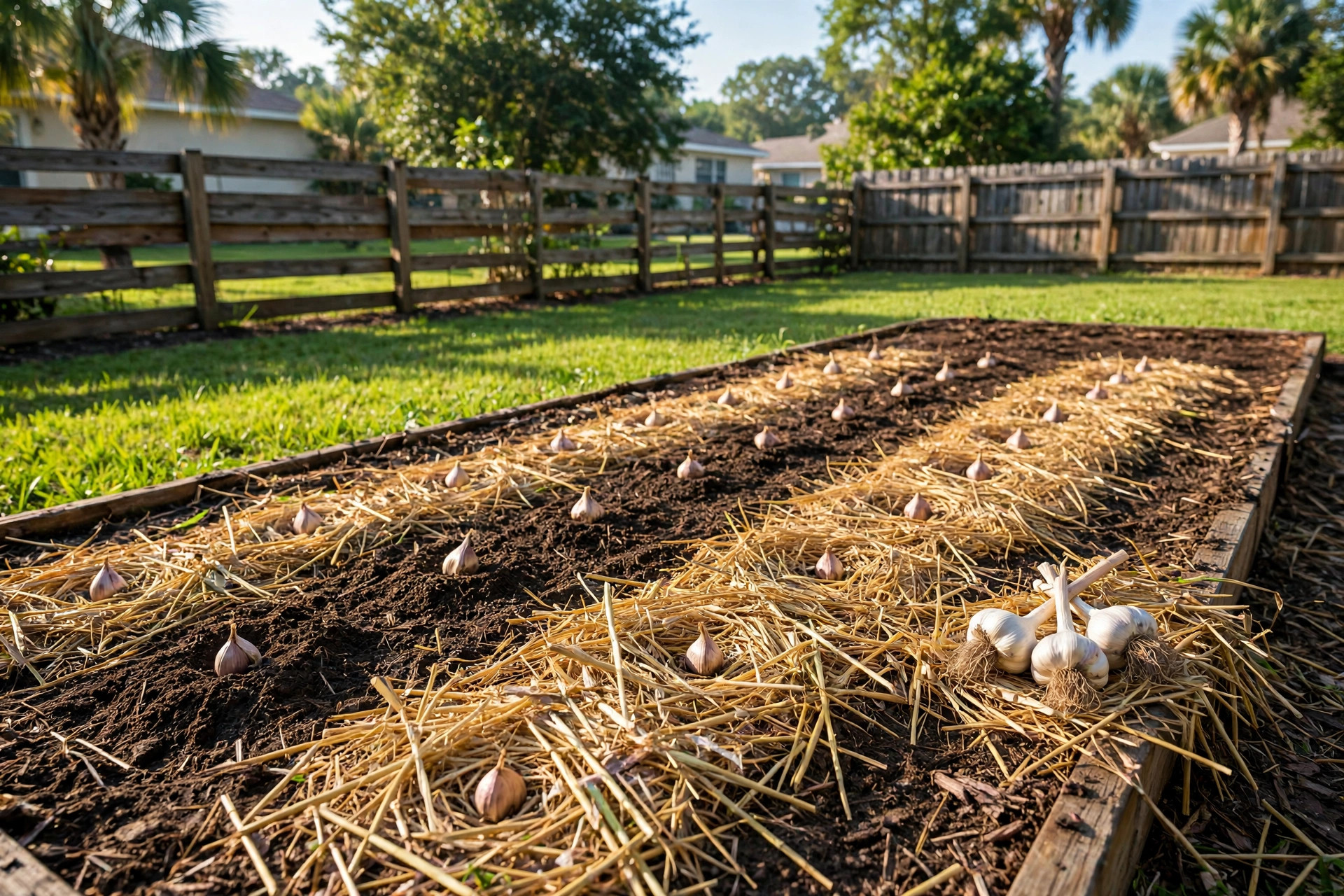
Plant each clove pointed end up, about two inches deep. Space cloves four to six inches apart in rows one foot apart. Cover with soil and press gently. Water well after planting. Then spread a thick mulch of straw, pine needles, or chopped leaves, three to four inches deep. Mulch is vital in Florida. It keeps the soil cool, holds moisture, and stops weeds. Gardening Know How has good notes on mulching vegetable beds through mild winters.
If you garden in pots, use a container at least ten inches deep. Fill it with quality potting mix, not garden soil. Plant three to four cloves per twelve-inch pot. Water well and mulch the top with straw. Pots dry fast in Florida, so check them often.
Cost and Price of Planting Garlic at Home
Garlic is a cheap crop to start. Seed garlic sells by the pound or by the bulb. Expect to pay eight to fifteen dollars per pound for named varieties from a seed company. One pound plants about a four-by-eight-foot bed. That bed can yield five to eight pounds of fresh garlic. Store garlic costs three to five dollars per pound at the market. The math favors the home garden.
Compost and fertilizer add a few dollars. A bag of compost covers a small bed for under ten dollars. Straw mulch is cheap in most of Florida. If you already garden, you may need nothing new at all. A trowel, a bag of bulbs, and a free afternoon are enough.
Organic seed garlic costs a little more. Many growers feel it is worth the price. Organic stock is grown without synthetic sprays, and many organic growers also keep organic herb seeds for Florida homes in the same cool-season garden. For a small home bed, the difference may be only two or three dollars.
Care and Upkeep Through the Growing Season
Garlic is not a fussy plant, but it asks for steady care. Water is the main job. Florida winters can be dry. Give the bed about one inch of water per week. Drip lines or soaker hoses work best. They keep the leaves dry. Wet leaves invite disease in Florida humidity. Stop watering when the lower leaves start to turn brown in spring. This signals that harvest is near.
Feed the plants once or twice. A side dressing of balanced fertilizer in late winter helps the bulbs swell. Scatter it beside the rows, not on the plants, and water it in. Do not overfeed with nitrogen late in the season. Too much nitrogen makes soft bulbs that store poorly.
Watch for weeds. Garlic roots are shallow. Weeds steal water and food. Pull them by hand rather than hoeing deep. The mulch layer will do most of the work for you. Check the mulch through winter and add more if it thins.
Pests are few. Aphids may cluster on the leaves in spring. A strong spray of water knocks them off. Onion thrips can scar the leaves. In most home gardens, healthy plants outgrow these troubles. Rotate the bed. Do not plant garlic or onions in the same spot two years in a row. Rotation breaks the cycle of soil diseases. Monrovia and Proven Winners note the same rotation rule in their planting advice, and White Flower Farm reminds growers that clean soil is the base of every bulb crop.
In late spring, the leaves will yellow from the bottom up. When half the leaves have turned brown, it is time to dig. Loosen the soil with a fork and lift the bulbs gently. Do not pull them by the stems. Brush off the soil and cure the bulbs in a dry, shaded spot with good air flow for two to three weeks. Then trim the roots and tops and store in a cool, dry place.
Safety in the Florida Garlic Garden
Garlic is safe and simple, but a few cautions apply. Wear gloves when working compost or manure into the bed. Wash your hands after handling soil amendments. Keep fertilizers and pest products locked away from children and pets, as the U.S. National Institute of Food and Agriculture advises for all home garden inputs.
Garlic itself can bother some pets. Dogs and cats should not eat large amounts of garlic. Fence the bed if your pets roam the yard. This is a simple step that avoids a vet visit.
Sun safety matters in Florida, even in winter. The planting season brings mild days, but the sun stays strong. Wear a hat, drink water, and take breaks. Most garlic beds take an hour or two to plant. Plan the work for morning or late afternoon.
Frequently Asked Questions
Can you grow garlic in Florida at all?
Yes. Garlic grows well in Florida when you choose the right type and plant at the right time. Softneck and Creole varieties suit the warm winters. Plant in October or November and harvest in late spring.
What month do you plant garlic bulbs in Florida?
Most of Florida plants between mid-October and mid-November. North Florida can start in early October. South Florida does best planting in November, when nights turn cooler.
Should I chill garlic bulbs before planting in Florida?
Chilling helps in much of Florida. Four to six weeks in the refrigerator before planting improves bulb size. This is most useful in central and south Florida, where winter cold is weakest.
How long does garlic take to grow in Florida?
Garlic takes about seven to eight months from planting to harvest. Cloves planted in October are usually ready to dig in May or early June.
Can I plant garlic from the grocery store?
It is better not to. Store garlic may carry disease and may be treated to stop sprouting. Seed garlic from a garden supplier is cleaner, named, and suited to your zone.
How do I know when garlic is ready to harvest?
Watch the leaves. When the lower half has turned brown but a few green leaves remain on top, dig a test bulb. If the wrapper is tight and the cloves are full, harvest the rest.
A Short Final Word
Garlic bulbs planting florida homes usa gardens is a quiet pleasure. It asks for a bag of bulbs, a sunny bed, and a cool season of patience. In return it gives flavor that no store can match and a harvest to share with friends. Plant this fall. Tend the rows through winter. Dig in spring. The Florida garden will reward you.
References
Burpee. (n.d.). Seeds, plants, and gardening supplies. https://www.burpee.com Gardening Know How. (n.d.). Gardening guides and plant care. https://www.gardeningknowhow.com Gurney’s Seed & Nursery Co. (n.d.). Seeds, plants, and garden supplies. https://www.gurneys.com Monrovia. (n.d.). Plants for home gardens. https://www.monrovia.com National Institute of Food and Agriculture. (n.d.). Agricultural research and extension. https://www.nifa.usda.gov Park Seed. (n.d.). Seeds, plants, and gardening supplies. https://www.parkseed.com Proven Winners. (n.d.). Plants and gardening inspiration. https://www.provenwinners.com The Old Farmer’s Almanac. (n.d.). Gardening calendars and advice. https://www.almanac.com The Spruce. (n.d.). Home and garden advice. https://www.thespruce.com White Flower Farm. (n.d.). Plants, bulbs, and garden supplies. https://www.whiteflowerfarm.com
Was this guide helpful?

About David Wilson
The My Garden US editorial team writes practical, in-depth home and garden guides for American homeowners — tested advice, no fluff.
You May Also Like
Lavender Seed Packets for Sale USA: How to Buy and Grow Them Well
March 5, 2026 0 views
Fiddle Leaf Figs for Sale USA: Where and How to Buy Them
July 5, 2026 0 views
Fiddle Leaf Figs for Florida Homes: A Complete Guide for USA Growers
February 28, 2026 0 views