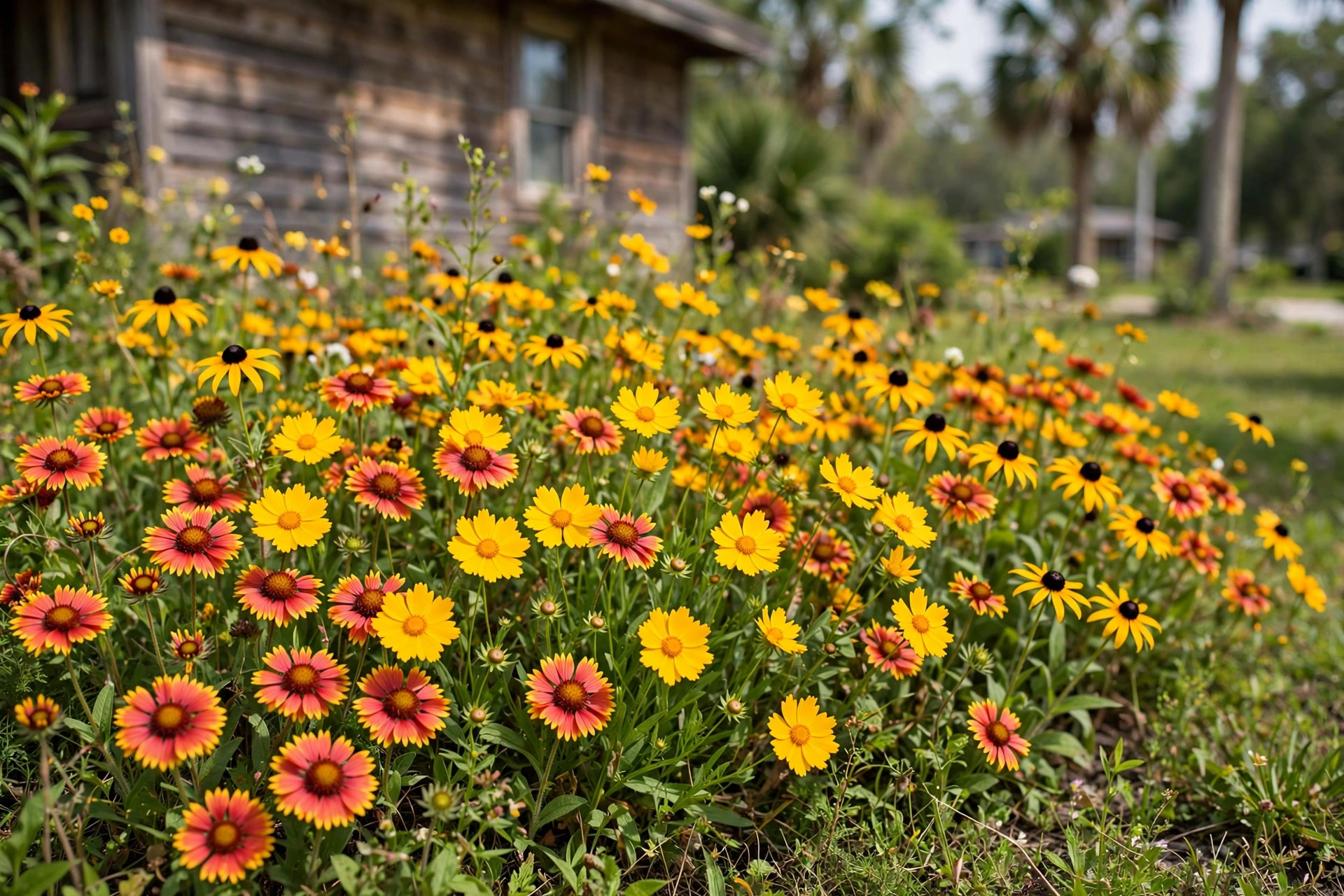

Few sights lift a yard like a patch of wildflowers in full bloom. For Florida homeowners, wildflower seed mixes for Florida homes offer one of the simplest ways to get that beauty. A single bag of seed, sown at the right time, can fill a corner of the yard with color for months. It costs little. It asks little. And it helps the bees and butterflies that visit your street.
This guide walks through the whole matter in plain terms. You will learn why these mixes suit Florida, how to read a seed label, which kinds of mixes to buy, what they cost, how to sow and care for them, and what the safety and legal rules are. Every point is kept simple, in the spirit of an old garden column that trusts the reader to do the work.
Why Wildflower Seed Mixes Matter for Florida Homes
Florida is not like the rest of the country when it comes to planting. The state sits across two very different growing zones. North Florida sees real winter cold. South Florida barely sees frost at all. A seed mix that works in Ohio may fail in Orlando. That is why mixes made for Florida matter so much.
A good wildflower mix gives a homeowner color without the weekly labor of bedding plants. Once the plants are up, they need far less water than a lawn. Many native Florida wildflowers hold up to heat and drought better than turf grass. A wildflower patch can cut the water bill and the mowing time at once.
There is a second reason, and it matters more each year. Pollinators are in trouble across the country. Bees, butterflies, and hummingbirds need food plants that bloom across the seasons. A mixed stand of wildflowers gives them that food. One yard helps. A street of yards helps more. The National Institute of Food and Agriculture notes that pollinators support much of the fruit and vegetable supply, so a home wildflower patch is a small but real public good.
Finally, wildflower mixes suit the Florida pace of life. Many people in the state are snowbirds, renters, or first-time buyers who do not want a garden that demands hours each week. A wildflower bed asks for attention at sowing time and little more.
How to Choose a Wildflower Seed Mix: Wildflower Seed Mixes Florida Homes Usa
Buying seed is easy. Buying the right seed takes a little care. The label on the bag tells you nearly everything. Read it the way you would read a medicine label: slowly, and all the way to the end.
Check the Species List
A trustworthy bag lists every species by its Latin name. Look for Florida natives first. Good names to see include Coreopsis (the state wildflower), Gaillardia or blanketflower, Rudbeckia or black-eyed Susan, and Lupinus or lupine. Guides like Gardening Know How explain which of these suit warm climates and why native plants outperform imports in local soil.
Be careful with bags that only say “wildflower mix” and list no species. Those may hold seed meant for other states. They may also hold filler: cheap annuals that bloom once and leave bare dirt. A mix with named species costs a little more and works a lot better.
Annual, Perennial, or Both
Mixes come in three kinds. Annual mixes grow fast, bloom in the first season, and die at year’s end. Perennial mixes take longer to start but come back year after year. Mixed bags hold both, which gives quick color the first year and lasting plants after.
For most Florida homes, a mix with both annuals and perennials is the sound choice. The annuals cover the ground while the perennials settle their roots. By the second spring, the perennials take over and the bed needs less reseeding.
Regional Formulas
The best seed houses sell region-specific mixes. A Florida or Southeast mix has been chosen for heat, sand, and long growing seasons. Companies such as Burpee and Park Seed carry regional mixes alongside their general catalogs, and nursery growers like Monrovia and Proven Winners offer plant varieties bred to stand up to southern heat.
If you cannot find a Florida-specific mix, a Southeast mix is the next best thing. Avoid mixes labeled only for the North or the Pacific Northwest. They will struggle in Florida sand.
Seed Purity and Germination Rate
The label should give two numbers: purity and germination. Purity tells you how much of the bag is real seed rather than chaff. Germination tells you how much of that seed is expected to sprout. Good mixes show germination above 70 percent. Anything far below that is a poor buy no matter how low the price.
Types of Wildflower Seed Mixes for Florida Yards
Not every yard is the same. The right mix depends on where in Florida you live and what your soil looks like.
North Florida mixes suit zones 8 and 9. Winters are cool enough that many traditional wildflowers, including lupines and some poppies, do well. Sow in fall for spring bloom, or in early spring.
Central Florida mixes suit the middle of the state. Heat and rain both run high. Look for mixes heavy in coreopsis, gaillardia, and black-eyed Susan. These are the workhorses of the Florida wildflower world.
South Florida mixes suit zone 10 and below. Frost is rare, and the growing year never really stops. Choose heat-tolerant species and sow in fall or winter, when rains are lighter and seed will not wash away.
There are also specialty mixes. Butterfly and pollinator mixes lean on nectar plants. Drought-tolerant mixes suit sandy lots with no irrigation. Shade mixes work under live oaks where sun is scarce. A homeowner who wants quick bedding-plant color instead may prefer to start with sunflower seed packs for tall summer blooms, or plan a fall bulb bed with the help of a tulip bulbs guide for American homes.
Cost and Price: What to Expect
Wildflower seed is one of the cheapest ways to change a yard. Prices stay low because a little seed covers a lot of ground.
A one-ounce packet, enough for about 100 square feet, usually costs between 5 and 12 dollars. A quarter-pound bag, enough for roughly 500 square feet, runs 15 to 30 dollars. A full pound, enough for about 2,000 square feet, runs 35 to 80 dollars depending on the species in the mix. These are ordinary 2026 store prices at garden centers and seed houses such as Gurneys and White Flower Farm. Home garden guides like The Spruce also publish seasonal buying advice for seed and supplies.
Perennial-heavy and native-only mixes cost more than plain annual mixes. The extra cost pays for itself, because perennials do not need yearly reseeding. Buying in bulk also cuts the per-pound price nearly in half.
Set aside a small budget for soil preparation as well. A bag of compost or a light tilling rental may cost 20 to 50 dollars. That is often the largest single expense in the whole project.
How to Sow and Care for Your Mix
Sowing wildflowers is simple work, but timing and soil contact decide whether it succeeds.
Prepare the Ground
Wildflower seed needs bare soil. Clear the planting area of grass and weeds first. For a small patch, a garden rake and a few hours will do. For a large area, mow the grass very short, then smother it with cardboard or black plastic for two to three weeks. Rake the top inch of soil loose just before sowing. The seed must touch soil to sprout. Do not bury it deep.
Sow at the Right Time
In most of Florida, fall is the best sowing season. Sow from October through December. Fall rains are gentler than summer storms, and the cooler months let roots grow before the heat of spring. Regional planting calendars, such as those from The Old Farmer’s Almanac, can help pin down the best weeks for your zone. North Florida gardeners can also sow in very early spring. South Florida gardeners should sow in the drier winter months.
Mix the seed with dry sand or sawdust at about four parts filler to one part seed. This spreads the tiny seed evenly. Scatter it by hand over the prepared soil, then press it down with a roller or simply walk over the area. Water lightly.
Water and Weed
Keep the soil damp, not soaked, until the seedlings are two or three inches tall. This usually takes two to four weeks. After that, rain is often enough. Florida wildflowers are tough. Overwatering hurts them more than underwatering.
Weed the bed by hand during the first month. Pull anything you do not recognize, but wait until seedlings are big enough to tell apart. Once the wildflowers close their canopy, most weeds give up.
Let Them Reseed
The great gift of wildflowers is that they plant themselves. At the end of the season, let the seed heads dry on the stems. Mow the bed once, in late fall, to about six inches. Leave the cut material where it falls for a week so the seed drops, then rake it clean. Next spring, new plants will rise on their own. This is how a one-time purchase becomes a lasting bed.
Safety Notes for Florida Homeowners
Wildflowers are safe in the ordinary sense, but a few cautions apply.
Some wildflower species are mildly toxic if eaten. Keep seed packets away from small children and pets, and teach children not to eat plants from the bed. pet owners can check a pet-safety plant list before sowing.
Wear gloves when clearing ground and spreading seed. Florida soil can hide fire ants, and old lots may hold broken glass. A simple pair of garden gloves prevents most trouble.
Check local rules before planting. Some Florida counties and homeowner associations have rules about how tall front-yard plantings may grow and how close they may come to the sidewalk. A wildflower bed is usually welcome, but a quick call to the county extension office avoids a later dispute. Also avoid any mix that lists known invasive plants. Florida has enough trouble with invasives already, and a responsible gardener keeps them out of the yard.
Frequently Asked Questions
How long does it take for wildflower seed mixes to bloom in Florida? Most annuals bloom 8 to 12 weeks after sowing. If you sow in October, expect first flowers in late winter or early spring. Perennials may bloom lightly the first year and strongly the second.
Can I sow wildflower seed over my existing lawn? No, not with good results. Grass outcompetes young wildflower seedlings for light and water. Clear the grass first, even in a small patch, and your seed will stand a far better chance.
Do wildflower beds need fertilizer? Usually not. Most wildflowers prefer poor to average soil. Rich soil makes them grow tall and floppy instead of sturdy. A thin layer of compost at sowing time is plenty.
Will the mix come back every year? Perennials and self-seeding annuals will, if you let the seed heads mature. Mow only once a year, in late fall, and leave the cut stems for a week so seed can drop. Some gardeners add a light overseeding each fall for the first two or three years.
Are wildflower seed mixes safe around dogs and cats? Most are, but some species can upset a pet’s stomach if chewed. Check the species list on the bag against a pet-safety plant list, and keep pets from digging in the bed while seeds are fresh. Shoppers comparing seed deals can browse sunflower seed pack deals for pet-safe sunny options too.
When is the cheapest time to buy seed? Late summer and early fall bring the best prices, as stores stock up for the fall sowing season. Buying larger bags also lowers the cost per square foot.
A Final Word
A wildflower bed is one of the kindest things a homeowner can do for a yard. It asks for a weekend of work and a modest bag of seed. In return it gives months of color, cuts water and mowing, and feeds the bees and butterflies that keep the whole neighborhood alive. Choose a Florida-specific mix, sow in the fall, and let nature do the rest. The old gardeners had it right: the best gardens are the ones that mostly take care of themselves.
References
Burpee. (n.d.). Seeds, plants, and gardening supplies. https://www.burpee.com Gardening Know How. (n.d.). Gardening guides and plant care. https://www.gardeningknowhow.com Gurney’s Seed & Nursery Co. (n.d.). Seeds, plants, and garden supplies. https://www.gurneys.com Monrovia. (n.d.). Plants for home gardens. https://www.monrovia.com National Institute of Food and Agriculture. (n.d.). Agricultural research and extension. https://www.nifa.usda.gov Park Seed. (n.d.). Seeds, plants, and gardening supplies. https://www.parkseed.com Proven Winners. (n.d.). Plants and gardening inspiration. https://www.provenwinners.com The Old Farmer’s Almanac. (n.d.). Gardening calendars and advice. https://www.almanac.com The Spruce. (n.d.). Home and garden advice. https://www.thespruce.com White Flower Farm. (n.d.). Plants, bulbs, and garden supplies. https://www.whiteflowerfarm.com
Was this guide helpful?

About Emily Rodriguez
The My Garden US editorial team writes practical, in-depth home and garden guides for American homeowners — tested advice, no fluff.
You May Also Like
Morning Glory Seeds for Texas Homes: A Complete Growing Guide
May 14, 2026 0 views
Lavender Seed Packets Florida Homes USA: A Plain Guide to Growing Lavender from Seed in the Sunshine State
February 11, 2026 0 views
Onion Sets Planting: An American Homes Guide
June 29, 2026 0 views