
Growing your own onions is a small project with a big reward. The work behind onion sets planting florida homes usa is simple once you know the basics. Florida is a warm state. That warmth shapes every choice you make, from which onion sets to buy to the month you put them in the ground. A bag of onion sets costs little. A patch of soil four feet wide can feed a family for weeks. This guide walks you through the whole process in plain language. It covers why sets beat seeds for beginners, what to look for at the store, the right varieties for Florida heat, and how to plant, water, and harvest. By the end, you will know enough to plant with confidence and pull your first sweet bulbs from the ground.
Why Onion Sets Make Sense for Florida Gardeners
An onion set is a small, half-grown onion bulb. Growers start it from seed one year, then stop it before it swells. You buy these small bulbs and plant them in your garden. They wake up fast and grow into full onions. For many Florida gardeners, sets are the easiest way to begin. Seeds take months to size up. Sets skip that long wait.
Florida weather is the main reason sets do well here. Most of the state sits in warm growing zones, roughly zones 8 through 11. Onions need the right day length to form bulbs. Florida gardeners must grow short-day types. These varieties start bulbing when days reach only ten to twelve hours. That fits Florida winters, when days are short and mild. A beginner who picks up the right short-day sets is halfway to a harvest.
Sets also forgive mistakes. If you plant them a little late or water a little wrong, they often pull through. Seed-grown onions are fussier. Many home gardeners in Florida plant sets between October and December. The plants grow through the cool months and swell in late winter or early spring. The harvest comes before the summer heat turns fierce.
What to Look For When You Buy Onion Sets: Onion Sets Planting Florida Homes Usa
Not every bag of sets is worth your money. Good sets feel firm and dry. They should be about the size of a dime or a marble. Sets that are soft, wet, or sprouting green tops in the bag may rot in the ground. Pick up the bag and look for mold. A sour smell is a bad sign.
Buy from a source you trust. Garden centers, farm supply stores, and well-known seed companies all sell sets. Buying online works too, but check that the seller ships sets suited to your zone. If you want help comparing options, see this onion sets planting buying guide for a plain rundown of what matters at purchase time.
Read the variety name on the label. For Florida, the name tells you if the set fits. Look for the words short day on the package. If the label says long day, put it back. Long-day onions need fourteen to sixteen hours of daylight. Florida never gives them that. They will grow tall tops and small bulbs, and you will be disappointed.
Ask about the variety if the label is thin. Good stores know what they sell. If the clerk cannot tell you the variety or the day length, shop somewhere else. The planting guides and calendars from the Old Farmer’s Almanac can help you match the right timing to your part of Florida.
Types and Options: Short-Day Varieties for Florida
Three main types of onions exist in stores. Yellow onions are the workhorse. They store well and cook well. Red onions add color to salads and sandwiches. White onions are mild and sweet when fresh. All three can grow in Florida if the variety is a short-day type.
Some short-day names show up again and again in Florida gardens. Yellow Granex is a classic sweet onion for the South. Texas Early Grano types also do well. Red Creole is a red short-day onion with good flavor. White Bermuda gives mild white bulbs. Vidalia-type sweet onions come from Granex lines grown in Georgia soil, but the same families grow fine in Florida yards.
Sets come in red, yellow, and white mixes too. A mixed bag lets you try all three colors at once. Some gardeners prefer onion transplants, which are small green plants rather than bulbs. Transplants grow into large bulbs fast, but they wilt in shipping and need planting right away. Sets wait patiently in a cool, dry spot until you are ready.
Which Variety Fits Your Kitchen
Think about how you cook. If you fry onions most nights, plant more yellows. They caramelize well and keep for months. If you eat fresh salads, plant reds for color and bite. If you grill in spring, plant whites to eat fresh from the garden. Most families do well with a mix. A four-by-four-foot bed holds about forty sets, so you can try several kinds at once.
Seed houses like Burpee list day-length notes next to each onion variety, which helps you sort short-day from long-day types. Gurney’s Seed and Nursery carries many vegetable varieties with plain growing notes. White Flower Farm offers bulbs and garden stock with honest descriptions. You can also browse Monrovia for plants and Proven Winners for garden ideas when you plan the rest of your beds.
How to Plant Onion Sets in Florida
Timing is the first choice. In North Florida, plant sets from October through December. In Central Florida, November through January works. In South Florida, you can plant from late fall into early winter. The goal is simple. The plants should grow roots and tops during the cool months, then bulb up as days lengthen in late winter and spring.
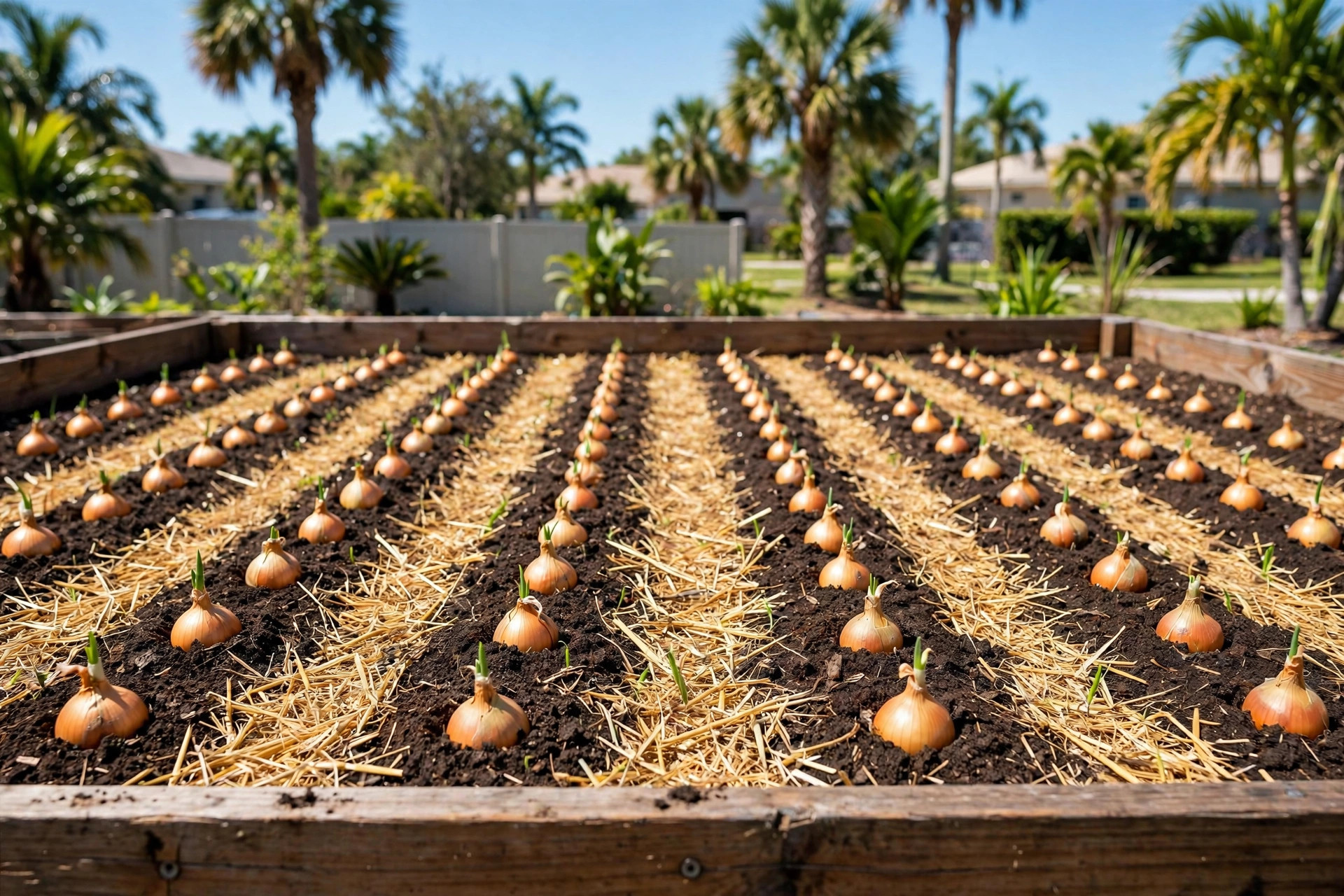
Pick a sunny spot. Onions need full sun, which means six to eight hours of direct light. A raised bed is ideal in Florida because the soil drains fast and warms early. If your yard holds water after rain, build the bed up at least six inches. Sandy Florida soil drains well but holds few nutrients, so mix in compost before you plant.
Test or fix the soil. Onions like soil that is loose and rich. The pH should sit between 6.0 and 7.0. If you have never tested your soil, a cheap kit from the garden center is enough. Add two to three inches of compost and work it into the top six inches of the bed. Some gardeners add a balanced fertilizer at planting time. Keep it light. Too much nitrogen late in the season grows tops at the cost of bulbs.
Plant each set about one inch deep. Push the pointed end up and cover it with soil. Leave the tip just at or slightly below the surface. Space sets four to six inches apart in rows twelve inches apart. Crowded sets grow small bulbs. Give each plant room to swell.
Water right after planting. Settle the soil around each set so air pockets close. Then mulch lightly with straw or pine needles. Mulch keeps the soil moist and holds down weeds. Keep the mulch a little back from the neck of each plant so the tops stay dry.
Cost and Price: What a Bag of Sets Buys
Onion sets are one of the cheapest ways to start a vegetable garden. A bag of eighty to one hundred sets often costs between three and eight dollars. That one bag can fill a small bed and yield many pounds of onions. Seeds cost less per plant, but they take more time and skill. Transplants cost more per plant and ship poorly.
Figure the yield. Forty healthy sets can give you twenty to thirty pounds of onions. At store prices, that harvest is worth far more than the bag cost. The rest of the expense is small. Compost, a bag of fertilizer, and mulch may add ten to fifteen dollars. Tools are a one-time cost if you already garden.
Buy enough for your space. Measure your bed before you shop. A four-by-eight-foot bed with rows a foot apart holds about two hundred sets. That is two bags. Do not overbuy. Sets keep for a few weeks in a cool, dry place, but they slowly lose vigor. Plant what you buy within a month.
Care and Upkeep Through the Season
Onions need steady water. Give the bed about one inch of water per week. Sandy Florida soil dries fast, so water deeply and less often rather than a little each day. A soaker hose under the mulch works well. It puts water at the roots and keeps the tops dry.
Feed the plants once or twice. Side-dress with a balanced fertilizer about a month after planting, and again a month later. Scratch it lightly into the soil and water it in. Stop feeding when the bulbs start to swell. Late feeding pushes leaf growth and soft bulbs.
Weed by hand. Onion roots sit near the surface, so a hoe can slice them. Pull weeds gently while the soil is damp. Mulch does most of the weed work for you. Check the bed once a week and pull what comes up.
Watch for pests and rot. Thrips are tiny insects that suck onion leaves and leave silvery streaks. A strong spray of water knocks many off. Pink root and basal rot show up in warm, wet soil. Good drainage and crop rotation prevent most disease. Do not plant onions where onions or garlic grew last year. If you like growing their cousins, read this garlic bulbs planting buying guide for notes that carry over to the whole allium family.
Harvest when the tops fall over. That is the plant’s signal that the bulbs are done. Pull the onions and let them cure in a dry, shady spot for a week or two. The skins will tighten and the necks will dry. Then trim the tops, brush off the soil, and store the bulbs in a cool, airy place. Sweet short-day onions keep for a month or two, less than storage types, so eat them fresh.
Safety in the Garden
Garden work is safe, but a few habits keep it that way. Wear gloves when you handle fertilizer and compost. Wash your hands before you eat. Keep fertilizer bags sealed and stored high, away from children and pets. Read the label before you spread anything. More is not better.
Sun safety matters in Florida. Plant in the morning or late afternoon. Wear a hat and drink water. Take breaks in the shade. A kneeling pad saves your knees when you plant two hundred sets. Keep tools clean and sharp. A dull trowel slips and cuts.
If you grow other crops in the same beds, keep notes. Simple records tell you what worked. The garden advice and how-to articles at Gardening Know How and the home and garden guides at The Spruce both offer plain checklists for safe, tidy garden habits.
Frequently Asked Questions
When is the best time to plant onion sets in Florida?
Plant in the cool months. North Florida gardeners plant from October through December. Central Florida does well from November through January. South Florida can plant into early winter. The plants grow through the mild season and bulb up in late winter and spring.
Can I plant onion sets in the spring in Florida?
Spring planting is risky. Sets planted in March or April face rising heat before the bulbs size up. You may get small bulbs or none. Fall and early winter planting gives the best results across the state.
Do onion sets need full sun?
Yes. Give them six to eight hours of direct sun each day. Shade grows tall tops and thin bulbs. A south-facing bed with no tree cover is best.
How deep should I plant onion sets?
Plant about one inch deep with the pointed end up. Cover the set lightly and firm the soil. Sets planted too deep rot. Sets left on the surface dry out or tip over.
Why are my onions growing tops but no bulbs?
The most common cause is the wrong day length. Long-day sets will not bulb in Florida. Buy short-day varieties only. Overcrowding and late heavy feeding also shrink bulbs. Thin the row and stop fertilizer once bulbing starts.
How long do Florida onions take to mature?
Most short-day sets mature in ninety to one hundred twenty days from planting. Sets planted in November often harvest in March or April. Watch the tops. When they yellow and fall over, the bulbs are ready.
A Final Word
The method behind onion sets planting florida homes usa is not a secret. Buy firm short-day sets. Plant them in cool months in sunny, well-drained soil. Water steady, weed by hand, and harvest when the tops fall. A small bed and a few dollars in sets can fill your kitchen with sweet onions by spring. If this is your first vegetable, onions are a kind teacher. They ask for little and give back plenty. Pair the bed with other easy crops, like the seeds in this heirloom vegetable seeds buying guide, and your Florida garden will grow a little bolder each year.
References
Burpee. (n.d.). Seeds, plants, and gardening supplies. https://www.burpee.com Gardening Know How. (n.d.). Gardening guides and plant care. https://www.gardeningknowhow.com Gurney’s Seed & Nursery Co. (n.d.). Seeds, plants, and garden supplies. https://www.gurneys.com Monrovia. (n.d.). Plants for home gardens. https://www.monrovia.com Proven Winners. (n.d.). Plants and gardening inspiration. https://www.provenwinners.com The Old Farmer’s Almanac. (n.d.). Gardening calendars and advice. https://www.almanac.com The Spruce. (n.d.). Home and garden advice. https://www.thespruce.com White Flower Farm. (n.d.). Plants, bulbs, and garden supplies. https://www.whiteflowerfarm.com
Was this guide helpful?

About Robert Taylor
The My Garden US editorial team writes practical, in-depth home and garden guides for American homeowners — tested advice, no fluff.
You May Also Like
Tulip Bulbs Fall Reviews Buying Guide USA
March 24, 2026 0 views
Seed Starting Trays California Homes USA: A Practical Growing Guide
March 2, 2026 0 views
Lavender Seed Packets Florida Homes USA: A Plain Guide to Growing Lavender from Seed in the Sunshine State
February 11, 2026 0 views