
Introduction
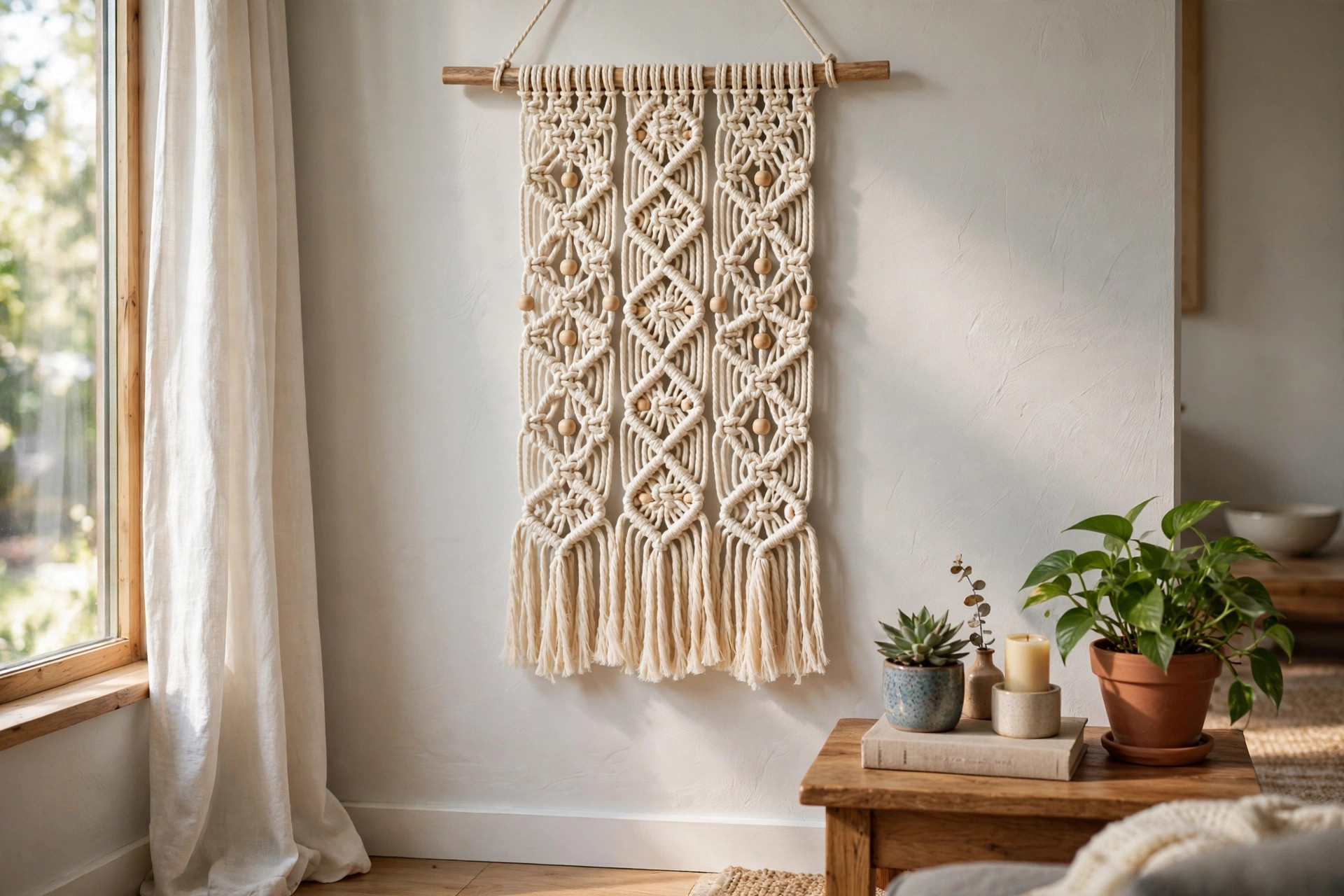
A macrame cord kit for wall hanging diy projects gives beginners a simple way to start a classic craft. The box holds the cord, a wooden dowel or branch, beads, and clear steps. You do not need to buy each item on its own. You do not need years of practice. Many people finish their first wall hanging in one weekend.
Macrame is the art of tying knots to make patterns. It is one of the oldest crafts in the world. Sailors used knotting skills on ships hundreds of years ago. In the nineteen seventies, macrame wall hangings filled many American homes. The craft has come back in a strong way. Young families and new homeowners hang handmade pieces in living rooms, bedrooms, and nurseries.
A kit takes the guesswork out of the first project. You get the right amount of cord in the right thickness. You get a sturdy dowel to hang the work. Most kits also include a printed guide with knot diagrams.
Why It Matters: Macrame Cord Kit for Wall Hanging Diy
Making your own wall decor saves money. A handmade macrame piece in a shop can cost sixty dollars or more. A kit that makes the same size piece often costs under twenty-five dollars. You also learn a skill you can use again and again.
Macrame is kind to beginners. You need only your hands. There are no loud machines and no sharp tools. The work is quiet and calm. Many people say knotting helps them relax after a long day. A kit makes the start even gentler because everything is measured and ready.
A finished wall hanging adds warmth to a room. The soft texture of cotton cord suits many styles. It fits well with wood furniture, houseplants, and woven baskets. People hang pieces above beds, sofas, and entry tables. A handmade piece also makes a thoughtful gift. No two pieces are exactly alike, even when they follow the same pattern.
What to Look For: How to Choose a Kit
A good kit starts with good cord. Most beginner kits use cotton cord or cotton rope. Cotton is soft on the hands and easy to knot. Single-twist cord gives a smooth, neat look. Three-ply rope has more texture and holds knots well. Many kits use cord that is three or four millimeters thick. This size is easy to see and easy to tie for a first project.
Check how much cord the kit holds. Wall hangings need more cord than most people expect. A small piece about twelve inches wide can need eighty to one hundred yards of cord. A large statement piece can need two hundred yards or more. The best kits tell you the finished size of the project on the box. Match that size to the wall space where you plan to hang the piece.
Look at the dowel or hanger that comes in the box. Most kits include a wooden dowel, a natural branch, or a metal hoop. The dowel should be smooth and strong. If you like the natural look, a kit with a raw branch can be very charming. A metal hoop gives a modern, clean shape.
Read the guide before you buy if you can. Good kits include knot diagrams that are large and clear. The best ones show each knot in three or four steps. They list how to tie the square knot, the lark’s head knot, and the double half hitch. These three knots make up most beginner patterns. You can find extra help on craft sites such as Michaels, which sells kits and tools for many types of fiber crafts.
Some kits add beads or tassels. Wooden beads in natural tones suit most rooms. Glass or clay beads add color. If the kit includes beads, make sure the holes are wide enough for the cord. A bead that will not slide onto the cord is of no use.
Check the skill level printed on the box. Kits marked for beginners should use only basic knots. Kits marked for all levels may include harder knots like the berry knot or the spiral knot. These are fine for a second project but can frustrate a first attempt.
Finally, look at the price. For a first kit, the range of fifteen to thirty dollars is normal. Very cheap kits may use thin, weak cord that frays. Very costly kits may include extras you do not need yet.
Types and Options
Kits come in many styles. Knowing the main types helps you pick one you will enjoy.
Classic square-knot kits. These use rows of square knots to make a flat, even pattern. The look is simple and tidy. They are the best choice for a true beginner.
Fringed boho kits. These kits make pieces with long, loose fringe at the bottom. The fringe can be left straight or combed out for a soft, feathery look. Boho styles suit rooms with plants and rattan furniture.
Hoop kits. Instead of a dowel, these kits use a metal or wood hoop. The cord hangs from the ring in a circle or half-circle shape. Hoop hangings look modern and fit small spaces.
Layered kits. These kits make hangings with several rows of different patterns. They may use beads between the layers. They take longer but give a rich, full look.
Mini kits. Small kits make hangings about eight inches wide. They are good for children over ten or for a quick evening project. A mini kit can also test whether you like the craft before you buy a large kit.
Natural branch kits. These kits pair cotton cord with a real tree branch. The branch gives each piece a one-of-a-kind shape. No two branches are the same.
Some makers sell kits with colored cord. Natural cream and beige are the most common colors. But you can also find kits in terracotta, sage green, navy, and blush pink. Colored cord suits rooms with a clear color plan.
Cost and Price
A beginner macrame cord kit for wall hanging diy usually costs between fifteen and thirty dollars. Mid-range kits with more cord, beads, and a nice dowel run from thirty to fifty dollars. Large statement kits that make pieces three feet wide can cost fifty to eighty dollars.
Buying the parts on your own often costs more. A spool of good cotton cord alone can cost twelve to twenty dollars. The kit saves money because the maker buys in large amounts.
Watch for sales at large craft stores. Stores like JOANN and Blick carry fiber craft supplies and often mark kits down during holiday sales. Online marketplaces such as Etsy sell kits from small makers. Big box stores like Walmart and Amazon carry low-cost kits that are fine for practice.
When you compare prices, look at the cord weight. A kit with more cord is often the better deal, even if the price is a little higher. Also check the cord material. Pure cotton costs more than cotton blends but looks and feels better in the finished piece.
How to Make Your First Wall Hanging
Set up a clean work space. You need a table or a door frame to hang the dowel while you work. Many people hang the dowel on a clothes rack or a curtain rod. The cord should hang free so you can see the pattern as it grows.
Start with the lark’s head knot. Fold a cord in half. Place the folded loop over the dowel. Pull the two loose ends through the loop and pull tight. Repeat this across the dowel. Most patterns tell you how many cords to mount.
The square knot is the heart of macrame. Take four cords. Hold the two middle cords straight as the filler cords. Take the left cord and make a four shape over the middle cords. Take the right cord over the end of the left cord, behind the middle cords, and up through the loop on the left. Pull tight. Then repeat with the right cord first. Two of these moves make one full square knot.
The double half hitch makes diagonal lines. It is a little harder, but most beginner kits teach it. Hold one cord across the others as a guide. Wrap each working cord twice around the guide cord. Pull each wrap snug. Rows of double half hitches make the V shapes you see in many patterns.
Work slowly and keep your tension even. Knots that are too tight make the piece curl. Knots that are too loose look messy. Step back often to look at the whole piece. It is easier to fix a row early than to undo a whole section later.
When the pattern is done, trim the fringe. Sharp fabric scissors give the cleanest cut. Some people brush the fringe with a pet comb to make it soft and full.
You can also find step-by-step craft advice at home-improvement sites. Family Handyman covers DIY skills for the home, and Bob Vila offers guides for hands-on projects. For general home craft supplies, The Home Depot carries rope, dowels, and hanging hardware. This Old House shares skilled how-to content for home projects of all kinds.
Care and Upkeep
A macrame wall hanging needs little care. Dust it once a month with a soft brush or a cool hair dryer. Do not use water unless the care card says it is safe. Water can make cotton cord shrink or stain.
Keep the piece out of direct sun. Strong sun fades colored cord over time. A spot on a wall that gets soft, indirect light is best.
If the fringe gets flat, comb it gently with a wide-tooth comb. Start at the tips and work up. Do not pull hard. If a knot comes loose, you can usually retie it by hand. Cotton cord is forgiving.
Keep the hanging away from steam and grease. Do not hang macrame in a kitchen near the stove or in a bathroom with a hot shower. Moisture can cause mildew in thick cotton cord. A living room, bedroom, hallway, or covered porch is ideal.
Store spare cord in a dry bag or box. Keep it out of the sun. Cord that is kept well will be ready for your next project.
Safety
Macrame is a safe craft, but a few simple rules help. Keep long cords away from small children and pets. Loose cords can be a strangling hazard for babies and toddlers. Hang finished pieces high enough that a child cannot reach the cords.
Use sharp scissors with care. Cut away from your body. Keep scissors in a closed box when not in use, especially in homes with children.
If you mount a heavy piece on the wall, use the right hardware. A large hanging with a thick branch can weigh several pounds. Use a wall anchor or a stud finder to mount the hook. The Home Depot sells picture-hanging kits that work well for this.
Some people are sensitive to cotton dust. If your nose or eyes feel itchy while you work, open a window. Wash your hands when you finish.
Frequently Asked Questions
How long does a first project take? Most beginners finish a small wall hanging in four to six hours. You can split the work over two or three evenings. A large piece can take ten to fifteen hours. Take breaks so your hands do not get sore.
Do I need any tools besides what is in the kit? Most kits include everything except scissors and a tape measure. A clothes rack or curtain rod helps hold the dowel while you work. A fine comb helps fluff the fringe at the end.
Can children make macrame? Children over ten can make simple pieces with help from an adult. Mini kits with thick cord are best for young hands. Keep scissors and long cords out of reach of small children.
What is the best cord for beginners? Three or four millimeter single-twist cotton cord is the best choice. It is soft, easy to see, and easy to untie if you make a mistake. Avoid very thin cord for a first project. It is harder to handle and shows every error.
How do I hang the finished piece? Most kits include a hanging cord or a loop on the dowel. Use a nail, hook, or picture hanger rated for the weight. For heavy pieces, screw the hook into a wall stud or use a wall anchor.
Can I wash a macrame wall hanging? It is best not to wash it. Spot clean with a dry cloth or a soft brush. If it must be cleaned, check the cord label first. Many cotton cords can be hand washed in cool water, but the piece may lose its shape.
A Short Final Word
A macrame cord kit for wall hanging diy is one of the easiest doors into handmade home decor. You get the right materials, a clear pattern, and a project you can finish in a weekend. The knots are simple. The cost is low. The result is a piece of art made by your own hands. Buy a beginner kit, clear a table, and tie your first knot. Your walls will thank you.
Related Crafts to Try Next
If you enjoy fiber crafts, you may also like a diy tie dye kit for shirts and crafts. If you want to personalize fabric, read about the best iron on vinyl for cricut projects usa. And if you are new to sewing, start with the best sewing kit for beginners adults crafts.
References
Amazon. (n.d.). Online shopping. https://www.amazon.com Blick Art Materials. (n.d.). Art and craft supplies. https://www.dickblick.com Bob Vila. (n.d.). Home improvement advice. https://www.bobvila.com Etsy. (n.d.). Handmade and craft marketplace. https://www.etsy.com Family Handyman. (n.d.). DIY home repair and maintenance. https://www.familyhandyman.com JOANN. (n.d.). Fabric and craft supplies. https://www.joann.com Michaels. (n.d.). Arts and crafts supplies. https://www.michaels.com The Home Depot. (n.d.). Home improvement products. https://www.homedepot.com This Old House. (n.d.). Home renovation guidance. https://www.thisoldhouse.com Walmart. (n.d.). Everyday low prices. https://www.walmart.com
Was this guide helpful?

About Sarah Mitchell
The My Garden US editorial team writes practical, in-depth home and garden guides for American homeowners — tested advice, no fluff.
You May Also Like

Finding the Best Craft Desk with Storage for Cricut Machine
May 4, 2026 0 views
The Best Craft Storage Cart With Drawers Rolling: A Complete Guide
February 22, 2026 0 views
Best Embroidery Machine for Small Business USA: A Plain Guide for New Owners
January 1, 2026 0 views