
Homeowners who want lower energy bills are asking about the heat pump water heater installation cost usa buyers pay in 2026. A heat pump water heater, also called a hybrid water heater, moves heat from the surrounding air into the water instead of making heat with an electric element or a gas burner. It uses far less electricity than a standard electric tank. The unit costs more up front, and the install takes more skill, but the long run savings can be large. This article lays out the full picture: what the job costs, what drives the price up or down, the types of units on the market, and how to keep one running well for years.
Why Heat Pump Water Heaters Matter
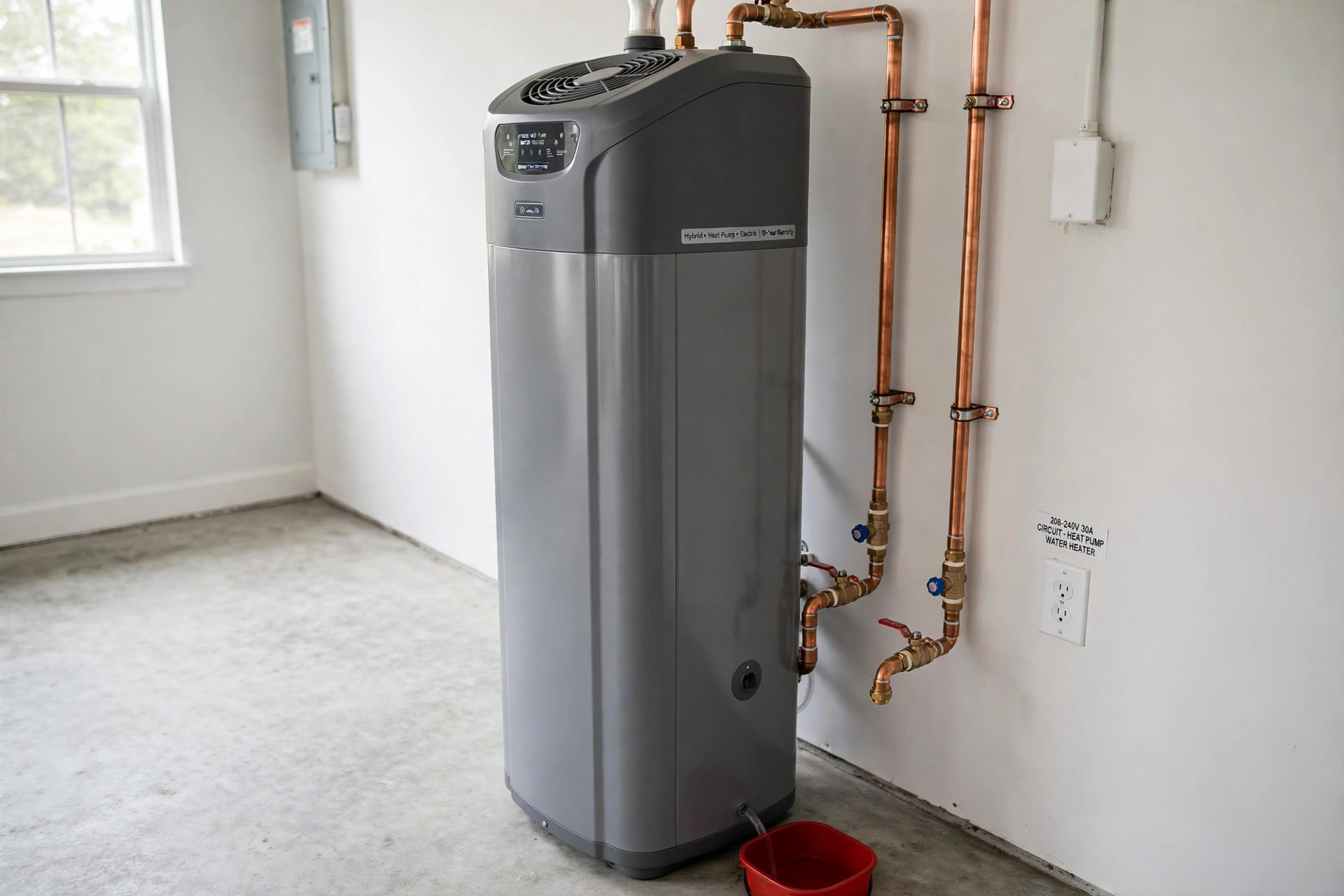
Water heating is the second largest use of energy in most American homes, behind space heating and cooling. A standard electric tank water heater turns electricity straight into heat at about the same rate as a toaster. A heat pump water heater works more like a refrigerator run in reverse. It pulls warmth from the air around it and puts that warmth into the tank water.
The result is a machine that uses two to three times less electricity than a plain electric tank of the same size. Over ten years, that gap can mean thousands of dollars saved. The U.S. Department of Energy notes that heat pump water heaters can cut water heating energy use by more than half. See the efficiency guidance at the U.S. Environmental Protection Agency and the federal Energy Star program for current ratings.
There is also the rebate story. Many states and utilities still pay homeowners to switch from gas or standard electric tanks to heat pump models. In some regions, the rebate covers a third or more of the heat pump water heater cost installed. These programs change often, so check your local utility before you sign a quote.
How the Heat Pump Water Heater Installation Cost in the USA Is Figured: Heat Pump Water Heater Installation Cost Usa
No two installs cost the same. A licensed plumber prices the job from several parts:
– The unit itself. A 50-gallon residential unit usually sells for $1,500 to $2,500. Larger 80-gallon models run $2,000 to $3,200. Brand name and warranty length move the price. – Labor. Expect $800 to $1,800 for a straightforward swap where an old tank stood. If pipes, drains, or wiring must be rerouted, labor can pass $2,500. – Electrical work. Most heat pump water heaters need a dedicated 240-volt circuit. If the panel is full or the run is long, an electrician adds $300 to $1,000. – Permits and inspection. Most cities require a plumbing permit. Budget $50 to $300. – Extras. A condensate pump, pan, new shutoff valves, or earthquake straps can add $100 to $400.
Put together, the typical heat pump water heater installation cost in the USA lands between $2,500 and $5,500 in 2026 for a 50-gallon replacement. Hard jobs with new wiring and venting can reach $7,000. The lowest prices appear in mild-climate states where plumbers do these installs every week and rebates are strong.
Types and Options
Integrated Tank Units
The common choice is an all-in-one unit. The heat pump sits on top of the storage tank. Sizes run from 40 to 80 gallons. A family of four usually needs a 50-gallon tank at minimum. These units are tall, often over 60 inches, so measure the closet or garage before you buy. Retailers such as The Home Depot and Lowe’s stock the main brands and list full dimensions online.
Split Systems
A split system puts the heat pump outside, like a small air conditioner, and keeps only the tank inside. This suits cold basements or tight closets where the indoor unit would struggle to find warm air. Split systems cost more and need a refrigeration technician, not just a plumber.
Add-On Heat Pump Units
A few makers sell a heat pump box that bolts onto an existing electric tank. These are rare in the United States and are usually a poor fit unless the tank is nearly new.
Comparison With Other Water Heaters
A standard electric tank costs $1,200 to $2,000 installed but doubles the energy use. An electric tankless water heater costs $2,000 to $4,500 installed, saves floor space, and needs heavy wiring. A gas tank costs $1,500 to $3,000 installed where gas lines exist. The heat pump model is the most efficient of the group and the cheapest to run, but it is also the tallest and the noisiest, with a low hum like a dehumidifier. For homes with damp basements, a crawl space dehumidifier can solve moisture problems that a heat pump water heater alone cannot.
What to Look for When You Choose
Uniform Energy Factor (UEF). This is the official efficiency number. Look for a UEF above 3.0. Higher is better. The yellow EnergyGuide label on each unit shows the yearly cost estimate.
First-hour rating. This tells how many gallons of hot water the unit can deliver in a busy morning hour. Match it to your household. Two bathrooms and four people need at least 60 to 70 gallons of first-hour delivery.
Noise level. The compressor and fan make sound. Most units run near 45 to 55 decibels. That is fine in a garage but loud for a bedroom closet.
Room size and air temperature. The unit needs about 700 to 1,000 cubic feet of air space to work well. Small closets need a louvered door or ducting. The room should stay above 40 degrees Fahrenheit. In cold climates, a garage or basement works better than an unheated crawl space.
Operating modes. Most units offer heat pump only, hybrid, and electric only modes. Heat pump only is the cheapest to run. Hybrid adds the elements on heavy-use days. Electric only is a backup if the compressor ever fails.
Warranty. Tank warranties run 6 to 10 years. Longer is worth paying for, since a tank swap repeats the whole install cost. Fixture and valve quality matters too; established plumbing brands such as Moen, Delta Faucet, and Kohler publish clear warranty terms worth comparing when you plan the whole job.
Condensate handling. The heat pump pulls moisture from the air and drips it into a drain. The install must include a drain line or a pump. A missing drain is the most common rookie mistake.
Cost and Price Details
Let us walk through three real cases from 2026 quotes.
Simple swap. A 50-gallon heat pump unit replaces a dead electric tank in a Florida garage. The 240-volt circuit is already there. Unit $1,800, labor $1,000, permit $120, small parts $150. Total: $3,070. A $750 utility rebate drops it to $2,320.
Moderate job. A 65-gallon unit goes into a New Jersey basement. The plumber adds a condensate pump and reroutes the drain. Unit $2,200, labor $1,600, electrician $400, permit $200, parts $250. Total: $4,650. State rebate of $1,000 brings it to $3,650.
Hard job. An 80-gallon unit replaces a gas tank in an Oregon home. New 240-volt circuit from a full panel, plus vent changes. Unit $2,900, labor $2,400, electrician $950, permit $250, parts $400. Total: $6,900. Combined state and utility incentives of $2,000 cut it to $4,900.
Notice how much rebates change the math. The gross heat pump water heater installation cost in the USA sounds steep next to a $1,500 electric tank. After rebates and ten years of energy savings, the heat pump often wins by $3,000 or more. Guides at This Old House and Family Handyman walk through similar cost breakdowns for planned remodels.
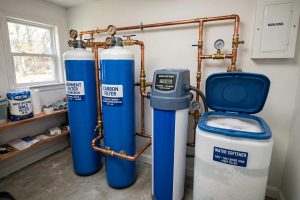
If your home also needs water treatment, price it at the same time. A plumber already on site can quote the water softener installation cost with little extra trip charge, and filtration makers like Aquasana list whole-house options that pair well with a new tank.
Ways to lower the price:
1. Get three written quotes. Prices for the same unit can differ by $1,500 between shops. 2. Ask each bidder to itemize unit, labor, electrical, permit, and parts. 3. Claim every rebate. Check your utility, your state energy office, and federal tax credits before work starts. Some credits require the unit to meet a minimum UEF. 4. Schedule in the off season. Plumbers are busiest after winter freeze damage. Spring and fall quotes run lower. 5. Keep the old tank location if it works. Moving a water heater doubles the plumbing labor.
Care and Upkeep
A heat pump water heater needs the same tank care as any other tank, plus attention to its air system.
– Clean the air filter every three months. A clogged filter forces the compressor to work harder and shortens its life. – Flush sediment once a year. Hook a hose to the drain valve and run water until it runs clear. – Check the condensate drain each spring. Algae can clog the line and trip the overflow switch. – Test the temperature and pressure relief valve yearly. Lift the lever briefly and make sure water flows, then stops. – Keep clearance around the unit. Do not box it in with stored goods. The fan needs free air on all sides. – Inspect the anode rod every three years. A worn rod lets the tank rust from the inside.
Most units last 10 to 15 years with this care. The compressor is the heart of the machine; keeping its filter clean is the single best thing you can do.
Safety
Water heaters mix electricity, water, and heat. Respect all three.
– Hire a licensed plumber and a licensed electrician. A permit and inspection protect your insurance coverage. – Set the thermostat to 120 degrees Fahrenheit. Higher settings waste energy and raise scald risk. – Never cap or plug the temperature and pressure relief valve. It is the last defense against a tank overpressure event. – The condensate drain must empty where water cannot damage floors. A pan under the tank is cheap insurance. – In earthquake country, strap the tank to wall studs with approved bands. – If the unit runs in a garage, keep gasoline, paint, and solvents away from it. The fan moves a lot of air and can spread fumes.
Frequently Asked Questions
How long does installation take? A simple swap takes four to six hours. Jobs with new wiring or drain rerouting take a full day. Permit inspection adds a separate visit in most cities.
Can a heat pump water heater work in a cold climate? Yes, with limits. The unit needs room air above about 40 degrees. In a heated basement or garage, it runs fine through northern winters. In an unheated outbuilding, it will switch to electric mode and lose its savings.
Is it louder than a normal water heater? Yes. A standard tank is silent. A heat pump unit hums and clicks at roughly the level of a window fan. Place it away from bedrooms.
What size do I need? A 50-gallon tank suits two to three people. Four people need 65 gallons. Five or more need 80 gallons. When in doubt, size up. Running out of hot water is worse than a slightly higher price.
Do I need to upgrade my electrical panel? Often not. Most panels have room for one more 240-volt breaker. If the panel is full or very old, an upgrade adds $1,500 to $3,000 to the project. Ask the electrician during the quote visit.
How fast is the payback? Against a standard electric tank, most households break even in three to six years after rebates. Against gas, the payback is longer because gas is cheap per unit of heat. The federal tax credit shortens both cases.
A Short Final Word
The heat pump water heater installation cost usa homeowners face in 2026 is higher than a plain tank, usually $2,500 to $5,500 before rebates. The machine pays back that gap with deep energy savings, and rebates often erase a third of the bill. Measure your space, get three quotes, check every incentive, and hire licensed pros. Do that, and the heat pump water heater becomes one of the smartest upgrades a home can make.
References
Aquasana. (n.d.). Water filtration systems. https://www.aquasana.com Delta Faucet. (n.d.). Kitchen and bathroom faucets. https://www.deltafaucet.com Family Handyman. (n.d.). DIY home repair and maintenance. https://www.familyhandyman.com Kohler. (n.d.). Bathroom and kitchen fixtures. https://www.kohler.com Lowe’s. (n.d.). Home improvement products. https://www.lowes.com Moen. (n.d.). Faucets and plumbing fixtures. https://www.moen.com The Home Depot. (n.d.). Home improvement products. https://www.homedepot.com This Old House. (n.d.). Home renovation guidance. https://www.thisoldhouse.com U.S. Environmental Protection Agency. (n.d.). Protecting human health and the environment. https://www.epa.gov
Was this guide helpful?

About James Carter
The My Garden US editorial team writes practical, in-depth home and garden guides for American homeowners — tested advice, no fluff.
You May Also Like
Best Macerating Toilet for Basement USA: A Practical Guide for Homeowners
July 31, 2026 0 views
The Best Shower Head for Well Water USA Homeowners: A Plain Buying Guide
August 21, 2026 0 views
Clogged Main Sewer Line Signs for Homeowners
February 27, 2026 0 views