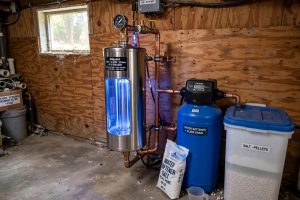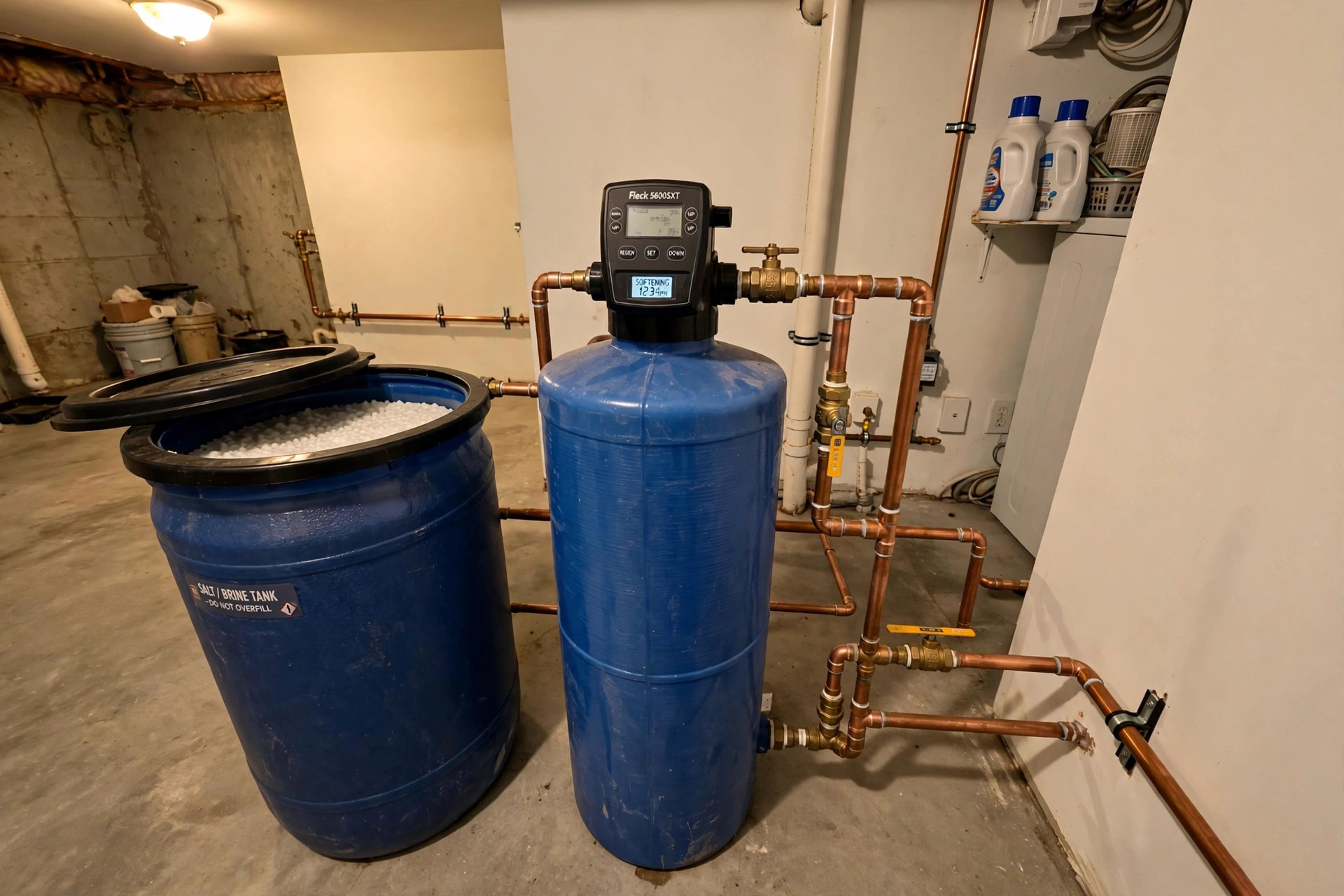

Hard water is a common trouble for homes on city water. It leaves spots on dishes, scale in pipes, and a film on skin and hair. The best water softener for city water USA is not one single product. It is the unit that fits your water hardness, your home size, and your budget. This guide walks through how to pick one, what it costs, and how to keep it working for years.
Why City Water Still Needs a Softener
Many people think city water is already treated and needs nothing more. City plants do treat water for germs and safety. They do not remove hardness. Hardness comes from calcium and magnesium that the water picks up as it moves through soil and rock. The U.S. Environmental Protection Agency notes that municipal water must meet safety standards, but hardness minerals are not a health hazard, so they are left in place.
Hard water causes real problems at home. Scale builds up inside water heaters and makes them use more energy. Faucets and showerheads clog with white crust. Soap does not lather well, so laundry and dishes look dull. Over time, scale shortens the life of appliances. A softener removes the minerals before they reach your taps. Homeowners who compare whole-house water treatment options often find that a softener pairs well with a filter for the best result.
What to Look for in a Water Softener for City Water: Best Water Softener for City Water Usa
City water has its own traits. It is usually chlorinated, and it may contain chloramine. The hardness level is often known, since the water utility can tell you the grains per gallon. Here are the main points to weigh.
Sizing by grains and home size. Softeners are sized by grain capacity, often 24,000, 32,000, or 48,000 grains. A simple rule: multiply your home’s daily water use by the hardness level in grains per gallon, then pick a unit that can run several days between regenerations. A 32,000-grain unit suits many three-bath homes. Test your water first, or ask your utility for its latest hardness report.
Chlorine tolerance. Standard resin beads wear out faster in chlorinated city water. Look for resin rated to handle chlorine, or plan to add a simple pre-filter that takes out chlorine before the softener. This small step adds years to the resin’s life.
Regeneration style. Timer-based units regenerate on a schedule whether they need to or not, and they waste salt and water. Demand-initiated units measure your actual use and regenerate only when needed. Demand units cost more up front but save salt, water, and money over time.
Salt or salt-free. Traditional ion-exchange softeners use salt and truly remove hardness minerals. Salt-free conditioners do not remove minerals; they change the crystals so scale forms less easily. If your hardness is above 10 grains per gallon, a salt-based unit is the safer choice. Shoppers reading salt-free softener reviews should note this difference before buying.
Certification. Look for units certified to NSF/ANSI standards for softener performance. Certification means the claims about capacity and salt efficiency were tested by an independent body, not just printed on the box.
Types of Water Softeners for Municipal Homes
Salt-based ion exchange
This is the most common type and the most effective against hard water. Hard water flows through a tank of resin beads that trade calcium and magnesium for sodium or potassium. When the beads fill up, the unit flushes them with brine and recharges. These systems work well for city water from 1 to 25 grains per gallon. Guides at Family Handyman and This Old House explain the basic plumbing loop these units need.
Salt-free conditioners
These units use a media that crystallizes the minerals so they pass through without sticking to pipes. They need no salt, no drain, and no electricity in some models. They are fine for mild hardness and for buyers who want to avoid adding sodium to their water. They are not true softeners, and very hard city water will still leave spots.
Dual-tank systems
Two resin tanks take turns, so soft water keeps flowing even during regeneration. These suit large families or homes with high water use. They cost more and take more space, but they never run out of soft water at an awkward hour.
Compact and cabinet models
All-in-one cabinets hold the resin tank and salt brine in a single box. They fit tight utility closets and garages. They work fine for small to mid-size homes on city water.
Cost and Price
A good whole-house softener for city water runs from about $400 for a small cabinet model to $2,500 or more for a large dual-tank unit. Installation is a separate cost. If you are checking water softener installation cost near me, expect $300 to $800 for a standard professional install, more if new plumbing or a drain line is needed.
Running costs are modest. Salt costs most families $50 to $120 a year. Water used in regeneration adds a few dollars a month to the bill. Demand-initiated units keep both numbers lower. Many owners find the unit pays for itself in longer appliance life and lower detergent use. Price comparison tools at Consumer Reports, Home Depot, and Lowe’s help set a fair budget.
Installation: DIY or Professional
Handy homeowners can install a softener in a few hours. The job needs a main-line cut, bypass valves, and a drain connection. If your plumbing is old or you are unsure about the main shutoff, hire a plumber. A bad install can leak or send hard water to the wrong fixtures. Local pros also know the code rules for drain lines in your area.
Place the unit close to the main water line entry, before the water heater, so all hot and cold taps get soft water. Keep the outdoor hose bibs on hard water if you like, since soft water is not needed for the lawn. Protect the unit from freezing if it sits in a garage.
A bypass valve is a small part with a big job. It lets water flow past the softener when you service the unit or when you want hard water for a task like filling a pool. Every install should have one. Also leave a clear path to the salt tank. You will open it every month, and a tight closet makes a simple chore feel hard. Many owners set a phone reminder for the salt check, and that one habit keeps the system at its best.
Care and Upkeep
A softener is low work, but it is not no work. Check the salt level every month and keep the brine tank at least half full. Use clean solar or evaporated salt pellets, not rock salt, which leaves residue. Once a year, run a resin cleaner through the system to clear iron and sediment.
Watch for signs of trouble. Slippery or slimy water can mean the unit is over-softening. Spots on dishes mean it is under-softening or needs service. Test the water at a tap once or twice a year to confirm the hardness is gone. Sanitize the brine tank every few years to stop mold. The EPA and Bob Vila both remind homeowners to follow the maker’s service schedule, since neglect voids most warranties.
If your city water is very chlorinated, change the pre-filter on schedule. A clogged pre-filter starves the softener and cuts its output. Keep the manual in a dry spot near the unit so the next owner or tenant can find it.
Renters should know their rights before buying a softener. In most leases, plumbing changes need the landlord’s written approval. Some landlords allow a portable unit that hooks to a laundry tap with no pipe cutting. These smaller units serve one or two people and move with you when you leave. They cost less than whole-house systems and need no plumber, though they soften only the water that passes through them.
Also keep an eye on water pressure after the install. A softener adds a small pressure drop, which is normal. If pressure falls a lot, the resin tank may be clogged or the bypass valve may be half closed. Fix it early, since low pressure strains the whole plumbing system.
Safety
Softened water is safe to drink for most people. It adds a small amount of sodium to the water, which is worth noting for those on strict low-sodium diets. Such homes can keep one kitchen tap on hard water or add a small reverse-osmosis unit for drinking water. The EPA sets drinking-water standards, and softened municipal water stays within them.
During installation, shut off the main water and release pressure before cutting pipes. Salt bags are heavy, so lift with care. Keep the brine tank lid closed so pets and children cannot reach the salt. If a leak appears, use the bypass valve right away and call a plumber.
Frequently Asked Questions
Do I need a water softener if my city water is treated?
Yes, often. City treatment targets germs and pollutants, not hardness. If your water leaves white scale or your soap will not lather, a softener helps even on city water. Ask your utility for the hardness level in grains per gallon to decide.
What size water softener do I need for city water?
Most city homes do well with a 32,000-grain unit, while larger homes may need 48,000 grains. Size it from your daily water use times your hardness level, then choose a unit that regenerates every three to seven days.
Is a salt-free system as good as a salt-based softener?
No. Salt-free systems condition water to reduce scale, but they do not remove the hardness minerals. For true soft water in a home with hard city water, a salt-based ion-exchange unit works better. Well-water homes face different issues, as covered in this guide to the best water softener for well water usa.
How much does a water softener add to the water bill?
A demand-initiated unit adds only a few dollars a month. Timer models use more. The exact cost depends on your hardness level and how often the unit regenerates. Over a year, most families spend less on salt and water than they save on soap and appliance repairs.
Can I drink softened water?
Yes. Softened water meets drinking-water standards. It contains a little extra sodium from the exchange process. Homes with strict sodium limits can use a separate unsoftened tap or a drinking-water filter. Filtration experts at Aquasana note that many homes pair a softener with a drinking-water filter for the best of both.
How long does a water softener last?
A well-kept unit lasts 15 to 20 years. The resin bed may need replacement after 10 years in chlorinated city water, sooner without a pre-filter. Regular salt checks and yearly cleaning keep it at the long end of that range.
A Short Final Word
The best water softener for city water USA is the one sized to your hardness, built for chlorine, and set to regenerate on demand. Start with your utility’s hardness report. Pick a certified unit with enough grain capacity. Install it right, feed it salt, and it will protect your pipes, your appliances, and your skin for many years. For more ideas on home water treatment, The Spruce offers plain buying guides that pair well with this one.
References
Aquasana. (n.d.). Water filtration systems. https://www.aquasana.com Bob Vila. (n.d.). Home improvement advice. https://www.bobvila.com Consumer Reports. (n.d.). Product reviews and ratings. https://www.consumerreports.org Family Handyman. (n.d.). DIY home repair and maintenance. https://www.familyhandyman.com Lowe’s. (n.d.). Home improvement products. https://www.lowes.com The Home Depot. (n.d.). Home improvement products. https://www.homedepot.com The Spruce. (n.d.). Home and garden advice. https://www.thespruce.com This Old House. (n.d.). Home renovation guidance. https://www.thisoldhouse.com U.S. Environmental Protection Agency. (n.d.). Protecting human health and the environment. https://www.epa.gov
Was this guide helpful?

About Sarah Mitchell
The My Garden US editorial team writes practical, in-depth home and garden guides for American homeowners — tested advice, no fluff.
You May Also Like
Chloramine Filter for City Water Reviews USA: What to Know Before You Buy
September 22, 2026 0 views
Best Alkaline RO System Reviews 2026 USA
January 18, 2026 0 views
Septic Safe Toilet Paper Reviews USA: Which Brands Keep Your Tank Healthy
May 23, 2026 0 views