
Every spring, the same question comes up at hardware stores and backyard fences. Should you buy a charcoal grill or a gas grill? The question sounds simple. The answer is not. This charcoal vs gas grill cost comparison walks through the real numbers. It covers the price of the grill, the price of fuel, and the price of upkeep. By the end, you will know which type of grill costs less over the years, and which type fits your style of cooking.
Most people look only at the price tag in the store. That is only the first cost. A grill is a machine you feed. The fuel bill, the tools, and the replacement parts add up fast. Some grills look cheap on the shelf but cost more every time you light them. This guide puts all the costs on the table so you can make a clear choice.
Why the Charcoal vs Gas Grill Cost Comparison Matters
A grill is a long-term purchase. A good unit lasts eight to fifteen years. Over that time, the money you spend on fuel can pass the money you spent on the grill itself. The Char-Broil line of grills, for example, shows how wide the price range runs in stores today, from small kettles to large multi-burner carts Char-Broil. If you grill once a month, fuel costs stay small. If you grill three nights a week all summer, fuel costs become the largest part of the bill.
Time is a cost too. A gas grill heats up in ten minutes. A charcoal grill takes thirty minutes or more to light and reach full heat. That extra time matters for busy families. It also affects how much fuel you burn while you wait.
Flavor plays a part in the math. Charcoal gives a smoky taste that many cooks love. Gas gives clean, steady heat. Some people are willing to pay more for flavor. Others pay more for ease. Knowing the cost gap helps you decide what your taste is worth to you.
What to Look For When You Compare Grills: Charcoal vs Gas Grill Cost Comparison
Start with the size of the cooking area. A small grill fits a couple of burgers. A large grill fits a whole party. Larger grills cost more to buy and more to fuel, no matter the type. Measure your cooking habits, not just your patio.
Look at the build quality. Thin metal rusts fast. Thick cast iron grates and heavy lids last longer. A cheap grill that dies in two years costs more than a sturdy grill that lasts twelve. Consumer Reports tests grills for how long they hold heat and how well they stand up to weather Consumer Reports. Check their ratings before you buy.
Count the extras. Gas grills may add side burners, rotisserie kits, and built-in thermometers. Charcoal grills may add hinged grates and ash catchers. Each extra feature adds to the purchase price. Ask which features you will truly use.
Think about where you will store the grill. A heavy kamado-style cooker stays in one spot. A small kettle moves anywhere. Storage covers and sheds cost money too. Plan for that cost from the start.
Types and Options on Each Side
Charcoal Grills
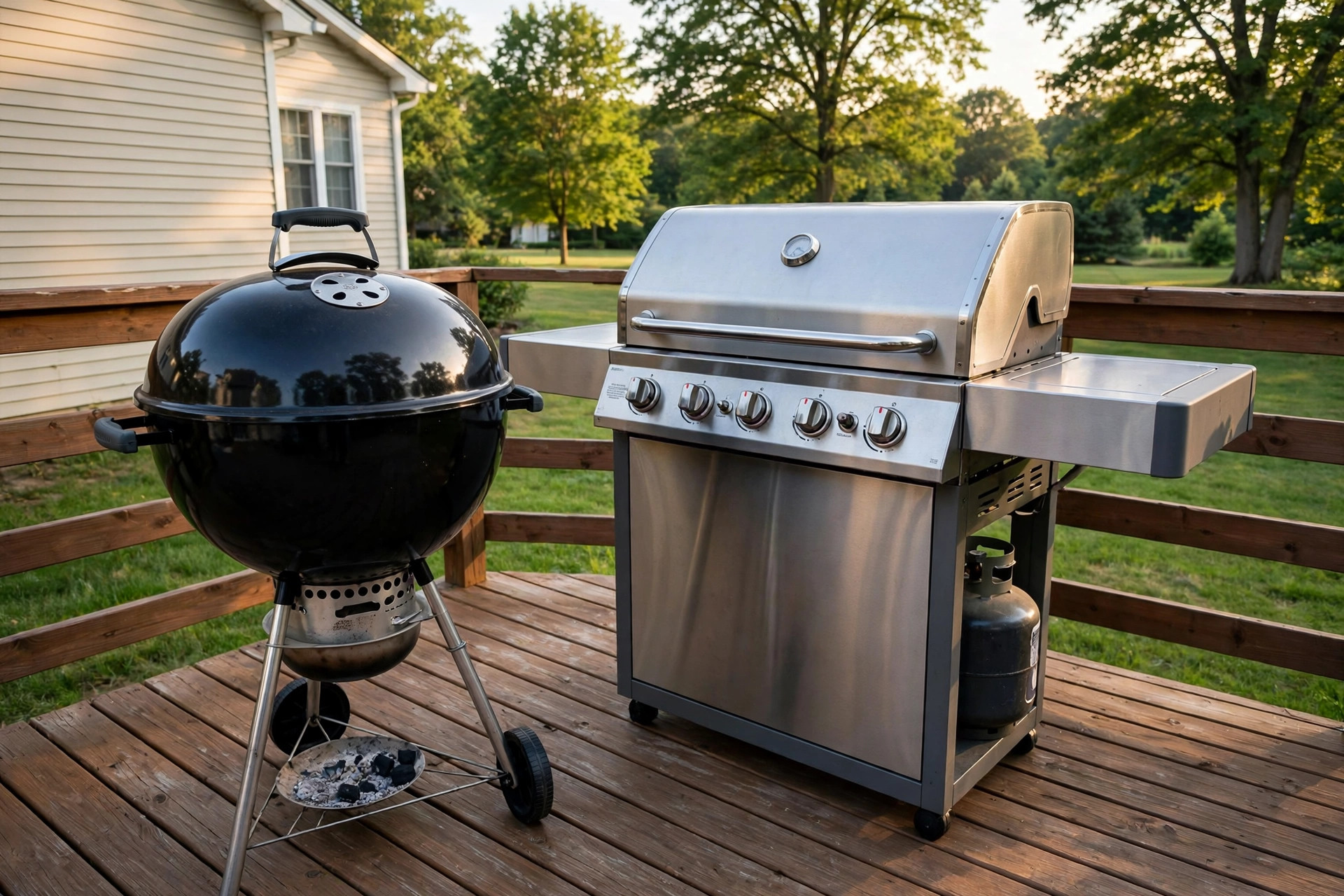
The kettle grill is the classic. It is a round metal bowl with a lid. Brands like Weber built their names on this shape Weber. Kettles are cheap, light, and simple. A basic kettle costs less than most gas grills.
Barrel grills give a larger cooking area. They look like a drum cut in half with a lid. They suit big families and parties.
Kamado grills are thick ceramic cookers. They hold heat for hours. They can grill, smoke, and bake. They cost the most of any charcoal grill, often more than a mid-range gas grill.
Charcoal also splits into fuel types. Briquettes burn longer and steadier. Lump charcoal burns hotter and faster but costs more per pound. That choice affects your fuel math.
Gas Grills
Two-burner gas grills suit small patios and apartments. Three and four-burner models are the most common for family backyards. Big brands like Napoleon sell full-size carts with strong burners and thick grates Napoleon.
Gas grills run on propane tanks or natural gas lines. Propane is the most common. A natural gas hookup costs more to install but gives cheap, steady fuel.
Infrared burners are a higher-end option. They sear meat fast. They cost more at purchase but can cook quicker, which trims fuel use a little. Brands such as Broil King build heavy cast-iron gas grills that hold heat well and last many seasons.
Cost and Price: The Full Breakdown
Here is the heart of this charcoal vs gas grill cost comparison. We will break costs into three parts: the grill itself, the fuel, and the upkeep.
The Purchase Price
Charcoal grills start low. A basic kettle grill sells for about 100 to 200 dollars. A good barrel grill runs 200 to 400 dollars. Kamado cookers start around 500 dollars and climb past 1,500 dollars.
Gas grills start higher. A small two-burner model sells for about 150 to 300 dollars. A solid mid-range grill runs 300 to 700 dollars. High-end stainless models pass 1,000 dollars. Home Depot lists both types side by side, which makes the price gap easy to see Home Depot.
If you are new to grilling, our guide on the best gas grill under 500 for beginners can help you shop smart in that price range.
Winner on purchase price: charcoal, by a wide margin, except for kamado cookers.
Fuel Costs Per Year
Now the running costs. A bag of charcoal briquettes costs about 10 to 25 dollars for a 15 to 20-pound bag. A heavy griller burns through 20 to 30 bags a year. That puts annual charcoal fuel cost near 200 to 600 dollars.
Lump charcoal costs more per pound, often double the price of briquettes. It burns hotter but faster. It can raise yearly fuel cost by 30 percent or more.
Propane costs about 15 to 25 dollars to refill a standard 20-pound tank. One tank gives roughly 18 to 25 hours of cooking on a mid-size grill. A griller who cooks twice a week in summer burns 6 to 10 tanks a year. That is about 90 to 250 dollars a year.
Natural gas is cheaper still. A home natural gas line may add only 30 to 80 dollars a year to your gas bill for regular grilling. The install cost of the line, 150 to 500 dollars, must be counted in year one.
Winner on fuel: gas, in most cases. A propane grill costs half to two-thirds less to fuel than a charcoal grill for the same amount of cooking.
Tools and Accessories
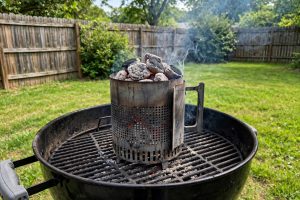
Both types need tools. A chimney starter for charcoal costs 15 to 30 dollars. Long tongs, a grill brush, and a cover run 50 to 120 dollars for either type.
Gas grills need propane tanks if they do not come with one. A new tank costs 40 to 60 dollars. Charcoal grills need a steady supply of lighter cubes or newspaper and a chimney. These small costs repeat each year.
Replacement Parts and Repairs
Charcoal grills have few parts to break. Grates rust and need replacement every three to five years, at 30 to 80 dollars. Kettles may need new wheels or handles. Annual repair cost is low.
Gas grills have burners, valves, igniters, and hoses. Igniters fail first, often in two to four years. Burners last five to eight years. A set of new burners costs 40 to 120 dollars. A full tune-up kit costs 60 to 150 dollars. Over ten years, a gas grill may need 200 to 400 dollars in parts.
Winner on repairs: charcoal. Fewer parts means fewer things break.
The Five-Year and Ten-Year Totals
Add it all up. A basic charcoal kettle at 150 dollars, plus 300 dollars a year in fuel, plus 50 dollars a year in tools and parts, costs about 1,900 dollars over five years.
A mid-range gas grill at 450 dollars, plus 150 dollars a year in propane, plus 60 dollars a year in parts and tools, costs about 1,500 dollars over five years.
Over ten years, the gap widens. The charcoal setup runs near 3,600 dollars. The gas setup runs near 2,700 dollars. The gas grill starts more costly but ends up cheaper. This is the key finding of this charcoal vs gas grill cost comparison.
Kamado cookers change the math. They cost more to buy than most gas grills and still burn costly charcoal. They are the priciest long-term choice, though many owners gladly pay for the flavor.
Care and Upkeep for Each Type
Charcoal Grill Care
Clean the ash after every cook. Ash holds moisture and causes rust. Empty the ash catcher into a metal bin. Let coals cool fully before you move them.
Scrub the grates with a stiff brush while the grill is warm. Oil the grates lightly before each cook. This keeps food from sticking and slows rust.
Store the grill under a cover. Keep it dry. Check the vents each spring. Clear vents with a wire brush so air flows freely.
Gas Grill Care
Clean the burners twice a year. Pull them out and brush away grease and rust flakes. Check the flame. A full blue flame means the burner works well. Yellow or weak spots mean it needs cleaning or replacement.
Check the gas hoses each spring. Look for cracks or wear. A soapy water test shows leaks: bubbles form where gas escapes. Replace worn hoses right away.
Grease traps fill fast. Empty the drip pan after every few cooks. Grease fires start in dirty grills more than in clean ones.
Cover the grill when not in use. Winter care matters too. See our full steps on how to winterize gas grill for storage before the cold sets in. Step-by-step cleaning guides on The Spruce Eats also walk through safe grill upkeep before storage. The general ideas in the Traeger support pages cover safe off-season storage as well Traeger.
Safety Rules for Both Types
Never use either grill indoors or in a garage. Both make carbon monoxide, a gas you cannot see or smell. Cook outside in open air only.
Keep the grill away from the house. Three feet of clear space is the minimum. Keep it away from railings, trees, and dry leaves.
For charcoal, use a chimney starter instead of lighter fluid. Lighter fluid can flare up and spoil food taste. Never add fluid to hot coals. Let coals cool for 48 hours before you throw ash away.
For gas, turn the lid up when you light the grill. This lets gas escape if it does not light right away. If the flame goes out, turn the gas off, wait five minutes, and relight. The safety guidance from the Big Green Egg community also stresses lid and vent control, which applies to every grill Big Green Egg.
Keep children and pets away from a hot grill. Use long-handled tools. Wear heat-safe gloves. A grill stays hot long after the flame is out.
Frequently Asked Questions
Is charcoal or gas cheaper overall? Gas is cheaper overall for most cooks. A charcoal grill costs less to buy. But charcoal fuel costs more per cook. Over five to ten years, a gas grill usually costs 500 to 1,000 dollars less in total. This charcoal vs gas grill cost comparison holds true for cooks who grill weekly.
How much does it cost to run a charcoal grill for a year? A steady griller spends 200 to 600 dollars a year on charcoal, based on 20 to 30 bags of briquettes. Lump charcoal raises that cost. Add 30 to 80 dollars a year for new grates, brushes, and covers.
How much does it cost to run a gas grill for a year? A steady griller spends 90 to 250 dollars a year on propane, based on 6 to 10 tank refills. Add 40 to 100 dollars a year for parts like igniters, burners, and covers. Natural gas users pay even less for fuel.
Which grill lasts longer, charcoal or gas? A heavy charcoal kettle can last 10 to 15 years with simple care. A gas grill lasts 8 to 12 years, but needs more part replacements. Stainless steel gas models last longest. Cheap thin-metal grills of either type die in two to four years.
Does gas grilling taste as good as charcoal? Taste is personal. Charcoal gives a smoky flavor from dripping fat and real wood fire. Gas gives clean, steady heat with less smoke. Many cooks add a smoker box to a gas grill for extra flavor. AmazingRibs explains how smoke and heat work together in backyard cooking AmazingRibs.
Should a beginner pick charcoal or gas? A beginner who wants fast weeknight dinners should pick gas. It lights in minutes and the heat is easy to control. A beginner who wants to learn fire cooking and loves smoky flavor should pick a charcoal kettle. It is cheap and teaches real skill. Our piece on pellet grill vs gas grill pros cons covers a third option worth a look.
Final Word
The charcoal vs gas grill cost comparison comes down to how you cook. Charcoal wins at the store. Gas wins over the years. A kettle grill is the cheapest way to start. A mid-range gas grill is the cheapest way to cook for a decade.
Match the grill to your life. Grill twice a month for fun? Buy the charcoal kettle and enjoy the fire. Grill three nights a week for dinner? Buy the gas grill and save money and time. Either way, a good cover, clean grates, and safe habits keep your costs low and your food good.
References
AmazingRibs.com. (n.d.). Barbecue and grilling science. https://www.amazingribs.com Big Green Egg. (n.d.). Kamado grills and outdoor cooking. https://www.biggreenegg.com Broil King. (n.d.). Gas and charcoal grills. https://www.broilkingbbq.com Char-Broil. (n.d.). Gas and charcoal grills. https://www.charbroil.com Consumer Reports. (n.d.). Product reviews and ratings. https://www.consumerreports.org Napoleon. (n.d.). Fireplaces, grills, and heating products. https://www.napoleon.com The Home Depot. (n.d.). Home improvement products. https://www.homedepot.com The Spruce Eats. (n.d.). Recipes and cooking guides. https://www.thespruceeats.com Traeger. (n.d.). Wood pellet grills. https://www.traeger.com Weber. (n.d.). Grills and outdoor cooking. https://www.weber.com
Was this guide helpful?

About James Carter
The My Garden US editorial team writes practical, in-depth home and garden guides for American homeowners — tested advice, no fluff.
You May Also Like
How to Clean BBQ Tools After Grilling: A Complete Guide
February 10, 2026 0 views
How to Use Wood Chips on Gas Grill: A Complete Guide
August 14, 2026 0 views
The Best Outdoor Cutting Board for Grilling: How to Choose the Right One
April 24, 2026 0 views