
Finding the best outdoor smoker for apartments is harder than picking one for a house. A backyard gives you room, distance, and forgiving neighbors. A balcony gives you none of those. Smoke drifts into open windows. Fire codes limit what you can burn. Landlords set rules of their own. Yet many people in apartments still make real smoked food at home. They do it by choosing small, low-smoke units and by learning the rules before they buy. This guide explains how.
Why It Matters
An apartment is not a house with less space. It is a shared building. Your smoke becomes your neighbor’s problem in seconds. One loud weekend cook can bring complaints, fines, or a ban on all grilling. A smoker that fits your life will not just be small. It will be quiet, clean, and easy to control.
There is also the matter of taste. Smoked brisket, ribs, and salmon need hours of steady heat. A weak or cheap smoker will not hold a low temperature. It will swing up and down and ruin the meat. So the goal is not the smallest box you can find. It is the smallest box that holds steady heat with little smoke.
Money matters too. Apartment smokers range from simple electric boxes to small pellet units. A guide to the best smoker for beginners under 300 shows how far a modest budget can go. For apartments, though, budget is only one part of the choice. Rules and smoke matter more. Review sites like Consumer Reports test how steady small smokers hold their heat, which is worth checking before you spend.
What to Look For in an Apartment Smoker: Best Outdoor Smoker for Apartments
Check the rules first
Before you compare models, read your lease. Many leases ban open flames on balconies. Some ban all grilling. City fire codes often forbid charcoal and propane within a set distance of a building, sometimes ten feet or more. Electric cookers are often the only type allowed.
Ask your landlord in writing. Keep the reply. If a neighbor complains later, a written answer protects you. It also tells you exactly what fuel you may use. This single step saves more trouble than any feature on a smoker.
Size and footprint
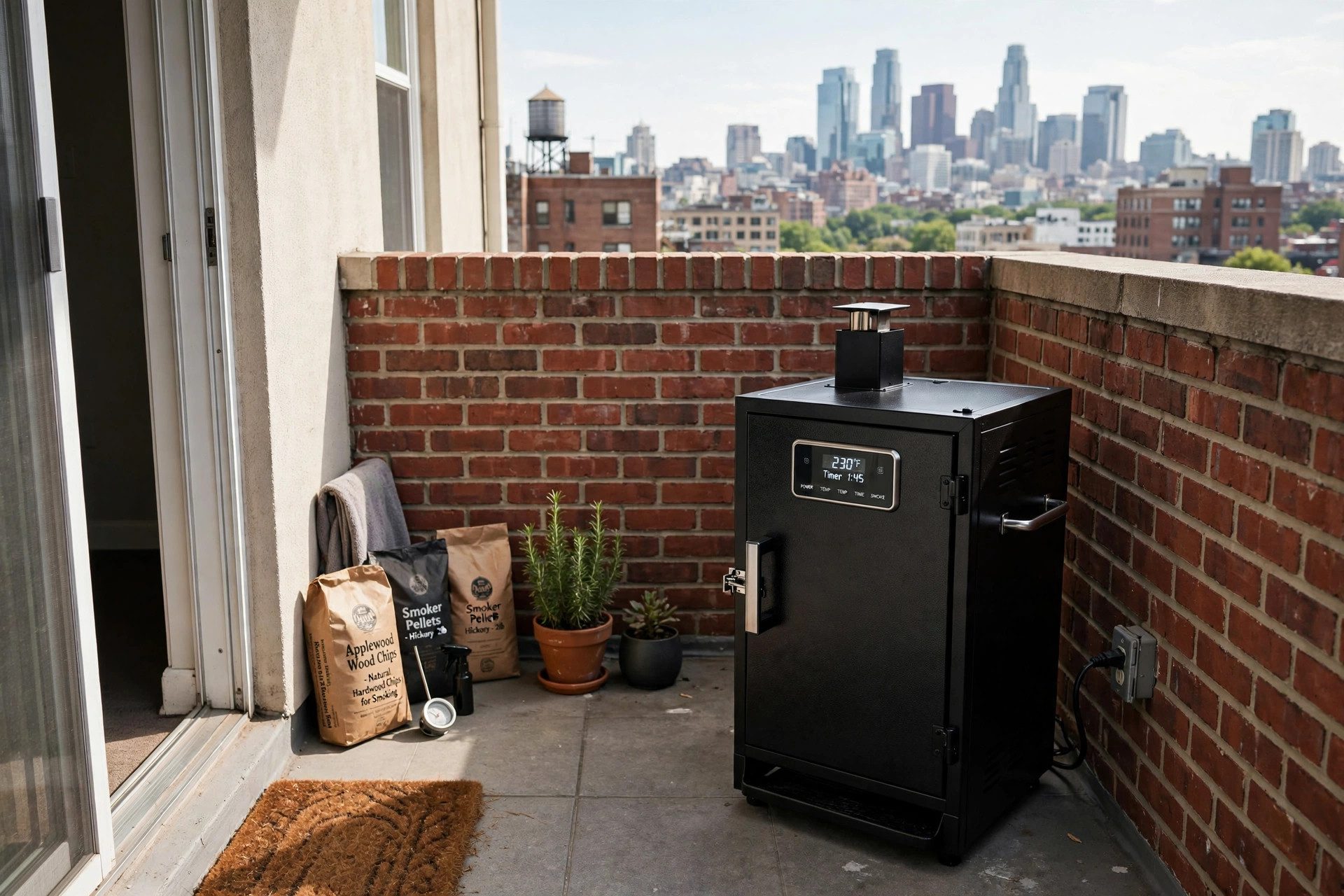
Measure your balcony or patio. A unit that fits on paper may block a door or a walkway in real life. Vertical cabinet smokers use the least floor space. They are tall and narrow, like a small refrigerator. Many hold four or five racks of food in a body less than two feet wide.
Also think about storage. Many apartment smokers must come inside when not in use. A lighter unit with wheels is easier to roll in and out. Retailers like Home Depot list the exact width and depth of each model, so check the numbers before you buy.
Smoke control
No smoker is smoke-free. But some make far less smoke than others. Electric smokers and small pellet smokers make a thin, clean stream of smoke. Charcoal and offset smokers make heavy clouds. On a balcony, heavy smoke is the enemy. It drifts into windows and up to balconies above you.
Look for tight doors and good seals. A smoker that leaks smoke from every seam will fill your balcony. A well sealed cabinet keeps the smoke inside where it works on the food. Makers such as Char-Broil and Napoleon build cabinet models with gasketed doors made for this kind of use.
Heat control and steadiness
Long smokes need steady heat, often between 225 and 275 degrees. Electric smokers hold this range with a dial or a digital panel. Small pellet smokers use an auger and a fan to feed fuel in small amounts. Both are far steadier than a cheap charcoal bullet smoker in the wind.
For a guide to a related balcony option, read about the best electric grill for apartment balcony. Many of the same rules about heat and smoke apply there.
Ease of cleaning
Grease and ash must go somewhere. A drip tray that slides out is easier to handle on a balcony than one you must lift from inside. Electric units make almost no ash. Pellet units make a small cup of ash. Charcoal makes much more, and you must cool it before you can throw it away. Cleaning guides from The Spruce Eats show simple routines that keep a small smoker in good shape.
Types of Smokers That Work in Apartments
Electric cabinet smokers
The electric cabinet is the safest pick for most apartment dwellers. It plugs into a wall outlet. A heating element warms a wood chip tray. The smoke is light and clean. Most models hold temperatures well because the element cycles on and off.
These units are often allowed where gas and charcoal are banned. They are quiet. They need no fuel storage beyond a bag of wood chips. Their weakness is flavor. The smoke is mild. Some cooks say the food tastes less like a real pit. For many apartment smokers, that trade is worth it. Char-Broil sells some of the most common small electric cabinets, and Char-Broil lists their sizes and features in plain terms.
Small pellet smokers
Pellet smokers burn small wood pellets. A motor feeds them into a fire pot. A fan keeps the fire steady. The result is a thin blue smoke that many cooks prize. Tabletop pellet units and small portable models fit a balcony well. Traeger is the best known maker of pellet cookers, and its small models are a common pick for patios.
The catch is rules and size. Some buildings treat pellet cookers like charcoal because they use a real flame. Check your lease first. They also need a bag of pellets nearby, which takes storage space. If your building allows them, they give the best flavor of any apartment-safe option.
Kettle grill conversions
A small kettle grill can act as a smoker with a clever setup. Coals go on one side. Meat goes on the other. A water pan steadies the heat. This method is cheap and it works. Guides at AmazingRibs explain the two-zone setup in full detail.
But this method fails the apartment test in most cases. Charcoal smoke is heavy. Charcoal fires are often banned on balconies by code. This path suits a ground floor patio with no overhead units, not a high balcony. If your building allows charcoal at ground level, a compact kettle is the cheapest way to start.
Smoker boxes on a gas grill
A smoker box for gas grill reviews page covers a clever middle path. If you already own a small gas grill and your building allows it, a metal box filled with wood chips can add smoke flavor. The smoke is light and short lived. It is not a true long smoke. But it is an option where rules allow gas but not a dedicated smoker. Broil King and other gas grill makers sell small chip boxes that sit right on the burners.
Compact kamado cookers
Small ceramic kamado cookers, like the compact models from Big Green Egg, can smoke as well as grill. They hold heat for hours on a small load of lump charcoal. They are heavy and costly. Most buildings that ban charcoal ban these too. Where rules allow, they are a fine but pricey choice for a ground floor patio.
Cost and Price
Small electric smokers often cost between 150 and 350 dollars. They are the cheapest safe path. Tabletop pellet smokers run from 300 to 600 dollars. Full size pellet cabinets cost more and are too large for most balconies.
Do not forget the extra costs. A cover is a must on a balcony, where rain comes sideways. Good wood chips or pellets cost a few dollars per cook. A drip pan and a reliable thermometer are small but useful buys.
Over a year of weekend cooks, the electric smoker is the cheapest to run. A bag of chips costs little. Electricity costs pennies per cook. Pellets cost more than chips but still less than a tank of propane or bags of charcoal.
Care and Upkeep
An apartment smoker must stay clean. Grease fires are rare but real. Wipe the inside of the door after each cook. Empty the drip tray before it overflows. Ash from a pellet pot should be vacuumed out once it cools.
Cover the unit after every use. Balconies take more weather than you think. Rain, dust, and city grime wear out seals and hinges. A simple vinyl cover doubles the life of a cheap smoker.
Wood chips need dry storage. A damp bag of chips smolders and makes bitter smoke. Keep the bag in a sealed bin inside your apartment. Pellets need the same care. One damp night on a balcony can ruin a whole bag.
Check the door seals once a season. Pull a thin sheet of paper through the closed door. If it slides out with no drag, the seal is worn. Many brands sell replacement gaskets for a few dollars.
Safety
Safety comes first in a shared building. Never use a smoker indoors or in a closed garage. Carbon monoxide has no smell and no color. Even electric smokers should run in open air.
Keep the unit at least a few feet from walls, rails, and doors. Never leave a live fire unit alone. A grease fire can grow in minutes. Keep a small fire extinguisher on the balcony. Know how to use it before you need it.
Dispose of grease and ash with care. Hot grease in a trash bin is a fire risk. Let everything cool fully. Then bag it and take it to the bin. Never pour hot grease down a sink or off a balcony.
Watch the wind. A gust can blow heat toward a wall or lift a cover into the heat. On a windy day, wait. Good smoked food is patient food.
Frequently Asked Questions
Can I use a smoker on my apartment balcony?
It depends on your lease and local fire codes. Electric smokers are often allowed where charcoal and gas are not. Always ask your landlord in writing first.
What is the smallest smoker I can buy?
Tabletop electric and small pellet units are the smallest. Many stand under three feet tall. Vertical cabinets use little floor space and hold a surprising amount of food.
Will my neighbors smell the smoke?
Yes. No smoker is odor-free. Electric and pellet units make the least smell. Cook on calm days, keep smokes short, and talk to your neighbors before you start.
Is an electric smoker worth it?
For apartment life, yes. It is cheap to run, easy to control, and often allowed. The smoke flavor is milder than charcoal, but the food is still good.
How much does a small smoker cost?
Most apartment-friendly models cost between 150 and 600 dollars. Electric cabinets are at the low end. Small pellet units are at the high end.
Can I smoke food in winter on a balcony?
You can, but cold wind makes heat control harder. Electric units struggle most. Shield the smoker from wind and allow more cooking time.
A Short Final Word
The best outdoor smoker for apartments is the one your building allows and your balcony fits. Start with the rules. Pick a small electric or pellet unit with tight seals. Learn on short cooks with simple cuts like chicken thighs or pork ribs. Then invite the neighbors to share the results. Good smoke has a way of making friends.
References
AmazingRibs.com. (n.d.). Barbecue and grilling science. https://www.amazingribs.com Big Green Egg. (n.d.). Kamado grills and outdoor cooking. https://www.biggreenegg.com Broil King. (n.d.). Gas and charcoal grills. https://www.broilkingbbq.com Char-Broil. (n.d.). Gas and charcoal grills. https://www.charbroil.com Consumer Reports. (n.d.). Product reviews and ratings. https://www.consumerreports.org Napoleon. (n.d.). Fireplaces, grills, and heating products. https://www.napoleon.com The Home Depot. (n.d.). Home improvement products. https://www.homedepot.com The Spruce Eats. (n.d.). Recipes and cooking guides. https://www.thespruceeats.com Traeger. (n.d.). Wood pellet grills. https://www.traeger.com
Was this guide helpful?

About Jennifer Lee
The My Garden US editorial team writes practical, in-depth home and garden guides for American homeowners — tested advice, no fluff.
You May Also Like
The Best Outdoor Cookware Set for Camping: A Plain Guide
March 7, 2026 0 views
How to Smoke Ribs Without Wrapping: A Complete Low-and-Slow Guide
June 10, 2026 0 views
The Best Outdoor Cutting Board for Grilling: How to Choose the Right One
April 24, 2026 0 views