
A pebble pool is a joy to own. The surface looks natural, it feels soft underfoot, and it lasts for many years. But keeping it clean takes the right tool. If you are looking for the best pool vacuum for pebble finish pools, you need one that can grip a rough surface, lift fine dirt from between the small stones, and do it all without harming the finish. This guide will walk you through every choice in plain terms so you can buy with confidence.
Why a Pebble Finish Needs a Special Vacuum
Pebble finishes are made of small, smooth stones set into a cement base. The surface is strong and it hides wear well. But it is not smooth like plaster or vinyl. Dirt and algae can settle into the tiny gaps between stones. A weak vacuum will roll over the top and leave the deep dirt behind.
Worse, the wrong brush or wheels can scuff the stones or wear the grout lines thin over time. That is why pool owners search for the best pool vacuum for pebble finish surfaces in particular. A vacuum built for this job has brushes that flex into the texture, wheels or tracks that climb the rough floor without slipping, and a filter fine enough to trap the small particles that pebble pools collect.
Cleanliness matters for more than looks. Dirt trapped in the finish can feed algae. Algae makes the pool slippery and unsafe. A good vacuum run once or twice a week keeps the water clear and the chemicals in balance. It also saves money, because a clean pool needs fewer chemicals and less shock treatment.
What to Look for When You Choose: Best Pool Vacuum for Pebble Finish
Start with the type of vacuum. There are three main kinds: manual, suction side, pressure side, and robotic. Yes, that is four, and each one works in a different way. Manual vacuums attach to a pole and use your pool’s pump for suction. They cost the least but take the most work. Suction-side cleaners plug into the skimmer and move around on their own using pump suction. Pressure-side cleaners use water pressure from a return line or a booster pump to move and to push dirt into a bag. Robotic cleaners are self-contained units with their own motors and filters that you drop into the water and let run.
For a pebble finish, the brushes matter most. Look for cleaners with soft scrubbing brushes or pleated brushes rather than hard plastic wheels. Rubber brushes bend into the pebble texture and scrub the gaps. Some robotic models add an extra spinning brush for this exact reason.
Climbing power comes next. Pebble is rough, so a cleaner needs strong traction. Tracked robotic cleaners and pressure-side models with wide tires tend to handle it well. If you own a pool with steps or a beach entry, check that the cleaner you pick is rated to climb walls and steps.
Filter quality is another key point. Pebble pools collect fine silt that passes through coarse bags. A cleaner with a fine filter, often rated in microns, will trap that silt and leave the water polished. Many robotic units let you swap in an extra-fine filter cartridge for just this job.
Cord and hose length should match your pool. A cleaner that cannot reach the far corner is useless. Measure your pool’s longest run and add a few feet before you buy.
Types of Pool Vacuums for Pebble Pools
Robotic Cleaners
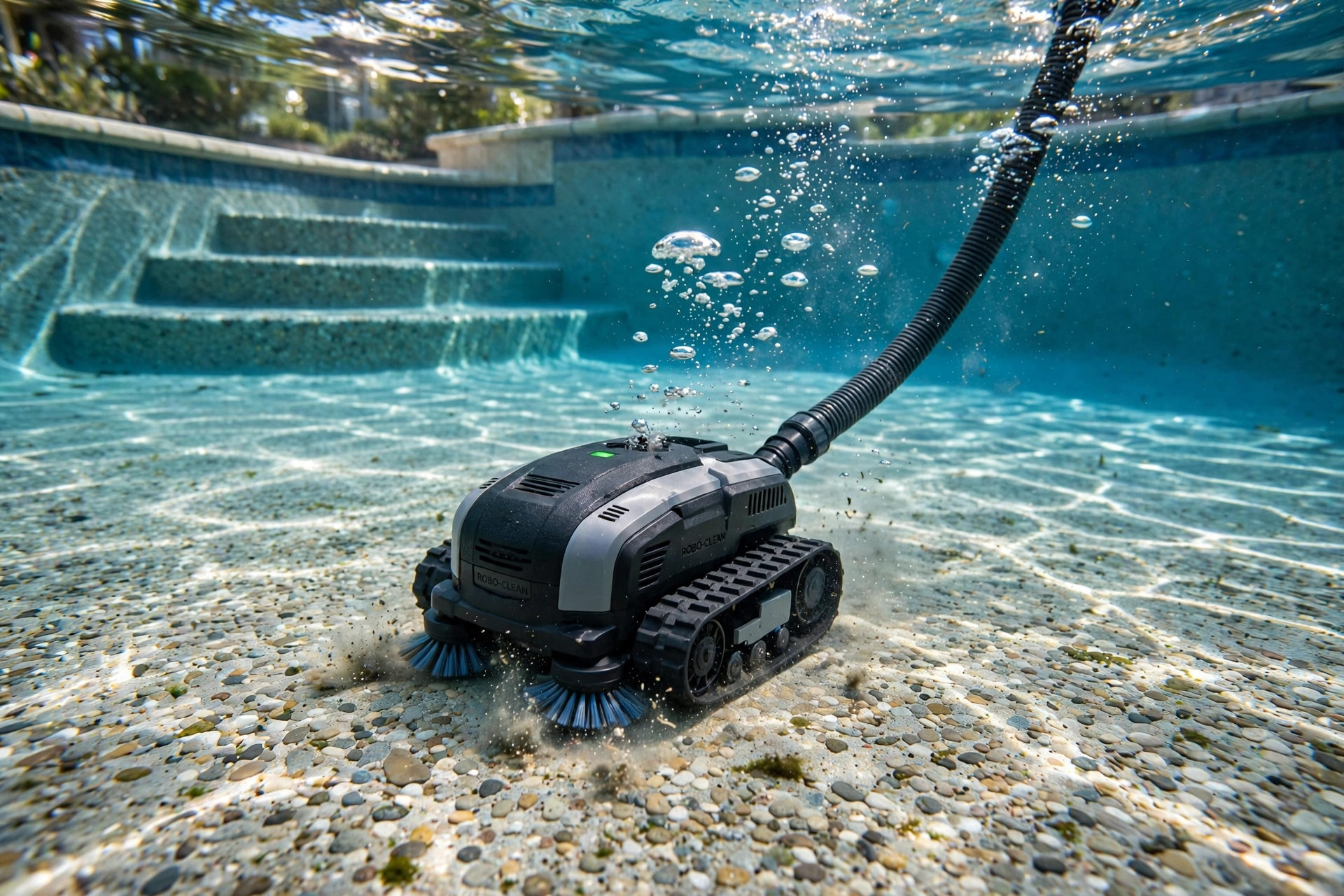
Robotic cleaners are the most popular pick for pebble finishes today. They carry their own pump and filter, so they do not strain your pool’s equipment. Most models clean the floor, walls, and waterline in one cycle. Their brushes are made to scrub rough surfaces. Many owners of pebble pools say a robot is the single best upgrade they have made.
The trade-off is price. Robotic cleaners cost more up front than other types. They also need to be pulled from the water and stored in the shade when not in use, or the sun will age the plastic and the seals.
Suction-Side Cleaners
Suction-side cleaners connect to the skimmer or a dedicated suction line. They wander the pool in a random pattern, vacuuming as they go. They are simple and low cost. On a pebble finish, they work best in small to mid-size pools with light debris. Heavy leaf loads can clog the throat, and some models lack the brush power to scrub deep into the texture.
Pressure-Side Cleaners
Pressure-side cleaners use a return jet or a booster pump to move. They sweep debris into an attached bag and also circulate the water. The moving water helps them glide over pebble surfaces, and their wide wheels grip well. They need a booster pump in most cases, which adds to the running cost. The filter bags come in different mesh sizes, and a fine bag works best on pebble.
Manual Vacuums
A manual vacuum head on a telescoping pole gives you full control. You can spend extra time on the spots where dirt gathers, such as the deep end corners. It costs very little. But cleaning a whole pool by hand each week takes real time and effort, and most owners use it only as a backup for spot cleaning.
Cost and Price: What Should You Expect
Prices vary widely. A manual vacuum head and hose may cost under fifty dollars. Suction-side cleaners often fall between one hundred and three hundred dollars. Pressure-side cleaners with a booster pump can run from three hundred to eight hundred dollars. Robotic cleaners for residential pools range from about five hundred to well over one thousand dollars for top models.
Do not judge by price alone. A well-matched mid-price robotic cleaner may out-clean a cheap unit many times over and last far longer. Look at the warranty. Two to three years is common for robotic cleaners. Check what the warranty covers: motors and seals are the parts that fail first.
Running costs matter too. Robotic cleaners use little power, often less than a standard light bulb. Pressure-side cleaners with booster pumps use more. Manual cleaning costs nothing but your time. Over five years, a robotic cleaner often proves the cheapest option because it cuts chemical use and frees your filter from extra load. You can compare prices and specs at major retailers such as Home Depot before you decide.
How Often to Vacuum a Pebble Pool
Most pebble pools need a full vacuum once a week. In heavy use months, or after storms, twice a week is better. Leaves and pollen fall every day, and each day they sit they break down into food for algae.
A good routine is simple. Run the robotic cleaner on a set day. Skim the surface each morning. Brush the walls and steps once a week, even if they look clean. Dirt on the walls slides down and becomes dirt on the floor. A proper pool brush for algae removal makes this job quick.
After heavy rain, vacuum sooner rather than later. Rain washes dust, oils, and plant matter into the pool. If you wait, that load settles into the pebble texture and takes twice the work to lift.
Care and Upkeep of Your Vacuum
A pool vacuum is a machine, and it needs basic care. Rinse the filter or bag after every use. A clogged filter cuts suction and leaves dirt behind. Check the brushes every month. Worn brushes lose their scrubbing power, and most makers sell replacement brush kits at fair prices.
Inspect the cord or hose for wear. A cracked hose on a suction-side cleaner lets air in and kills performance. On a robotic cleaner, keep the power supply box dry and shaded. Never run a robotic cleaner out of water. The motor is water-cooled and will burn out in minutes on dry land.
Store the unit out of direct sun. Ultraviolet light breaks down plastic and rubber over time. A simple storage caddy or a shaded corner of the garage will add years to its life. At season’s end, clean the unit fully, dry it, and store it indoors if you close the pool for winter.
Keep an eye on your pool chemistry as well. A vacuum cannot fix bad water. Test chlorine, pH, and alkalinity each week. Balanced water protects the pebble finish from scale and etching, and it keeps the vacuum’s job easy. For general pool care basics, The Spruce offers clear step-by-step guides.
Protecting Your Pebble Finish From Damage
A pebble finish is tough, but it is not indestructible. Never use a cleaner with stiff metal or hard plastic parts that drag on the surface. Never let a manual vacuum head sit in one spot while the pump runs hard; the suction can pull at the grout around the stones.
Avoid harsh chemicals poured straight onto the finish. Acid washing should only be done by a professional, and only when truly needed. Most years, normal brushing and vacuuming are enough. If you see white scale forming, that is a water balance problem, not a dirt problem, and a pool supply store can help you fix the chemistry. Leslie’s Pool Supplies and Pool Warehouse both carry test kits and balancing chemicals with clear instructions.
If your pool uses a salt system, keep the salt cell clean as well. A dirty cell throws off chlorine levels, and poor chlorine lets algae take hold in the pebble texture. Learn how to clean a salt water pool cell so your system keeps working as it should.
Safety Notes
Pool equipment and electricity demand respect. The Consumer Product Safety Commission reminds owners to keep all electrical equipment, including robotic cleaner power supplies, well away from the pool edge and on a ground-fault protected outlet. Never handle the power supply with wet hands while standing in water.
Remove the cleaner from the pool before swimming. Cords and hoses are trip and tangle hazards. Store chemicals locked away from children and pets. Test the water before each swim, especially in hot weather when chlorine burns off fast.
If anyone in your home is unsure about pool equipment, read the owner’s manual together. Every major brand posts its manuals online, and a few minutes of reading can prevent a costly mistake. Swim University also publishes plain-language safety and maintenance tutorials for new owners.
Frequently Asked Questions
Will a regular pool vacuum scratch my pebble finish?
A standard vacuum made for smooth plaster or vinyl may not harm the stones, but it often cleans them poorly. The risk comes from cleaners with hard wheels or stiff parts that can wear the grout between stones over time. Choose a model with soft brushes and rubber tracks, and you will protect the finish while getting a deeper clean.
Is a robotic cleaner really worth the higher price for a pebble pool?
For most owners, yes. A robot scrubs the rough texture better than suction or pressure models, filters the water on its own, and uses very little power. It also runs while you do other things. Many owners find that the time saved and the lower chemical bill pay back the difference within a few seasons.
How do I get fine silt out of the gaps between pebbles?
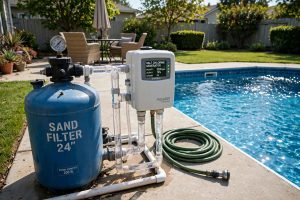
Use a cleaner with a fine filter option. Many robotic models offer an ultra-fine cartridge for exactly this job. Run a full cycle, then brush the floor lightly toward the main drain before the next run. If silt keeps returning, check your filter system; a worn sand filter or a dirty cartridge may be letting fine dirt pass back into the pool.
Can I use my pool vacuum in winter?
If you keep the pool open year-round in a warm climate, keep vacuuming on a lighter schedule. If you close the pool, clean and dry the vacuum before storage, as described above. Do not leave a robotic cleaner in a covered pool all winter. Cold and still water age the seals and the cord.
My pebble pool keeps growing algae in the same spots. What should I do?
First, learn how to remove algae from pool walls with proper brushing technique, because algae in pebble pools hides in the texture. Then check your chlorine and stabilizer levels, improve circulation to the dead spots, and vacuum on a strict weekly schedule. Repeat trouble spots often mean poor water flow, and a return jet adjustment may fix them.
How long should a pool vacuum last?
A quality robotic cleaner lasts five to eight years with basic care. Suction and pressure cleaners often last three to six years before hoses, bags, or gears need replacement. Manual heads last for years since they have few moving parts. Good storage and regular rinsing are the two habits that extend life the most. Reviews at Hot Spring and Bullfrog Spas show how long careful owners keep their equipment running, and pool forums echo the same lesson: care beats price.
A Final Word
The best pool vacuum for pebble finish pools is the one that matches your pool’s size, your debris load, and your budget. For most owners, a robotic cleaner with soft brushes and a fine filter is the top pick. It scrubs the texture, traps the silt, and asks little of you in return. Whatever type you choose, run it on a steady schedule, keep the filter clean, and protect the finish with balanced water. Do that, and your pebble pool will stay beautiful for many years to come.
References
Bullfrog Spas. (n.d.). Hot tubs and spas. https://www.bullfrogspas.com Hot Spring Spas. (n.d.). Hot tubs and spas. https://www.hotspring.com Leslie’s Pool Supplies. (n.d.). Pool supplies and equipment. https://www.lesliespool.com Pool Warehouse. (n.d.). Pool equipment and supplies. https://www.poolwarehouse.com Swim University. (n.d.). Pool and hot tub care guides. https://www.swimuniversity.com The Home Depot. (n.d.). Home improvement products. https://www.homedepot.com The Spruce. (n.d.). Home and garden advice. https://www.thespruce.com U.S. Consumer Product Safety Commission. (n.d.). Product safety information. https://www.cpsc.gov
Was this guide helpful?

About Sarah Mitchell
The My Garden US editorial team writes practical, in-depth home and garden guides for American homeowners — tested advice, no fluff.
You May Also Like
Best Pool Vacuum for Sand Bottom: How to Choose the Right One
July 10, 2026 0 views
Best Hot Tub for Two People
April 16, 2026 0 views
How to Install a Salt Water Chlorinator: A Step by Step Guide
April 7, 2026 0 views