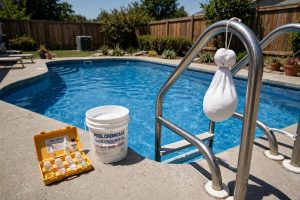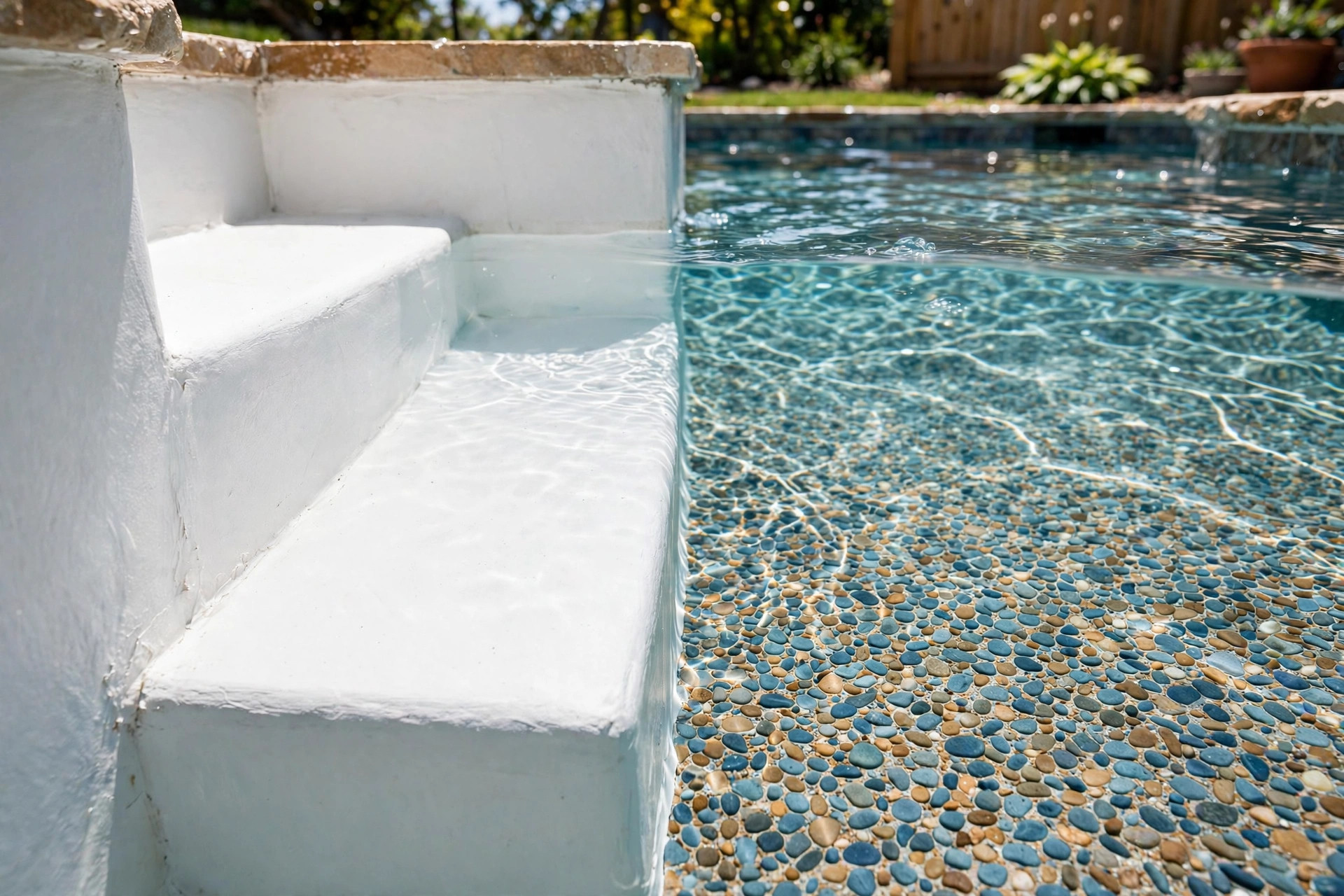

This pool plaster vs pebble finish comparison gives a clear look at the two most common pool surfaces. Pool plaster is the smooth white coating that lines many older pools. A pebble finish uses small rounded stones set in cement. Both hold water well. Both look fine when new. But they differ in cost, life, comfort, and care. A pool owner who picks the wrong surface can spend thousands on early repairs. This guide lays out the facts so you can choose with care.
Why the Surface Choice Matters
The surface of a pool is more than paint. It is the layer that stands between the pool shell and the water. Concrete gunite pools cannot hold water on their own. They need a finish. That finish must resist water pressure, sun, and pool chemicals for years.
A good finish keeps the pool smooth and clean. A poor finish stains, cracks, and flakes. Flakes and rough spots hurt feet. Stains make the pool look old. A worn finish can also let water reach the steel in the pool shell. Steel rusts. Rust expands. It can crack the concrete around it.
The finish also sets the look of the pool. White plaster gives the classic bright blue water. Pebble finishes come in many colors. They give deeper tones and a natural look. The choice changes how the whole backyard feels.
Money is the last reason the choice matters. Plaster costs less to install. Pebble costs more. But pebble often lasts longer. The cheap choice today can cost more over twenty years. The dear choice today can save money over time. This is why a careful comparison of pool finishes helps before you sign a contract.
What to Look for When You Choose: Pool Plaster vs Pebble Finish Comparison
Comfort Underfoot
Plaster feels smooth. It is kind to feet. Pebble feels rough by design. The stones give grip. That grip helps on steps and shallow ledges. But it can scrape feet during long swims. Families with small children often favor the smooth feel of plaster. Older swimmers often favor the grip of pebble on steps.
Color and Looks
White plaster reflects light. The water looks bright blue. This is the classic pool look. Plaster can be tinted blue, gray, or tan. The color range is narrow.
Pebble finishes offer a wide color range. Makers mix stone colors to create blues, greens, tans, and grays. Darker pebble colors give a lagoon look. Lighter colors give a bright look. The stones also hide small stains better than white plaster.
Life Span
Plaster lasts about seven to ten years in most pools. Good water care can stretch that to twelve. Pebble lasts longer. Many makers claim fifteen to twenty five years. Real life results often fall in the fifteen to twenty year range. The longer life is the main reason owners pay more for pebble.
Chemical Tolerance
Pool water must stay balanced. Low pH and low calcium eat plaster. The surface roughens and thins. Pebble stands up better to poor water chemistry. The stones are hard. They resist etching. But the cement between the stones still needs care. Neither surface forgives long neglect.
Home guides and pool care guides from Swim University stress steady testing. Test strips and kits sold by pool supply stores such as Leslie’s make weekly checks easy. Good water care helps both surfaces last.
Types and Options
Plaster Options
Standard white plaster is the basic type. It is a mix of white cement and marble dust. It goes on smooth. It is the least costly choice.
Tinted plaster adds color to the mix. Blues and grays are common. The tint gives the water a softer tone. Tinted plaster costs a bit more than white.
Quartz plaster blends quartz crystals into the mix. The crystals add sparkle and strength. Quartz plaster resists stains better than plain plaster. It costs more but lasts longer. It is a middle path between plain plaster and pebble.
Polished marble plaster is a premium plaster. Crews polish it after it cures. The result is smooth and glossy. It looks fine. It also resists stains well. The polish step adds labor cost.
Pebble Options
Standard pebble uses small natural stones. The stones are washed and sorted. Crews spread the mix over the pool shell and wash off the top cement. The stones show through. Standard pebble is the least costly pebble type.
Mini pebble uses smaller stones. The surface feels smoother than standard pebble. It costs a bit more. Many owners pick mini pebble for comfort.
Polished pebble takes mini pebble one step further. Crews polish the surface after it cures. The finish is smooth yet textured. It looks rich. It costs the most of the pebble types.
Glass bead finishes mix glass beads with stone. The beads catch light and sparkle. The look is striking. The cost is high. Glass bead is often used as an accent, not a full pool surface.
Both plaster and pebble come from many makers. Large retailers such as The Home Depot and pool equipment sellers such as Pool Warehouse carry repair products for both types. For full resurfacing, hire a licensed pool builder. This is not a do it yourself job.
Cost and Price
Price depends on pool size, region, and crew skill. The numbers below are rough ranges for a standard home pool in the United States.
A plaster job often runs from seven thousand to fifteen thousand dollars. Plain white plaster sits at the low end. Tinted and quartz plaster cost more. Polished marble plaster costs the most of the plaster types.
A pebble job often runs from twelve thousand to twenty five thousand dollars. Standard pebble sits at the low end. Mini pebble and polished pebble cost more. Complex pools with steps, benches, and spas cost more to finish in either type.
The price gap is real. Pebble can cost half again as much as plaster. But think in years. A fifteen thousand dollar plaster job that lasts ten years costs fifteen hundred dollars a year. A twenty two thousand dollar pebble job that lasts twenty years costs eleven hundred dollars a year. The math favors pebble over the long run.
Resurfacing is not the only cost in pool work. Owners often bundle the finish with new tile, coping, or deck work. If you plan deck repairs too, read a pool deck resurfacing cost near me guide. A pool liner replacement cost estimate is a different matter. Vinyl liner pools use a liner, not plaster. Do not mix the two. Vinyl liners cost less than either plaster or pebble but serve a different pool type.
Get three written bids. Ask each builder how long the crew has done this finish. Ask for addresses of past jobs. Visit one if you can. A good crew matters more than the brand of the mix.
Care and Upkeep
Both surfaces need steady care. The first month matters most. New plaster and new pebble must cure in balanced water. The builder should give start up steps. Follow them.
Brush the pool. New finishes shed a fine dust. Brush daily for the first two weeks. Use a soft brush for plaster. Use a stiff brush for pebble. Brushing stops dust from settling and staining.
Balance the water. Keep pH between 7.2 and 7.6. Keep calcium hardness in the right range for your area. Test every week. Adjust with care. Independent testers such as Consumer Reports review pool test kits. A good kit pays for itself.
Do not let the pool sit empty. Sun and heat dry out a new finish. Cracks follow. If you must drain the pool, do it in cool weather and refill fast.
Salt systems deserve a note. Salt pools are popular. Salt is gentler on eyes and skin. But salt water is still chlorine water. It can wear plaster faster than fresh chlorine water if the chemistry drifts. Read a salt water vs chlorine pool pros cons guide before you convert. Keep salt levels in range. Watch the pH. It tends to rise in salt pools.
Clean stains early. Rust, leaves, and metals stain both surfaces. Pebble hides stains better. Plaster shows them fast. Use stain removers made for pools. Do not use household bleach or acid without care. Strong acid etches plaster.
Winter care matters in cold states. Follow the builder’s closing steps. Keep the cover tight. Do not let heavy snow and ice sit on an empty pool. A covered pool with clean water rests well through winter.
Safety
A worn finish can cut feet. Check steps and benches each season. Run a hand over the surface. If it feels like sandpaper, it may need work. Rough plaster can be sanded smooth in mild cases. Heavy wear needs resurfacing.
Grip is a two sided matter. Pebble gives good grip. That helps prevent slips on steps. Plaster can get slick when algae grows. Keep algae out with steady chlorine and brushing. Algae on a slick step is a fall risk.
Drain safety is a separate and vital matter. The federal safety agency CPSC sets rules for pool drains and covers. A broken or missing drain cover can trap a swimmer. Check drain covers each year. Replace cracked covers at once. The surface finish does not change this rule. Every pool needs safe drains.
Chemical safety matters during start up and weekly care. Store pool chemicals in a dry place. Keep them away from children and pets. Add chemicals to water, never water to chemicals. Wear gloves and eye cover when you handle strong products. The EPA publishes guidance on safe water practices. Read it.
Spa and hot tub owners face the same water rules. Makers such as Hot Spring and Bullfrog Spas stress steady water balance in their care guides. The lessons carry over to pools.
FAQ
How long does pool plaster last?
Plain plaster lasts about seven to ten years. Tinted plaster lasts about the same. Quartz plaster can last ten to twelve years. Water care is the main factor. Pools with steady pH and calcium last longer. Pools with wild swings wear out fast.
How long does a pebble finish last?
Most pebble finishes last fifteen to twenty years. Some last longer. Mini pebble and polished pebble fall in the same range. The stones are tough. The cement between them wears slowly. Good water care still matters. Poor care shortens the life of any finish.
Which is better for a salt water pool?
Pebble usually wins for salt pools. Salt water can be hard on plaster when the chemistry drifts. The stones in a pebble finish resist the wear better. Many builders now steer salt pool owners toward pebble or quartz. Either way, keep the salt level and pH in range.
Can I put pebble over old plaster?
Yes, in most cases. Crews bond the pebble mix over sound plaster. The old plaster must be solid. Loose or hollow spots must be cut out first. A good builder will tap the whole pool and mark bad spots. If the old plaster is too far gone, the crew strips it to the shell. Ask your builder which method fits your pool.
Does pebble hurt bare feet?
It can at first. Standard pebble feels rough under soft feet. Most swimmers get used to it in a few weeks. Mini pebble and polished pebble feel smoother. If comfort is your top worry, pick plaster or polished pebble. Try walking on a sample pool if you can. Many builders have one.
Which finish adds more home value?
A fresh finish of either type helps. Buyers like a pool that needs no work. Pebble may read as an upgrade. It looks modern and lasts long. But no finish adds value on its own. The pool, yard, and home must fit together. A clean, safe pool with a sound surface is what buyers want.
A Short Final Word
Plaster is smooth, bright, and kind to the budget. Pebble is tough, varied, and kind to the long run. Match the finish to your water habits, your feet, and your plans. If you tend the water with care, either surface can serve you well for many years.
References
Bullfrog Spas. (n.d.). Hot tubs and spas. https://www.bullfrogspas.com Consumer Reports. (n.d.). Product reviews and ratings. https://www.consumerreports.org Hot Spring Spas. (n.d.). Hot tubs and spas. https://www.hotspring.com Leslie’s Pool Supplies. (n.d.). Pool supplies and equipment. https://www.lesliespool.com Pool Warehouse. (n.d.). Pool equipment and supplies. https://www.poolwarehouse.com Swim University. (n.d.). Pool and hot tub care guides. https://www.swimuniversity.com The Home Depot. (n.d.). Home improvement products. https://www.homedepot.com The Spruce. (n.d.). Home and garden advice. https://www.thespruce.com U.S. Consumer Product Safety Commission. (n.d.). Product safety information. https://www.cpsc.gov U.S. Environmental Protection Agency. (n.d.). Protecting human health and the environment. https://www.epa.gov
Was this guide helpful?

About Emily Rodriguez
The My Garden US editorial team writes practical, in-depth home and garden guides for American homeowners — tested advice, no fluff.
You May Also Like
Pool Heater for Above Ground Pools: A Plain Guide to Warm Water All Season
June 30, 2026 0 views
How to Winterize Pool Equipment Properly: A Step-by-Step Guide
June 1, 2026 0 views
Best Pool Test Kit Digital Reviews: A Plain Guide for Pool Owners
March 24, 2026 0 views