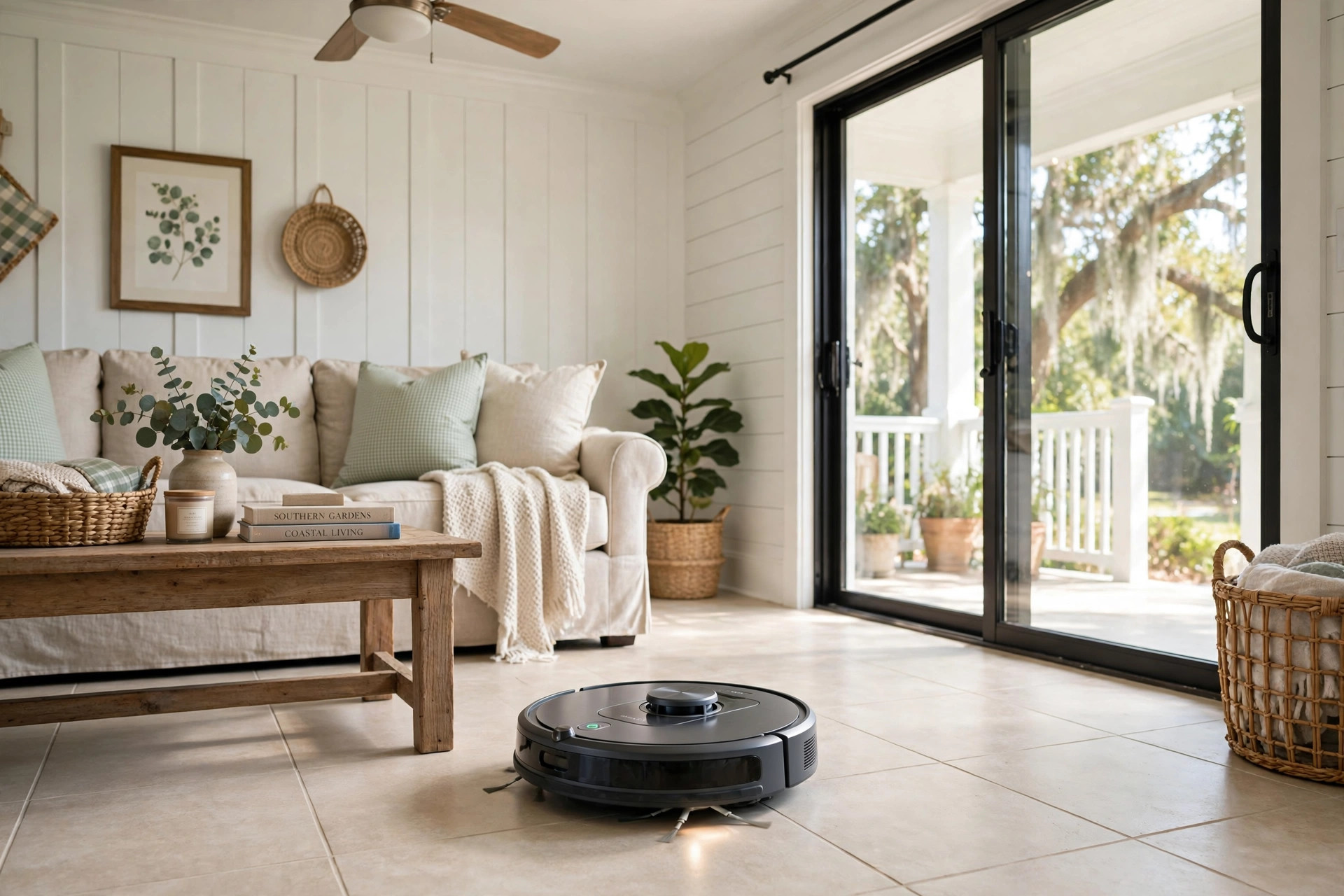

A home in the South faces a dust problem that never quite ends. Pollen drifts in from pine trees in March. Red clay tracks in on shoes in April. Pet hair gathers under the couch by June. For this reason, many buyers search for top rated robot vacuum cleaners for southern states before summer arrives. A good machine runs on a set schedule. It picks up the daily film of grit while the family is at work or school. This guide explains what matters in a warm climate, how to choose a model, what each type costs, and how to keep the machine in good order.
Why Southern Homes Benefit From a Robot Vacuum
The South has long cooling seasons. Doors open and close all day. Each open door lets in a small cloud of dust. Pine pollen settles on floors in a yellow film each spring. Sand works its way inside near the coast. Homes in Texas, Florida, Georgia, and Louisiana often have tile or sealed concrete floors. Tile shows every speck of dirt. A quick daily pass by a robot vacuum keeps that surface clean without mopping.
Pets add to the load. Warm states have long outdoor seasons, and dogs spend more time in the yard. They bring in leaves, grass, and hair. Families with cats know the steady drift of litter and fur. A robot vacuum made for pet hair keeps these piles from growing. The machine runs under beds and sofas where a stick vacuum rarely reaches.
Heat also affects indoor air. Air conditioning runs for eight months or more in many southern homes. The system moves dust through the vents each time it cycles. A robot vacuum that removes dust from the floor each day lightens the load on the air filter. The U.S. Environmental Protection Agency notes that regular dust removal is part of good indoor air habits, and a scheduled robot vacuum supports that habit with no extra thought.
How to Choose the Right Model: Top Rated Robot Vacuum Cleaners for Southern States
Shoppers face dozens of models. The boxes look alike. The words on them blur together. Focus on a short list of features that truly matter in a southern home.
Suction Power and Brush Design
Suction power decides how much grit the machine lifts from a single pass. For tile and hardwood, medium suction is enough. For area rugs and carpet, stronger suction helps. Brush design matters just as much. Rubber brush rollers resist hair tangles better than old bristle brushes. Pet owners should look for a dual rubber roller design. Long hair wraps around bristle brushes and stops them from turning. Rubber rollers shed hair more easily.
Side brushes sweep dust from corners and along baseboards. A single side brush is common. Two side brushes clear edges a bit faster. None of them reach deep into a corner. Plan to wipe corners by hand once a month.
Navigation and Mapping
Cheap models bounce around a room at random. They miss spots and waste time. Mid-range and top models use sensors or lasers to map the home. A mapped home cleans in neat rows. The map also lets the owner set no-go zones in the phone app. Keep the machine out of the dog water bowl area and away from fragile rugs. Mapping matters more in larger homes. A southern ranch house with an open plan needs a smart map to finish the job on one charge.
Battery Life and Run Time
Most robot vacuums run for 60 to 120 minutes per charge. A small apartment needs only an hour. A 2,000 square foot home needs two hours or a machine that recharges and resumes. Look for recharge and resume. The machine returns to the dock, fills its battery, and goes back to the spot where it stopped. This feature saves the owner from restarting the job by hand.
Dustbin Size and Self-Emptying Docks
Southern dust fills a small bin fast. A standard bin holds about half a liter. In pollen season, that bin fills in one run. Self-emptying docks solve the problem. The dock sucks the bin contents into a bag that holds weeks of dirt. The owner changes the bag once a month. Pet owners should treat the self-emptying dock as a real help, not a luxury. Independent testing from Consumer Reports has found that docks with good seals also cut down on dust puffing back into the air.
Smart Features and Voice Control
Most top rated robot vacuum cleaners for southern states now link to a phone app. The app sets schedules, maps rooms, and names zones. Voice control through common smart speakers starts a cleaning with one sentence. These features are nice to have. They are not required for clean floors. A simple schedule button on the machine serves the same purpose for many owners.
Types of Robot Vacuum Cleaners
Makers sell four broad types. Each fits a different home and budget.
Random Navigation Models
These are the least costly. They turn when they hit a wall and clean by chance. They work in one or two small rooms. They struggle in large open homes. Buyers on a tight budget use them for a single bedroom or a home office. Expect to empty the bin often.
Laser Mapping Models
Laser models scan the room and build a map. They clean in straight lines and remember the layout. Most mid-price machines fall in this group. They suit most southern family homes. Detailed product guides from Wirecutter and reviews at PCMag often rank these models high for the balance of price and cleaning power.
Vacuum and Mop Combinations
These machines vacuum and drag a damp mop pad behind them. They suit tile floors, which cover much of the South. The mop pass picks up the fine film that a dry vacuum leaves. The pad needs a wash after each run. Do not expect the mop to scrub a stained grout line. It handles light surface dust well. Homes with sealed tile or luxury vinyl floors get the most value from this type.
Self-Emptying Flagship Models
Top models pair laser mapping with a self-emptying dock and strong suction. They cost the most. They also demand the least attention. Some add mop washing at the dock. Busy families and pet owners benefit the most. Home care guides at This Old House and Bob Vila suggest weighing the dock cost against the time saved each week before buying.
Cost and Price
Prices fall into clear bands. Budget models cost between 150 and 300 dollars. They use random or basic mapping navigation. Mid-range models cost between 300 and 600 dollars. They add laser mapping and stronger suction. Top models cost between 600 and 1,100 dollars. They add self-emptying docks and mop functions.
A southern buyer should also count the running costs. Replacement filters cost 10 to 25 dollars per set. Side brushes wear out each year. Self-emptying bags cost 15 to 25 dollars for a pack of three. One pack lasts about three months in a dusty home. Over two years, these supplies add roughly 100 to 150 dollars.
Buy during seasonal sales if the budget is tight. Late November and early spring bring the deepest cuts on home appliances. Retailers such as Lowe’s run these sales along with package deals that bundle extra bags and filters.
Care and Upkeep
A robot vacuum is a small machine with moving parts. It needs steady care. Neglect shortens its life fast.
Daily and Weekly Habits
Empty a standard bin after each run during pollen season. Wipe the sensors with a dry cloth each week. Dust on the sensors blinds the navigation. Check the wheels for wrapped hair. Pull the hair off before it binds the axle. These small steps take five minutes. They keep the machine from slowing down.
Brush and Filter Care
Remove the main brush each week in a pet home. Cut away wrapped hair with small scissors. Rinse a washable filter once a month and let it dry fully for a full day. Never put a damp filter back in the machine. Damp filters grow mold fast in a humid southern climate. Keep one spare filter so the machine can run while the washed one dries.
Battery Care
Lithium batteries last longest with steady use. Let the machine run on its schedule. Do not leave it dead on the dock for weeks. In the heat of a southern garage, store the dock indoors. High heat shortens battery life. Most batteries hold a good charge for two to three years. Replacement batteries cost 30 to 60 dollars and take minutes to swap. Practical maintenance advice from Family Handyman covers these battery basics in plain terms.
Dock and Charging Contacts
Wipe the charging contacts on the machine and the dock each month. A thin film of dust blocks the charge. Make sure the dock sits on a hard floor against a wall. Carpet under the dock makes the machine miss its parking spot. Leave three feet of clear space in front of the dock so the machine can back in without trouble.
Safety in the Home
Robot vacuums are safe machines, but a few rules protect both the home and the machine. Pick up small items before a run. Socks, cords, and pet toys jam the brush. Tie up long curtain cords. Close the doors to rooms with standing water, such as a laundry room after a leak.
Pet safety needs a clear plan. Some dogs attack the machine. Watch the first few runs. If the dog stays calm, the schedule can run while the owner is out. Cat owners should check that the machine cannot trap a kitten under low furniture. A low sofa gap can pin a small animal. Measure the gap before the first run.
Fire risk is low but real. Use only the charger that came in the box. Charge on a hard surface away from curtains. Unplug the dock during long trips away from home. These steps match standard advice for all small home appliances.
Frequently Asked Questions
Do robot vacuums work well on tile floors?
Yes. Tile is one of the best surfaces for a robot vacuum. The hard flat surface lets the brush reach all the dust. A vacuum and mop combination works even better on tile. It picks up the fine film that dry vacuums leave behind. Grout lines collect some dust. The machine will not deep clean grout. Plan a hand scrub of grout once or twice a year.
How often should the machine run in a southern home?
Once a day suits most homes. Pet homes may need two short runs, one in the morning and one in the evening. During spring pollen season, a daily run keeps the yellow film from building up. A schedule in the phone app handles this with no daily input. Owners who travel can pause the schedule from the app.
Can a robot vacuum replace a full-size vacuum?
Not fully. The robot handles daily surface dust well. It cannot match the deep suction of an upright on thick carpet. It also cannot clean stairs, cars, or drapes. Think of the robot as daily upkeep. Keep the full-size vacuum for weekly deep cleaning. Many owners find they use the big vacuum far less once the robot runs daily.
What is the best robot vacuum for pet hair in Texas homes?
Look for dual rubber brush rollers, strong suction, and a self-emptying dock. Rubber rollers resist tangles from long dog hair. The dock holds weeks of hair so the owner does not empty a bin each day. A laser map keeps the machine from knocking over water bowls. Cleaning guides at The Spruce list pet hair pickup as a key test point when comparing models.
How long do robot vacuums last?
Most last three to five years with steady care. Brushes and filters wear first. The battery fades after two to three years. Makers sell these parts as spares. A machine that gets weekly brush cleaning and monthly filter care often reaches the five year mark. Machines left full of hair and dust fail much sooner.
Are robot vacuums loud?
Most run at 60 to 70 decibels. That is close to a normal talk. Quiet modes drop the sound but also drop the suction. The self-emptying dock makes a short loud burst when it empties the bin. That burst lasts about ten seconds. Schedule runs for times when the house is empty if noise is a concern.
A Short Final Word
The best machine is the one that runs every day. Fancy features help, but a steady schedule matters more. Match the machine to the home: tile floors, pets, and dust set the real needs. Read independent reviews, count the running costs, and buy from a store with a fair return policy. Then set the schedule and let the small machine do the daily work. Readers who want a broader cleaning plan can also look into reliable same day appliance repair services near me when a unit needs professional help, best pet odor eliminator sprays for texas homes for fresher air between runs, and top rated post construction cleaning services for homeowners after a remodel. For energy use questions, ENERGY STAR offers plain guidance on small appliance power draw.
References
Bob Vila. (n.d.). Home improvement advice. https://www.bobvila.com Consumer Reports. (n.d.). Product reviews and ratings. https://www.consumerreports.org ENERGY STAR. (n.d.). Energy efficient products. https://www.energystar.gov Family Handyman. (n.d.). DIY home repair and maintenance. https://www.familyhandyman.com Lowe’s. (n.d.). Home improvement products. https://www.lowes.com PCMag. (n.d.). Technology product reviews. https://www.pcmag.com The Spruce. (n.d.). Home and garden advice. https://www.thespruce.com This Old House. (n.d.). Home renovation guidance. https://www.thisoldhouse.com U.S. Environmental Protection Agency. (n.d.). Protecting human health and the environment. https://www.epa.gov Wirecutter. (n.d.). Product reviews from The New York Times. https://www.nytimes.com/wirecutter
Was this guide helpful?

About Michael Thompson
The My Garden US editorial team writes practical, in-depth home and garden guides for American homeowners — tested advice, no fluff.
You May Also Like
Top Rated Pressure Washing Service Companies for Homeowners: A Complete Guide
July 10, 2026 0 views
Eco Friendly Mold Removal Sprays With Free Shipping
April 13, 2026 0 views
Buy Pet Hair Removal Tools Online in California: A Simple Guide
September 21, 2026 0 views