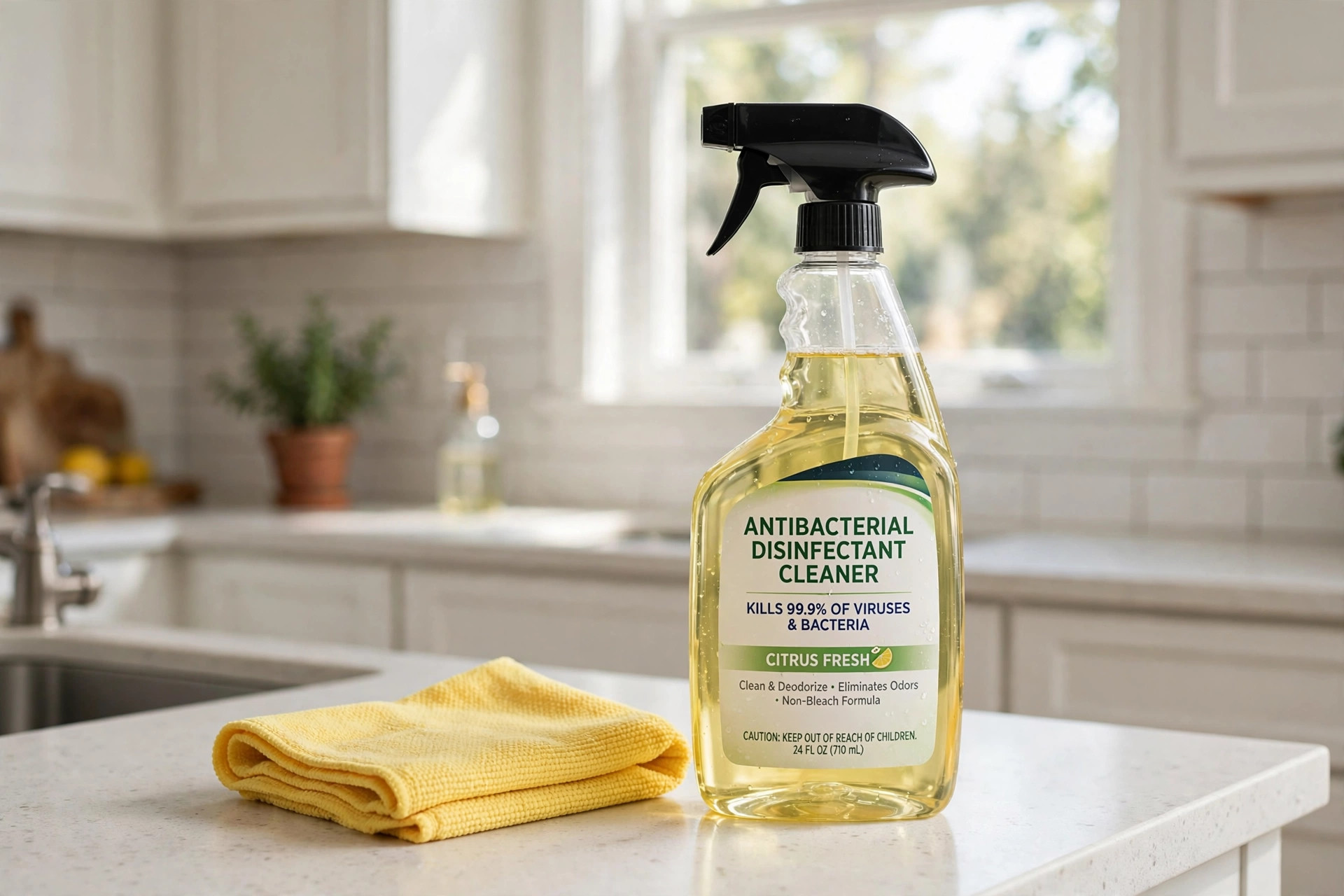

Powerful antibacterial disinfectant sprays with free shipping make it easy to keep a home clean and safe. More shoppers now buy cleaning supplies online. They like the low prices. They like home delivery. Free shipping takes away the last worry. There is no need to carry heavy bottles from the store.
But not every spray does the same job. Some kill germs in seconds. Some need ten minutes of wet contact. Some are safe for food areas. Some are not. A wise buyer learns a few facts before clicking the order button. This guide covers what matters. It explains how these sprays work. It shows what to check on the label. It covers price, storage, and safety. It answers common questions. By the end, you will know how to pick the right spray for your home.
Why It Matters
Germs live on the surfaces we touch each day. Door handles carry them. Light switches carry them. Kitchen counters carry them. Phones and remote controls carry them. Most of the time our bodies fight off these germs. But some germs cause real sickness. A good disinfectant spray lowers the risk.
Antibacterial sprays are made for this work. They kill bacteria on hard surfaces. Many also kill viruses and fungi. The word “powerful” on a label means the product has been tested. It means it passed strict rules. In the United States, the Environmental Protection Agency registers disinfectants. A registered product lists the germs it kills. It lists the time needed to kill them. This rule protects the buyer.
Buying these sprays online with free shipping adds real value. Cleaning sprays are heavy. A single bottle can weigh two pounds. A case of twelve weighs much more. Stores near your home may charge high prices. Online shops often sell the same brands for less. Free shipping makes the deal even better. There is no extra fee at checkout. The bottles come to your door.
Many homes now keep a stock of spray bottles. A family with young children uses them daily. A home with an elderly parent needs them too. Pet owners use them on food bowls and litter areas. Busy workers like the speed of a spray. One pull of the trigger covers a counter. There is no bucket to fill. There is no mop to wring out.
What to Look For When You Shop: Powerful Antibacterial Disinfectant Sprays with Free Shipping
Read the Label First
The label tells the whole story. Look for the word “disinfectant.” A cleaner that only says “cleans” may not kill germs. A true disinfectant spray says what it kills. It names bacteria and viruses. It shows an EPA registration number. That number proves the product passed testing. Consumer Reports tests many cleaning products and rates them for how well they work.
Check the list of active ingredients. Common ones include quaternary ammonium compounds. Others use bleach or hydrogen peroxide. Each has strengths. Bleach kills a wide range of germs. Hydrogen peroxide breaks down into water and oxygen. That makes it friendlier for many homes. Quaternary ammonium compounds are gentle on surfaces. They work well in kitchens and baths.
Look at the surface list too. Some sprays work on tile and glass. Some work on wood and plastic. A few are safe for fabric. Make sure your counters and floors are on the list. If you have stone counters, be careful. Some strong sprays can stain marble or granite. When in doubt, test a small hidden spot first.
Check the Contact Time
Contact time is the key fact most buyers miss. It is the time a surface must stay wet for the spray to kill germs. One product may need thirty seconds. Another may need ten minutes. The Centers for Disease Control and Prevention notes that disinfection only works when directions are followed. A quick wipe may not be enough.
Read the directions on the back of the bottle. They will tell you the contact time. They will also tell you if the surface needs a rinse after. Some sprays must be rinsed from food areas. Others are safe to leave in place. Plan your cleaning around this time. Spray the counter. Let it sit. Do other chores while you wait. Then wipe if the label says to wipe.
Consider the Scent and the Fumes
Strong sprays can have strong smells. Bleach has a sharp scent. Some people dislike it. Others find it harsh on the eyes and throat. Many brands now sell lemon or fresh linen scents. Unscented versions exist too. If anyone in the home has asthma, pick a low-fume product. Open a window when you spray. Good airflow helps.
Types and Options
Ready-to-Use Sprays
Most online listings are ready-to-use sprays. The bottle has a trigger. You pull it and spray. These are the simplest choice. They are popular with busy families. They are also popular in small homes. There is nothing to mix. There is nothing to measure. The Spruce offers clear guides on which ready-to-use sprays suit common household tasks.
The downside is price per ounce. Ready-to-use bottles cost more than concentrates. They also take more space in storage. But for most homes, the ease is worth it. One bottle under the sink handles daily jobs.
Concentrates and Refills
Concentrates save money. You buy a small bottle of strong liquid. You mix it with water in a spray bottle. One concentrate can make many bottles of spray. This cuts waste and shipping weight too. That is one reason many powerful antibacterial disinfectant sprays with free shipping now come as refill packs.
Refills need care. You must measure the right amount. Too weak, and germs may survive. Too strong, and the mix may harm surfaces. Follow the label exactly. Keep concentrates away from children. Store the mixed bottle with a clear label. Write the mix date on it with a marker.
Foaming and Clinging Formulas
Some sprays come out as foam. The foam clings to vertical surfaces. This helps on shower walls and toilet bowls. Gravity pulls thin liquid down. Foam stays in place longer. That extra time helps the product work. Family Handyman explains how clinging formulas reach germs in spots that thin sprays miss.
Foam sprays cost a bit more. They are worth it for bathrooms. They also work well on kitchen backsplashes. If you clean a lot of tile walls, try one.
Cost and Price
Prices vary by brand and size. A single 32-ounce bottle often sells for four to eight dollars. Store brands cost less. Name brands cost more. Large packs bring the unit price down. A case of six may cost less per bottle than buying one at a time.
Free shipping changes the math. Some sellers raise the item price to cover shipping. Others offer real free shipping with no price trick. Compare the total cost. Look at the price per ounce. A site that lists the per-ounce price makes this easy. Watch for coupons and subscribe plans. Many stores cut five to ten percent for repeat orders.
Watch out for false deals. A very low price may mean a small bottle. Check the ounces before you buy. A 16-ounce bottle at three dollars costs more per ounce than a 32-ounce bottle at five dollars. The bigger bottle wins. Bob Vila has shopping guides that show how to compare cleaning product prices the right way.
Care and Upkeep of Your Supplies
Sprays last a long time, but not forever. Most have a shelf life of one to two years. The date is often printed on the bottle. An old spray may lose strength. It may still clean, but it may not kill germs as well. Do not stock more than you can use in a year.
Store bottles in a cool, dry place. Heat breaks down active ingredients. A garage that bakes in summer is a poor spot. Under the kitchen sink works for most homes. Keep bottles upright. Make sure the trigger is locked or off. A leaking bottle wastes product and can harm cabinets.
Keep the spray nozzle clean. Dried product can clog the trigger. If a trigger stops working, rinse it in warm water. Pump it a few times. Most clogs clear fast. If not, move the liquid to a new spray bottle. Label the new bottle with the product name. Never pour a disinfectant into a food or drink container. That mistake can poison someone.
Safety at Home
Disinfectant sprays are safe when used as directed. They can harm when misused. Read every warning on the label. Keep sprays away from children and pets. Store them high or behind a locked door. A child can be poisoned by drinking even a small amount.
Never mix products. Bleach mixed with ammonia makes a deadly gas. Bleach mixed with vinegar makes a harsh gas too. Use one product at a time. Rinse the surface if you plan to switch products. This rule has no exceptions.
Ventilate the room when you spray. Open a window or turn on a fan. Strong fumes can sting the eyes. They can make breathing hard for people with lung problems. If you feel dizzy, leave the room. Get fresh air at once.
Wear gloves for long cleaning jobs. Some sprays dry out the skin. Gloves protect your hands. Safety glasses help when you spray overhead. A drop in the eye needs a rinse with clean water for fifteen minutes. Call poison control if pain stays. Keep the number on your fridge: 1-800-222-1222.
Keep sprays away from food. Cover food before you spray nearby counters. Rinse food contact surfaces if the label says to rinse. Store sprays far from food in the pantry. A leak onto food can ruin it.
Pets need care too. Keep cats and dogs out of the room while you spray. Let surfaces dry before pets walk on them. Some products are toxic to cats in small amounts. Read the pet warnings on the label. When in doubt, rinse the floor with plain water after disinfecting. Good Housekeeping publishes pet-safe cleaning tips that many owners find useful.
How to Use Sprays the Right Way
Good method matters as much as a good product. Start by cleaning first. Wipe away dirt and grease with soap and water or an all-purpose cleaner. Dirt blocks disinfectants. A dirty surface will not get fully disinfected. This two-step method is the rule in hospitals. It works at home too.
Spray from six to eight inches away. Cover the whole surface with an even mist. Do not miss the edges. Corners and seams hold germs. Let the surface stay wet for the full contact time. Do not wipe early. If the spray dries too fast, apply more.
Wipe with a clean cloth after the time is up, if the label calls for it. Use paper towels or a fresh microfiber cloth. A dirty rag spreads germs around. Wash reusable cloths in hot water after use. Let them dry fully before the next use.
Many shoppers also look for best eco friendly cleaning supplies with free shipping when they want gentler options for daily use. Others dealing with pet messes read pet odor eliminator sprays reviews and buying guide before they buy. Homeowners with a fireplace often add top rated chimney cleaning brushes for midwest homes to the same order to save on shipping.
Frequently Asked Questions
Do antibacterial sprays kill viruses too?
Many do, but not all. The word “antibacterial” means the product kills bacteria. A product that also kills viruses will say “disinfectant” and list viruses on the label. Check the germ list. If a virus you care about is named, the spray has been tested against it. This Old House explains the difference between cleaners, sanitizers, and disinfectants in plain terms.
Can I use disinfectant spray on my kitchen counters?
Yes, if the label lists your counter material. Most sprays are safe for sealed stone, laminate, tile, and stainless steel. Some need a rinse on food contact surfaces. Read the directions. When you cut raw meat on a counter, disinfect after cleaning. That two-step habit keeps food safe.
Are these sprays safe around children?
They are safe once the surface is dry and used as directed. Keep bottles locked away from children. Never let a child play with a spray bottle. Spray when children are in another room. Let the surface dry fully before they touch it. Rinse toys with water after disinfecting them.
How long does a bottle last once opened?
Most sprays stay strong for one to two years after opening. Heat and sunlight shorten that time. Write the open date on the bottle with a marker. If the spray smells weak or looks cloudy, replace it. An old product may not kill germs well.
Is free shipping really free?
It can be. Many large stores offer true free shipping with no minimum. The Home Depot and Lowe’s both run free shipping deals on cleaning supplies. Some sellers build the cost into the price. Compare the total with a local store price. Often the online deal still wins, even with the built-in cost.
A Final Word
Powerful antibacterial disinfectant sprays with free shipping are a smart buy for most homes. They save trips to the store. They often cost less than shelf prices. They arrive at your door. The key is to buy with care. Read the label. Check the contact time. Pick the right type for your rooms. Store bottles safely. Use them as directed.
A clean home is not about fear. It is about habit. A quick spray of the counter each night. A weekly wipe of the bathroom. A clean doorknob in flu season. Small steps add up. With the right spray on hand, those steps take only minutes. Order wisely, use safely, and enjoy a fresher home.
References
Bob Vila. (n.d.). Home improvement advice. https://www.bobvila.com Centers for Disease Control and Prevention. (n.d.). Cleaning and disinfecting your home. https://www.cdc.gov Consumer Reports. (n.d.). Product reviews and ratings. https://www.consumerreports.org Family Handyman. (n.d.). DIY home repair and maintenance. https://www.familyhandyman.com Good Housekeeping. (n.d.). Product reviews and home advice. https://www.goodhousekeeping.com Lowe’s. (n.d.). Home improvement products. https://www.lowes.com The Home Depot. (n.d.). Home improvement products. https://www.homedepot.com The Spruce. (n.d.). Home and garden advice. https://www.thespruce.com This Old House. (n.d.). Home renovation guidance. https://www.thisoldhouse.com U.S. Environmental Protection Agency. (n.d.). Protecting human health and the environment. https://www.epa.gov
Was this guide helpful?

About Lisa Anderson
The My Garden US editorial team writes practical, in-depth home and garden guides for American homeowners — tested advice, no fluff.
You May Also Like
Where to Buy HEPA Vacuum Cleaners in California: A Plain Shopping Guide
February 12, 2026 0 views
Buy Microfiber Cleaning Cloth Sets Online in Colorado
September 23, 2026 0 views
Top Rated Pest Control Service Plans Reviews: A Plain Guide for Homeowners
April 24, 2026 0 views