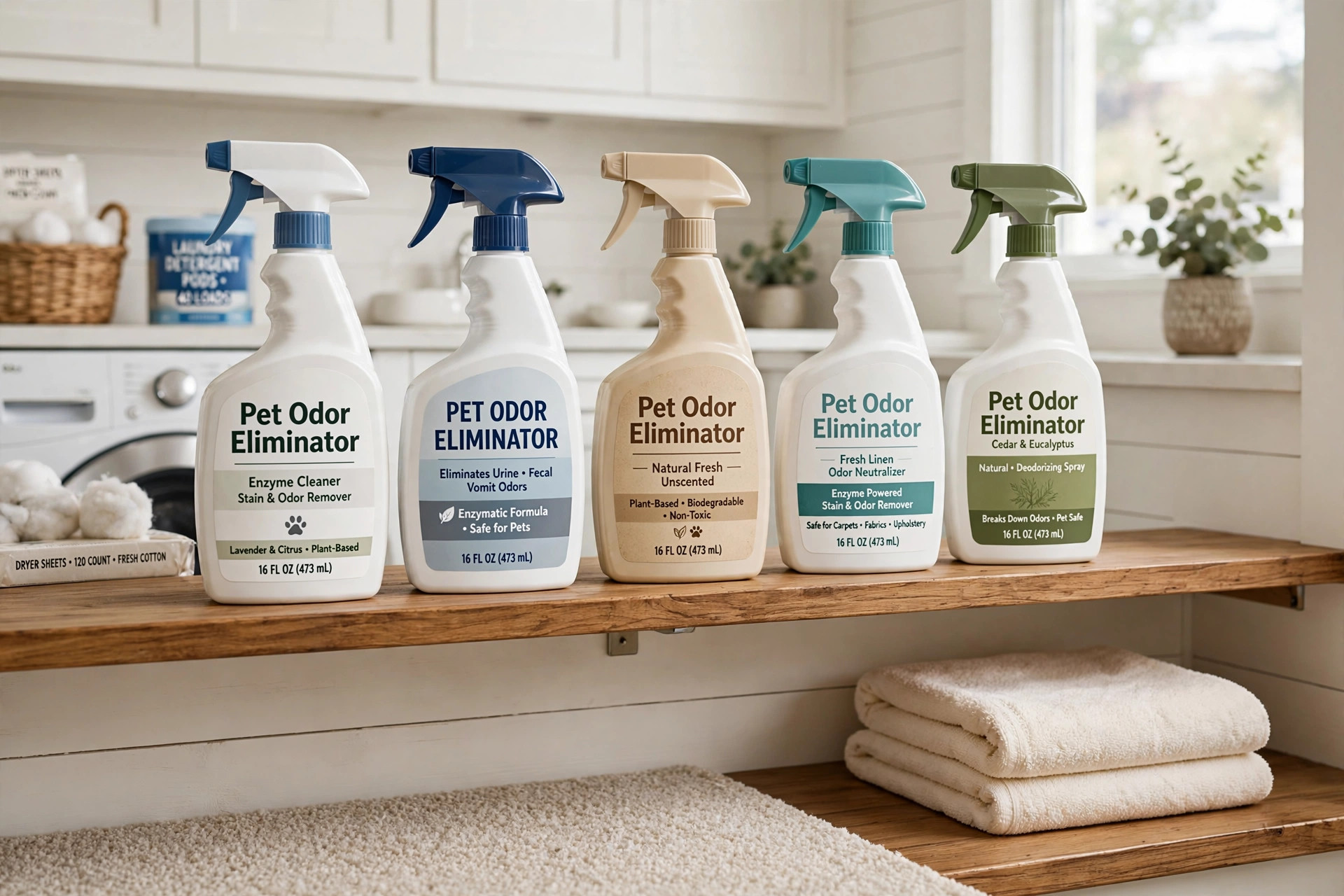

Pets bring joy to a home. They also bring smells. A dog that plays in the yard can carry earth and damp fur into the house. A cat litter box can leave a sharp note in the air even after it is cleaned. Over time these odors sink into carpets, curtains, and couch cushions. This pet odor eliminator sprays reviews and buying guide will help you understand how these sprays work, which types suit which problems, and how to pick a safe product for your family.
You do not need to spend a fortune to keep your home smelling clean. With the right spray and a few good habits, most pet odors can be removed at the source. Read on for clear reviews of the main kinds of sprays, honest notes about what they can and cannot do, and practical advice on safe use.
Why Pet Odors Are Hard to Remove
Pet smells are not like the smell of burned toast. A kitchen smell fades when the air clears. Pet odors tend to stay. Urine soaks through carpet into the pad below. Oils from a dog coat rub into fabric over months. Cat spray contains strong proteins that bind to surfaces.
Simple air fresheners only cover these smells. The cover fades, and the odor comes back. A true pet odor eliminator spray attacks the cause. It breaks down or neutralizes the matter that holds the smell. That is why sprays made for pet odors work better than general room sprays.
How Pet Odor Eliminator Sprays Work: Pet Odor Eliminator Sprays Reviews and Buying Guide
Most pet odor sprays use one of three main methods. Some products mix two or more of them.
Enzyme Formulas
Enzyme sprays contain living proteins that eat organic matter. They work slowly but they reach deep. When the enzymes meet urine, drool, or vomit, they break the waste into odorless parts. These are the best choice for old stains and deep carpet smells. They need time. Give them hours, not minutes.
Oxidizing Formulas
Oxidizing sprays use active oxygen or similar agents to break odor molecules apart. They work fast on surfaces. They are good for hard floors, tile, and fresh spots. They may lighten some fabrics, so always test in a hidden spot first.
Absorbing and Neutralizing Formulas
These sprays use minerals or plant-based agents that trap odor particles. They act at once and often leave a light scent. They are good for quick touch-ups on bedding, pet beds, and the air. They do not dig as deep as enzymes.
Independent testing groups such as Consumer Reports often compare cleaning products side by side. Reading independent reviews helps you see past bold label claims. Home sites like Good Housekeeping and The Spruce also test pet odor products in real homes and give plain verdicts.
How to Choose the Right Spray
Start with the surface. Carpet and upholstery need a different product than tile or wood. Enzyme sprays suit soft surfaces. Oxidizing sprays suit hard surfaces. Read the label for a clear list of safe surfaces.
Next, think about the age of the stain. Fresh spots respond to almost any good spray. Old, set-in urine needs an enzyme formula and often two or three treatments. No spray can fix a stain that has rotted the carpet pad. In that case the pad may need to be replaced.
Check the scent. Strong perfumes can bother pets and people with allergies. Many buyers now choose fragrance-free or lightly scented sprays. Your pet should not sneeze or avoid a freshly treated room.
Look at the size of the bottle. A large dog creates large messes. A 32-ounce bottle may last only a few weeks in a busy house. Buying a gallon refill can cut the cost per ounce in half.
Finally, read real reviews. Product ratings from large home sites like Bob Vila and This Old House give useful buying advice. They test sprays on real stains and report which ones kept working after a week.
Types of Pet Odor Eliminator Sprays
Enzyme Urine Sprays
These are the workhorses of pet odor control. They come in trigger bottles and gallon jugs. They handle urine, feces, and vomit on carpet and furniture. Expect to pay a little more for them, but they replace many bottles of weaker sprays.
Surface and Hard-Floor Sprays
These use oxidizers or citrus-based cleaners. They shine on tile, sealed wood, and linoleum. Many can also be used on litter box areas. They dry fast and leave little residue.
Fabric and Upholstery Fresheners
These light sprays refresh couch cushions, curtains, and pet beds between deep cleanings. They neutralize odors on contact. They are not a fix for deep urine stains, but they keep everyday smells under control.
Air and Room Sprays
These treat the air, not the source. They help after a treatment or when guests are on the way. Use them as a last step, not as the only step.
Practical cleaning guides from Family Handyman show how to match the product to the stain. Their step-by-step photo guides are clear and honest about what a spray can achieve.
Cost and Price Ranges
Pet odor sprays are not costly. Here is what to expect in 2026:
– Budget trigger bottles (16 to 24 ounces): 8 to 15 dollars. Good for small homes and fresh spots. – Mid-range enzyme sprays (24 to 32 ounces): 15 to 25 dollars. The best value for most pet owners. – Gallon refills: 30 to 50 dollars. A smart buy if you treat carpets often. – Professional-strength concentrates: 40 to 70 dollars per gallon. Meant to be mixed with water. Best for large houses or multiple pets.
The cheapest bottle is not always the best deal. A weak spray that needs five coats costs more in the end than a strong enzyme spray that works in two. Check the cost per ounce and read reviews before you buy.
How to Use the Sprays for Best Results
Good method matters as much as good product. Follow these steps for the best results.
First, blot up what you can. Use paper towels or a clean cloth. Press down hard. Do not rub, which pushes the stain deeper.
Next, apply the spray with care. For enzyme products, soak the area. The enzymes must reach all of the waste to break it down. For surface sprays, mist evenly and wipe with a damp cloth.
Then, give it time. Enzyme sprays need four to eight hours, or even a full night. Cover the spot with a damp towel to keep the enzymes active. Do not let pets walk on the wet area.
Finally, check the result the next day. Smell the spot with your nose close to the surface. If odor remains, treat again. Old stains often need two or three rounds.
Do not forget the washable items. Take the covers off couch cushions and pet beds and run them through the washing machine with a hot wash. Add a cup of white vinegar to the rinse cycle. Vinegar is a mild acid that breaks down odor salts in fabric. Dry the covers fully in the sun if you can. Sunlight kills many odor-causing germs on its own. This one habit can cut your spray use in half.
Wash pet bedding every week. Vacuum carpets twice a week. A clean home needs less spray. The EPA offers useful guidance on indoor air quality and cleaning products that can help you keep a healthy home routine.
Safety Around Pets and Children
Most pet odor sprays are made to be safe once dry. But safety still needs care.
Read the full label before you spray. Look for warnings about cats, birds, or small animals. Some ingredients that are safe for dogs are not safe for cats.
Keep pets out of the room while you treat a spot. Let the area dry fully before you let them back in. This is most important for sprays with strong oxidizers.
Store bottles out of reach. A spray bottle looks like a toy to a small child. Keep all cleaning products in a locked cabinet or on a high shelf.
If your pet has breathing problems or skin allergies, choose a fragrance-free, dye-free product. The ASPCA provides helpful notes on pet-safe cleaning and what to watch for in household products.
Open a window when you spray a whole room. Fresh air moves fumes out and brings clean air in. This is a simple step, but it makes a real difference for homes with birds, hamsters, or cats with sensitive lungs.
Never mix different cleaning sprays together. Mixed chemicals can give off harsh fumes. Finish one treatment, let it dry, then use another product if needed.
Frequently Asked Questions
Do pet odor eliminator sprays really work, or do they just mask smells?
Good enzyme and oxidizing sprays really work. They break down the waste that causes the smell. Cheap sprays with only perfume just mask it. Look for labels that say “eliminates odor at the source” and read independent reviews.
How long does it take for an enzyme spray to work?
Plan on four to eight hours at least. Deep stains may need a full night. Keep the area damp and covered while the enzymes work. Do not rush this step.
Are these sprays safe to use on wood floors?
Many are safe for sealed wood, but not all. Check the label for a clear list of safe surfaces. Always test in a hidden corner first. Never soak unsealed wood with liquid.
Can I use a pet odor spray on a stain that is years old?
You can try. Enzyme sprays have revived some old stains. But if urine has soaked through to the pad or the subfloor, no spray can fix it. In that case you may need to replace the carpet pad.
How often should I spray to keep odors away?
Treat each new spot as soon as it happens. For daily upkeep, refresh pet beds and favorite resting spots once or twice a week. Deep-treat carpets every month or two in a house with pets.
Will these sprays remove the smell from a cat litter box area?
They help a great deal. Clean the box daily, change the litter fully each week, and spray the box area with an enzyme or neutralizing spray. Good airflow around the box also helps.
A Final Word
A home with pets can smell clean and fresh. The secret is simple. Treat each spot fast, use the right spray for the surface, and give enzyme products the time they need to work. This pet odor eliminator sprays reviews and buying guide gave you the main facts. Now you can shop with confidence.
Start with one good enzyme spray for carpets and one surface spray for hard floors. Watch how they work in your home. Adjust from there. A calm routine beats a cabinet full of half-used bottles. Your pets will thank you with clean paws, and your guests will notice the difference.
For more home care ideas, you can also read our guides on best same day appliance repair services for homeowners, where to buy hepa vacuum cleaners in california, and commercial grade chimney cleaning brushes buying guide.
References
ASPCA. (n.d.). Pet care and animal welfare resources. https://www.aspca.org Bob Vila. (n.d.). Home improvement advice. https://www.bobvila.com Consumer Reports. (n.d.). Product reviews and ratings. https://www.consumerreports.org Family Handyman. (n.d.). DIY home repair and maintenance. https://www.familyhandyman.com Good Housekeeping. (n.d.). Product reviews and home advice. https://www.goodhousekeeping.com The Spruce. (n.d.). Home and garden advice. https://www.thespruce.com This Old House. (n.d.). Home renovation guidance. https://www.thisoldhouse.com U.S. Environmental Protection Agency. (n.d.). Protecting human health and the environment. https://www.epa.gov
Was this guide helpful?

About Robert Taylor
The My Garden US editorial team writes practical, in-depth home and garden guides for American homeowners — tested advice, no fluff.
You May Also Like
Quiet Roof Moss Removal Services Near Me
July 13, 2026 0 views
Reliable Ceiling Fan Dusters Buying Guide
March 6, 2026 0 views
Reliable Post Construction Cleaning Services in Florida
August 27, 2026 0 views