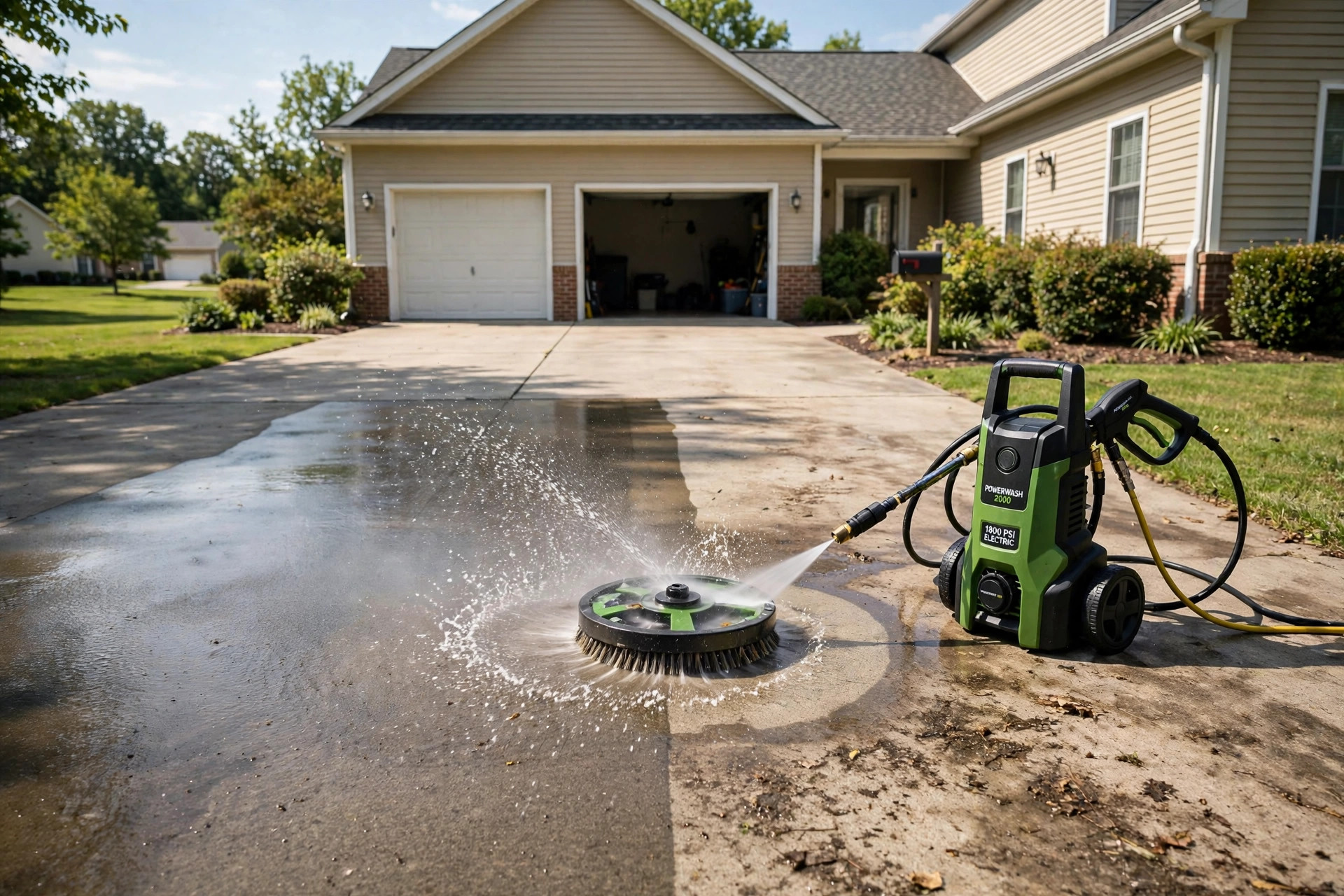

A driveway takes more abuse than any other part of a house. Cars drip oil on it. Tires grind dirt into it. Rain, leaves, and mildew leave dark stains that grow worse each year. A garden hose cannot fix this kind of dirt. The water flow is too weak. That is why so many homeowners look for the best pressure washers for driveways for USA homes. A pressure washer sprays water at high force. It strips away grime that soap and a brush cannot touch. A driveway that looked old and tired can look nearly new again after one good wash.
Choosing the right machine takes some care. A washer that is too weak will leave the job half done. A washer that is too strong can carve lines into concrete or knock mortar out of pavers. Price, power, and features all matter. This guide explains what to look for, what to pay, and how to use a pressure washer on a driveway with care.
Why Your Driveway Deserves a Pressure Washer
A driveway is the first thing guests see. It also affects the value of a home. Appraisers and buyers notice stains, moss, and black mildew at once. A clean driveway makes the whole property look cared for. That matters if you plan to sell.
There are practical reasons too. Oil and grease make concrete slick when it rains. Moss holds moisture against the surface and can cause cracks in cold weather. Mold and mildew release spores that bother people with allergies. A yearly wash removes these problems before they grow.
Renting a pressure washer is one option. Many tool rental shops charge forty to eighty dollars a day. But rental trips add up fast if you wash twice a year. Buying your own machine often costs less than two years of rentals. The machine sits in the garage, ready whenever the driveway needs it. It can also clean decks, fences, siding, and patio furniture.
What to Look For in a Driveway Pressure Washer: Best Pressure Washers for Driveways for Usa Homes
Not every pressure washer suits driveway work. Concrete is a hard surface. It needs real force. Two numbers matter most: PSI and GPM.
PSI and GPM
PSI means pounds per square inch. It measures how hard the water hits. GPM means gallons per minute. It measures how much water flows. Both matter for driveways.
For a concrete driveway, look for 2,500 to 3,200 PSI. Below 2,000 PSI, the wash will be slow and may miss deep stains. Above 3,500 PSI, the spray can etch concrete and leave marks that never fade. A GPM of 1.8 to 2.5 gives enough flow to rinse dirt away as you clean. Many electric models sit near 2,000 PSI, which is fine for light stains and yearly maintenance. Stubborn oil spots usually call for a stronger machine.
Nozzles change how the force spreads. Most washers come with several tips marked by color. A 25-degree green tip works well for general driveway cleaning. A 15-degree yellow tip cuts tougher spots but covers a narrow strip. A zero-degree red tip focuses all force on one point and can damage concrete fast. Many owners never need it.
Electric or Gas
Electric pressure washers plug into a standard outlet. They are quiet, light, and easy to store. They cost less and need little upkeep. The best electric models now reach about 2,000 to 2,300 PSI, which handles most driveways fine. Companies such as Karcher and RYOBI make electric washers aimed at homeowners.
Gas pressure washers run on a small engine. They are stronger and do not need a cord. A mid-range gas unit can reach 3,000 PSI or more. That power speeds up large driveways. The trade-offs are noise, weight, and engine care. Gas machines need oil checks, fresh fuel, and winter storage care. They also cost more up front.
For most single-car and two-car driveways, an electric model is enough. For long driveways or years of built-up stains, gas saves time.
Types of Pressure Washers for Driveway Cleaning
Pressure washers fall into three broad groups. Each has a place.
Electric handheld units are small and light. They suit porches and small patios. They struggle on full driveways. The cleaning path is narrow and the motor is weak.
Electric cart models are the most common choice for homeowners. They roll on wheels, carry a long hose, and reach 1,800 to 2,300 PSI. They clean a standard driveway in a few hours. Storage is simple. They cost between one hundred fifty and four hundred dollars. Many buyers read Consumer Reports ratings before picking one.
Gas-powered units handle the largest jobs. They reach 2,800 PSI and above. They work well for long rural driveways and for homes that have not been washed in years. They cost three hundred to seven hundred dollars. They are loud, so check local rules about noise hours.
Surface Cleaner Attachments
A surface cleaner is the best add-on for driveway work. It is a round disc with spinning spray bars under it. It cleans a path twelve to fifteen inches wide with even force. Without one, a wand leaves stripes: clean lines next to dirty ones. With one, the result looks smooth and even.
Most washers accept a surface cleaner that matches their PSI. A universal model costs forty to one hundred twenty dollars. Home Depot and Lowe’s both carry them, and guides on sites like Bob Vila explain how to match the attachment to your machine. If you buy only one accessory, make it this one.
Cost and Price
Prices vary by power and brand. Here is what to expect in the United States.
Entry-level electric washers cost one hundred to two hundred dollars. They handle light cleaning and yearly upkeep. Mid-range electric models cost two hundred to four hundred dollars. They reach 2,000 PSI or more and last longer. Gas models cost three hundred to seven hundred dollars. Professional-grade gas units can pass one thousand dollars, but few homes need that much power.
Add-ons raise the total. A surface cleaner costs forty to one hundred twenty dollars. Extra-long hoses, turbo nozzles, and driveway detergents add twenty to sixty dollars each. A bottle of concrete detergent lasts several washes.
Compare this with hiring help. A professional driveway wash costs two hundred to five hundred dollars per visit in most areas. Two visits pay for a good machine. Guides on Good Housekeeping and Family Handyman often note the same math: owning the tool beats renting or hiring after the second year.
Watch for sales in spring. Stores discount outdoor equipment when washing season starts. Winter sales can be even lower, since demand drops.
Care and Upkeep
A pressure washer lasts many years if it is treated well. Neglect shortens its life fast.
Flush the pump after each use. Run clean water through the machine for a minute with the spray off pressure. This clears detergent and grit from the pump and valves.
Store it where it will not freeze. Water left inside the pump can freeze, expand, and crack the housing. In cold states, run pump antifreeze through the machine before winter. Many manuals explain the steps. The Home Depot and other retailers sell the fluid for a few dollars.
For gas models, change the oil once a year. Use fresh fuel and add stabilizer if the machine sits for months. Check the spark plug and air filter each spring.
Check hoses and fittings for leaks. A small drip wastes pressure. Tighten or replace worn O-rings. Keep nozzles clean. A clogged tip can spike pressure and harm the pump.
Never let the machine run without water flowing. The pump needs water to stay cool. Running dry for even a minute can destroy the seals. When you pause work, release the trigger often so the pump does not overheat.
Safety
A pressure washer can hurt people. The spray can cut skin at close range. Take these steps every time.
Wear eye protection and closed shoes. A pair of safety glasses costs little and saves much. Gloves help with grip and protect hands from flying grit.
Keep the nozzle moving. Hold it at least twelve inches from the surface. Never point it at people, pets, or your own feet. The zero-degree tip can pierce skin. Many owners remove that tip and store it away.
Clear the work area before you start. Move cars, toys, and planters. Cover nearby plants with a tarp if you use detergent. Keep children and pets inside while you wash.
Watch for electrical hazards. Do not spray outlets, fixtures, or the motor of an electric washer. Plug electric models into a grounded outlet with a ground-fault circuit interrupter. Unplug the machine before you change nozzles.
Think about runoff. Washing sends oil, soap, and dirt toward the street. The EPA notes that this runoff can reach storm drains and harm local water. Sweep loose dirt first. Use plain water when you can. Pick detergents labeled safe for the environment. Some towns have rules about wash water. A quick call to the local office can clear this up.
Frequently Asked Questions
What PSI do I need to clean a concrete driveway?
Most concrete driveways clean well at 2,500 to 3,200 PSI. That range lifts oil, tire marks, and mildew without etching the surface. Start with a 25-degree nozzle and test a small hidden spot first. If the surface shows lines or pits, move back or switch to a wider nozzle.
Is an electric pressure washer enough for a driveway?
Yes, for most homes. An electric model near 2,000 PSI with a surface cleaner handles a standard driveway fine. It takes longer than a gas unit on deep stains. For very large driveways or years of neglect, a gas washer is faster.
Can a pressure washer damage my driveway?
It can. Too much pressure, a narrow nozzle, or holding the wand too close can carve grooves in concrete and wash sand out from between pavers. Keep the nozzle at least a foot away. Keep it moving. Test first. Mortar joints and old concrete need a gentle touch.
How often should I pressure wash my driveway?
Once a year is enough for most homes. Driveways under trees or in damp shade may need two washes a year because moss and mildew grow fast there. Homes in dry climates can sometimes go two years.
Do I need detergent for driveway cleaning?
Plain water handles most dirt. Oil stains and heavy mildew respond better to a concrete detergent. Apply the soap at low pressure, let it sit for five to ten minutes without drying, then rinse at high pressure. Do not let detergent dry on the concrete. It can leave a film.
What else can I clean with my pressure washer?
A driveway washer handles many jobs. Decks, fences, siding, walkways, patio furniture, and garage floors all benefit. Pair it with other tools for a full clean: a wet dry shop vacuum picks up water and grit after washing, steam mops for tile floors handle indoor floors the washer cannot reach, and cordless electric scrubbers clean tight spots like grout lines and baseboards. For guidance on saving energy around the home, the U.S. Department of Energy offers free tips.
A Final Word
The best pressure washers for driveways for USA homes are not the strongest ones on the shelf. They are the ones that match your driveway, your budget, and your habits. An electric cart model with a surface cleaner serves most homes well for years. A gas unit suits large lots and deep stains. Match the PSI to concrete, use the right nozzle, and keep safety first. A few hours each spring will keep your driveway clean, safe, and strong for the long run.
References
Bob Vila. (n.d.). Home improvement advice. https://www.bobvila.com Consumer Reports. (n.d.). Product reviews and ratings. https://www.consumerreports.org Family Handyman. (n.d.). DIY home repair and maintenance. https://www.familyhandyman.com Good Housekeeping. (n.d.). Product reviews and home advice. https://www.goodhousekeeping.com Kärcher. (n.d.). Pressure washers and cleaning equipment. https://www.karcher.com Lowe’s. (n.d.). Home improvement products. https://www.lowes.com Ryobi. (n.d.). Power tools and outdoor equipment. https://www.ryobitools.com The Home Depot. (n.d.). Home improvement products. https://www.homedepot.com U.S. Department of Energy. (n.d.). Energy efficiency and renewable energy. https://www.energy.gov U.S. Environmental Protection Agency. (n.d.). Protecting human health and the environment. https://www.epa.gov
Was this guide helpful?

About Emily Rodriguez
The My Garden US editorial team writes practical, in-depth home and garden guides for American homeowners — tested advice, no fluff.
You May Also Like
Quiet Mold Remediation Services Near Me: What to Know Before You Hire
February 24, 2026 0 views
Commercial Grade All Purpose Cleaning Caddies Buying Guide
June 16, 2026 0 views
Top Rated Pressure Washing Service Companies for Homeowners: A Complete Guide
July 10, 2026 0 views