
Introduction
Learning how to make pulled pork on smoker is one of the best ways to cook pork. Pulled pork is meat that is cooked until it is so tender that it can be torn apart with two forks. The smoker gives the meat a deep, smoky flavor that an oven cannot match. This guide will walk you through the whole process, from picking the meat to serving the finished dish.
Pulled pork comes from the shoulder of the pig. This cut has a lot of fat and tough tissue inside it. Slow heat melts that tissue into the meat. That is what makes pulled pork soft and rich. If you rush the cook, the meat will be tough. If you give it time, the meat will fall apart in your hands.
Smoking pulled pork is not hard, but it takes patience. A single pork shoulder can take eight to twelve hours on the smoker. Most of that time, you will do very little. The smoker does the work. Your job is to keep the temperature steady and to check the meat now and then.
Why Pulled Pork Is Worth the Effort: How to Make Pulled Pork on Smoker
Pulled pork is one of the most loved barbecue dishes in the United States. It feeds a crowd. One pork shoulder can make sandwiches for twelve to fifteen people. That makes it a great choice for family parties, game days, and neighborhood cookouts.
It is also a kind way to start with smoking. A pork shoulder is hard to ruin. It has so much fat that it stays moist even when the temperature swings a little. New smokers often try brisket first and feel let down. Pork shoulder gives them a better chance of success. Many cooks who learn how to smoke brisket on a pellet grill got their start with pulled pork.
Cost is another reason. Pork shoulder is one of the cheapest cuts of meat you can buy. When it is on sale, it often costs less than two dollars a pound. A ten-dollar cut of meat can feed a family for two or three days. Few dishes give you that much value.
What to Look For: Choosing Your Pork
The first step in learning how to make pulled pork on smoker is picking the right piece of meat. You want a pork shoulder. In many stores, it is sold as a “Boston butt.” The name is odd, but the cut is right. It is the upper part of the shoulder, and it has the best mix of fat and meat.
Choose a shoulder that weighs between seven and ten pounds. A shoulder this size cooks evenly and gives you plenty of meat. Look for a piece with a thick layer of fat on one side. This is called the fat cap. The fat cap keeps the meat moist as it cooks. It also gives the outside a rich flavor.
Avoid cuts that are very small. A small shoulder can dry out before it gets tender. If you find only large shoulders, that is fine. You can smoke it whole and freeze what you do not eat. Pulled pork freezes very well.
Check the color of the meat before you buy. Good pork is pink and firm. It should not feel slimy or smell sour. Buy from a store you trust, and keep the meat cold until you are ready to cook.
Types of Smokers That Work for Pulled Pork
You do not need a fancy smoker to make great pulled pork. Many kinds of smokers work well. The key is steady heat and real smoke.
Pellet smokers are the easiest choice for new cooks. They burn small wood pellets and feed them on their own. You set the temperature on a dial, and the smoker holds it. Many people who make pulled pork on a pellet smoker love how little work it takes.
Offset smokers give a strong, classic smoke flavor. They have a firebox on the side and a long cooking chamber. They need more care because you must watch the fire. But many serious cooks say the flavor is worth it.
Charcoal smokers, such as bullet-style models, are a good middle choice. They burn charcoal and wood chunks. They cost less than pellet smokers and give strong smoke flavor. They need some practice to keep the temperature steady.
Electric smokers are simple to use. They heat with an electric element and make smoke from wood chips. They do not give as strong a smoke ring as charcoal, but they are easy for beginners. When you are shopping, it helps to read about the best smoker for beginners under 300 before you spend your money.
No matter which smoker you use, you will want a good thermometer. A wireless barbecue thermometer lets you watch the meat temperature from inside your house. The best bbq thermometer wireless for grilling models often track both the meat and the smoker at the same time.
How to Choose Wood for Smoking
Wood gives pulled pork its smoke flavor. The type of wood you use will change how the meat tastes. Some woods are mild and sweet. Others are strong and sharp.
Fruit woods like apple and cherry are mild and slightly sweet. They pair well with pork. Many cooks use apple wood for their first pulled pork because it is gentle and hard to overdo.
Hickory is the classic barbecue wood. It gives a strong, rich smoke flavor. Use it with care. Too much hickory can make the meat taste bitter. A mix of hickory and apple is a good middle ground.
Oak is mild and burns steady. It is a safe choice for long cooks. Pecan is sweet and rich, and it works well with pork. Mesquite is very strong. It can be too much for a long pork cook, so most cooks skip it for pulled pork.
For a long cook, you want the best wood for smoking pork shoulder to burn clean and slow. Many cooks also read guides from Amazing Ribs to learn how different woods behave.
Preparing the Pork: Trimming and Rub
Take the pork shoulder out of the fridge about one hour before you plan to start. Let it sit at room temperature. Pat the meat dry with paper towels. Dry meat holds seasoning better.
Trim off any large flaps of fat. Keep the fat cap on, but cut it down to about one-quarter inch thick. This is enough fat to keep the meat moist without wasting seasoning on fat you will not eat.
Next, apply a rub. A rub is a mix of salt, sugar, and spices that goes on the outside of the meat. A simple rub works well: two parts salt, two parts brown sugar, and one part each of paprika, garlic powder, and black pepper. Rub it all over the shoulder. Use your hands to press it in.
Some cooks add a thin coat of yellow mustard before the rub. The mustard helps the rub stick. You will not taste it in the finished meat. Wrap the meat in plastic wrap and put it back in the fridge. Let the rub sit on the meat for at least four hours, or overnight if you can.
How to Make Pulled Pork on Smoker: The Cook
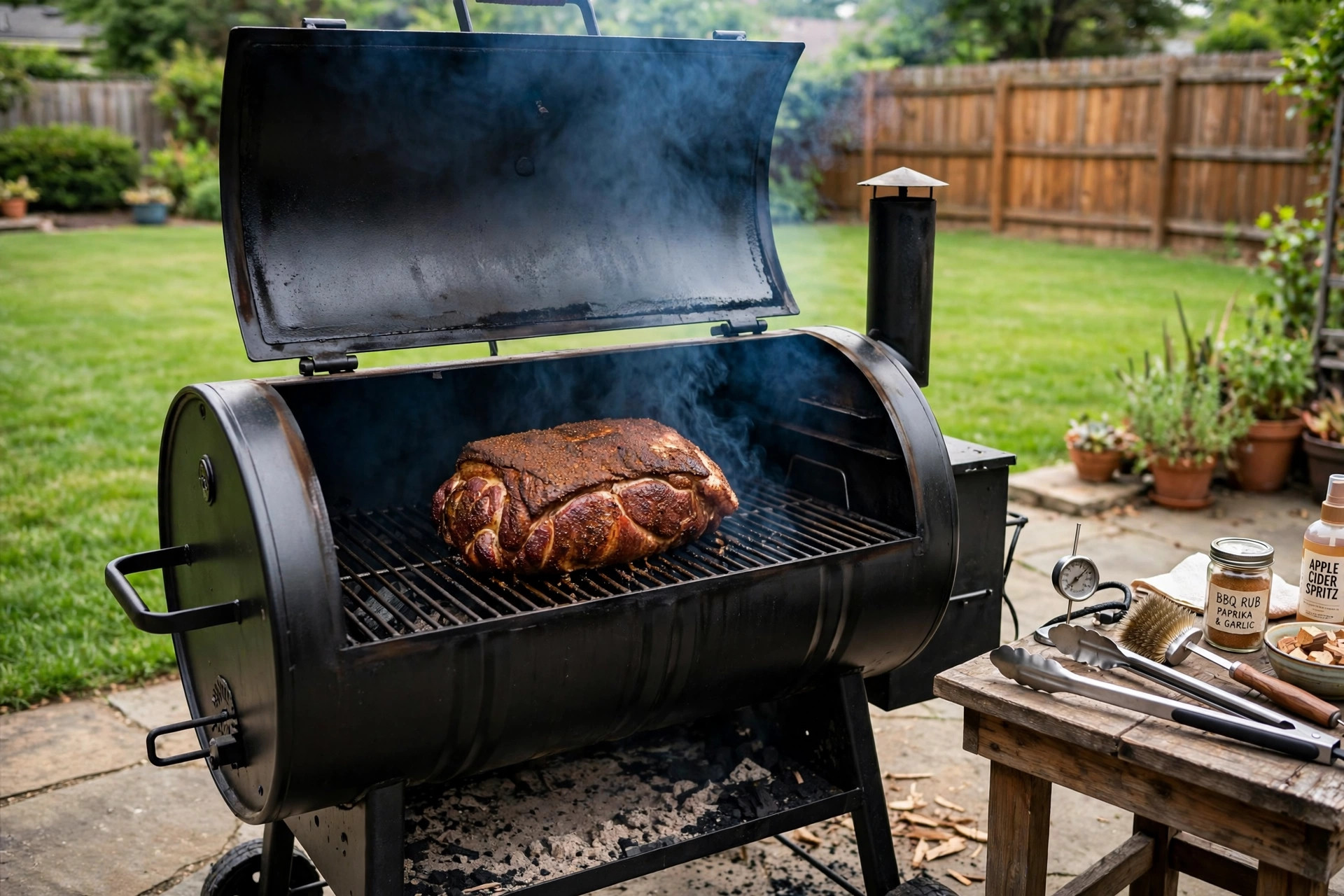
Now comes the main part. Heat your smoker to 250 degrees Fahrenheit. This is the right heat to smoke pulled pork low and slow. Add your wood and wait until the smoke is thin and blue. Thick white smoke can make the meat bitter.
Place the pork shoulder on the smoker with the fat cap facing up. The melting fat will drip down into the meat. Put your thermometer probe in the thickest part of the shoulder. Do not let the probe touch the bone.
Close the lid and leave it alone. Check the temperature every hour, but do not open the lid too often. Each time you open it, heat and smoke escape. For the first few hours, the meat will take in smoke and form a dark crust. This crust is called bark. It is one of the best parts of pulled pork.
Around hour five or six, the meat temperature will stop rising. It may sit at 160 degrees for hours. This is called the stall. It happens because moisture leaves the meat and cools it. Do not raise the heat. Just wait it out. The stall is normal and every cook faces it.
Wrapping and Finishing the Cook
Once the bark looks dark and firm, you can wrap the meat. Wrapping is called the “Texas crutch.” Use pink butcher paper or aluminum foil. Wrapping keeps the meat moist and helps it push through the stall faster. Some cooks like butcher paper because it lets the bark stay crisp. Foil keeps more steam in, which makes the meat very soft.
After wrapping, put the meat back on the smoker. Keep the heat at 250 degrees. Now you wait for the finish. The pulled pork internal temperature should reach about 203 degrees Fahrenheit. At this point, the tough tissue inside has melted. You can test by pushing the probe in. It should slide in with almost no resistance, like pushing into soft butter.
Do not pull the meat off at 165 degrees just because it is safe to eat. Safe and tender are not the same thing. Pulled pork needs that higher finish to become soft. Trust the probe test more than the clock.
Resting, Pulling, and Serving
Resting is a step that many cooks skip, and it hurts their result. Take the wrapped pork off the smoker. Place it in a clean cooler or an empty oven. Let it rest for at least one hour. Some cooks rest it for two. Resting lets the juices spread back through the meat. The meat will also stay hot for hours if you keep it wrapped.
To pull the meat, take it out of the wrap and place it in a large pan. Pull the bone out. It should slide out clean. Now tear the meat apart with two forks or your hands. Wear gloves if the meat is hot. Break up the bark and mix it through the meat. The bark adds flavor and texture.
Remove any large chunks of fat that did not melt. Some fat is good. Too much fat can feel greasy. Taste the meat. Add a little salt if it needs it. You can toss the meat with a thin barbecue sauce or serve the sauce on the side. Many people serve pulled pork on soft buns with coleslaw.
Cost and Price of Smoking Pulled Pork
Smoking pulled pork is kind to your wallet. A pork shoulder often costs one to two dollars a pound on sale. A nine-pound shoulder might cost fifteen to eighteen dollars. That one shoulder can make thirty or more sandwiches. The cost per serving is very low.
Wood and fuel cost a little extra. A bag of pellets or charcoal adds a few dollars. A simple rub costs less than a dollar per batch. If you compare the total cost to buying pulled pork from a barbecue shop, smoking at home wins by a wide margin.
The biggest cost is time. A full cook can take ten to twelve hours. But most of that time is waiting. You can plan the cook around a free day. Start early in the morning, and the meat will be ready by dinner.
Care and Upkeep of Your Smoker
A clean smoker lasts longer and cooks better. After each cook, clean the cooking grates with a stiff brush while they are still warm. Scrape out ash from the bottom. Ash holds moisture, and moisture causes rust.
Wipe down the outside of the smoker. Check the seal around the lid. A bad seal lets heat and smoke escape. Many smokers need a new gasket after a few years. That is a cheap fix.
Cover your smoker when it is not in use. A good cover keeps rain and snow off. Store it in a dry spot if you can. At the end of the season, do a deep clean. Remove all grates and wash them. Check the burners, vents, and wheels. A little care keeps your smoker ready for the next cook. You can find upkeep advice at The Home Depot and Char-Broil.
Safety Tips for Smoking Meat
Safety comes first when you smoke meat. Keep your smoker on a flat, stable surface. Place it at least ten feet away from your house, deck rails, and trees. Never use a smoker inside a garage or shed. The smoke and fumes are not safe to breathe in a closed space.
Food safety matters too. Wash your hands before and after touching raw pork. Do not leave raw meat sitting out for more than one hour. Clean your cutting board and tools after they touch raw meat.
Use clean gloves when you pull the hot meat. Keep a fire extinguisher near your smoker. Grease can flare up, and it helps to be ready. Many cooks review Consumer Reports safety ratings when they buy a new smoker.
Frequently Asked Questions
How long does it take to smoke pulled pork? Plan for about one to one and a half hours per pound at 250 degrees. A nine-pound shoulder can take ten to twelve hours, plus one hour of resting. Start early.
What is the best internal temperature for pulled pork? Aim for 195 to 205 degrees, with 203 as the sweet spot. At this point the meat is tender and pulls apart with ease. Always check with a thermometer, not with the clock.
Should I wrap pulled pork in foil or butcher paper? Both work. Foil keeps more steam in and makes the meat very soft. Butcher paper lets the bark stay firm. Try both and see which you like. Many cooks wrap once the bark is set and the meat hits 165 degrees.
Can I make pulled pork on a gas grill? You can, but it is not the same as a real smoker. You will need a smoker box or foil pouch of wood chips. Keep one side of the grill off and the meat on that side for indirect heat. A real smoker gives better smoke flavor.
How do I store leftover pulled pork? Let it cool, then store it in sealed bags or containers in the fridge for up to four days. For longer storage, freeze it in meal-size bags for up to three months. Add a splash of broth when you reheat to keep it moist.
What sides go well with pulled pork? Coleslaw, baked beans, cornbread, macaroni and cheese, and pickles are all classic sides. Cold slaw on top of the sandwich adds crunch and cuts the rich flavor of the pork.
Final Word
Learning how to make pulled pork on smoker takes one good cook and a little patience. Pick a well-marbled shoulder, rub it with care, and give it a long, slow ride over gentle heat and clean smoke. Wrap when the bark sets, finish near 203 degrees, rest the meat, and pull it by hand. The result is tender, juicy, smoky pork that will make you the hero of the cookout. For more outdoor cooking ideas, browse the guides at Napoleon and The Spruce Eats.
References
AmazingRibs.com. (n.d.). Barbecue and grilling science. https://www.amazingribs.com Big Green Egg. (n.d.). Kamado grills and outdoor cooking. https://www.biggreenegg.com Broil King. (n.d.). Gas and charcoal grills. https://www.broilkingbbq.com Char-Broil. (n.d.). Gas and charcoal grills. https://www.charbroil.com Consumer Reports. (n.d.). Product reviews and ratings. https://www.consumerreports.org Napoleon. (n.d.). Fireplaces, grills, and heating products. https://www.napoleon.com The Home Depot. (n.d.). Home improvement products. https://www.homedepot.com The Spruce Eats. (n.d.). Recipes and cooking guides. https://www.thespruceeats.com Traeger. (n.d.). Wood pellet grills. https://www.traeger.com Weber. (n.d.). Grills and outdoor cooking. https://www.weber.com
Was this guide helpful?

About James Carter
The My Garden US editorial team writes practical, in-depth home and garden guides for American homeowners — tested advice, no fluff.
You May Also Like
Charcoal vs Gas Grill Cost Comparison: What Your Backyard Cookouts Really Cost
September 28, 2026 0 views
Outdoor Kitchen Sink with Faucet Reviews: A Plain Guide for Homeowners
January 26, 2026 0 views
Outdoor Kitchen Lighting Ideas for Grilling
February 18, 2026 0 views