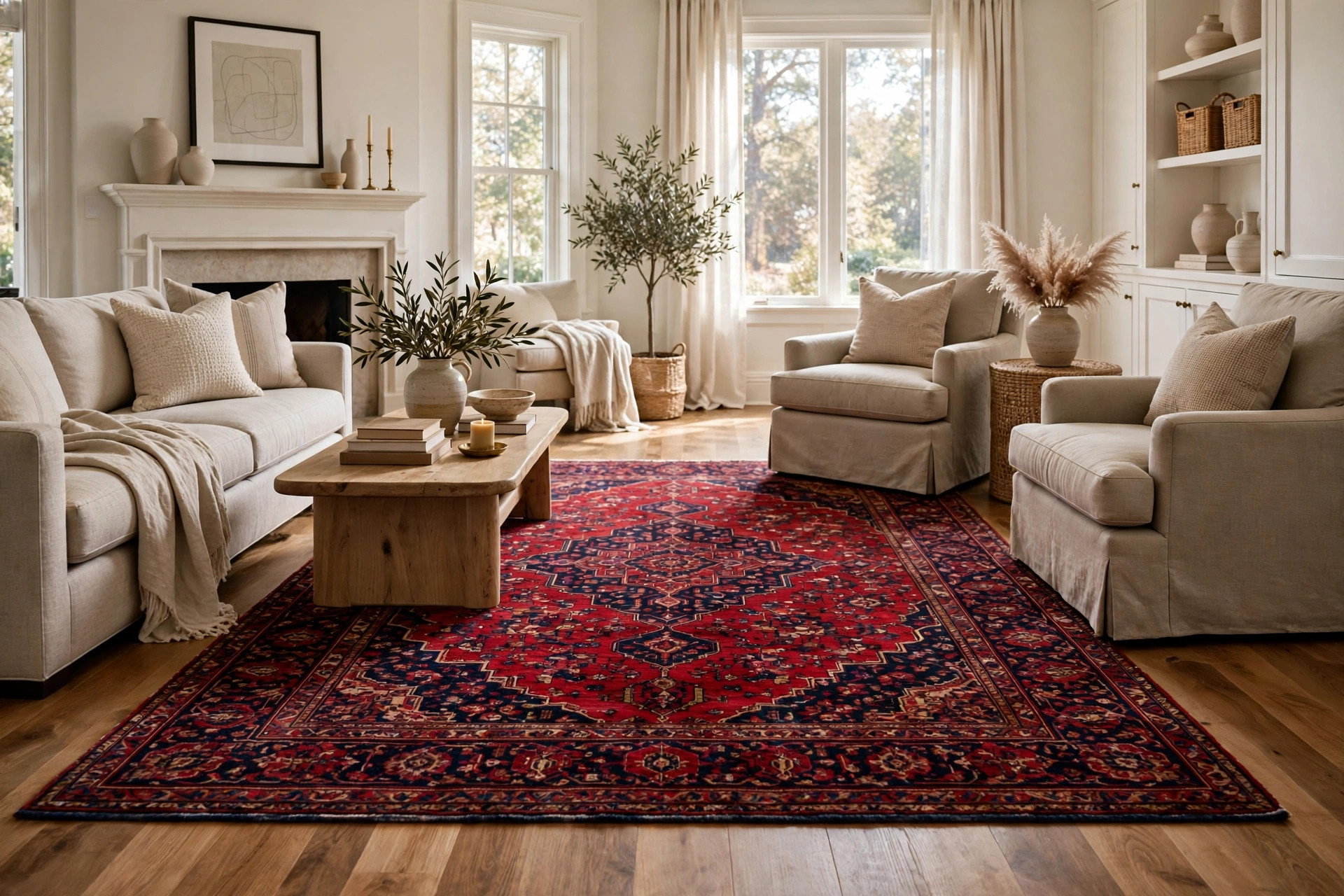

A fine rug can change a room in a single afternoon. When people ask about luxury area rugs where to buy usa shoppers have a wide field of choices. The market ranges from hand-knotted wool pieces in old weaving centers to fine machine-made rugs with deep color and tight weave. This guide shows where to find them and how to judge quality before money changes hands.
A luxury rug is more than a floor covering. It warms a bare floor and softens the sound of steps. It sets the color scheme for the whole room and protects wood and tile from wear. A well-made rug can serve a home for thirty years or more, so the choice deserves care. The seller matters as much as the rug itself. Online shops let you compare hundreds of rugs in an hour. Local dealers let you touch the pile and see the true colors in daylight.
This guide walks through both kinds of buying. You will learn what marks a rug as truly fine, which sizes fit common rooms, and what prices are fair. You will also find notes on care, safety, and shipping. With these facts in hand, you can shop with a steady eye and spend without regret.
Why a Fine Rug Matters in the Home
A room without a rug often feels unfinished. The floor meets the eye with nothing to rest on. A luxury rug fills that gap. Its pattern draws the eye. Its soft surface invites bare feet. In open floor plans it marks off the living space from the dining space without a wall.
Sound is another quiet benefit. Hard floors bounce noise from room to room. A thick rug with a good pad absorbs much of it. Family rooms grow calmer. Bedrooms feel more restful. These gains come free with every quality rug.
A fine rug also guards the floor beneath it. Wood floors gain scratches from shoes and chair legs. A rug takes that wear instead. In homes with pets, the rug catches claws and clatter. The floor below stays new for years.
Finally, a luxury rug holds value. Hand-knotted rugs in wool or silk often keep a large share of their price when resold. Few household goods can claim the same.
What to Look For Before You Buy: Luxury Area Rugs Where to Buy Usa
Quality shows in small details. Learn to read them and you will never be fooled by a pretty photo.
Material. Wool is the classic choice. It is strong, soft, and resists dirt. High-grade wool feels dense and springs back when pressed. Silk adds shine and takes dye in bright, clear tones, but it costs more and wears faster in busy halls. Cotton usually appears in the foundation and fringes. Fine synthetic fibers can look rich at first, yet they crush flat within a few years. For a luxury rug, real wool or a wool-silk blend is the safest bet.
Knot count. Hand-knotted rugs are built knot by knot. The count is given in knots per square inch, or KPSI. A fine piece may run 200 to 400 KPSI. Higher counts allow sharper curves and finer detail in the pattern. Lower counts can still serve well in large, bold designs. Machine-made rugs have no knots, so compare them by weight and pile density instead.
Pile and weave. Press the pile with your palm. Good wool stands back up. Turn a corner over and look at the back. In a hand-knotted rug the pattern shows clearly on the back, almost like the front. In a printed rug the back is blank or blurred.
Edges and ends. Look at the selvage, the bound edges along the sides. It should lie flat with no waves. The fringe at the ends should be even and firmly tied. Loose or uneven edges hint at hurried work.
Origin records. Honest sellers state the country of origin, the material mix, and how the rug was made. Hand-knotted, hand-tufted, hand-loomed, and machine-made are very different things at very different prices. A dealer who answers these questions plainly deserves your trust.
Types and Styles of Luxury Area Rugs
Persian rugs. These are the old masters of the rug world. Patterns from Tabriz, Kashan, Heriz, and other centers carry centuries of design. True hand-knotted Persian pieces are among the finest rugs made. Prices run high, and for good reason.
Oriental rugs. The term covers hand-made rugs from across Asia and the Middle East. Indian workshops now produce some of the finest wool and silk rugs sold in America. Quality varies, so buy from sellers with clear standards.
Moroccan rugs. Beni Ourain and similar styles use thick, shaggy pile in cream with dark geometric lines. They suit modern rooms and add strong texture. Hand-woven versions are durable and warm underfoot.
Tibetan and Nepalese rugs. These use a distinct knotting method that gives a soft, thick hand. Wool from high regions takes dye in deep, rich shades. Modern designs from these centers blend well with both classic and new interiors.
Each style has its place. A formal living room suits a Persian or a fine transitional piece.
Where to Buy: Online Stores and Showrooms
Online buying now leads the market. The range is wide and the prices are easy to compare. Start with large home retailers that carry fine lines. The online furniture retailer Wayfair stocks thousands of rugs with customer photos that show real colors in real rooms. Crate & Barrel offers a curated range with clear material labels and strong return terms. Design-led brands carry some of the most interesting new work; West Elm and CB2 both sell hand-knotted and hand-tufted pieces in modern patterns, while Article focuses on clean, current designs at fair prices.
For value with wide choice, IKEA carries flatweaves and low-pile rugs that suit starter budgets, and its product pages list materials in plain terms. Shoppers who want ideas before they shop can browse Houzz for room photos that show how rugs sit in finished spaces, then read decorating guides on Apartment Therapy and HGTV for notes on size and placement. Care and cleaning guides on The Spruce help new owners protect their purchase.
Local rug dealers still have a real edge. They let you see the rug in daylight, feel the weight, and check the back. Many have served the same town for decades. Ask whether they offer in-home trials. A dealer who brings rugs to your house for a day is worth more than a small discount elsewhere.
Estate sales and auctions can yield fine old rugs at good prices, but they suit buyers who can judge quality on their own. What looks like a bargain can be a worn piece with hidden repairs.
When you buy online, read the return policy before you order. The rug should be returnable within at least thirty days. Check who pays return shipping; on a 9-by-12 rug the cost is real. Order the smallest size first if the seller offers it, to test color in your own light.
Sizes That Fit Common Rooms
Size matters more than pattern. A rug that is too small makes a room look scattered.
– Living room: aim for 8 by 10 feet or 9 by 12 feet. Front legs of sofas and chairs should rest on the rug. – Dining room: the rug must extend at least 24 inches past the table on all sides so chairs stay on it when pulled out. A 9-by-12 rug fits most six-seat tables. – Bedroom: a 9-by-12 rug under a king bed leaves a soft border on three sides. Runners on each side work for smaller rooms. – Entry: a runner 2.5 by 8 feet suits most halls. It should be narrower than the hall by a few inches on each side.
Measure twice. Tape the outline on the floor with painter’s tape and live with it for a day before you order. This simple step prevents the most common regret in rug buying.
Cost and Price: What to Expect
Luxury rug prices move with size, material, and method of making.
– Machine-made rugs in fine synthetics: 200 to 800 dollars for 8 by 10 feet. These look rich but have short lives. – Hand-tufted wool rugs: 800 to 2,500 dollars for 8 by 10 feet. Good value for the money. – Hand-knotted wool rugs: 2,000 to 8,000 dollars for 8 by 10 feet, rising with knot count and design work. – Hand-knotted wool-silk blends and silk rugs: 5,000 to 20,000 dollars and up. These are heirloom pieces. – Antique and rare pieces: prices vary widely. Seek an appraisal for anything above 10,000 dollars.
Watch for honest pricing. A rug listed at 12,000 dollars and sold at 3,000 was never worth 12,000. Fair dealers price close to the real selling price. Seasonal sales are real and common, often around holidays, with cuts of 20 to 30 percent off honest prices.
Shipping is usually free from large online sellers. Local dealers may charge for delivery, but they place the rug where you want it. A quality pad costs 100 to 300 dollars for a large rug and is worth every cent. It adds years to the rug’s life and keeps it from sliding.
As you plan the room around your rug, related guides can help with the rest of the pieces: see our notes on velvet living sofas where to buy if you are pairing soft seating with a fine rug, ideas for living room wall art where to buy to match tones with your walls, and tips on living room floor lamps where to buy for lighting that shows the weave at its best.
Care and Upkeep
A luxury rug asks for little but rewards steady care. Vacuum once a week on suction only, with the beater bar off or raised. The bar can pull fibers from hand-knotted pile. Turn the rug once a year so wear spreads evenly and sun fades it in balance.
Blot spills at once with a clean cloth. Do not rub. For wool rugs, a mix of mild soap and cool water handles most spots. Test any cleaner on a corner first. Avoid bleach and strong chemicals; they strip dye and weaken fiber.
Have the rug washed by a professional rug cleaner every three to five years, sooner in busy homes. A full immersion wash by a skilled shop costs 3 to 5 dollars per square foot in most American cities.
Store spare rugs rolled, never folded, in a dry place. Folds break the foundation over time. Wrap the roll in breathable cloth, not plastic, which traps damp air.
Safety Notes
Large rugs on hard floors can slide. A proper pad with a rubber or felt-rubber base stops the drift. This is the top safety step and it also protects the rug.
Rug edges can trip small children and older adults. Low-profile rugs with bound edges lie flatter than thick shag in busy paths. In homes with seniors, choose rugs under half an inch of pile in halls and entries.
Some rugs shed fibers in the first months. This is normal for new wool rugs and slows with vacuuming. If shedding continues past a year, ask the seller about it. Excess dye that rubs off on a damp white cloth is a sign of poor dye work and grounds for a return.
Check fire labels if the rug will sit near a fireplace. Wool resists flame better than synthetics, but no rug should touch a hearth. Keep a clear gap of at least three feet.
Frequently Asked Questions
How can I tell a hand-knotted rug from a machine-made one? Turn the rug over. On a hand-knotted piece the back shows the pattern almost as clearly as the front, and you can see single knots along the rows. On a machine-made rug the back is usually covered with latex or fabric, and the pattern looks blurred or hidden. The fringe also tells a story: on hand-knotted rugs it is part of the warp threads, while on machine-made rugs it is sewn on.
Are expensive rugs worth the price for a home with pets? Often yes, with the right pick. Wool resists stains because its outer layer repels liquid. Choose a dense weave in a medium tone or busy pattern, which hides the marks of daily life. A good pad and quick blotting of accidents will keep a wool rug sound for years.
Should I buy the rug before the furniture? Most designers say yes. The rug sets the color story for the room. It is easier to match a sofa to a rug than to find a rug that fits an existing set of colors. Buy the rug first, then carry a photo of it when you shop for chairs and drapes.
Do online photos show true colors? Not always. Light and screens shift tones. Read reviews with customer photos, which are closer to real life. Order a small size or a sample swatch first when the seller offers one. View the rug in your own room at different times of day before you commit.
How long should a luxury rug last? A hand-knotted wool rug with normal care can last 30 to 50 years. Fine silk pieces last 20 to 30 years in low-traffic rooms. Machine-made rugs in synthetics often show wear within five years. The price gap reflects this difference in life span.
A Final Word
A luxury rug is one of the few purchases that grows more beautiful with the years. Buy from sellers who answer plain questions with plain answers. Choose real materials, a sound weave, and a size that fits the room. It will repay you daily: warm floors, quiet rooms, and a home that feels settled and complete.
References
Apartment Therapy. (n.d.). Home design ideas and inspiration. https://www.apartmenttherapy.com Article. (n.d.). Modern furniture. https://www.article.com CB2. (n.d.). Modern furniture and decor. https://www.cb2.com Crate and Barrel. (n.d.). Furniture and home decor. https://www.crateandbarrel.com HGTV. (n.d.). Home and garden ideas. https://www.hgtv.com Houzz. (n.d.). Home design and remodeling. https://www.houzz.com IKEA. (n.d.). Home furnishings. https://www.ikea.com The Spruce. (n.d.). Home and garden advice. https://www.thespruce.com Wayfair. (n.d.). Furniture and home goods. https://www.wayfair.com West Elm. (n.d.). Modern furniture and home decor. https://www.westelm.com
Was this guide helpful?

About Robert Taylor
The My Garden US editorial team writes practical, in-depth home and garden guides for American homeowners — tested advice, no fluff.
You May Also Like

Kitchen Island Stools Deals Near Me: A Plain Guide to Good Seating at Low Prices
January 15, 2026 0 views
Entryway Storage Benches Buying Guide USA
September 16, 2026 0 views
Leather Recliner Chairs for California Homes: A Complete USA Guide
May 7, 2026 0 views