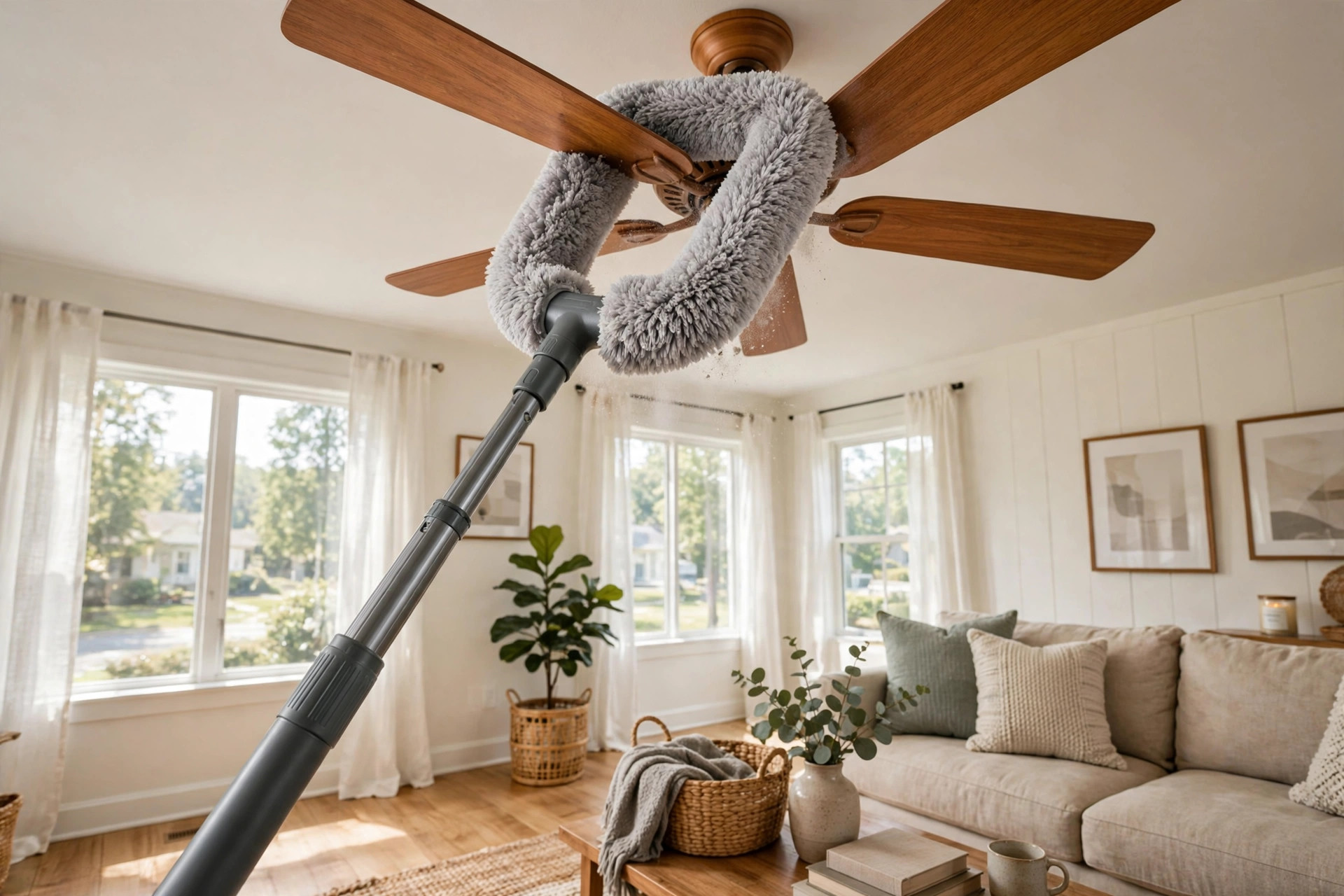

Ceiling fans sit high on the ceiling and gather dust on every blade. When you turn the fan on, that dust flies down into the room. A cordless ceiling fan duster for USA homes solves this problem. It cleans the blades while you stand safely on the floor. No ladder. No chair. No cord to drag across the room. This guide explains how these dusters work, what kinds you can buy, what they cost, and how to keep them clean.
Why It Matters
Dust on fan blades is more than an eyesore. When the blades spin, they throw dust into the air. That dust settles on tables, beds, and floors. People with allergies feel it first. They sneeze more. Their eyes itch. Their throats feel dry.
A clean fan also runs better. A thick layer of dust makes each blade heavier. Heavy blades can cause the fan to wobble. A wobbling fan makes noise. Over time it wears out the motor. Dusting the blades twice a year helps the fan last longer.
Many American homes have high ceilings. Some reach nine or ten feet. Vaulted ceilings go even higher. A regular rag on a stick often fails at that height. A cordless duster with a long handle reaches these spots with ease. It keeps the dust off the blades and out of the air.
What to Look For: Cordless Ceiling Fan Dusters for Usa Homes
Shopping for a duster is simple when you know what to check. These points help you pick a good one.
Handle Length
The handle is the most important part. Look for a handle that extends to at least six feet. Longer handles work better for vaulted ceilings. Some handles lock at any length. Others click into fixed spots. Locking handles stay where you set them.
Head Shape
The head must wrap around the blade. Most heads look like a deep U. The U slides over the top and bottom of the blade at once. Wide U heads fit wide blades. Narrow heads fit small fans. Some heads bend to match the blade angle. This feature helps a lot.
Duster Material
Microfiber is the most common material. It holds dust well. It does not scratch painted blades. Washable microfiber heads save money over time. You rinse them and use them again.
Electrostatic heads use a static charge to pull dust in. They work well on light dust. They need less pressing. Some heads combine both ideas. They have microfiber cloth with an electrostatic charge.
Cordless or Not
A true cordless ceiling fan duster has no cord at all. Many are simple manual tools. The handle extends. The head grips the blade. No power is needed. These cost little and last long.
Some powered dusters use a rechargeable battery. The head spins or vibrates. This shakes dust loose. They cost more. They need charging. For most homes, a manual cordless duster does the job.
Weight
You will hold the tool above your head for several minutes. A light tool makes this easy. Heavy tools tire your arms. Look for dusters under one pound. Aluminum handles are strong and light.
Types of Cordless Ceiling Fan Dusters
Three main types are sold in stores today. Each has its own strengths.
Flexible Sleeve Dusters
These look like a long sock that slips over the blade. The sleeve is made of thick microfiber. You slide it along the blade from one end to the other. It wipes the top and bottom at the same time. Sleeve dusters cost very little. They work well on flat blades. They wash well in a washing machine.
U-Shaped Brush Dusters
These have a rigid U head with soft bristles or cloth pads. The U grips the blade as you pull. Brush dusters clean faster than sleeves. They reach between close-set blades better. Some models have a head that turns to any angle. This helps with fans that have angled blades.
Extendable Wand Dusters
Wand dusters have a small head on a very long pole. The head is often fuzzy or feather-like. You use them to reach the top of the fan and the motor housing. They are best for light touch-up dusting. They cost the least. They fold down for storage.
How to Use Your Duster
Using a fan blade cleaning tool the right way keeps dust off your floor.
First, turn the fan off. Let the blades stop moving. Place a sheet or an old towel under the fan. This catches dust that falls.
Extend the handle to the right length. Stand to the side of the fan, not right under it. Slide the head over the end of one blade. Pull it slowly toward the motor. Lift it off. Repeat for each blade.
Wipe the motor housing and the light kit with a damp cloth. These parts gather dust too. When you finish, take the head off and shake it outside. This keeps the dust out of your home.
For the best result, dust each blade twice. The first pass lifts the loose dust. The second pass picks up what stayed behind. Work in slow, steady strokes. Fast moves throw dust into the air. If your fan has a downrod, wipe that too. Dust collects on the rod as well.
Cost and Price
Prices for these dusters are low. Most American shoppers pay between eight and thirty dollars. The exact price depends on the type and the brand.
Basic extendable wand dusters cost eight to twelve dollars. They do light work. Flexible sleeve dusters cost ten to fifteen dollars. They clean more deeply.
U-shaped brush dusters cost fifteen to twenty-five dollars. Good brands sit in this range. They last longer. Their handles extend farther.
Battery-powered models cost twenty-five to sixty dollars. They spin the head for you. They need a battery swap or a recharge each year or two. Most families find the manual kinds enough. There is no need to spend more unless your ceilings are very high.
Check the return policy before you buy. Some stores allow a full return within thirty days. Try the duster on your own fan. If the head does not fit your blades, take it back.
Care and Upkeep
A clean duster works better and lasts longer. After each use, take the head off the handle. Shake it outside to drop loose dust.
Wash microfiber heads in warm water with mild soap. Do not use fabric softener. Softener coats the fibers and weakens their grip on dust. Let the head air dry. Never put it in a hot dryer. Heat can melt the fibers.
Wipe the handle with a damp cloth now and then. Check the locking joints twice a year. A loose joint can slip while you work. Tighten any screws you find.
Store the duster with the handle short. Hang it in a closet or behind a door. Keep it out of direct sun. Sunlight breaks down microfiber over time.
Plan to replace microfiber heads every one to two years. They wear out with washing. Many brands sell replacement heads for these dusters. New heads cost far less than a new tool.
Safety Tips
These tools are safe, but a few rules keep you out of trouble.
Always turn the fan off before you dust. Never reach for a moving blade. A spinning blade can strike your hand or break the duster head.
Stand on a firm floor. Do not use the duster while standing on a bed or a soft couch. These surfaces shift under your weight. A firm floor keeps your balance.
Watch the power. If your fan has a pull chain or a remote, make sure it is off. Tell others in the house that you are cleaning the fan. This stops anyone from switching it on by mistake.
Keep the tool away from small children. Long handles can strike lamps or breakables. Store the duster high on a hook or in a locked closet.
If your home has very old wiring or a loose fan mount, call an electrician first. A wobbling fan may have a loose bracket. Dusting will not fix that. Fix the mount before you clean.
Comparing Fan Cleaning to Other House Cleaning
High dusting is one part of whole-home cleaning. Many homeowners pair it with other simple jobs. Dusting baseboards keeps the lower rooms clean while the duster handles the ceiling. Shoppers who like price guides can read a baseboard cleaning tools price comparison usa before they buy.
Blinds gather dust much like fan blades. A reader looking for local options can learn where to buy blind cleaning tools in texas. Tile floors need their own care too. A steam mops for tile floors price comparison usa helps buyers pick the right mop for the job after the high dusting is done.
Trusted home sites also give good advice on these chores. The Spruce covers cleaning routines for every room. Bob Vila explains home upkeep in plain terms. Good Housekeeping tests cleaning tools and rates them. Family Handyman shows step-by-step repair and cleaning projects. This Old House covers both old and new homes.
For product research, Consumer Reports gives test-based buying advice. Large retailers like Home Depot and Lowes list many duster models with user reviews. The EPA offers guidance on indoor air quality and dust control. The CPSC publishes safety standards for household products.
FAQ
How often should I dust my ceiling fan?
Dust the blades every two to three months. Homes with pets or smokers need dusting every month. Dust builds fast on blades. Regular cleaning keeps the air cleaner.
Can I use a regular feather duster on a ceiling fan?
You can, but it is not the best choice. Feather dusters push some dust into the air. U-shaped dusters grip the blade and trap the dust. They clean better and make less mess.
Do cordless powered dusters work better than manual ones?
Powered models help people with weak hands. The spinning head does some of the work. For most users, a manual duster works just as well. Manual tools cost less and never need charging.
Will a duster scratch my fan blades?
Most blades are painted wood or metal. Microfiber heads will not scratch them. Avoid heads with stiff plastic edges. Always test on a small hidden spot first if your blades have a special finish.
How do I reach a fan on a very high ceiling?
Buy a duster with the longest handle you can find. Some handles reach twelve feet or more. For ceilings above that, you may need a step ladder with the duster together. Stand firm and work slowly.
Can I wash the duster head in a washing machine?
Many microfiber heads can go in the machine. Use cold water and mild soap. Skip the fabric softener and the hot dryer. Check the label on your head for exact washing rules.
A Final Word
A cordless ceiling fan duster is a small tool that solves a real problem. It keeps blades clean without a ladder. It costs little. It stores easily. Pick a model with a long light handle and a head that fits your blades. Dust the fan every few months. Your air will feel fresher. Your fan will run smoother and quieter. That is money well spent for any American home. Start with one room and see the difference. Clean blades mean less dust on shelves and less sneezing in the morning. A good duster pays for itself in comfort many times over.
References
Bob Vila. (n.d.). Home improvement advice. https://www.bobvila.com Consumer Reports. (n.d.). Product reviews and ratings. https://www.consumerreports.org Family Handyman. (n.d.). DIY home repair and maintenance. https://www.familyhandyman.com Good Housekeeping. (n.d.). Product reviews and home advice. https://www.goodhousekeeping.com Lowe’s. (n.d.). Home improvement products. https://www.lowes.com The Home Depot. (n.d.). Home improvement products. https://www.homedepot.com The Spruce. (n.d.). Home and garden advice. https://www.thespruce.com This Old House. (n.d.). Home renovation guidance. https://www.thisoldhouse.com U.S. Consumer Product Safety Commission. (n.d.). Product safety information. https://www.cpsc.gov U.S. Environmental Protection Agency. (n.d.). Protecting human health and the environment. https://www.epa.gov
Was this guide helpful?

About Robert Taylor
The My Garden US editorial team writes practical, in-depth home and garden guides for American homeowners — tested advice, no fluff.
You May Also Like

Move Out Cleaning Services Cost Guide USA: What You Pay and Why
June 21, 2026 0 views
Buy Grill Cleaning Brushes Online in California: A Complete Buyer’s Guide
January 4, 2026 0 views
Reliable Whole House Water Filters Buying Guide
June 11, 2026 0 views