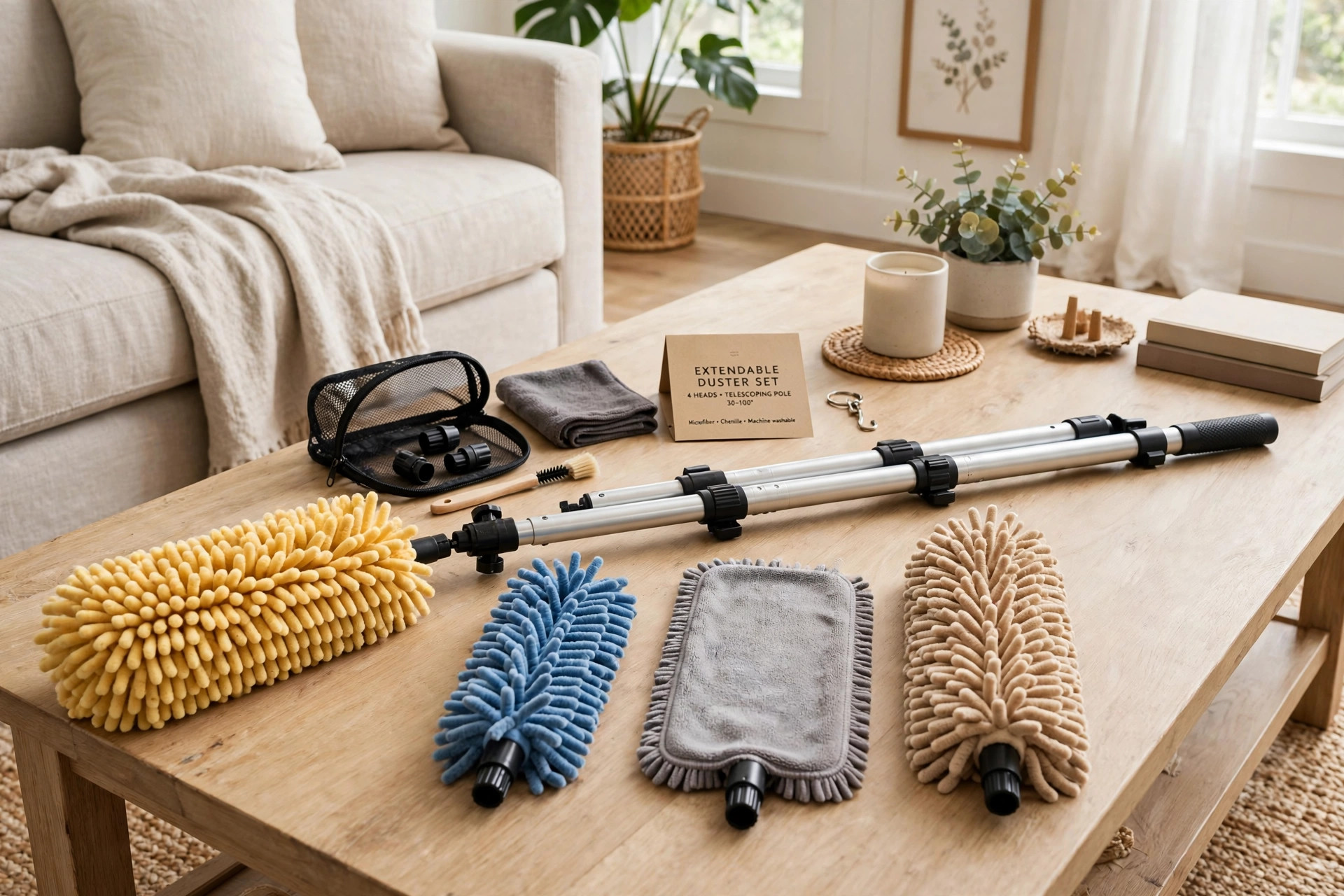

Dust settles on every high shelf, fan blade, and light fixture in a home. Most people skip these spots because a step stool feels like too much work. This extendable duster sets reviews and buying guide solves that problem. A good extendable duster set lets you reach up to fifteen feet while your feet stay on the floor. This guide explains what these sets include, how to read reviews, and how to pick the right one for your home.
Why an Extendable Duster Set Matters
Dust is more than a mark of a dirty house. Dust holds pollen, pet dander, and small bits of soil. The EPA notes that indoor air can carry these particles all day. People with allergies feel the effects first. Sneezing and itchy eyes often start in a dusty bedroom or living room.
High places collect the most dust. Ceiling fan blades spin dust into the air each time you turn them on. The tops of bookcases, door frames, and air vents sit out of sight for months. A short duster cannot reach them. A step stool works, but it is slow and risky. An extendable duster set gives you one pole and several heads. You can dust a whole room in minutes.
Many buyers shop first at large home improvement stores and online marketplaces. Reviews there help you see how a set holds up over months of use. This guide will teach you what to look for in those reviews.
We looked at dozens of buyer reviews and product tests to write this guide. You will learn how long a good set should last, what a fair price is, and which heads earn their keep. By the end, you will know how to pick a set that fits your home and your budget.
What to Look for When You Buy: Extendable Duster Sets Reviews and Buying Guide
Pole Length and Reach
The pole is the heart of the set. Most poles extend from three feet to about twelve feet. Some reach fifteen feet. A longer pole sounds better, but a very long pole can bend and wobble. Look for a pole made of stainless steel or thick aluminum. These metals stay straight under pressure. Cheap plastic poles flex and make control hard.
Check the locking joints. Twist locks and flip locks both work well when they are built with care. Reviews often mention whether the pole slips during use. A pole that slides back down is useless. Pay close attention to this point in any review you read.
Also check the handle grip. A foam or rubber grip keeps the pole from turning in sweaty hands. Hard plastic handles can hurt your palm during a long job. Buyers with arthritis often praise padded grips in their reviews.
Buying in a Set vs. Buying Separately
Buying a full set is usually the best deal. The pole, heads, and storage bag are made to fit each other. A matched set costs less than the same parts bought one by one. Single heads do have a place. Once you know which head you use most, you can buy a spare of that type. Most brands sell extra microfiber heads in packs of two or three. This saves you from replacing the whole set when one head wears out.
Head Types in the Set
A set earns its name by including several heads. The most common heads are:
– Microfiber dusting head. Soft fibers pull in dust with static charge. It fits flat surfaces and fan blades. – Cobweb duster head. A round or cone-shaped head with long bristles. It clears corners and ceiling joints. – Chenille or fluffy head. Thick fingers wrap around odd shapes like railings and lamps. – Crevice or detail head. A slim head that fits between books and behind furniture.
A good set includes at least three heads. If you need a special tool just for fan blades, our ceiling fan dusters buying guide goes into more detail.
Washability
You should wash duster heads after each use. Machine-washable microfiber heads last much longer than throwaway ones. Check the care tag before you buy. Some sets include heads that can only be rinsed by hand. A hand-washable head wears out faster. Look for sets where every head can go in the washing machine.
Types of Extendable Duster Sets
Microfiber Sets
Microfiber is the most popular choice. The fibers are split into tiny strands that trap dust instead of pushing it around. These sets work best for weekly cleaning of furniture, shelves, and blinds. They cost more than basic sets, but they last for years with proper care.
Lambswool Sets
Lambswool heads hold a natural static charge that attracts dust. They are soft and kind to delicate items like picture frames and lamp shades. Lambswool costs more and needs gentler washing. Many older homeowners still prefer the feel of real wool.
Disposable Refill Sets
Some sets use a pole with throwaway electrostatic sheets. You dust and toss the sheet. There is no washing to do. The long-term cost is higher, and the waste adds up. These sets suit people who want the fastest possible job with no upkeep.
Multi-Tool Sets
Some sets add heads for blinds and vents. Thin slat-cleaning tools slide between blind slats. If your home has many windows, you may also want to read our guide to blind cleaning tools for small apartments. Multi-tool sets cost more, but they replace several single tools.
Reading Reviews Like a Pro
Product reviews are your best source of truth. independent review labs test products with lab methods. Large retail sites carry thousands of buyer reviews. Home care magazines run hands-on tests with cleaning staff. Each source has value.
Read the three-star and four-star reviews first. These tend to be the most honest. Five-star reviews are often short and vague. One-star reviews may describe shipping damage rather than product faults. Look for patterns. If ten buyers say the pole lock slips, believe them. If ten buyers say the heads survive a year of washing, believe that too.
Check the date of the reviews. A set that earned praise in 2022 may have changed its design since then. Recent reviews tell you what the current version is like. Home blogs often update their best-of lists each year. Trade guides and DIY sites also publish long-term test results.
Cost and Price Ranges
Extendable duster sets come in three price bands.
Budget sets, $10 to $20. These include a short pole and two or three basic heads. The pole is often thin aluminum or plastic. Budget sets work for light jobs like dusting low shelves. They rarely last more than a year of steady use.
Mid-range sets, $20 to $40. This is the sweet spot for most buyers. You get a strong metal pole, four or more heads, and washable materials. Most sets in our ceiling fan duster reviews fall into this band. A mid-range set should serve a family home for two to three years.
Premium sets, $40 to $70. Premium sets use stainless steel poles, lambswool heads, and extra attachments. They feel solid in the hand and hold up to weekly washing. They suit large homes or people who clean often.
Watch for holiday sales at major retailers and big-box stores. Cleaning tools often drop in price during spring cleaning season. Hardware stores like Lowe’s run deals in January and July.
Care and Upkeep
A duster set lasts longer when you care for it well. Shake each head outdoors after use. This knocks loose dust free before it settles deep in the fibers. Then wash microfiber heads in warm water with a mild soap. Skip fabric softener. It coats the fibers and kills the static charge that makes microfiber work.
Let heads air-dry fully before you store them. A damp head grows mildew. Hang the pole on a wall hook or lay it flat in a closet. Do not lean a long pole in a corner under heavy items. It can bend over time.
Replace a head when its fibers mat down and will not spring back. Most heads last six to twelve months with weekly use. Keep a spare set of heads if your kit sells refills.
Safety Tips
An extendable pole changes how you move through a room. Keep these rules in mind.
Watch for ceiling lights and fans. A twelve-foot pole can strike a fixture hard enough to break it. Turn ceiling fans off before you dust the blades. Work slowly around hanging lamps.
Stay clear of outlets and wires. Some poles are metal and conduct electricity. Never poke a pole near bare wires or broken outlets. If you dust around wall-mounted televisions, unplug them first.
Keep your footing. Dusting high places can tempt you to stand on chairs. Do not do it. The whole point of an extendable pole is to keep your feet on the floor. If a spot is still out of reach, the pole is too short, not you.
Protect your back and shoulders. Hold the pole with both hands and move it in slow arcs. A long pole acts like a lever and can strain your wrists. Take a short break between rooms.
Frequently Asked Questions
How long should an extendable duster pole be?
For most homes, a pole that reaches ten to twelve feet is enough. Measure your highest fan or shelf first. Add your own height plus arm reach. Buy a pole that covers that total with a foot to spare. Longer poles are harder to control.
Are microfiber duster heads really better than feather dusters?
Yes, for most jobs. Microfiber traps dust with static and fiber shape. Feather dusters often just move dust into the air. Lambswool is a fine natural choice, but microfiber washes easier and costs less over time.
How often should I dust high surfaces?
Dust ceiling fans and high shelves once a month. Homes with pets or open windows may need dusting every two weeks. Vents and door frames can wait two to three months. A quick pass with your set takes only minutes.
Can I wash all the heads in a washing machine?
Not always. Most microfiber and chenille heads are machine-safe. Lambswool heads need a gentle hand wash in cool water. Check the care label on each head before the first wash. When in doubt, hand wash.
Will an extendable duster scratch my furniture?
Soft microfiber and lambswool heads will not scratch wood or glass. Avoid using stiff bristle heads on polished surfaces. Always knock loose grit off the head before you dust a delicate item.
What is the best value for a first-time buyer?
A mid-range microfiber set with four heads and a ten-foot metal pole is the best value. It handles most rooms, washes well, and costs under $40. Read recent buyer reviews before you pick a brand.
Do extendable dusters work on popcorn ceilings?
Yes, but use a light touch. Press a stiff head too hard and it can knock loose bits of texture. Use a soft microfiber head and glide it across the surface. For heavy cobwebs in corners, a cone-shaped cobweb head works best.
A Final Word
An extendable duster set is a small purchase that changes a weekly chore. Buy a solid metal pole, washable heads, and a set with at least three attachments. Read reviews with care and watch for patterns about pole locks and head life. Dust the high places once a month and your whole home will feel fresher. For more tools that make cleaning easier, browse our other guides in the cleaning section.
References
Amazon. (n.d.). Online shopping. https://www.amazon.com Bob Vila. (n.d.). Home improvement advice. https://www.bobvila.com Good Housekeeping. (n.d.). Product reviews and home advice. https://www.goodhousekeeping.com Lowe’s. (n.d.). Home improvement products. https://www.lowes.com The Home Depot. (n.d.). Home improvement products. https://www.homedepot.com The Spruce. (n.d.). Home and garden advice. https://www.thespruce.com This Old House. (n.d.). Home renovation guidance. https://www.thisoldhouse.com U.S. Environmental Protection Agency. (n.d.). Protecting human health and the environment. https://www.epa.gov Walmart. (n.d.). Everyday low prices. https://www.walmart.com Wayfair. (n.d.). Furniture and home goods. https://www.wayfair.com
Was this guide helpful?

About Emily Rodriguez
The My Garden US editorial team writes practical, in-depth home and garden guides for American homeowners — tested advice, no fluff.
You May Also Like

Best Antibacterial Disinfectant Sprays for Humid Climates
August 20, 2026 0 views
Best Shower Door Descalers With Free Shipping
May 17, 2026 0 views
Eco Friendly Carpet Stain Remover Kits for Sale: A Plain Buyer’s Guide
September 5, 2026 0 views