
Introduction
This ceiling fan dusters reviews and buying guide will help you pick the right tool for clean, dust-free blades. Dust builds up on fan blades fast. A spinning fan throws that dust into the air. The room feels less fresh. People with allergies notice it first.
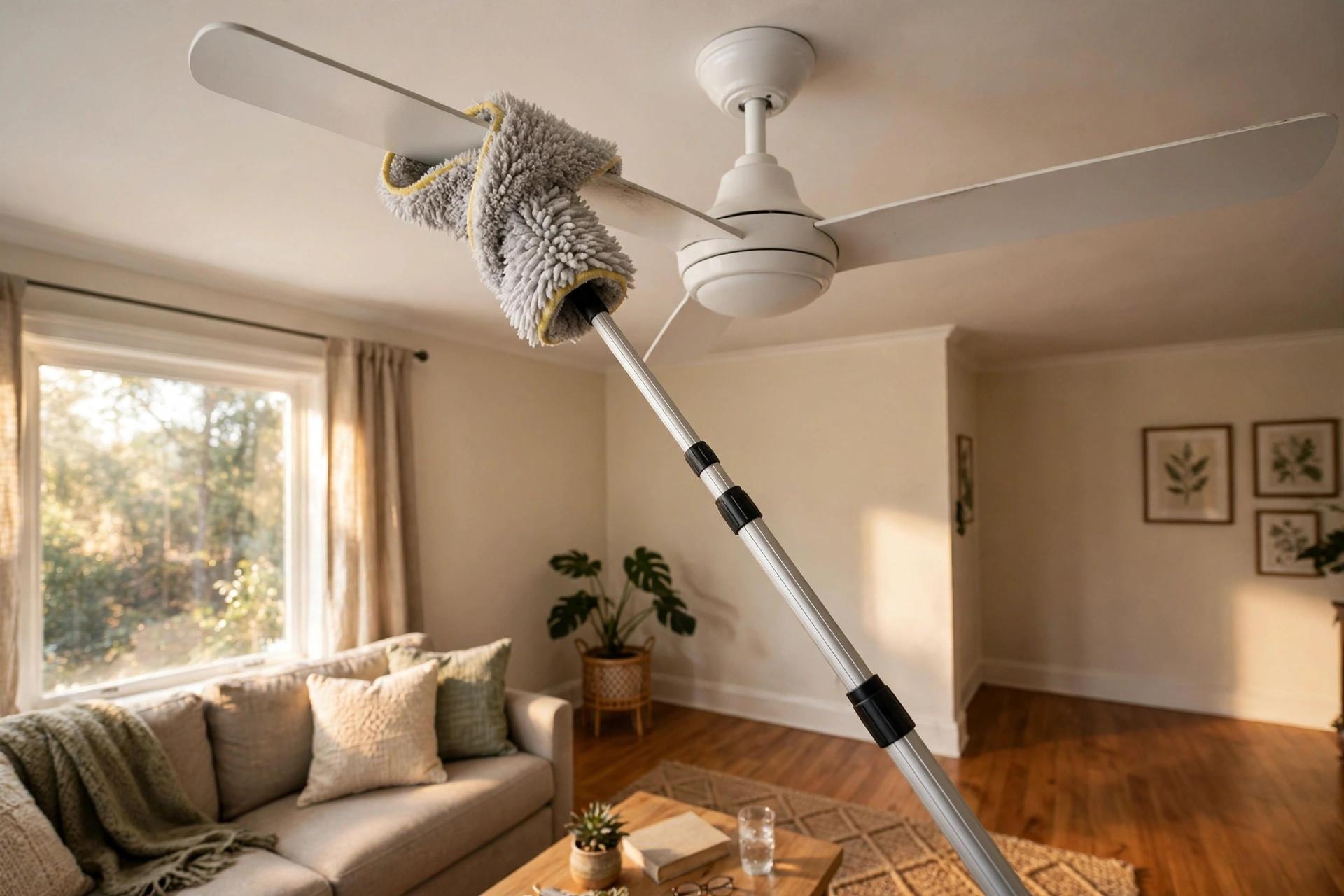
A ceiling fan duster solves this problem with little effort. It has a long handle and a soft head. You stand on the floor and clean each blade. No ladder is needed. No heavy gear is required. The work takes only a few minutes.
This guide compares the main types of dusters. It explains what matters when you buy one. It covers price, care, and safe use. By the end, you will know which duster fits your home and your budget.
Why Dusty Fan Blades Matter: Ceiling Fan Dusters Reviews and Buying Guide
Dust is part of every home. It settles on flat surfaces. Fan blades are flat and wide. They collect a thick layer of dust in just a few weeks. When the fan runs, the dust lifts off. It floats in the air and lands on furniture.
Dust makes rooms look dirty. It also affects health. Dust holds pollen, pet hair, and tiny mites. People with asthma or allergies can feel it in their chest. Clean blades mean cleaner air. Cleaner air means easier breathing.
Dirty blades also make the fan work harder. A heavy coat of dust can throw off the balance. The fan may wobble or shake. A wobbling fan is noisy. Over time, it can wear out the motor. Regular dusting keeps the fan smooth and quiet.
Experts at the Environmental Protection Agency note that cutting indoor dust helps keep home air healthier. A fan duster is a small step that makes a real difference. It costs little. It takes minutes. The result is a fresher home.
What to Look for in a Ceiling Fan Duster
Not all dusters are the same. Some grab dust well. Some push it around. A good duster traps dust in its fibers. Look for these features before you buy.
Handle Length and Reach
The handle is the most important part. A long handle lets you reach the blades while your feet stay on the floor. Most ceilings are eight feet high. A handle that extends to five or six feet works well for standard rooms.
Some dusters have fixed handles. Others have telescoping handles that slide in and out. Telescoping handles store in less space. They also adjust to your ceiling height. Check that the lock on the handle is firm. A handle that slips while you work is no good.
For vaulted or high ceilings, look for extra-long models. Some extend to ten feet or more. Read the stated length before you buy. A short handle forces you to use a stool. That defeats the purpose of the tool.
Duster Head Shape and Material
The head should fit between the blades. Many dusters have a U-shaped or flat head. The U-shape wraps around the blade. It cleans the top and bottom in one pass. This design saves time.
Microfiber is the best head material. It holds an electric charge. The charge pulls dust in and holds it. Cotton cloth heads work, but they do not trap dust as well. Feathers look classic. They often scatter dust instead of catching it.
Check if the head is washable. A washable head saves money. You rinse it and use it again. Non-washable heads must be replaced. Over a year, that cost adds up.
Comfort and Grip
A good grip matters more than you might think. You will hold the duster over your head. Your arms will tire. A soft, thick grip is easier to hold. Some handles have foam padding. That padding reduces strain.
Light weight is also important. A heavy duster is hard to control at full reach. Most good models weigh less than a pound. Reviews from the Good Housekeeping Institute often rate comfort and ease of use along with cleaning power.
Types of Ceiling Fan Dusters
Stores sell several kinds of ceiling fan dusters. Each has its strengths. This section reviews the main types. It notes what each type does best.
Flexible Microfiber Dusters
Flexible microfiber dusters are the most popular choice. The head bends. It wraps around the blade on its own. The fibers trap dust with static charge. These dusters clean fast. One pass per blade is often enough.
Many models have a detachable head. You pull the head off for washing. This keeps the duster fresh for years. Prices start low. Most cost between ten and twenty-five dollars.
The main limit is reach. Cheaper models have short handles. Read the specs. Make sure the handle is long enough for your ceiling. Buyers guides on the Spruce often list reach as a key buying point.
Telescoping Pole Dusters
Telescoping pole dusters focus on reach. The pole extends in sections. Some reach twelve feet. That covers high and vaulted ceilings. The head is usually microfiber or a soft pad.
These dusters are ideal for two-story rooms. They also suit entryways and great rooms. The poles can feel wobbly at full length. A strong locking mechanism helps. Test the lock before you buy if you can.
Expect to pay more for long reach. Prices run from fifteen to forty dollars. The extra cost is worth it if you have tall ceilings. Home improvement advice at Bob Vila suggests measuring your ceiling height before shopping.
Electrostatic Disposable Dusters
Electrostatic dusters use disposable sleeves. You slip a sleeve over the head. The sleeve holds static charge. It grabs dust well. When the sleeve is dirty, you throw it away. No washing is needed.
These are handy for quick jobs. They suit people who want no upkeep. The long-term cost is higher. Replacement sleeves cost money over time. A pack of refills may cost as much as the duster itself.
Some users find the sleeves less thick than washable heads. They still clean well on light dust. For heavy buildup, a washable microfiber head works better. The Family Handyman site notes that disposable dusters are best for routine light cleaning.
Flat Pad Dusters
Flat pad dusters have a wide, flat head. The pad presses against the blade. It works like a cloth on a stick. These dusters are simple and sturdy. They clean both light and heavy dust.
The flat shape is easy to store. It hangs on a hook in a closet. Some pads are washable. Others take disposable refills. Prices are moderate, usually ten to twenty dollars.
Flat pads need more passes than U-shaped heads. The shape does not wrap around the blade. You may clean the top and bottom in two steps. The work is still fast and simple.
Cost and Price
Ceiling fan dusters are cheap tools. Most sell for ten to forty dollars. Price depends on three things: handle length, head material, and brand.
Basic models cost ten to fifteen dollars. They have fixed handles and simple heads. They suit standard eight-foot ceilings. They are fine for one or two fans.
Mid-range models cost fifteen to twenty-five dollars. They often have telescoping handles. The heads are microfiber and washable. This is the sweet spot for most buyers. You get good reach and good dust trapping.
High-end models cost twenty-five to forty dollars. They offer very long reach. Some have padded grips and sturdy locks. They suit homes with tall ceilings. Consumer Reports ratings often show that mid-range dusters perform as well as pricier ones for basic jobs.
Do not forget running costs. Washable heads cost nothing to reuse. Disposable refills cost five to ten dollars per pack. Over a year of monthly dusting, refills can double your total cost.
Shoppers can compare prices at large retailers like Home Depot and Lowe’s. Both carry several brands. Reading customer reviews there helps. Real buyers note if a handle slips or a head falls off.
Care and Upkeep
A clean duster cleans better. Dust builds up in the fibers. When the head is full, it stops trapping dust. Shake the duster after each use. Shake it into a trash can. This removes loose dust.
Wash the head when it looks gray or dull. Most microfiber heads are machine washable. Use warm water and mild soap. Skip fabric softener. Softener coats the fibers. It kills the static charge that traps dust.
Let the head air dry. High heat from a dryer can damage microfiber. It can also warp plastic parts. Lay the head flat or hang it up. It dries in a few hours.
Check the handle now and then. Tighten any screws. Look for cracks in the plastic. A cracked handle can break while you reach overhead. Replace worn parts early. A broken duster can scratch a fan blade.
Store the duster in a dry place. Hang it on a hook. Do not pile heavy items on it. A bent head may not straighten. Maintenance tips on This Old House remind homeowners that simple tools last years with light care.
Safety
Dusting a fan is low risk. Still, a few safety steps keep it that way.
Turn the fan off before you dust. A spinning blade can hit the duster. It can knock the tool from your hand. It can also throw dust into your eyes. Wait until the blades stop fully.
Stand clear of the fan. Dust will fall as you work. Wear a dust mask if you have allergies. A mask keeps you from breathing in the dust you knock loose.
Use a sturdy stance. Keep both feet flat on the floor. Do not lean on furniture. Do not stretch too far. If you cannot reach, get a longer duster. Never stand on a chair with a short tool. That is how falls happen.
Check the fan blades first. Look for loose screws or cracked blades. A loose blade can come off while you dust. Tighten hardware once a year. If a blade is damaged, replace it before using the fan again.
The Consumer Product Safety Commission warns against unsafe cleaning practices at height. A long-handled duster keeps you on the ground. That is its main safety benefit.
Frequently Asked Questions
How often should I dust my ceiling fan blades?
Once a month is a good rule. Homes with pets or high traffic may need it every two weeks. Dust builds up fast on blades. Monthly dusting keeps the layer thin. Thin layers wipe off with ease.
Can I clean fan blades with a regular cloth instead of a duster?
You can, but a duster works better. A cloth requires a ladder. A duster lets you stay on the floor. The microfiber head also traps more dust than most cloths. A regular cloth may push dust into the air.
Do I need to turn off the fan before dusting?
Yes. Always turn the fan off first. Wait for the blades to stop moving. A moving blade can strike the duster. It can fling dust into your face. Dusting a stopped fan is safer and cleaner.
Are washable or disposable duster heads better?
Washable heads cost less over time. They trap dust well. Disposable sleeves are easier to use. You throw them away when dirty. Choose washable for value. Choose disposable for convenience. Either type works when used often.
What handle length do I need for an eight-foot ceiling?
A duster that extends to five or six feet is enough. Add your arm’s reach to the handle length. The total should clear the fan blades. For ceilings above ten feet, look for dusters that reach ten feet or more.
Final Word
A ceiling fan duster is a small tool with a big job. It keeps blades clean. It keeps air fresher. It protects the fan motor. The best duster for you depends on your ceiling height and how often you clean.
Look for a long, sturdy handle. Pick a microfiber head that traps dust. Choose washable over disposable if you want to save money. Read buyer reviews before you spend. A good duster costs little and lasts for years.
Start with a mid-range telescoping model. It fits most homes. Dust your fans once a month. Your rooms will look cleaner. The air will feel fresher. And the job will take only a few minutes each time.
For readers who also maintain other dusting tools, our guides to wet dry shop vacuums and blind cleaning tools cover more ground. A baseboard cleaning tools price comparison can help you budget a full dust-free routine.
References
Bob Vila. (n.d.). Home improvement advice. https://www.bobvila.com Consumer Reports. (n.d.). Product reviews and ratings. https://www.consumerreports.org Family Handyman. (n.d.). DIY home repair and maintenance. https://www.familyhandyman.com Good Housekeeping. (n.d.). Product reviews and home advice. https://www.goodhousekeeping.com Lowe’s. (n.d.). Home improvement products. https://www.lowes.com The Home Depot. (n.d.). Home improvement products. https://www.homedepot.com The Spruce. (n.d.). Home and garden advice. https://www.thespruce.com This Old House. (n.d.). Home renovation guidance. https://www.thisoldhouse.com U.S. Consumer Product Safety Commission. (n.d.). Product safety information. https://www.cpsc.gov U.S. Environmental Protection Agency. (n.d.). Protecting human health and the environment. https://www.epa.gov
Was this guide helpful?

About Emily Rodriguez
The My Garden US editorial team writes practical, in-depth home and garden guides for American homeowners — tested advice, no fluff.
You May Also Like

Commercial Grade Robot Vacuum Cleaners Buying Guide
January 21, 2026 0 views
Buy Chimney Cleaning Brushes Online in Arizona: A Homeowner’s Guide
August 8, 2026 0 views
Professional Grade Tile Grout Cleaning Machines for Sale: A Practical Buyer’s Guide
May 19, 2026 0 views