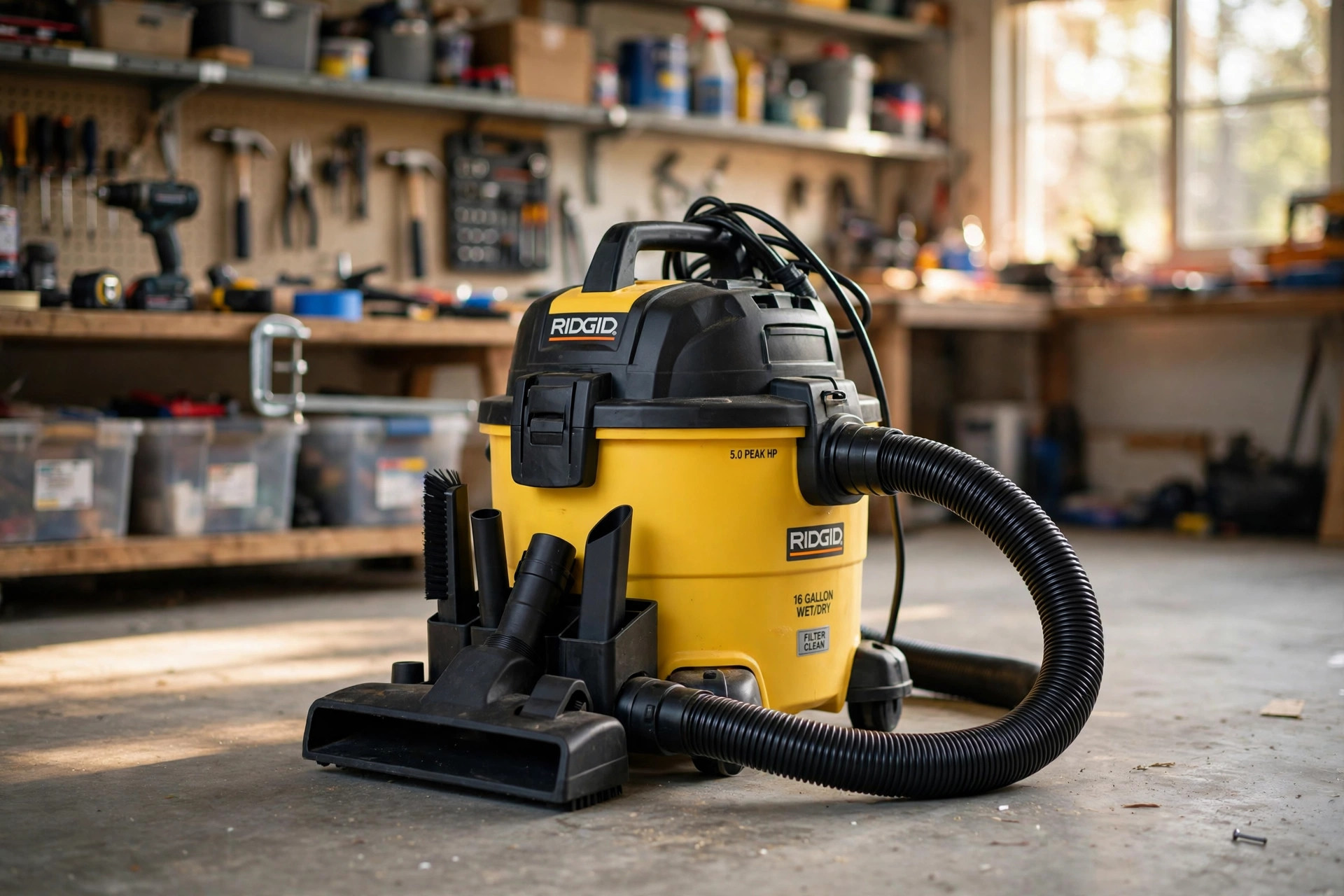

A good shop vacuum is one of the most useful tools a home owner can own. This wet dry shop vacuums reviews and buying guide walks through what these machines do, how to choose one, and what a fair price looks like. Whether you clean a garage, a workshop, a car, or a flooded basement, the right vacuum saves time and effort.
A wet dry shop vacuum picks up both dry dust and spilled water. That simple fact sets it apart from a regular home vacuum. In the pages below, you will find clear advice on size, power, filters, hoses, and cost. You will also find notes on care and safety. Read on before you spend a dollar.
Why It Matters
Garages and workshops get dirty in ways that living rooms do not. Sawdust, metal chips, nails, spilled oil, and wet leaves all land on the same floor. A standard vacuum cannot handle these loads. It clogs. Its small bag fills in minutes. Its motor burns out when it meets water.
A wet dry shop vacuum is built for this hard work. The tank is large, often five to sixteen gallons. The motor is strong. The hose is wide enough to swallow screws and wood chips. With a flip of a switch, the same machine drinks up spilled water. For home owners, this means one tool covers many jobs.
Reviews matter because models differ more than the pictures suggest. Two vacuums may look alike and still differ in suction, noise, and filter life. Trusted testing groups such as Consumer Reports publish side by side results that show these gaps. Reading reviews before you buy keeps you from paying for power you do not need, or from getting too little power for the work you do.
What to Look For When You Choose: Wet Dry Shop Vacuums Reviews and Buying Guide
Start with the job list. A shop vacuum for car cleaning needs a long hose and good attachments. A vacuum for basement floods needs a pump that moves water fast. A vacuum for a wood shop needs fine dust filtration. Write down your top three jobs. Every other choice follows from that list.
Suction Power
Power is rated in peak horsepower or in air watts. Higher numbers mean stronger suction in most cases, but the number alone does not tell the full story. Hose width, filter design, and tank seals all affect real suction. Look for reviews that test suction with real debris, not just paper ratings. A mid power unit handles most home tasks well. Only heavy shop work calls for the largest motors.
Tank Size
Tank size ranges from two to sixteen gallons or more. Small tanks empty fast but carry easy and store easy. Large tanks run longer but get heavy when full of water. For a two car garage, a six to twelve gallon tank is a sound middle ground. If you plan to move water out of a basement, pick a larger tank or a model with a built in pump.
Filtration
Filters trap dust before it reaches the motor and before it leaves the exhaust. Basic filters catch large dust. Fine dust filters and HEPA style filters catch much smaller particles. Good filtration matters in a wood shop or during home renovation dust cleanup. It also matters if anyone in the home has dust allergies. Check how easy the filter is to change, and what a replacement costs.
Hose and Attachments
A wide hose clogs less. A long hose reaches further. Most shop vacuums ship with a crevice tool, a floor nozzle, and a brush. Some add a car nozzle or a wet squeegee. Match the attachments to your job list. Extension wands help with ceilings and tall shelves. A blower port turns the vacuum into a leaf blower for the driveway, a handy bonus.
Cord Length and Portability
A long cord means fewer outlet changes. Twenty feet is a good target for garage work. Check the wheels too. Large rear wheels roll over thresholds and cords. A sturdy top handle helps you lift the unit into a truck bed. Weight matters when the tank is full of water, so test the balance if you can.
Noise
Shop vacuums are loud. Some models run far quieter than others, and reviews often measure decibels. If you clean early in the morning or share walls with neighbors, noise deserves a place on your list. Ear protection is wise for long jobs no matter which model you buy.
Types and Options
Shop vacuums fall into a few clear groups. Knowing the groups makes reviews easier to read and compare.
Compact models. Two to four gallon tanks. Light and easy to store. Best for cars, small shops, and quick cleanups. They fill fast, so they are not the pick for floods or whole garage cleanups.
Mid size models. Five to ten gallons. The most popular group for home owners. They handle garage floors, workshop dust, and car interiors. Most include a blower port and a fair set of attachments. Prices stay reasonable.
Large models. Twelve to sixteen gallons and up. Built for serious workshop use and water jobs. They hold more, run longer, and often add features like automatic shutoff floats and drain plugs. They take more floor space and cost more.
Wet pickup with pump. Some large units add a pump that pushes water out through a garden hose. This design empties a basement or a clogged pool cover without lifting a heavy tank. For flood prone homes, the pump is worth the extra cost.
Cordless models. Battery powered units trade run time for freedom from cords. They suit quick jobs and spots far from outlets. Check the battery platform you already own. A shop vacuum that shares batteries with your drills and saws saves real money.
Brands compete hard in this space, and stores such as The Home Depot and Lowe’s carry wide ranges to compare side by side. Reading a set of current reviews at The Spruce or Bob Vila helps you see which models hold up after months of use, not just in a first test.
Cost and Price
Prices for wet dry shop vacuums span a wide range. Compact models often sell for thirty to sixty dollars. Mid size models run sixty to one hundred twenty dollars. Large models with pumps reach two hundred dollars or more. Cordless models cost more still, in part because of the batteries.
The tank is the biggest price driver. The second is the pump feature. Filtration grade adds a little. Brand name adds a little too, though the premium is smaller here than in other tool groups.
Think in terms of cost per year. A seventy dollar vacuum that lasts five years costs fourteen dollars a year. That is a bargain next to renting a commercial unit for one weekend flood. Read warranty terms. One year is common. Some brands offer longer coverage on the motor. Keep the receipt and register the product if the maker asks.
Accessories add up. Extra filters, longer hoses, and car kits are sold apart. Price the full kit you need, not just the base unit. A cheap vacuum plus costly filters can pass a pricier bundle that includes everything.
Care and Upkeep
A shop vacuum asks little, but it asks for something. The filter is the heart of care. Shake it out or rinse it after heavy dust jobs, and let it dry fully before you store it. A damp filter grows mold and smells. Keep a spare filter on hand so you never run the machine without one. Running without a filter sends dust straight into the motor and shortens its life.
Empty the tank after each use. Do not store water in the tank. Wipe the inside dry after wet jobs. Check the float that shuts off suction when the tank fills with water. If it sticks, the motor can take in water. A stuck float is a common cause of early motor failure.
Store the hose loose, not kinked tight. Cracks in the hose leak suction. Check the power cord for nicks. Coil it on the built in hooks if the unit has them. Wipe the outside with a damp cloth. Keep the vacuum in a dry spot. A damp garage corner breeds rust on metal parts.
For dust from drywall or fine woodwork, consider a dust bag inside the tank. The bag catches the fine dust and keeps the main filter cleaner longer. Bags cost a few dollars each and are worth it for heavy dust work. Guides at Family Handyman and This Old House show simple upkeep routines that add years to shop tools.
Safety
Shop vacuums handle harsh material, so respect the risks. Never vacuum flammable liquids such as gasoline or solvents. The motor can spark and start a fire. Never vacuum hot ash unless the unit is rated for ash and the ash is fully cold. Hot embers melt hoses and tanks.
Unplug the unit before you change the filter or empty the tank. Keep water away from the power head and the cord ends. Wear a dust mask for fine dust jobs. Drywall dust and some wood dusts harm the lungs. Wear eye protection when you blow debris with the blower port.
Check the rules for your material. Some waste, such as old paint dust or certain insulation, needs special handling. The EPA publishes plain guidance on household hazardous waste. When in doubt, call your local waste office before you vacuum it up.
Frequently Asked Questions
Can a shop vacuum pick up water and dust at the same time? Yes, with one change. Remove the dry dust filter or the dust bag before wet pickup on most models. Some filters are rated for both wet and dry use. Check your manual. Running a paper dry filter in water ruins it fast.
What size shop vacuum do I need for a garage? For a two car garage, six to twelve gallons covers most jobs. Smaller works for cars only. Larger suits flood cleanup and big workshops. Match the tank to your worst job, not your average one.
Are HEPA filters worth it on a shop vacuum? They are worth it when fine dust is part of the job. Wood shops, drywall work, and allergy homes all gain from better filtration. The filters cost more and need changing on schedule. For simple garage sweep jobs, a standard fine dust filter does fine.
Can I use a shop vacuum as a blower? Many models include a blower port. You move the hose to the exhaust side and the unit blows air. It works well for leaves, grass clippings, and clearing the driveway. It is not a match for a full size leaf blower on big jobs, but it is handy. Wear eye protection.
How loud is a shop vacuum? Most run between seventy and eighty five decibels. That is loud enough to need ear protection for long jobs. Some newer models run quieter. Reviews that measure noise help you compare. If noise matters in your home, treat it as a buying factor, not an afterthought.
How long should a shop vacuum last? With basic care, five to ten years is normal for home use. The motor usually outlives the hose and the wheels. Filters are wear items. A unit that sees weekly workshop use wears faster than one that cleans the car twice a year. Good upkeep, as shown in Good Housekeeping guides, is the best way to reach the long end of that range.
A Short Final Word
This wet dry shop vacuums reviews and buying guide comes down to a simple rule. Buy for the hardest job on your list, keep the filters clean, and respect the safety limits. Do that, and a shop vacuum will serve your garage, your workshop, and your car for years.
If your cleanup needs go beyond the garage, you may find related guides useful, such as our notes on top rated window cleaning service companies reviews, top rated baseboard cleaning tools buying guide, and professional grade professional house cleaning services near me. Each one follows the same plain approach. Compare a few models, read current reviews, and pick the tool that fits your home.
References
Bob Vila. (n.d.). Home improvement advice. https://www.bobvila.com Consumer Reports. (n.d.). Product reviews and ratings. https://www.consumerreports.org Family Handyman. (n.d.). DIY home repair and maintenance. https://www.familyhandyman.com Good Housekeeping. (n.d.). Product reviews and home advice. https://www.goodhousekeeping.com Lowe’s. (n.d.). Home improvement products. https://www.lowes.com The Home Depot. (n.d.). Home improvement products. https://www.homedepot.com The Spruce. (n.d.). Home and garden advice. https://www.thespruce.com This Old House. (n.d.). Home renovation guidance. https://www.thisoldhouse.com U.S. Environmental Protection Agency. (n.d.). Protecting human health and the environment. https://www.epa.gov
Was this guide helpful?

About James Carter
The My Garden US editorial team writes practical, in-depth home and garden guides for American homeowners — tested advice, no fluff.
You May Also Like
Buy Pressure Washers for Driveways Online in Colorado: A Complete Guide
April 15, 2026 0 views
Reliable Handyman Services for Homeowners in Colorado
May 28, 2026 0 views
Move Out Cleaning Services Cost Guide USA: What You Pay and Why
June 21, 2026 0 views