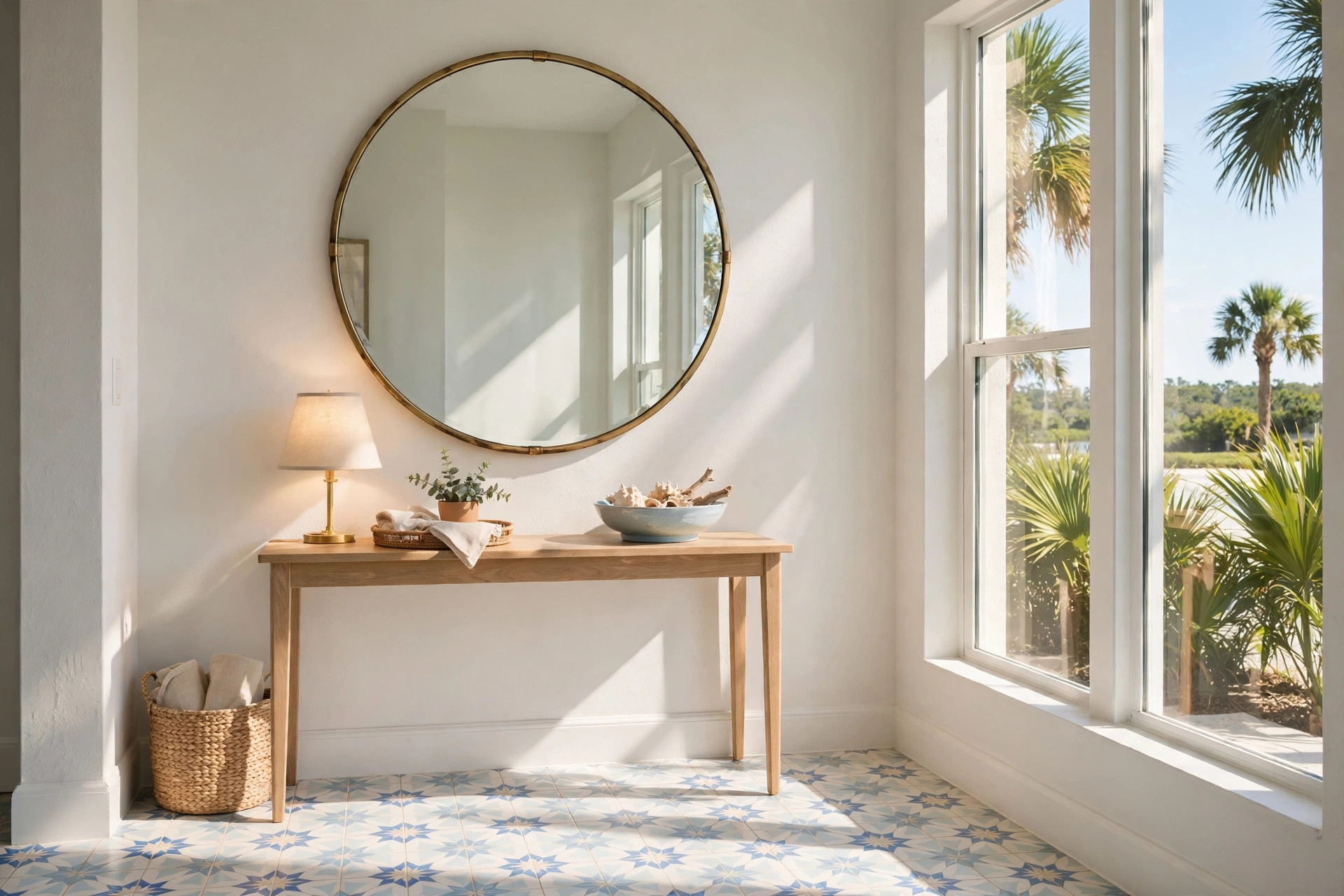

The first thing a guest sees when the front door opens is the entryway. In Florida homes, where light pours in and rooms often feel open and airy, the entryway sets the tone for the whole house. Entryway decorative mirrors Florida homes USA buyers choose can make a small foyer feel twice its size, bounce sunlight into dark corners, and add a finished look that bare walls cannot give. This guide explains how to choose the right decorative mirror for a Florida entryway, which styles suit coastal and traditional homes, what prices to expect, and how to keep the glass bright in a humid climate.
Why Entryway Mirrors Matter in Florida Homes
Florida homes have a style of their own. Many were built for the sun. Tile floors, high ceilings, and big windows are common from Miami to Tampa to Jacksonville. The entryway in these homes often opens straight into a living room or a long hall. A decorative mirror helps define that space. It tells the eye where the entry begins and the rest of the home ends.
Light is the second reason. Florida gets strong sun for most of the year. A mirror placed across from a window or sidelight catches that sun and throws it deeper into the home. Dark hallways that never see direct light can feel brighter with one well-placed mirror. This is simple physics, and it costs nothing to run.
Space is the third reason. Many Florida homes, from ranch houses to condos, have small or narrow entryways. A mirror gives the sense of depth. The eye reads the reflection as more room. This trick has been used by decorators for a very long time, and it still works.
How to Choose the Right Entryway Decorative Mirror: Entryway Decorative Mirrors Florida Homes Usa
Choosing well starts with measuring. Measure the wall where the mirror will hang. Measure the width of the console table or bench below it, if there is one. A mirror should be narrower than the furniture beneath it. Two thirds the width of the table is a safe rule. A mirror that is wider than the table looks top heavy and wrong.
Height matters too. Hang the mirror so the center sits near eye level, about 57 to 65 inches from the floor in most homes. In Florida, where many rooms have nine or ten foot ceilings, there is a temptation to hang everything high. Resist it. Mirrors are made to be looked into, not up at.
Think about what the mirror will reflect. A mirror shows whatever sits across from it. Aim it at something pleasant. A window with a view of palm trees is ideal. A piece of art, a pretty lamp, or a neat bookcase also works. Do not aim it at a cluttered closet or a blank wall. Walk the entry and look at the facing wall before you buy.
Consider the weight. Large mirrors with solid wood or metal frames can weigh forty pounds or more. Plaster and drywall need proper anchors. A mirror that falls is a hazard and a loss. Check the hardware that comes with the piece and upgrade it if it looks weak.
Florida climate deserves a thought as well. Entryways near the front door get blasts of humid air every time the door opens. Cheap backing on a mirror can spot or darken at the edges in damp air. Look for sealed backs and frames rated for humid rooms. A little care here adds years to the life of the piece. Guides on sites like Houzz often note how humidity shapes material choices in southern homes.
Types and Styles of Entryway Decorative Mirrors
Entryway decorative mirrors come in more forms than most buyers expect. Each form suits a different kind of Florida home.
Round mirrors are the most forgiving choice. A circle has no sharp corners, so it fits narrow walls and pairs well with nearly any furniture. A 24 to 36 inch round mirror over a slim console table is a classic Florida look. Brass or thin black metal rims suit modern coastal homes. Thick wood rims suit older ranch and Mediterranean homes.
Rectangular and square mirrors read more formal. They work well above long console tables in larger foyers. A tall rectangle can make a low ceiling feel higher because the eye moves up. Wide horizontals stretch a narrow wall and calm a busy room. Frame makers such as Article and West Elm offer clean-lined rectangles that suit contemporary Florida interiors.
Arched mirrors have a soft top that echoes doorways and windows. In Florida homes with arched openings, a matching arch mirror looks natural.
Sunburst and starburst mirrors were once the mark of mid-century style, and they are back in favor. They work best as accents rather than working mirrors. Their rays make them hard to use for a true reflection, but as a decorative piece over a small table they add joy.
Floor-length leaning mirrors suit entryways with empty wall space and high ceilings. Leaning, rather than hanging, keeps them stable if they are placed behind a bench or in a corner. They need a secure anchor at the top so they cannot slide. In a condo entry with limited width, a leaning mirror adds full height without drilling.
Coastal style deserves special mention in Florida. Weathered wood frames, rope details, and soft blue or white finishes echo the beach without shouting it. Many Florida buyers want the coast felt, not spelled out. A lightly whitewashed oak frame over a console table with mirror says Florida in a quiet way.
Cost and Price Expectations
Decorative mirrors cover a wide price range, and the frame is what sets the cost. Glass is glass. A plain frameless mirror is cheap. The craft of the frame is what you pay for.
Small round mirrors, 18 to 24 inches across, with simple metal or wood frames, often sell for 60 to 150 dollars. These suit apartments and small foyers.
Mid-size mirrors, 28 to 40 inches, with better frames, run 150 to 400 dollars. This is the sweet spot for most Florida entryways. The choice is wide, and quality is solid.
Large statement mirrors, over 40 inches, with carved wood, thick brass, or designer names, run 400 to 1,200 dollars and more. At this level you are paying for the frame as furniture.
Floor-length mirrors range from 200 to 800 dollars depending on size and frame.
Shipping matters in Florida. Glass is fragile and heavy. Many retailers include freight, but some charge it. A cracked corner on arrival is common enough that good retailers have a clear process for it.
If budget is tight, the secondhand market in Florida is rich. Inspect the silvering at the edges. If it is dark or cloudy, the mirror is past saving. A sound mirror with a tired frame is a fine buy, since frames can be repainted, and shoppers often compare entryway decorative mirrors deals near me before buying new.
Placement Ideas for Florida Entryways
Placement is where a good mirror becomes a great one. These rules hold in nearly every Florida home.
Hang the mirror over the console table, centered on it. Leave four to eight inches between the top of the table and the bottom of the mirror. This keeps the two pieces reading as one unit.
Pair the mirror with a lamp. A lamp in front of or beside a mirror doubles its light. In an entry that gets little sun, a lamp and a mirror together can carry the whole job of lighting the space.
In a narrow hall, hang one long mirror along the wall. It will widen the hall at once. Do not break the line with small art between two mirrors. One strong piece beats two weak ones.
In a wide foyer, a mirror on the facing wall answers the visual weight of the front door.
Watch the sun. A mirror that catches direct afternoon sun can throw a hard glare across the room. Test with a hand mirror at different hours before hanging the real one. Morning east light is usually kind. West afternoon light can be fierce in Florida.
For open plans where the entry flows into the living room, a mirror helps mark the boundary. Place a bench, a rug, and a mirror together, and the entry reads as its own room. This trick works in condos and in large suburban homes alike.
Care and Upkeep in a Humid Climate
Florida humidity is the main enemy of mirrors. Damp air creeps behind the glass and attacks the silvering. Spots at the edges, called desilvering, are the usual sign. Once started, it cannot be reversed.
Prevention is simple. Keep the room aired. Run the air conditioner, which dries the air as it cools. Do not hang a mirror on a wall that gets direct rain splash near an open door. Leave a small gap behind the mirror so air can move. Felt pads on the back corners do this job.
Clean the glass with a soft microfiber cloth and a mild glass cleaner, or with plain water and a drop of dish soap. Spray the cloth, not the mirror. Liquid that runs down into the frame edge can work behind the glass. Dry at once. Never use harsh powders or scouring pads.
Dust the frame with a dry cloth. For wood frames, a light furniture polish twice a year is enough. For brass and metal frames in coastal air, watch for tarnish and wipe with a proper metal cloth. Salt air near the beach speeds up corrosion on cheap metals, so sealed finishes are worth the money in shore towns.
Check the hanging hardware once a year. Hooks loosen. Wire stretches. Anchors in drywall can work free over time, especially near doors that slam. A yearly check takes five minutes and prevents a bad fall.
Safety Notes
A mirror is glass, and glass deserves respect. Follow these rules and there will be no trouble.
Anchor heavy mirrors to a stud or use rated wall anchors. Hollow-wall anchors that grip from behind are made for this job. Do not trust a single nail for a heavy piece.
Keep mirrors out of the path of swinging doors. Measure the door swing before choosing a spot on the wall next to the entry.
In homes with small children, hang mirrors high enough that little hands cannot reach the bottom edge, or choose shatter-resistant acrylic for low spots. Real glass at toddler height near a hard tile floor is a risk not worth taking. Federal safety guidance from the U.S. Consumer Product Safety Commission covers furniture and glass hazards in plain language.
Near stairs, make sure a leaning mirror cannot be bumped. Topple straps or wall anchors are cheap insurance.
Frequently Asked Questions
What size decorative mirror fits a small Florida entryway? For a narrow entry, a round mirror 24 to 30 inches across is a safe choice. It should be narrower than the table or bench beneath it. In a hall with no furniture, a long mirror 20 inches wide and 48 inches tall widens the space without crowding it.
Should an entryway mirror face the front door? It can, but it is often better to face a side wall, a window, or art. A mirror that faces the door doubles the doorway and can feel busy. Try both spots with a stand-in before you hang.
Do mirrors really make a small entry look bigger? Yes. The eye reads the reflected room as added depth. This works best when the mirror is large, clean, and aimed at something bright. A small, dark, or dirty mirror does little. Size and light are what make the trick work.
How do I stop a mirror from fogging near the front door? Fogging comes from warm damp air hitting cool glass. Keep the air conditioner running, which lowers indoor humidity. Wipe the glass dry after rainy days. A mirror with a sealed back resists moisture damage better than a cheap open-back piece.
Can I hang a heavy mirror on drywall? Yes, with the right anchors. Use toggle bolts or rated hollow-wall anchors sized to the weight. Better still, drive screws into a wood stud. Check the weight rating on the anchor package and stay well under it.
What frame styles suit coastal Florida homes? Light woods, whitewash finishes, thin brass, and natural rope or rattan details suit the coast. Avoid heavy dark frames in small bright rooms, since they can look out of place. Simple shapes and pale finishes keep the airy Florida feel.
A Short Final Word
An entryway mirror is a small buy with a large effect. It adds light, space, and order to the first room of the home. Florida homes, with their sun and open plans, gain more than most from this one piece. Measure the wall, pick a style that matches the home, hang it with proper anchors, and keep the glass clean. The result is an entry that feels welcoming every time the door opens. Pair it with a slim table, a lamp, and a rug, and the entry becomes a room of its own. For more ideas on dressing the space around it, look at IKEA entry storage pieces and the decorating guides at The Spruce. Shoppers furnishing the whole foyer may also like our notes on sofa console tables california homes usa and leather recliner chairs texas homes usa for nearby rooms.
Buying guides are also published by Apartment Therapy and HGTV.
References
Apartment Therapy. (n.d.). Home design ideas and inspiration. https://www.apartmenttherapy.com Article. (n.d.). Modern furniture. https://www.article.com HGTV. (n.d.). Home and garden ideas. https://www.hgtv.com Houzz. (n.d.). Home design and remodeling. https://www.houzz.com IKEA. (n.d.). Home furnishings. https://www.ikea.com The Spruce. (n.d.). Home and garden advice. https://www.thespruce.com U.S. Consumer Product Safety Commission. (n.d.). Product safety information. https://www.cpsc.gov West Elm. (n.d.). Modern furniture and home decor. https://www.westelm.com
Was this guide helpful?

About Robert Taylor
The My Garden US editorial team writes practical, in-depth home and garden guides for American homeowners — tested advice, no fluff.
You May Also Like
Modern Wall Bookshelves: Where to Buy in the USA
January 6, 2026 0 views
Where to Buy Entryway Decorative Mirrors in the USA
May 7, 2026 0 views
Couch Throw Pillows USA Online Deals: A Plain Guide to Saving Money
January 13, 2026 0 views