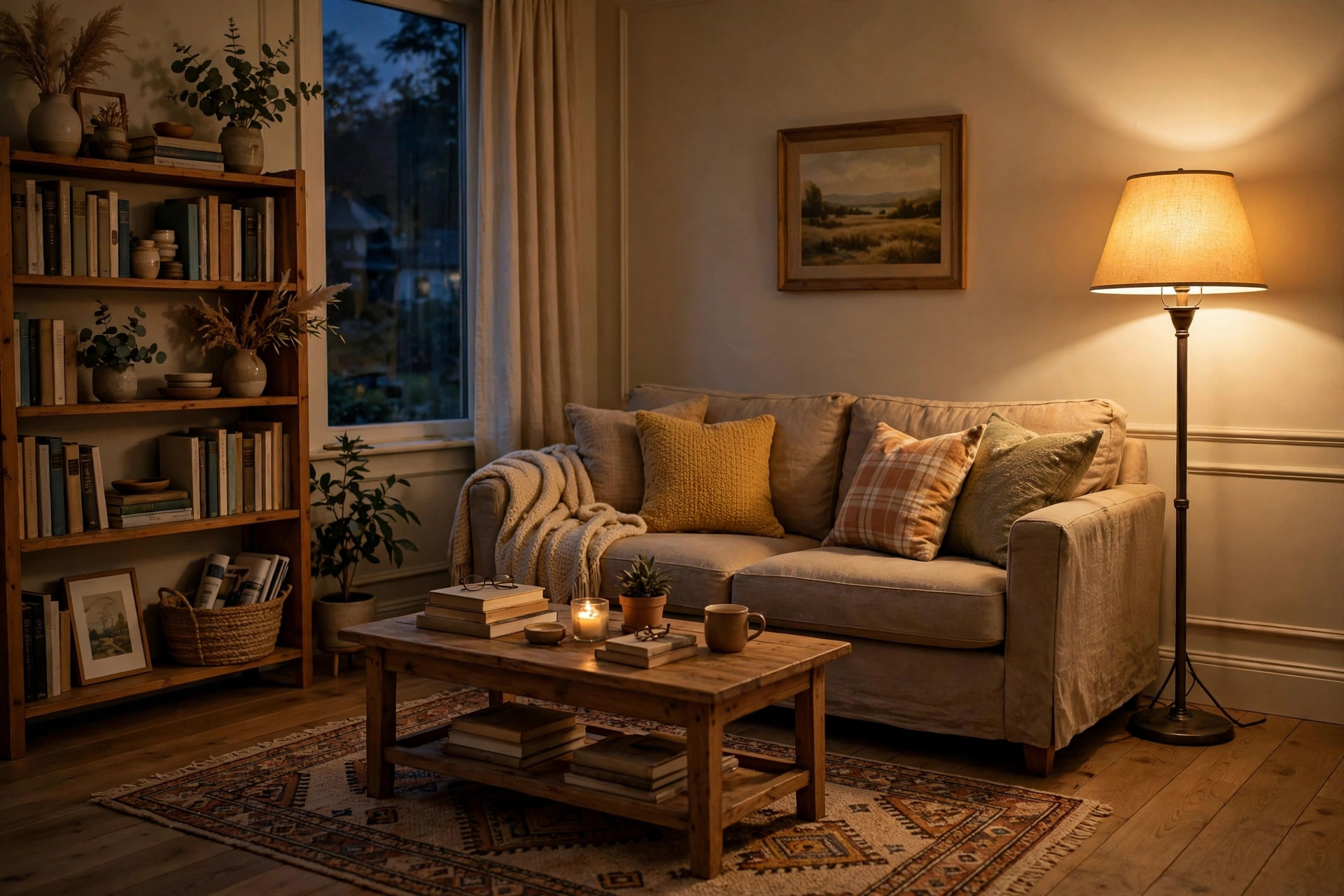
The living room floor lamps american homes guide begins with a simple fact. A floor lamp is one of the most useful pieces of furniture in any living room. It gives light where it is needed. It adds style to a corner. And it does this without taking up table space. In American homes from coast to coast, the floor lamp has become a staple of the living room, as common as the sofa and the coffee table.
A good floor lamp serves two masters. It must light the room well. And it must look right in the room. This guide will walk you through both. You will learn the main types of floor lamps. You will learn how to choose one that fits your room. You will learn what floor lamps cost in the United States today. And you will learn how to keep your lamp safe and working for years.
Why Living Room Floor Lamps Matter
A living room is the heart of most American homes. It is where the family gathers. It is where guests are received. It is where people read, watch television, play games, and talk. The lighting in this room sets the mood for all of these activities. Overhead lights alone are often too harsh. They wash the whole room in flat, bright light. They make a room feel like an office, not a home.
Floor lamps solve this problem. They bring light down to human level. They create pools of warm light where people sit. Designers often say that a living room needs at least three sources of light. A floor lamp is often one of those three. The other two may be a ceiling fixture and a table lamp, or natural light from a window.
There is also a practical side. Many living rooms in American homes were built without enough outlets in the walls. Older houses may have only one overhead light, or none at all. A floor lamp needs only one plug and one corner. It can go almost anywhere. This makes it the easiest way to add light to a dark room.
A floor lamp also shapes how a room looks. A tall, slim lamp can make a low ceiling feel higher. A heavy brass lamp can give a room a formal air. A lamp with a large drum shade can soften a modern room. Shoppers browsing home design ideas often notice how one lamp can change the whole feel of a photographed room. The same effect shows up in interior decorating ideas, where a single lamp often anchors a whole corner. The lamp is never the largest piece of furniture. Yet it is often the piece that ties the room together.
How to Choose the Right Floor Lamp: Living Room Floor Lamps American Homes Guide
Choosing a floor lamp is not hard, but it pays to think first. A few simple measurements and choices will keep you from buying the wrong lamp. The steps below will help.
Measure Your Space
Before you shop, measure the corner or spot where the lamp will stand. Note the distance to the nearest wall outlet. Note the height of the furniture near it. A floor lamp should be taller than the chair or sofa beside it. The bottom of the shade should sit at about eye level when you are seated, which is roughly 40 to 49 inches from the floor.
If the lamp will sit behind a sofa, make sure the shade will not hit the wall. Leave at least a few inches of space. If it will stand beside a reading chair, the shade should be close enough that light falls on your book. Plan for this before you buy.
Match the Purpose
Ask yourself what the lamp must do. A lamp for reading needs a bright, focused bulb and an adjustable head or a shade that points light downward. A lamp for mood lighting needs a dimmer and a shade that glows softly. A lamp for general room light needs a tall design with a shade that throws light up and down at once.
One lamp can do more than one job if it has a dimmer or a three-way switch. But no lamp does everything well. Decide which job matters most in your room.
Pick a Style
Floor lamps come in styles to suit every American home. Traditional rooms favor brass or bronze lamps with fabric shades. Modern rooms favor slim metal lamps with simple lines. Farmhouse rooms favor wood and black metal. Coastal rooms favor rattan or light finishes. Look at the furniture you already own and choose a lamp that speaks the same language. Comparing pieces across modern furniture collections and lighting and decor selections can help you spot the shapes and finishes that suit your room.
Types of Living Room Floor Lamps
There are more types than many shoppers expect. Each type does a different job. Here are the main ones found in American stores today.
Torchiere Lamps
The torchiere is one of the oldest floor lamp styles in American homes. Its shade is an open bowl that points upward. Light bounces off the ceiling and fills the room with soft, general light. Torchieres are good for dark rooms that need brightness without glare. They are not good for reading, since no light points downward. Many modern torchieres include a small reading light in the stem to fix this.
Arc Lamps
The arc lamp has a long curved arm that reaches over a sofa or chair. It gives the effect of a hanging light without any work on the ceiling. Arc lamps make a strong style statement. They suit large living rooms with high ceilings. They need floor space, because the heavy base must stand a few feet from the seat it lights.
Tripod Lamps
Tripod lamps stand on three legs. They bring a casual, airy feel to a room. The three legs spread the weight, so the lamp is steady. Tripod lamps often carry drum shades and suit modern and Scandinavian rooms, a look you can study in many modern lighting designs. They take up more floor space than single-stem lamps, so they fit best in larger rooms.
Tree and Multi-Light Lamps
Tree lamps have two or three lights on one stem, each pointing in a different direction. They are handy when one corner must serve two needs, such as reading light and room light at once. Multi-light designs let you switch each light on or off by itself.
Reading and Task Floor Lamps
These are built for work. They have adjustable heads or arms that aim light exactly where it is needed. A pharmacist lamp, with its small shade on a pivoting stem, is a classic example. So is the modern pharmacy-style lamp with a tall pole and a pivoting shade. Pair one with a good armchair and you have a reading corner. If you also plan to add velvet sofas in California homes or other seating to the room, a task lamp beside each chair keeps everyone happy.
Shelf and Display Floor Lamps
Some floor lamps carry small shelves or a table built into the stem. These are useful in small living rooms where every inch counts. You can set a cup of tea or a remote control on the shelf. Just remember that the shelf adds weight and makes the lamp harder to move.
Cost and Price of Floor Lamps
Floor lamp prices in the United States cover a wide range. A simple basic lamp from a discount store can cost 25 to 50 dollars, and big-box stores carry plenty of affordable floor lamp options under that mark. A solid mid-range lamp from a national retailer usually costs 80 to 200 dollars. Designer lamps from specialty stores can cost 300 dollars to well over 1,000 dollars. Shoppers comparing furniture collections will see how designer names raise the price.
What drives the price? Materials matter most. Solid brass, wood, and hand-finished metal cost more than plastic and thin steel. A quality shade made of linen or silk costs more than a paper or plastic shade. Features add cost too. Built-in dimmers, USB charging ports, and smart bulbs that change color all raise the price. Brand names carry a premium, though they often bring better wiring and stronger switches.
There are ways to save. Watch for seasonal sales. Home stores often cut lamp prices in January and July. Floor models at local shops can sell for half price. Secondhand stores and estate sales are full of sturdy old lamps that need only a new shade. A 20-dollar shade on a 10-dollar brass lamp can look better than a new 150-dollar lamp.
Do not forget the cost of bulbs. LED bulbs cost more at first but use far less electricity and last for years. Over the life of the lamp, the bulb savings can be larger than the price of the lamp itself.
Care and Upkeep
A floor lamp is a simple machine, but it still needs care. Dust the shade often with a soft cloth or a lint roller. Fabric shades attract dust, and dusty shades give off less light. Wipe metal stems with a damp cloth and dry them at once. Never spray cleaner directly on the lamp.
Check the cord once a year. Look for cuts, cracks, or worn spots. If the cord is damaged, stop using the lamp until the cord is replaced. Many hardware stores sell replacement cords and plugs. Rewiring a simple lamp is a basic repair that many owners learn to do themselves.
Keep the bulb wattage at or below the limit printed on the lamp socket. Too strong a bulb can overheat the shade and the wiring. LED bulbs run cooler than old incandescent bulbs, which makes them safer for most lamps.
Tighten the shade harp and finial now and then. Shades loosen over time from heat and vibration. A tilted shade looks sloppy and can touch a hot bulb, which is a fire risk.
Safety Tips for Floor Lamps
Floor lamps are safe when they are used with care. Most lamp fires and shocks come from simple mistakes. Follow these rules.
Place the lamp where it will not be knocked over. Keep it away from walkways, door swings, and playful pets and children. A top-heavy lamp on a light base can tip easily. If your lamp wobbles, move it to a corner where two walls steady it.
Run the cord along the wall, not across the floor. Cords across walkways cause trips and wear. Do not run a cord under a rug, where heat can build up and damage goes unseen. Do not pinch the cord under furniture legs.
Use only bulbs that fit the socket and meet the wattage limit. Never force a bulb. If the plug feels loose in the outlet, have the outlet fixed or use another one. Unplug the lamp before you change a bulb or clean near the socket.
Keep fabric shades away from heat. Paper and fabric shades are made to sit a safe distance from the bulb, but a tilted shade can get too close. Bulbs marked for enclosed fixtures are not needed here, but bulbs that run hot need room to breathe.
Buy lamps that carry a safety mark from a testing lab, such as UL or ETL. These marks show that the lamp was tested to American safety standards. Guides from lamp buying guides often remind shoppers to check for this mark before buying.
Frequently Asked Questions
How tall should a living room floor lamp be? Most floor lamps stand between 58 and 64 inches tall. The key measure is the bottom of the shade. It should sit at about seated eye level, 40 to 49 inches from the floor. Behind a tall sofa, you may need a taller lamp.
Can one floor lamp light a whole living room? One lamp can light a small room or a sitting area, but most living rooms need more. Designers suggest three light sources per room. A torchiere gives the most general light of any floor lamp type.
Are LED bulbs good for floor lamps? Yes. LED bulbs use less energy, run cooler, and last far longer than old bulbs. Most new floor lamps are made for them. Choose a warm white color, around 2700 to 3000 Kelvin, for a cozy living room feel.
Where should I put a floor lamp in my living room? Good spots are beside a reading chair, behind a sofa corner, in a dark corner, or next to a console table. Keep the lamp within reach of an outlet and out of foot traffic. Try the lamp in two or three spots before you decide.
How do I clean a fabric lampshade? Dust it weekly with a soft cloth, a feather duster, or a lint roller. For stains, dab gently with a damp cloth and mild soap. Do not soak the shade. Paper shades should only be dusted, never wetted.
What is the difference between a floor lamp and a torchiere? A torchiere is one type of floor lamp. The word means a lamp whose shade is an upward-facing bowl. All torchieres are floor lamps, but not all floor lamps are torchieres.
A Final Word
A floor lamp is a small investment that pays back every evening. It makes a living room warmer, more useful, and more pleasant to sit in. Before-and-after photos in room makeover ideas show how often lighting is the finishing touch. Take the time to measure, to match the lamp to its job, and to pick a style that fits your home. Shoppers who start with floor lamps for Texas homes or browse decorative entryway mirrors often find that one good piece leads them to improve the whole room. Start with the lamp. The rest of the room will follow.
References
Apartment Therapy. (n.d.). Home design ideas and inspiration. https://www.apartmenttherapy.com Article. (n.d.). Modern furniture. https://www.article.com CB2. (n.d.). Modern furniture and decor. https://www.cb2.com Crate and Barrel. (n.d.). Furniture and home decor. https://www.crateandbarrel.com HGTV. (n.d.). Home and garden ideas. https://www.hgtv.com Houzz. (n.d.). Home design and remodeling. https://www.houzz.com IKEA. (n.d.). Home furnishings. https://www.ikea.com The Spruce. (n.d.). Home and garden advice. https://www.thespruce.com West Elm. (n.d.). Modern furniture and home decor. https://www.westelm.com
Was this guide helpful?

About Jennifer Lee
The My Garden US editorial team writes practical, in-depth home and garden guides for American homeowners — tested advice, no fluff.