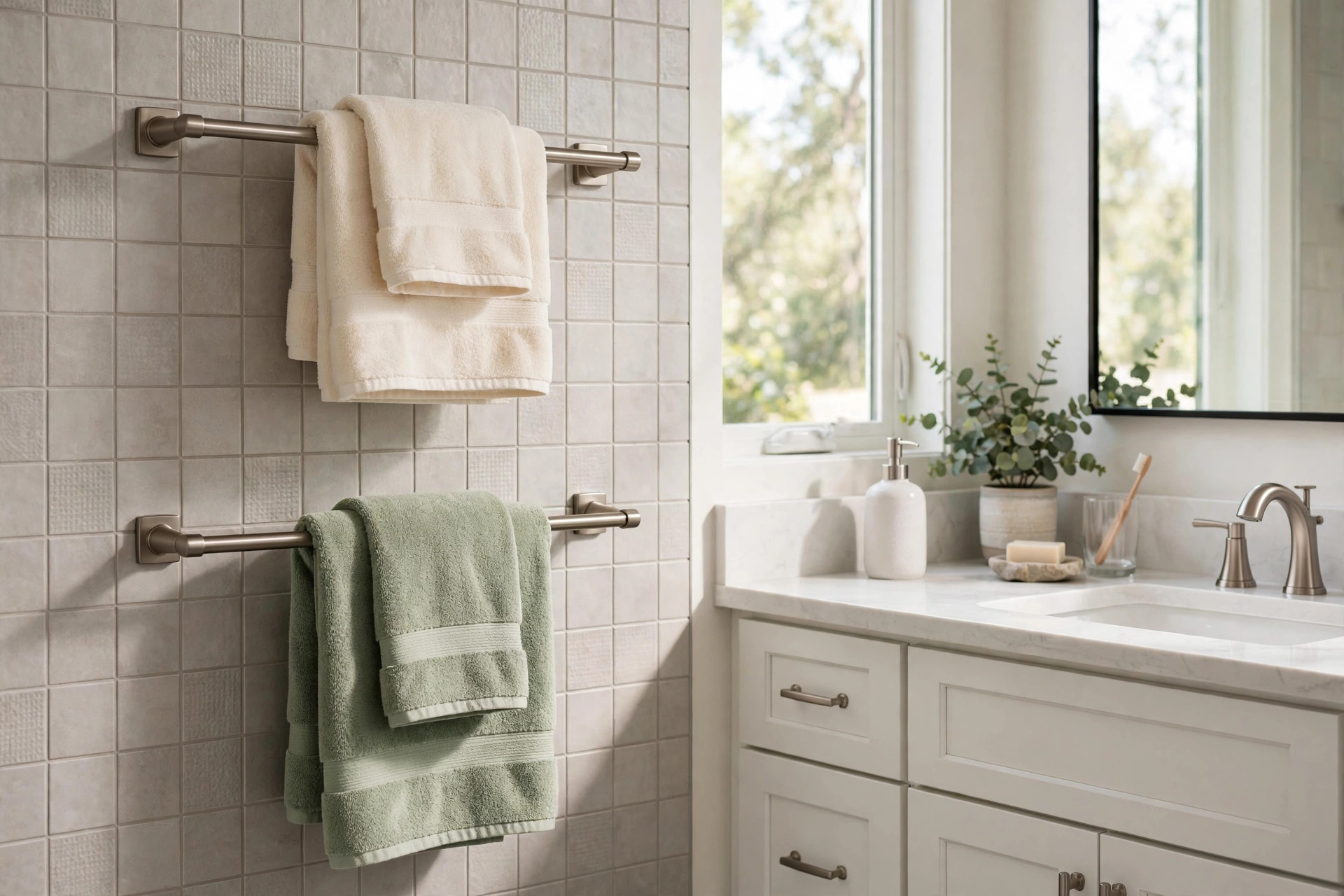

The phrase brushed towel holders california homes usa appears often in shopping searches, and for good reason. A towel holder is one of the most touched fixtures in any home. It holds wet towels day after day. In California homes, where salt air, hard water, and bright sun test every surface, the choice of finish matters more than it does in many other places. This guide explains what brushed towel holders are, why they suit California homes, how to choose them, what they cost, and how to keep them looking new for years.
Why Brushed Towel Holders Matter in California Homes
California homes face conditions that shorten the life of cheap bathroom fixtures. Coastal towns from San Diego to Santa Cruz have salt in the air. Inland cities such as Fresno and Sacramento have hard water that leaves mineral spots. Desert communities near Palm Springs have strong sun and dry air that stress cheap plating. A brushed finish stands up to these conditions better than polished chrome or painted metal, and that is why brushed towel holders for California homes have become a steady favorite.
A brushed finish is made by rubbing the metal surface with fine abrasives. This leaves tiny parallel lines that soften reflections. The result is a soft, satin look that hides fingerprints, water spots, and light scratches. In a busy family bathroom, this is a real benefit. A polished holder shows every smudge. A brushed holder forgives daily use and still looks clean.
What to Look For When You Choose Brushed Towel Holders: Brushed Towel Holders California Homes Usa
The most important factor is the base metal. Stainless steel is the best choice for coastal California homes because it resists rust even in salty air. Brass is another strong choice. Solid brass holds up well and takes a brushed finish beautifully. Zinc alloy is common in budget fixtures. It looks fine at first but can fail sooner in humid or salty air.
Look at how the finish is applied. Physical vapor deposition, often called PVD, bonds the finish to the metal at a deep level. PVD finishes resist scratching and fading far better than simple electroplating. If you live near the coast, PVD is worth the extra cost.
Check the mounting system. The best towel bars use a wall plate that screws into a stud or a solid anchor, with a set screw that locks the bar in place. Cheap holders use only adhesive pads or thin drywall anchors. A wet bath towel is heavy. A holder that cannot carry that weight will pull loose from the wall within a year.
Measure before you buy. Standard towel bars come in lengths of eighteen inches, twenty-four inches, and thirty inches. A large bath towel needs at least twenty-four inches to hang flat. A powder room may need only a towel ring.
Finish names vary by maker. Moen, Delta Faucet, and American Standard all sell soft-silver finishes, but the tone is not identical from one brand to the next. Brushed nickel, satin nickel, and brushed stainless all describe similar looks. If you want your brushed nickel faucets buying guide usa project to match your towel holders, buy both from the same maker, or bring a sample to the store and compare in daylight.
Types and Options
Single Towel Bars
A single bar is the classic choice. It mounts to one wall and holds one large towel flat. Most bathrooms use one bar near the shower or tub and one near the sink, a layout shown in many of Kohler‘s bath collections.
Double Towel Bars
A double bar has two parallel rods on one set of mounts. It holds two towels in the space of one. Double bars work well in shared bathrooms where two people need towel space.
Towel Rings
A towel ring holds a hand towel in a small circle. Rings are ideal next to a sink in a powder room or half bath.
Towel Hooks
Hooks hold towels by one corner. They are strong, simple, and need little wall space. Many families use hooks for children’s towels because children find hooks easier to use than bars. Hooks also dry robes and swim gear well, which suits beach towns where wet suits and beach towels come home often.
Freestanding Towel Stands
Renters in California apartments often choose stands because leases may forbid drilling into tile. Stands are easy to move but can tip if a child pulls on them.
Heated Towel Holders
Heated holders warm towels with low electric heat. They dry towels faster, which helps in cool coastal mornings when bathrooms stay damp.
Matching Brushed Towel Holders to California Home Styles
California homes come in many styles, and brushed towel holders fit most of them. In a modern home in Silicon Valley or Irvine, design ideas from HGTV show brushed stainless bars matching clean lines and glass showers. In a Spanish revival home in Santa Barbara, brushed bronze holders sit well with warm tile and wood beams. In a farmhouse in the Central Valley, brushed nickel pairs with white shiplap and simple shaker vanities.
The key is to match the metal tone of the other fixtures. If your shower trim is brushed nickel, choose brushed nickel towel holders. If your faucets are oil-rubbed bronze, choose a brushed bronze that sits close to it. Mixing two very different metals in one small bathroom can look like a mistake. Mixing three metals in a large master bath can work if one metal clearly leads and the others support it.
Light also matters. A bathroom vanity light bars buying guide usa article may note that warm light changes how metal looks. Brushed nickel under warm light looks slightly golden. Under cool daylight bulbs, it looks more silver. Test your finish under the actual light in your bathroom before you commit to a whole set.
Cost and Price
Brushed towel holders come in a wide price range. A basic brushed bar from a mass-market store such as The Home Depot or Lowe’s may cost between fifteen and thirty dollars. These work for rentals or quick refreshes but may show wear within a few years, especially near the coast.
Mid-range holders cost between thirty and eighty dollars. This is the sweet spot for most California homeowners. At this price you get solid metal, a PVD or strong plated finish, and a firm mounting system. Many national brands sell their core towel bars in this range.
High-end holders cost between eighty and two hundred dollars or more. These are solid brass or stainless steel with hand-applied brushed finishes. They often carry lifetime finish warranties. Heated models, which a bathroom towel warmers buying guide usa page can compare, add cost and need an outlet nearby. For a master bath in a home you plan to keep for decades, this level of quality can make sense.
Installation adds to the cost if you hire help. A handyman in California may charge between seventy-five and one hundred fifty dollars to mount two or three holders, depending on the city. Do-it-yourself installation costs nothing but your time and a few basic tools: a drill, a level, a tape measure, and the anchors that come in the box.
Remember the full set. Add up every holder you need before you set your budget.
Installation: Doing It Right
Good installation matters as much as good quality. A fine holder mounted poorly will fail. Guides from This Old House and Bob Vila stress the same points, and these steps cover the essentials.
First, plan the layout. Mount the main bar within easy reach of the shower or tub. The center of the bar should sit about forty-eight inches above the floor for adults. In a children’s bath, lower it to thirty-six inches.
Second, find support in the wall. The best mount goes into a wood stud. Use a stud finder and mark the stud edges. If no stud sits where you need the holder, use the toggle bolts or heavy-duty wall anchors made for the job. Standard plastic anchors that come in many boxes are too weak for a towel bar that holds wet towels.
Third, protect tile. When drilling through tile, place masking tape over the spot first. The tape keeps the drill bit from skating across the glaze. Start the hole with a small masonry bit at low speed, then switch to the size you need. Keep the bit cool with a few drops of water.
Fourth, level the mounts. Set both wall plates with a level before you tighten them. A bar that tilts even a little will show badly in a clean modern bath.
Fifth, lock the bar in place. Slide the bar onto the mounts and tighten the set screws with the small wrench that comes in the box. Pull on the bar firmly to test it. It should not move at all.
For renters or tile walls where drilling is not allowed, strong adhesive holders are an option. Clean the tile with rubbing alcohol first, press the mount firmly for a full minute, and wait twenty-four hours before hanging a towel. Adhesive mounts hold light hand towels well but should not carry heavy wet bath towels.
Care and Upkeep
Brushed towel holders are easy to care for, but a few habits will keep them looking new.
The Spruce and other cleaning guides suggest wiping bath hardware with a soft damp cloth once a week. This removes soap film and mineral dust before it builds up. Dry the bar after wiping so water does not sit in the crevices near the wall mounts.
For hard water spots, which are common in much of California, wipe the holder with a cloth dampened with white vinegar. Rinse with clean water and dry. Do not leave vinegar on the finish for long. A minute is enough.
Never use steel wool, scouring pads, or harsh cleaners with bleach or ammonia. These scratch the brushed surface and can eat through the finish. Never use a cleaner made for polished chrome on a brushed finish. The labels are different for a reason.
In coastal homes, rinse holders with fresh water once in a while if salt mist reaches the bathroom through open windows. Salt left on metal will pit even good finishes over time.
Check the set screws once a year. Bathrooms vibrate with daily use, and screws can work loose. A quick turn with the small wrench keeps everything tight.
If the finish does wear through after many years, many makers sell replacement bars that fit the old wall mounts. You may be able to refresh the look without drilling new holes.
Safety
Towel holders are not grab bars. They are not made to hold body weight. A person who slips in the tub may grab the nearest bar by reflex. If that bar is only a towel holder, it can pull out of the wall and cause a worse fall.
In homes with older adults or anyone with poor balance, install real grab bars near the tub and toilet. Real grab bars anchor into studs and are tested to hold hundreds of pounds. Mark them clearly by their different shape and heavier mounts so no one mistakes a towel bar for support.
Keep this in mind when you place holders. Do not mount a towel bar where someone would naturally reach for support when stepping out of the shower. Put the grab bar there instead, and put the towel bar a step away.
Small children also pull on towel bars. Mount bars solidly and check them often in a children’s bath. A bar that comes down with a child hanging on it can cause injury.
Heated towel holders carry their own safety notes. Keep them away from the tub and shower spray. Follow the maker’s clearance rules. Have a licensed electrician wire any hardwired model. Never drape a plastic item over a heated rack.
Frequently Asked Questions
Are brushed towel holders good for coastal California homes? Yes, when the base metal is stainless steel or solid brass. These metals resist rust in salty air. Choose a PVD finish for the longest life near the coast. Zinc alloy holders may fail sooner in salt air.
Will brushed nickel towel holders match my brushed stainless faucets? Usually yes. Brushed nickel and brushed stainless are close in tone, and in the same room the difference is small. For a perfect match, buy both from the same maker. Test a sample in your bathroom light before you buy a full set.
What length towel bar should I buy? For a full-size bath towel, choose a twenty-four inch bar. For a small bath or a child’s towel, eighteen inches is enough. For a wide wall or two towels side by side, thirty inches works well. Measure your wall and your towels before you order.
Can I install a towel bar on tile without cracking it? Yes. Put masking tape on the tile, mark your spot, and drill slowly with a masonry bit at low speed. Keep the bit cool. Use anchors made for the wall behind the tile. Many homeowners in California install bars on tile with no trouble by working slowly.
How do I clean hard water spots off a brushed finish? Wipe with a cloth dampened with white vinegar, then rinse with clean water and dry. Do this quickly and do not let the vinegar sit. Avoid abrasive pads and harsh chemicals, which damage the brushed surface.
A Short Final Word
Brushed towel holders are a small purchase that you will touch every day. In California homes, where the air, water, and sun test every fixture, it pays to choose well. Pick stainless steel or solid brass, check the mounting hardware, measure twice, and install with care. Match the finish to your other fixtures and keep the cleaning simple.
References
American Standard. (n.d.). Bathroom and kitchen products. https://www.americanstandard.com Bob Vila. (n.d.). Home improvement advice. https://www.bobvila.com Delta Faucet. (n.d.). Kitchen and bathroom faucets. https://www.deltafaucet.com HGTV. (n.d.). Home and garden ideas. https://www.hgtv.com Kohler. (n.d.). Bathroom and kitchen fixtures. https://www.kohler.com Lowe’s. (n.d.). Home improvement products. https://www.lowes.com Moen. (n.d.). Faucets and plumbing fixtures. https://www.moen.com The Home Depot. (n.d.). Home improvement products. https://www.homedepot.com The Spruce. (n.d.). Home and garden advice. https://www.thespruce.com This Old House. (n.d.). Home renovation guidance. https://www.thisoldhouse.com
Was this guide helpful?

About Jennifer Lee
The My Garden US editorial team writes practical, in-depth home and garden guides for American homeowners — tested advice, no fluff.
You May Also Like
Quiet Exhaust Fans: An American Homes Guide
July 14, 2026 0 views
Quiet Exhaust Fans for Florida Homes: A Complete Buying Guide
April 11, 2026 0 views
Bathtub Refinishing Kits Texas Homes USA: A Plain Guide to Restoring Worn Tubs
August 28, 2026 0 views