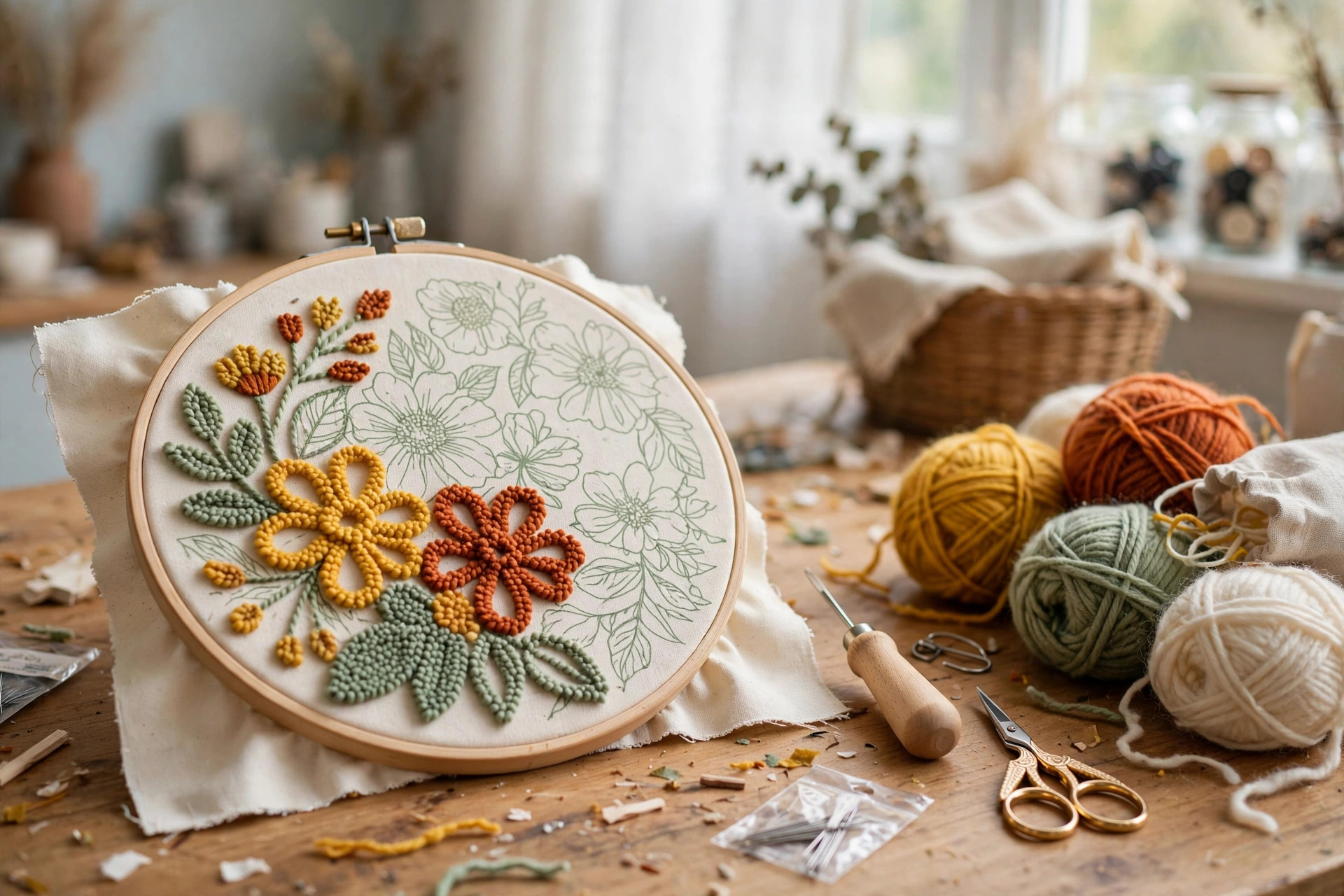

A punch needle kit for beginners rug making gives new crafters a simple way to enter the world of textile art. Rug hooking has a long history in American homes, and the punch needle method makes it easier than ever. You push yarn through fabric with a special needle, and small loops form on the other side. Row by row, a rug grows under your hands. A good beginner kit packs the needle, the frame, the fabric, and the yarn in one box, so you do not have to hunt for parts. Many people finish their first small rug in a single weekend. This guide covers what to look for, what types exist, what they cost, and how to care for your tools and finished rugs.
Why a Beginner Punch Needle Kit Makes Rug Making Easy
Punch needle rug making is one of the oldest forms of textile craft in America. Families in New England made looped rugs from scraps of cloth in the 1800s. The punch needle tool came later, and it changed the craft. Instead of pulling each loop by hand with a hook, you punch the needle down through stretched fabric. The loop forms on the back side. You lift, move a short step, and punch again. The motion is quick and steady. It feels a little like coloring inside lines.
A beginner kit removes the guesswork. Buying parts one by one can confuse a new crafter. The needle must match the fabric. The fabric must hold the yarn. The yarn must suit the needle. If one part does not match, the loops pull out and the work falls apart. A well-designed beginner punch needle rug kit solves this. The maker has tested the parts together. You open the box and start the same day.
These kits also keep costs low. A single box often costs less than the separate parts would cost at a craft store. For a new hobby, that matters. You can try the craft without a large spend. If you love it, you can buy finer tools later. If not, you have a small finished rug and no regret.
Many beginners pair this craft with other home crafts. A hot glue gun helps attach a backing to a small rug. A sewing kit is useful for hemming rug edges. A macrame cord kit shares tools and skills with punch needle work. Textile crafts often grow together on one craft table.
What to Look for When You Choose Your First Kit: Punch Needle Kit for Beginners Rug Making
The Punch Needle Tool
The needle is the heart of the kit. Look for a tool with a comfortable wooden or plastic handle. It should feel firm in your hand but not heavy. Most beginner kits include one needle with an adjustable tip or a set of two or three needles in different sizes. A thicker needle works with chunky yarn. A finer needle works with thinner yarn. An adjustable needle is a fine choice for a first kit because it lets you try both.
Check that the needle has a smooth tip. A rough tip can snag the fabric and tear it. The box should say which yarn weight the needle fits.
The Frame or Hoop
Your fabric must stay tight while you punch. A loose fabric lets loops pull out. Most kits for beginners include a wooden embroidery hoop or a square snap frame. A hoop is light and easy to hold. A snap frame holds a larger area flat and keeps tension even across the whole piece. For a first rug, a hoop of about 8 to 12 inches across is plenty. Larger projects need a floor frame or a gripper frame, but those are better saved for later.
Check that the frame edges are smooth.
The Fabric
Punch needle fabric is not ordinary cloth. It needs an open but firm weave. The two most common choices are monk’s cloth and linen. Monk’s cloth is soft and loose-woven. It is easy to punch and forgiving for new hands. Linen is firmer and makes finer, denser loops, but it demands more care.
A good beginner kit includes a piece of fabric with the pattern printed or stamped on it. Printed guides show you where each color goes. This saves you from drawing your own design on a first try. The fabric piece should be at least two inches wider than the frame on all sides so you can grip it firmly.
The Yarn
Kits usually include yarn in enough colors to finish the printed design. For rugs, 100 percent wool yarn holds loops best and wears well underfoot. Wool rug yarn is springy and fills gaps between loops. Acrylic yarn is cheaper and easier to find, and many beginner kits use it. It works well for wall hangings and small decorative rugs. For a rug that will sit on the floor, wool is the stronger choice.
Check that the kit holds enough yarn to finish the piece. A printed design uses set amounts of each color. Running out of one color halfway is a common beginner problem. Look for kits that list generous yardage or include extra of the main color.
The Extras
The best beginner punch needle rug making kits add small tools that save time. A threader helps you load yarn through the narrow needle. A small pair of scissors trims stray ends. Some kits include a printed instruction booklet with photos. Clear instructions matter more than anything for a first-timer. If the booklet shows each step with pictures, you can learn without hunting for videos.
Types of Beginner Kits You Will Find
Kit makers package their products in a few common styles. Each style suits a different kind of beginner.
Pre-printed design kits. These are the most popular. The fabric comes with a full-color design printed on it. You punch each color into its marked area. Common designs include flowers, simple animals, and geometric patterns. These kits teach you the punching motion without asking you to plan a design.
Blank fabric starter sets. These kits give you the needle, frame, fabric, and a bundle of yarn with no printed pattern. They suit beginners who already draw or who want to try free-form art. You sketch your own lines on the fabric with a marker. This path takes more thought but gives more freedom.
Mini rug and coaster kits. Some kits focus on very small projects. You make a set of coasters or a small mug rug. These are ideal if you want to test the craft in an afternoon. A small project teaches the motion and finishes fast, which builds confidence.
Deluxe all-in-one boxes. These larger kits include several needles, a big frame, multiple fabric pieces, many yarn colors, and a detailed guidebook. They cost more but serve a beginner who plans to make several rugs. If you already know you enjoy fiber crafts, a deluxe box can be good value.
You can find these styles at Michaels and Joann, on Etsy from small makers, at low prices on Amazon and Walmart, and as quality tools from Blick.
Cost and Price: What You Should Pay
A punch needle kit for beginners rug making usually costs between 15 and 45 dollars in the United States. Mini kits with one small project sit at the low end. Mid-range kits with a printed rug design, frame, and several yarn colors sit in the middle. Deluxe boxes with multiple needles and large fabric pieces reach the high end.
Price is not always a sign of quality. A 20-dollar kit from a trusted brand can punch as well as a 40-dollar kit. What matters is the fit between needle, fabric, and yarn. Read reviews before you buy. Look for reviews that mention loop height staying even and yarn not pulling out. These two points tell you the kit parts work together.
Watch for hidden costs. Some cheap kits skip the frame. You then must buy a hoop separately, which adds 8 to 15 dollars. A kit that includes the frame is usually the better deal. Also check yarn amounts. A kit with skimpy yarn forces a second purchase of the same dye lot, which is hard to match.
Chains such as Home Depot stock basic kits, and buying guides at Family Handyman, Bob Vila, and This Old House help you judge value.
Care and Upkeep of Your Kit and Finished Rugs
Good care starts while you work. Wipe the needle tip with a soft cloth after each session and store it in a case so the tip does not bend.
Keep your yarn in sealed bags or boxes. Dust and sunlight fade colors over time. Wool yarn also attracts moths, so a cedar block or lavender sachet near your storage helps. Never store damp yarn. Let it air out fully after a humid day before you pack it away.
Your frame needs light care. Wooden hoops can loosen with changes in humidity. Tighten the screw before each session so the fabric stays drum-tight. Snap frames have plastic clips that can crack if forced. Press them on straight and pull them off straight.
Finished rugs need their own routine. Shake a small rug outside once a month to drop dust. Vacuum a larger rug on low suction without a beater bar. The beater bar can pull loops loose. Blot spills at once with a clean cloth. Do not rub. Rubbing pushes the stain deeper and mats the loops.
If a loop pulls out, push it back through the fabric with your needle from the back side.
Safety Notes for New Crafters
Punch needle work is a safe craft, but a few habits keep it that way. The needle tip is sharp enough to pierce skin. Always punch away from your holding hand. Keep your free hand on the frame edge, never under the fabric where the needle strikes.
Take breaks. Punching uses the same wrist motion over and over. Rest for five minutes every half hour and stretch your fingers.
Work in good light. Poor light strains your eyes and makes you press harder than needed. A desk lamp aimed at your frame is enough. Sit in a chair that supports your back. Many beginners hunch over their work, which leads to a stiff neck.
Store the kit on a high shelf or in a latched box, away from young children and pets.
A hot glue gun burns skin on contact; work on a heat-safe mat and keep it upright in its stand.
Frequently Asked Questions
How long does it take a beginner to finish a first punch needle rug? A small rug of about 10 by 14 inches usually takes a beginner six to ten hours of punching. Most people spread this over a few evenings. A coaster or mug rug takes one to two hours. Do not rush. Even, steady punching gives a better result than fast punching.
Can I use any yarn with my punch needle? No. The yarn must match the needle size and the fabric weave. Yarn that is too thin pulls out of the fabric. Yarn that is too thick jams in the needle. Use the yarn weight the kit maker recommends.
What is the difference between punch needle and traditional rug hooking? Traditional rug hooking pulls loops up through fabric with a hook, working from the front. Punch needle pushes yarn down through fabric, and loops form on the back. You work from the front side with a punch needle and see the looped side only when you turn the piece over. Punch needle is faster and easier on the hands, which is why beginners favor it.
Do I need to be good at drawing to start? No. Most beginner kits print the design on the fabric. You only follow the color map. If you buy a blank starter set, you can trace a simple shape from a printed page onto the fabric with a fabric marker. Simple shapes like circles, leaves, and waves make fine first rugs.
How do I stop my loops from pulling out? Loops pull out when the fabric is loose, the yarn is too thin, or you lift the needle too high between punches. Keep the fabric tight in the frame. Use the right yarn weight. Lift the needle just enough to clear the fabric and slide it to the next spot without dragging. Short, even strokes make even loops.
Can a finished punch needle rug go on the floor? Yes, if you make it with rug-weight yarn and add a backing. Wool rug yarn stands up to foot traffic. Attach a non-slip rug pad or sew on a canvas backing to protect the loops. Light-traffic rooms like bedrooms suit handmade rugs best. Entryways wear any handmade rug faster.
A Final Word
A punch needle kit for beginners rug making is one of the kindest introductions to fiber craft. The tools are simple. The motion is easy to learn. The results show fast. Choose a kit where the needle, fabric, and yarn are made to work together, keep your frame tight, and punch at a steady pace. Your first rug may have a few uneven loops. That is normal. Every skilled rug maker started with the same uneven first piece.
References
Amazon. (n.d.). Online shopping. https://www.amazon.com Blick Art Materials. (n.d.). Art and craft supplies. https://www.dickblick.com Bob Vila. (n.d.). Home improvement advice. https://www.bobvila.com Etsy. (n.d.). Handmade and craft marketplace. https://www.etsy.com Family Handyman. (n.d.). DIY home repair and maintenance. https://www.familyhandyman.com JOANN. (n.d.). Fabric and craft supplies. https://www.joann.com Michaels. (n.d.). Arts and crafts supplies. https://www.michaels.com The Home Depot. (n.d.). Home improvement products. https://www.homedepot.com This Old House. (n.d.). Home renovation guidance. https://www.thisoldhouse.com Walmart. (n.d.). Everyday low prices. https://www.walmart.com
Was this guide helpful?

About Emily Rodriguez
The My Garden US editorial team writes practical, in-depth home and garden guides for American homeowners — tested advice, no fluff.
You May Also Like
How to Choose the Best Heat Gun for Embossing and Crafts
October 4, 2026 1 views
The Best Stamp Set for Card Making Crafts: A Complete Buyer’s Guide
March 2, 2026 0 views
The Best Craft Glue for Paper and Cardstock: A Practical Guide
May 26, 2026 0 views