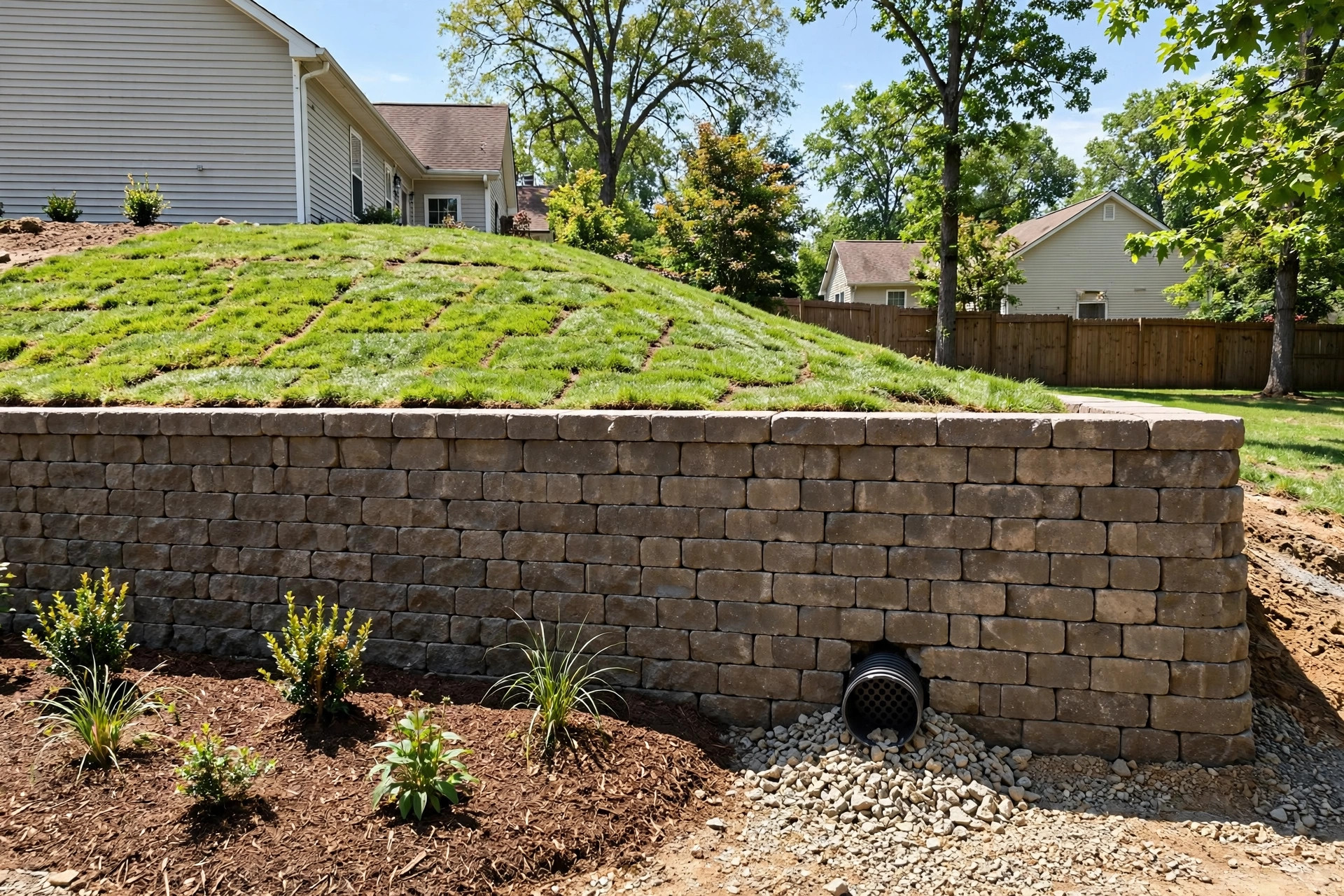

A retaining wall is not decoration. It is a structure that holds back tons of earth. When you read top rated retaining wall builders reviews before you hire, you take the most important step of the whole project. Reviews tell you more than price. They tell you how a builder keeps a schedule, handles problems, and treats a home. A failed wall can cost five times what the first wall cost. The right builder, chosen with care, can give you a wall that stands for forty years.
This guide will show you how to read builder reviews the way a contractor reads plans. You will learn what to look for in a builder, which wall types suit American homes, what the work should cost, and how to keep the finished wall in good shape.
Why Reviews Matter Before You Hire
A retaining wall project is not like painting a room. It involves heavy equipment, soil work, and drainage planning. If the drainage is wrong, the wall can fail in the first heavy rain. Reviews written by past customers show you how a builder works under pressure. They show whether the crew cleaned up the yard. They show whether the owner answered the phone when a crack appeared six months later.
Look past the star count. A company with a hundred honest four-star reviews is often safer than one with twelve perfect five-star reviews. The detailed reviews matter most. A review that names the project, the wall height, and the material used is worth more than ten reviews that say only that the crew was nice.
Reviews also reveal how a company handles permits. Many American towns require a permit for walls above three or four feet. Some also require a drawing stamped by an engineer. A good builder will pull the permit as part of the job. Reviews often mention this. If several reviewers say the builder skipped the permit, that is a clear warning. Long-running home guides such as This Old House often explain permit rules for outdoor structures, and they are worth reading before you sign a contract.
How to Read Reviews the Right Way: Top Rated Retaining Wall Builders Reviews
Not every review tells the truth. Some are written by the company itself. Some are written by competitors. Learning to spot the difference will save you money and trouble.
Real reviews have detail. They mention dates, weather problems, and exact costs. They often mention small complaints along with praise. A real customer might write that the wall looks great but the crew was two days late. A fake review is usually short, vague, and glowing. It says the company is the best and gives no facts.
Check the pattern of dates. If twenty five-star reviews all appeared in one week, they were probably solicited or paid for. Honest reviews spread out over months and years. Also check how the company answers bad reviews. A builder who responds with respect and offers to fix the problem is often a safe choice. A builder who argues or blames the customer will likely treat you the same way.
Read reviews on more than one site. Independent product testing groups like Consumer Reports remind readers that a single source can mislead. The same rule applies to contractor reviews. Check review sites, social pages, and the business listings of your state contractor board. A pattern that repeats on several sites is likely true.
What to Look for When You Choose a Builder
License and Insurance
Ask for the contractor license number. Then check it with your state board. The license should be current and should cover masonry or general construction work. Ask for proof of liability insurance and workers compensation. A builder without insurance can leave you with the bill if a worker is hurt on your land. This is not a small point. Equipment and stone are heavy, and accidents happen on real job sites.
Experience With Your Soil and Slope
Ask how many walls the builder has built in the last two years. Ask to see photos of walls at least as tall as yours. Soil matters. Clay soil swells when wet and pushes hard against a wall. Sandy soil drains fast but needs a solid footing. A builder who has worked in your county will know your soil and your local codes. National home and garden reference sites such as The Spruce have simple explanations of soil types that can help you ask better questions.
Written Estimates
Get three written estimates. Each should list the wall length, the wall height, the material, the footing, the drainage system, and the price of each part. If an estimate is just one number on one page, ask for detail. A serious builder will give it. When you compare estimates, compare the same work. The cheapest bid often leaves out drainage gravel or backfill. Those missing items show up later as extra charges or as a failed wall. Home improvement advice columns from Bob Vila often remind homeowners to compare bids line by line, and that advice applies strongly to wall projects.
Drainage and Engineering Plans
Every wall needs drainage. Behind the wall there must be gravel and a perforated pipe that carries water away. Water is the main cause of wall failure, and federal stormwater guidance from the EPA explains why controlling runoff protects structures like walls. Ask each builder to describe the drainage plan in plain words. If a builder says drainage is not needed, stop talking to that builder. For walls above four feet, many states require an engineer-stamped plan. Ask who provides it and what it costs. Do-it-yourself guides from Family Handyman show how drainage works behind small walls, which helps you judge the answers you get.
References You Can Visit
Ask for three references with walls that are at least three years old. Drive by them. Look at the wall face. Check for leaning, bulging, or missing caps. Then call the owners. Ask if the wall has moved. Ask if the builder came back when called. A wall that looks good after five years tells you more than any review written in the first month.
Common Types of Retaining Walls
Segmental Concrete Block
These are the most common walls in American yards. The blocks lock together without mortar. They come in many colors and textures. They suit walls from two to six feet high. Homeowners like them because they cost less than stone and go up fast. Material price lists at a national home center like Home Depot let you compare block costs before you meet a builder.
Natural Stone
Dry-laid or mortared stone walls look old and fine. They fit historic homes and country settings. They cost more because the stone must be cut and set by hand. A good stone mason is an artist. A bad one is just expensive. Reviews are especially important for stone work because the quality shows in every joint.
Pressure-Treated Timber
Timber walls are the cheapest option. They suit low garden walls under four feet. They do not last as long as block or stone. The wood will rot in time, even when treated. Block and stone suppliers such as Lowe’s carry the timbers and the gravel you need if you plan a small timber wall.
Poured Concrete
Poured concrete walls are strong and plain. They suit modern homes and tall walls. They cost more than block because of the forms and the labor. They can be faced with stone or brick for a better look.
Gabion Baskets
Gabions are wire baskets filled with stone. They suit slopes and drainage areas. They handle water well because water passes through the stone fill.
Cost and Price
Retaining wall costs vary widely across the United States. As a rough guide, a segmental block wall built by a contractor often costs between thirty and sixty dollars per square foot of wall face. A natural stone wall can cost sixty to one hundred dollars or more per square foot. A timber wall may cost twenty to forty dollars per square foot. These are contractor prices, not do-it-yourself prices. They include labor, material, equipment, and cleanup.
Height is the biggest cost driver. A six-foot wall is far harder to build than a three-foot wall. It needs a deeper footing, more gravel, and often an engineer. Site access matters too. If the truck cannot reach the work area, the crew must carry block by hand. That adds labor cost. Soil type matters. Rock must be dug out. Soft soil may need a deeper footing.
Watch for hidden costs. Some bids leave out hauling away the soil. Some leave out the final grading and sod. Some leave out the permit fee. Ask directly what is not included. An honest builder will answer at once. A vague answer is a warning.
Related exterior work can change the total project. Many homeowners fix their foundation at the same time as they build a wall. Our guide to foundation crack repair costs can help you budget for that work. Some owners also repair their stucco while the crew is on site. Our article on stucco repair costs covers that subject. And if new exterior doors are part of your renovation, see our exterior door replacement guide.
Get the payment schedule in writing. A common schedule is one third to start, one third at the halfway point, and one third at the end. Never pay the full price before the work is done. Hold the final payment until you have walked the wall with the builder and checked the drainage, the caps, and the grading.
Care and Upkeep
A well-built wall needs little care, but it needs some. Walk the wall twice a year, in spring and in fall. Look at the face. Check for leaning, bulging, or steps that have shifted. Look at the top. The caps should sit flat and tight. Look at the base. Soil should not be washing out from under the first course.
Keep water away from the top of the wall. Roof downspouts should not pour onto the soil behind the wall. That water adds weight and pressure. If you see a downspout aimed at the wall, add an extension to carry the water past it.
Pull weeds from the joints. Roots can push blocks apart over time. Do not plant trees close behind the wall. Keep heavy loads off the top edge. If a block cracks or a cap loosens, fix it soon. Small repairs are cheap. Call the original builder first if the wall is under warranty. Home exterior manufacturers like James Hardie and CertainTeed stress the same standard in their contractor programs: stand behind the work.
Safety
A retaining wall is a heavy structure, and a failing wall is dangerous. Learn the warning signs. A wall that leans forward is moving. A bulge in the face means pressure is building behind it. Water stains or wet spots on the face can mean the drainage pipe is blocked. Cracks that grow wider over time are a sign of movement. If you see any of these signs, keep people and pets away from the wall and call a builder or a structural engineer.
Do not try to fix a tall failing wall yourself. A four-foot wall holds back thousands of pounds of soil. A trained crew knows how to take it down safely and rebuild it. Homeowners can handle small repairs on low garden walls, but anything above three feet that shows movement needs a professional. During construction, keep children and pets away from the work area.
Frequently Asked Questions
How long should a retaining wall last?
A well-built concrete block or stone wall can last forty to sixty years. A poured concrete wall can last as long. A timber wall usually lasts fifteen to twenty years.
Do I need a permit to build a retaining wall?
In most American towns, you need a permit for walls above three or four feet. Some towns require a permit for any wall near a property line. Some require an engineer-stamped drawing for tall walls. Call your local building department before you start. A good builder will handle the permit as part of the job.
How high can a wall be without engineering?
Many builders and codes treat four feet as the practical limit for a simple gravity wall. Above that height, the forces grow fast, and an engineer should design the wall. Some states require engineering by law at certain heights. Do not let a builder talk you into a tall wall without a proper design.
What is the cheapest type of retaining wall?
Pressure-treated timber is usually the cheapest installed option for low walls. Segmental concrete block is the cheapest long-term option for most yards because it lasts much longer than timber.
How can I tell if a builder review is fake?
Fake reviews are usually short, vague, and written in glowing general terms. Real reviews mention dates, costs, materials, and small problems. Check several sites. A pattern of honest detail across many months is the mark of real reviews.
Should I get more than one estimate?
Yes. Get at least three written estimates. Each should break down the work in detail. The builder who explains the drainage plan in plain words is usually the builder who builds it right.
A Final Word
Reading top rated retaining wall builders reviews is the best hour you can spend before a wall project. The reviews will show you who is honest, who is skilled, and who stands behind the work. Pair what you learn with three written estimates, a clear drainage plan, and a fair payment schedule. The wall you get will hold back the hill and look good doing it for decades to come. A wall is a long-term part of your home. Choose the builder with the same care you would use to choose the home itself.
References
Bob Vila. (n.d.). Home improvement advice. https://www.bobvila.com CertainTeed. (n.d.). Building materials and exterior products. https://www.certainteed.com Consumer Reports. (n.d.). Product reviews and ratings. https://www.consumerreports.org Family Handyman. (n.d.). DIY home repair and maintenance. https://www.familyhandyman.com James Hardie. (n.d.). Fiber cement siding and exterior products. https://www.jameshardie.com Lowe’s. (n.d.). Home improvement products. https://www.lowes.com The Home Depot. (n.d.). Home improvement products. https://www.homedepot.com The Spruce. (n.d.). Home and garden advice. https://www.thespruce.com This Old House. (n.d.). Home renovation guidance. https://www.thisoldhouse.com U.S. Environmental Protection Agency. (n.d.). Protecting human health and the environment. https://www.epa.gov
Was this guide helpful?

About James Carter
The My Garden US editorial team writes practical, in-depth home and garden guides for American homeowners — tested advice, no fluff.
You May Also Like

Top Rated Vinyl Siding Installation Reviews: How to Read Them and Choose Well
March 7, 2026 0 views
Low Maintenance Seamless Gutter Guards Buying Guide
January 26, 2026 0 views
Top Rated Garage Door Replacement Reviews: A Plain Guide for Homeowners
January 20, 2026 0 views