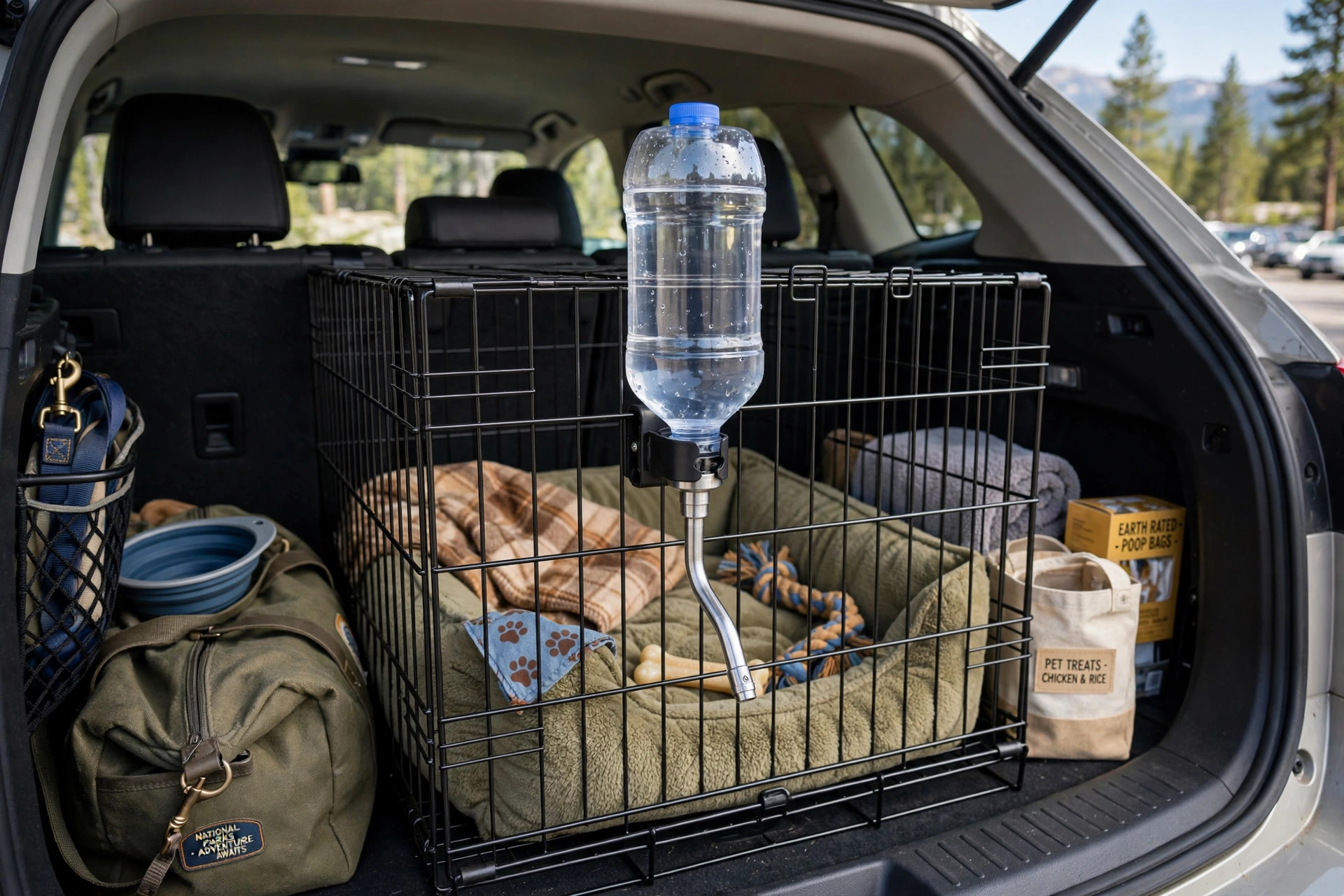

Long car rides, moves across state lines, and weekend trips all raise the same question. How does a dog get fresh water while riding in a crate? A loose bowl slides and spills. A paper cup tips in the first turn. A dog water dispenser for crate attachment travel solves this plain problem. It fastens to the crate door or the side bars and holds a small supply of water. The dog drinks from it at will. The water stays off the floor and out of the bedding.
A dog water dispenser for crate attachment travel is a small device. Yet it matters a great deal on a long drive. Dogs drink more water when they are warm or stressed. A crate can feel warm in the back of a car. A dispenser keeps water within reach at all times. This guide explains why it matters, what to look for, the main types on the market, what it costs, how to keep it clean, and how to use it safely.
Why Fresh Water Matters on the Road
A dog needs water every day. The need grows during travel. Heat builds up in a parked or slow-moving car. New sounds and motion raise a dog’s pulse. A nervous dog pants more. Panting uses up body water fast. A dog that cannot drink will grow tired, restless, and in time unwell. Even mild thirst makes a dog uneasy. It may whine, scratch at the crate, or refuse to settle.
Stops along the road are not always possible. Traffic, weather, and schedules can keep a family in the car for hours. A dispenser removes the worry. Water is there when the dog wants it. There is no need to pull over just to fill a bowl. The dog learns where the water is and drinks on its own. On a hot day this small comfort can keep a dog calm for miles.
Water also affects health in quiet ways. A dog that drinks enough keeps its coat and skin in better shape. Its kidneys work with less strain. Its mouth stays cleaner. Travel already strains a dog’s routine. Steady access to water keeps one part of that routine normal. Vets at PetMD note that steady hydration is one of the simplest forms of pet care, and the point holds double during travel.
What to Look for When You Choose One: Dog Water Dispenser for Crate Attachment Travel
Not every dispenser suits every crate or every dog. A few points of design make the difference between a clean crate and a wet one.
A Mount That Holds Firm
The mount is the heart of the device. It should grip the crate bars or hook onto the door without slipping. Wire crates and plastic travel crates use different bar sizes. Check the fit before you buy. A mount that twists loose at highway speed will spill water and startle the dog. The best mounts use clamps or screw knobs rather than weak springs. Some models hook onto a sturdy travel crate door so the whole unit moves when the door swings open.
The Right Size for Your Dog
Dispensers come in small, medium, and large sizes. A toy breed needs only a few ounces of water. A large breed can drink a pint in one sitting. Buy for your dog’s size and the length of your trip. A bottle that is too large weighs down the crate door. One that is too small will run dry before the next stop. Many makers print size guides on the box. Chewy lists size charts for most models it sells.
Materials That Stay Safe and Clean
Look for BPA-free plastic or stainless steel. Both are common. Plastic is light and cheap. Stainless steel lasts longer and holds fewer smells. Avoid dispensers with sharp edges near the mouth piece. Dogs chew. A mouth piece should stand up to light chewing without breaking off in small pieces. Dishwasher-safe parts make cleaning far easier.
A Drip-Free Valve
Most crate dispensers use one of two valves. A ball valve lets water out when the dog licks a metal ball. A nipple valve opens when the dog presses a small tip with its tongue. Both should seal shut when the dog steps away. Read reviews on The Spruce Pets to see which valves leak least. A leaky valve will soak the crate pad and annoy the dog.
Types of Crate Water Dispensers
Four main styles are sold today. Each has its fans.
Bottle and Valve Sets
The most common type is a water bottle with a valve spout. The bottle hangs on the crate wall. The dog licks the valve and water flows. These are cheap, light, and easy to refill. They suit most dogs that already know how to drink from a bottle. The downside is training. A dog raised on bowls may not trust the valve at first.
Hanging Cup Dispensers
These use a small cup that hooks inside the crate. A tube from a bottle keeps the cup full. The dog drinks from an open cup, which feels natural. The cup is shallow, so spills are small. The mount must be strong or the cup will swing with the car. These work well for small and medium dogs.
Gravity Bowls
A gravity bowl holds a large bottle upside down over a bowl. Water fills the bowl as the dog drinks. Some gravity bowls can clip or strap to a crate. They give a big water supply for large dogs. The weak point is size. They take up crate space and can shift in a moving car unless they are strapped down well.
No-Spill Travel Bowls
These are not fixed to the crate at all. They have a rim and a floating plate that lets in only small sips. They spill far less than a plain bowl. They suit owners who move the bowl in and out of the crate at stops. They are less handy for constant access on the road, but they are simple and wash well.
How to Train Your Dog to Use One
A valve dispenser is useless if the dog will not touch it. Most dogs learn in a day or two with calm practice. Start at home, not on the road. Mount the dispenser on the crate a few days before your trip. Fill it with fresh water. Put a small smear of peanut butter on the valve tip. Let the dog explore. When the dog licks and water comes out, praise it warmly.
Do this a few times each day. Keep the regular water bowl nearby at first. A thirsty dog will try new things faster than a full one, so train before meals, not after. Within a day most dogs drink from the valve on their own. Nervous dogs may take longer. Never force the dog’s mouth onto the spout. That creates fear and sets training back. The American Kennel Club has good notes on crate comfort, and a calm crate is the base of calm travel.
Once the dog uses the valve at home, try a short drive. Mount the dispenser as you would for the real trip. Watch how the dog handles it in a moving car. Some dogs drink less in motion. That is fine. The water is there when they want it.
Cost and Price Guide
Prices are modest. A basic bottle and valve set sells for about ten to fifteen dollars. Hanging cup models run fifteen to twenty-five dollars. Gravity bowls for crates cost twenty to thirty dollars. Stainless steel models cost more, often thirty to forty dollars, but they last for years. Replacement valves sell for a few dollars.
Buy from a trusted seller. Large pet stores like Petco and PetSmart carry the main brands. Online, Chewy and The Home Depot list many models with honest reviews. Look for a return policy. A valve that leaks in your kitchen will leak on the road. Test the unit at home for a day before a long trip. The cost of a good unit is small next to vet bills for a dehydrated dog.
Care and Upkeep
Clean the dispenser every two to three days in daily use. Water grows slime when it sits. Empty the bottle. Wash it with warm soapy water. Rinse well. A bottle brush reaches the corners. Clean the valve with a small brush or a cotton swab. Run plain water through it before you refill.
Do not let water sit for a week. Even sealed water goes stale. Refill with fresh water at each travel day. In hot weather, check the bottle at every stop. Sun through car windows heats the water fast. Lukewarm water still hydrates, but dogs prefer cool water and drink more of it.
Check the mount once a month. Screws loosen with road shake. Clamps wear thin. A worn mount can drop the bottle onto the dog’s head. Replace broken parts right away. Spare parts are cheap. Good Housekeeping testing guides stress checking wear points on any gear a dog uses daily, and a crate dispenser is no different.
Safety on the Road
A dispenser is a tool, not a substitute for care. Never leave a dog alone in a hot car, dispenser or not. Temperatures inside a parked car can climb to deadly levels in minutes. The ASPCA warns of this danger every summer. A water dispenser does not change that rule.
Keep the dispenser low and to the side of the door. Do not mount it where it blocks the door latch. You must be able to open the crate fast in an emergency. Make sure the dog can lie down fully without pressing against the bottle. A bottle that crowds the dog will make the crate feel small.
On long trips, stop every two to three hours. Let the dog out to walk, stretch, and relieve itself. Refill the dispenser at each stop. Check that the valve still flows. A valve can jam with dust from rest areas. A quick lick test takes five seconds.
For puppies, choose a small unit with a gentle valve. Puppies chew hard and can break weak plastic. For old dogs, keep the water easy to reach. An older dog may drink lying down. Match the mount height to the dog’s mouth level. Small details like this keep travel kind.
Dogs that travel with extra gear, like travel gear for small dogs or dog ramps for SUVs, often do best with a full travel kit packed in one place. Add the dispenser, a spare bottle, and a cleaning brush to that kit. When every piece is in one bag, nothing is forgotten on travel morning.
Frequently Asked Questions
Will the valve leak in a moving car?
A good valve should not leak. Ball and nipple valves seal by spring pressure. Road shake can cause a drop or two, but a steady leak means a bad seal. Replace the valve or the whole unit. Test it at home first. Hang it on a crate overnight and check for wet spots in the morning.
Can a dog that only knows bowls learn to use one?
Yes. Most dogs learn in one to three days. Use peanut butter on the tip. Keep the old bowl nearby while the dog learns. Praise the dog when it drinks from the valve. Some stubborn dogs do better with a hanging cup, which drinks like a bowl.
How much water should I put in for a long drive?
Fill the bottle full at the start of each day. A medium dog drinks about an ounce of water per pound of body weight each day, and more in heat. For a six-hour drive, a 20-ounce bottle suits a medium dog. Large dogs may need two bottles or a gravity bowl. Check and refill at every stop.
Is plastic safe, or should I buy stainless steel?
Food-grade BPA-free plastic is safe for dogs. Stainless steel is tougher and holds fewer smells. It also costs more. Either works. Avoid unknown brands with no safety labels. Wirecutter and Consumer Reports both advise buying pet gear from known makers.
Can I leave water in the bottle between trips?
No. Empty and wash the bottle after each trip. Standing water grows bacteria and slime. Store the unit dry. Before the next trip, wash it again and fill it fresh. This habit takes five minutes and keeps the water clean.
Does a dispenser replace stopping for water?
No. It is a helper, not a replacement. Stops let the dog walk, stretch, and drink deeply. The dispenser covers the hours between stops. Together they keep the dog comfortable for the whole trip.
A Final Word
A dog water dispenser for crate attachment travel is a small purchase with an outsized payoff. It keeps water clean, dry, and always within reach. It cuts stops, cuts spills, and cuts worry. Choose a firm mount, the right size, and a drip-free valve. Train the dog at home first. Clean the unit often. Used well, it turns long miles into easy miles for both dog and owner.
For more background, see Petco and PetSmart.
References
American Kennel Club. (n.d.). Dog care and training resources. https://www.akc.org ASPCA. (n.d.). Pet care and animal welfare resources. https://www.aspca.org Chewy. (n.d.). Pet supplies. https://www.chewy.com Petco. (n.d.). Pet supplies and services. https://www.petco.com PetMD. (n.d.). Pet health information. https://www.petmd.com PetSmart. (n.d.). Pet supplies and services. https://www.petsmart.com The Home Depot. (n.d.). Home improvement products. https://www.homedepot.com The Spruce Pets. (n.d.). Pet care guides and product reviews. https://www.thesprucepets.com
Was this guide helpful?

About Jennifer Lee
The My Garden US editorial team writes practical, in-depth home and garden guides for American homeowners — tested advice, no fluff.
You May Also Like
The Best Dog Playpen for Puppies Indoor Outdoor: A Plain Guide
February 8, 2026 0 views
Pet Water Fountain for Small Dogs and Cats: A Complete Guide
January 24, 2026 0 views
Best Dog Muzzle for Vet Visits and Grooming
June 27, 2026 0 views