
Every cat owner knows the problem. The cat uses the litter box. Then the cat walks away. Tiny grains of litter stick to the paws. Soon they are on the floor. They are in the hall. They are on the bed. A cat litter mat to trap litter tracking is the simple fix for this daily mess. It sits in front of the box. The cat steps on it after each visit. The mat catches the loose grains before they spread through the house. This guide explains how these mats work, which kinds are best, and how to choose the right one for your home.
Why a Litter Mat Matters
Litter tracking is one of the most common complaints among cat owners. A cat leaves the box with litter on the paws every time. Fine clay litter sticks well. Crystal litter rolls far. Even corn and paper litters leave bits behind. Without a mat, these grains travel across the room. They end up under tables and in carpets. They stick to socks. They scratch hard floors over time.
A good mat stops most of this. It does not end tracking fully. No mat catches every grain. But a well chosen mat can cut the mess by a large share. Less litter on the floor means less sweeping. It means a cleaner home and less work each week. For owners of several cats, the difference is even greater. More cats mean more trips to the box. Each trip leaves more grains behind.
There is also a health angle. Litter on the floor can carry dust and waste particles. Small children play on floors. Keeping litter in one area lowers the risk. Pet care guides, such as those published by ASPCA, stress the need to keep litter areas clean and separate from living space.
How Litter Trapping Mats Work: Cat Litter Mat to Trap Litter Tracking
The Basic Idea
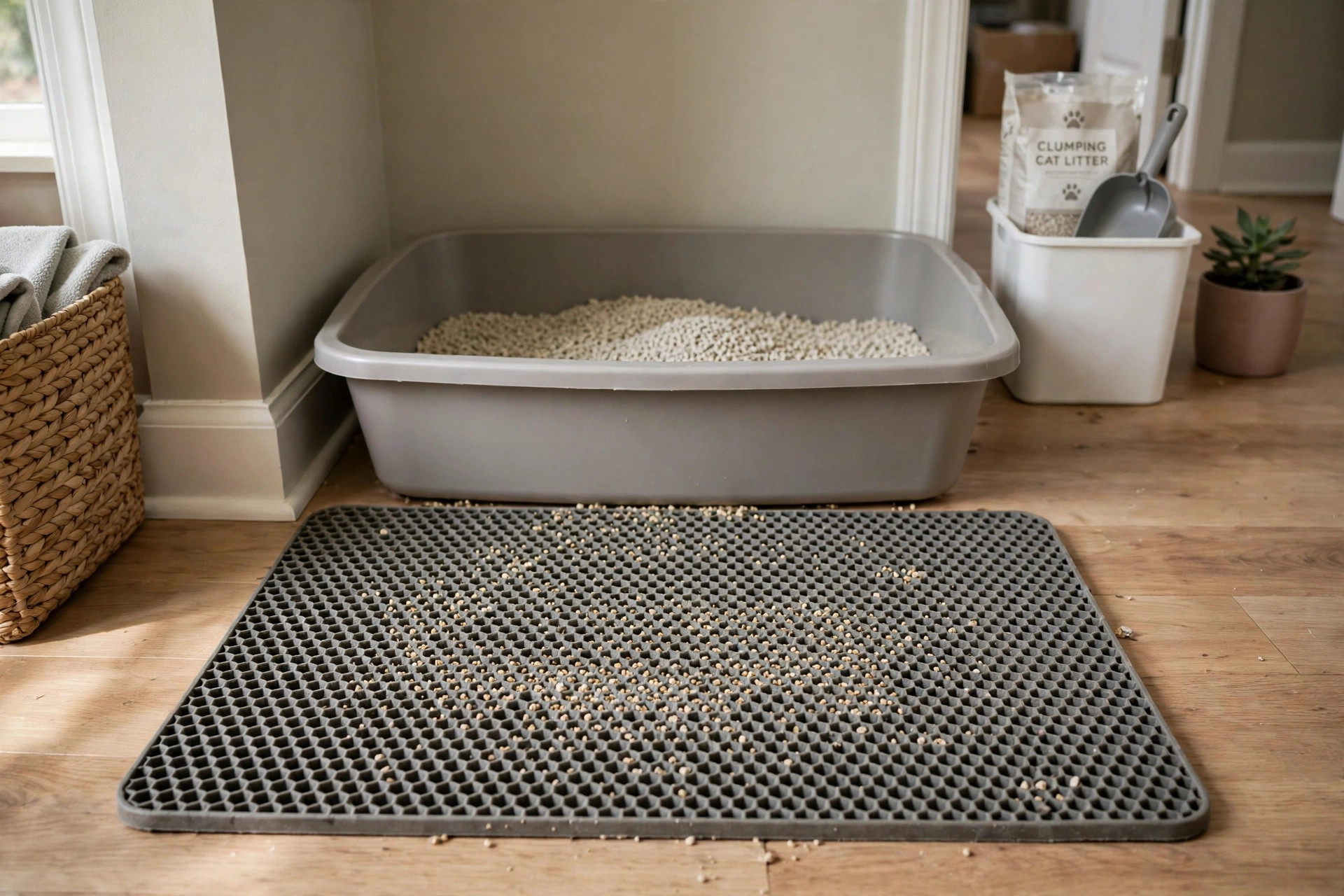
The design is simple. The mat has a rough top surface. It may have loops, holes, or grooves. When the cat walks across it, the loose grains fall off the paws. The grains sink into the mat instead of staying on the feet. Some mats have two layers. The top layer has holes. The grains fall through to a bottom tray. The cat walks on a clean top while the litter collects below.
Depth matters. A flat cloth does little. A mat with raised loops gives the grains somewhere to go. The cat’s weight presses the paws into the surface. This shakes the loose litter free. It works best when the mat is long enough for several steps. One step is not enough. Three or four steps clean the paws well.
Why Placement Matters
Place the mat right at the box exit. Cats choose the shortest path out. If the mat sits two feet away, the cat will skip it. Put it flush against the box front. For boxes with a side entry, place the mat at that side. The larger the mat, the more steps the cat takes on it. Many owners use a mat that is twice as long as the box is wide.
What to Look for When You Choose
Size
Size is the first point to check. A small mat helps a little. A large mat helps a lot. Measure the area in front of your box. Then pick a mat that covers it with room to spare. A good rule is to allow at least two full cat steps on the mat. For most cats, a mat that is 30 by 24 inches works well. Larger homes with several boxes may need bigger mats or two mats side by side.
Also think about the box itself. Many owners place the mat partly under the box. This stops the mat from sliding. It also catches litter that spills over the edge during digging. A large litter trapping mat that extends under the box gives full coverage.
Material
Mats come in several materials. Each has strengths.
PVC loop mats have curly strands on top. They catch fine clay litter well and are soft on paws, but they may not last as long as rubber mats.
Silicone and rubber mats have raised nubs or grooves. They grip the floor well and clean with a simple rinse. They suit crystal and pellet litter.
Double layer honeycomb mats use a top sheet with holes over a bottom tray. Litter falls through and stays trapped. These hold the most litter and need shaking out less often.
Carpet style mats look like small rugs. They suit homes where looks matter. They catch litter, but they hold it tight. Only vacuuming cleans them well.
Waterproof Backing
A waterproof base keeps liquid off the floor. Cats sometimes miss the box. Urine can run down the side and pool under it. Without a waterproof layer, the mat soaks through. The floor below gets wet. Look for mats that list a waterproof or water resistant base. Rubber backed mats do this job well. Some waterproof cat litter mat designs add a raised edge to hold spills.
Easy Cleaning
You will clean the mat often. Pick one that makes this simple. Shake out mats work well for daily care. Take the mat outside and shake it over the trash. Vacuum mats suit indoor cleaning. Rinse mats go in the tub or shower. Machine wash mats are rare but exist. Check the care label before you buy. A mat that is hard to clean will end up unused.
Types of Litter Trapping Mats
Loop Mats
Loop mats use soft coiled strands. They feel gentle under the paws, and most cats accept them at once. They catch fine and medium litter well. They are light and easy to move. The weak point is wear: heavy use flattens the loops over time. Pet supply guides at The Spruce Pets note that loop mats suit single cat homes best, where wear is slower.
Double Layer Honeycomb Mats
These have two sheets. The top sheet has large holes, and the bottom sheet holds what falls through. You lift the top to empty the bottom. They trap the most litter per square inch and work with all litter types, even large pellets. The cost is higher, and the size is often larger too, which is a plus for tracking control.
Textured Rubber and Silicone Mats
Rubber mats use nubs, ridges, or grooves. They are tough and last for years. They grip tile and wood floors and do not slide. Cleaning is easy: rinse them in the shower or wipe them down. They are less soft than loop mats, and some cats dislike the feel at first. Most adjust within a few days.
Scatter Control Rugs
These look like small area rugs. They suit living rooms and bedrooms where the box sits in view. They catch a fair amount of litter and hide it well, so the area looks clean. The trade off is cleaning: you must vacuum them well, since shaking does not free deep grains. They also absorb liquid, so they are a poor pick if your cat misses the box often.
Cost and Price
Prices run from about ten dollars to about forty dollars. Small basic loop mats sit at the low end. Large double layer mats sit at the high end. Brand name mats cost more. Store brand mats cost less. Price often tracks with size and build quality. A cheap thin mat may need replacement in six months. A well made rubber mat can last for years.
Think about cost per year, not just the price tag. A twenty five dollar mat that lasts three years costs less than a ten dollar mat replaced each year. Online pet retailers, such as Chewy and PetSmart, often list mats across this full range. Home stores like Home Depot and Lowe’s also carry pet mats in their cleaning aisles.
Watch for multipacks. Some sellers offer two mats for a small extra cost. This lets you use one while the other is being washed. For homes with two boxes, a pair is worth the money.
Care and Upkeep
Daily care takes less than a minute. Shake the mat out over the trash. This works best for loop and honeycomb mats. Do it each day or each time you scoop the box. Litter that sits in the mat too long gets ground in. It becomes harder to remove.
Weekly care depends on the mat type. Vacuum carpet style mats each week. Rinse rubber mats in the tub with warm water and mild soap. Avoid harsh cleaners: strong scents may put the cat off the area. Let the mat dry fully before you put it back. A damp mat under a box grows mildew.
Check the mat each month for wear. Flattened loops catch less litter. Torn edges let litter escape. Cracked rubber loses its grip. Replace the mat when it no longer does its job. Most mats last one to three years. Heavy use by several cats shortens the life.
Odor control matters too. Litter dust holds smell. A monthly wash keeps the mat fresh. Baking soda sprinkled on a dry mat, left for an hour, then vacuumed off, helps with odor. Keep the area around the box aired.
Safety
Mats are safe for most cats. Still, a few points deserve care.
Pick non toxic materials. Cheap mats may use strong glues or dyes. These can irritate paws. They can also give off fumes when new. Air a new mat out for a day before you place it. Reputable makers list their materials. Product safety resources from the U.S. Consumer Product Safety Commission remind buyers to check pet products for small parts and toxic coatings.
Watch kittens. Very young kittens chew soft mats. Loose loops can catch tiny claws. If you have kittens, pick a firm rubber mat with no loose strands. Check the mat often for bites and tears.
Avoid sharp edges. Some stiff mats have rough cut edges. These can scratch paws. Run your hand over the mat before you buy. If it feels rough to you, it will feel rough to the cat.
Keep the mat flat. A curled edge is a trip risk for old cats. Heavy mats stay flat on their own. Light mats may need a non slip pad under them. Tape made for rugs also works.
Frequently Asked Questions
Do litter mats work with all types of litter?
Yes, but some pairings work better than others. Loop mats suit fine clay litter. The small grains catch in the loops well. Rubber nub mats suit crystal and pellet litter. The firm surface knocks the larger pieces off the paws. Honeycomb double layer mats work with all types. If you use a self cleaning litter box for busy cat owners, the mat still helps. Even the best box leaves some grains on paws.
How big should the mat be?
Bigger is better. Aim for a mat that gives the cat at least two full steps after leaving the box. For most cats, 30 by 24 inches is a good start. Large cats need more room. Homes with several cats gain from extra large mats. If litter still reaches the floor past the mat, add a second mat or switch to a larger size.
Can I wash a litter mat in the washing machine?
Some can go in the machine. Most cannot. Rubber and silicone mats may crack in the wash. Loop mats may shed strands that clog the machine. Check the care label first. When in doubt, wash by hand in the tub. Warm water and mild soap clean most mats well. Let the mat dry in the air. Heat from a dryer can warp rubber and melt glue.
Will my cat refuse to step on the mat?
Most cats accept a mat at once. A few are fussy. Start with a soft loop mat, which feels most like carpet. Place it flat with no curls. Put a few treats on it so the cat walks over it by choice. If the cat walks around the mat, make the mat the only path out of the box area. Give it a week. Nearly all cats adjust. Advice from feline health sources like PetMD notes that cats accept new textures best when the change comes with no stress.
How often should I replace the mat?
Replace it when it stops working. Signs include flattened loops, torn spots, and a smell that washing will not remove. For one cat, a good mat lasts two to three years. For several cats, plan on one to two years. Rubber mats often outlast loop mats. Keep a spare on hand so the change is quick.
Does a mat help with litter box odor?
A little. The mat holds litter dust, which holds smell. Shaking it out daily keeps the dust down. But the mat is not an odor cure. Scoop the box daily and change the litter on schedule. Breed and health guides from the American Kennel Club cover dogs, while cat care groups stress the same rule for cats: clean boxes smell less, and no mat can fix a dirty box.
A Final Word
A cat litter mat to trap litter tracking is a small buy with a large payoff. It cuts the daily mess. It guards your floors. It makes the home feel cleaner with less work. Pick a large size. Pick a material that suits your litter. Keep it clean.
Pair the mat with good box habits. Scoop each day. Keep the box in a calm spot. Give each cat its own box plus one extra. A best cat tree for large cats sturdy tall gives climbing fun, and a best cat scratching post tall for large cats saves the furniture. Together, these simple steps make a home that suits both the cat and the owner.
References
American Kennel Club. (n.d.). Dog care and training resources. https://www.akc.org ASPCA. (n.d.). Pet care and animal welfare resources. https://www.aspca.org Chewy. (n.d.). Pet supplies. https://www.chewy.com Lowe’s. (n.d.). Home improvement products. https://www.lowes.com Petco. (n.d.). Pet supplies and services. https://www.petco.com PetMD. (n.d.). Pet health information. https://www.petmd.com PetSmart. (n.d.). Pet supplies and services. https://www.petsmart.com The Home Depot. (n.d.). Home improvement products. https://www.homedepot.com The Spruce Pets. (n.d.). Pet care guides and product reviews. https://www.thesprucepets.com U.S. Consumer Product Safety Commission. (n.d.). Product safety information. https://www.cpsc.gov
Was this guide helpful?

About Lisa Anderson
The My Garden US editorial team writes practical, in-depth home and garden guides for American homeowners — tested advice, no fluff.
You May Also Like
Pet Gate with Cat Door for Stairway Safety: A Complete Guide
July 8, 2026 0 views
Cat Scratching Lounge for Large Cats Sturdy: A Complete Guide
May 23, 2026 0 views
A Cat Litter Box with Top Entry for Dogs: What to Know Before You Buy
April 22, 2026 0 views