
Why a Pet Gate with Walk Through Door for Kitchen Makes Sense
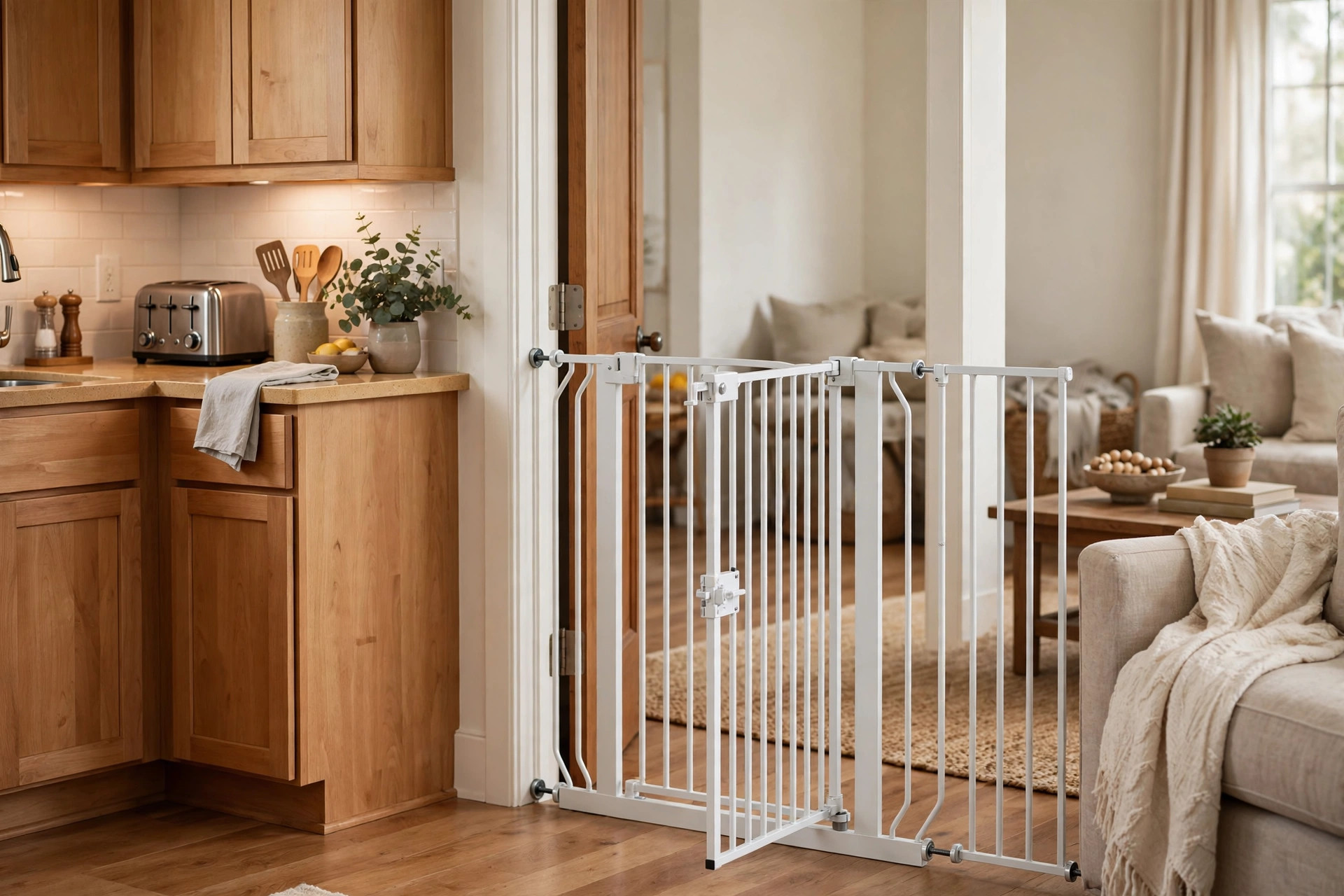
The kitchen is the busiest room in most homes. Hot stoves, sharp knives, dropped food, and open ovens all sit within easy reach of a curious dog or cat. A pet gate with walk through door for kitchen use gives the animal a clear boundary while still letting people pass through with ease. You do not have to step over the gate or move it aside every time you carry a tray of food. You simply open the small door, walk through, and close it behind you.
Many pet owners once used baby gates or simple barriers. Those work, but they get in the way. A gate that you must lift and set aside several times a day soon becomes a nuisance. A pet gate with walk through door solves that problem. The built-in door swings open and shuts on its own. Most models lock with a simple latch that a child or pet cannot open. This makes daily life smoother and the kitchen safer for everyone.
What to Look for When You Choose One: Pet Gate with Walk Through Door for Kitchen
Size and Fit
Start by measuring the doorway or opening where the gate will stand. Most kitchen doorways in American homes run between 28 and 42 inches wide. A pet gate with walk through door for kitchen openings often comes with extension panels. These panels let you widen the gate to fit larger openings. Measure twice before you buy. Write down the width at the top, middle, and bottom of the opening. Walls are not always straight.
Height matters too. A gate that is 30 inches tall suits most small and medium dogs. For large breeds or strong jumpers, look for gates 36 to 44 inches tall. Cats that climb will test any gate, so height plus a sturdy latch is your best defense.
The Walk-Through Door
The door is the part you will use the most. Look for a door that swings in both directions. A two-way swing means you can walk through from either side with your hands full. A self-closing door is a strong plus. It shuts behind you if you forget to close it. The latch should lock firmly but open easily for adults. Test the latch in the store or read reviews about it online. A latch that sticks will annoy you every day.
The width of the door matters as well. A door that is at least 16 inches wide lets most adults pass without turning sideways. Some doors are as wide as 20 inches. If a family member uses a wheelchair, check that the door clears it.
Materials
Pet gates come in wood, metal, and plastic. Metal gates, often steel, are the strongest. They hold up well against large dogs that push or scratch. Wood gates look nicer in a traditional kitchen. They blend with cabinets and trim. Plastic gates are light and easy to move, but they do not last as long under a heavy dog. For a kitchen, a wipe-clean surface is a real help. Cooking steam and splashes land on the gate. Metal with a coated finish wipes clean in seconds.
Mounting Style
There are two main ways to put up a pet gate with walk through door for kitchen use. Pressure-mounted gates hold in place with rubber bumpers that press against the walls. You need no tools and leave no holes. They are good for renters. But a strong dog can knock a pressure-mounted gate loose. Hardware-mounted gates screw into the wall or door frame. They are much more secure. For a kitchen near a hot stove, the extra security of a hardware-mounted gate is worth the small holes in the trim.
Some gates offer both modes. You can pressure-mount them for light use or add screws for full security. This is a good middle path.
Types of Pet Gates with Walk-Through Doors
Straight Doorway Gates
These fit a single doorway. They are the most common type. Most include the walk-through door, a locking latch, and one or two extension panels. A straight doorway gate is the best pick when your kitchen has a clear, standard doorway.
Wide Opening Gates
Some kitchens open onto a living room with a wide arch or a double-wide entry. Wide opening gates span 60 inches or more. They often have two or more panels and sometimes two walk-through doors. They cost more, but they fit spaces where a standard gate would fall short.
Freestanding Gates
A freestanding gate stands on its own with feet or a frame. It needs no wall contact at all. You can move it from room to room. A freestanding pet gate with walk through door for kitchen use is handy if you want to block different openings on different days. The trade-off is stability. A large dog can push a freestanding gate aside. Use these mainly for small dogs or cats.
Extra-Tall Gates
These rise to 44 inches or more. They suit tall doorways and strong jumpers. Many extra-tall models still include a walk-through door at standard height. Check that the door itself is tall enough for easy passage.
Cost and Price
Prices vary with size, material, and brand. A basic pressure-mounted pet gate with walk through door for kitchen doorways often costs between 40 and 80 dollars. A sturdy metal hardware-mounted model runs from 80 to 150 dollars. Wide opening gates and extra-tall models can cost 150 to 250 dollars. Freestanding gates sit in the middle range, often 60 to 120 dollars.
Think about cost over time. A cheap plastic gate that a large dog breaks in a month costs more in the end than a solid steel gate that lasts for years. Read product reviews before you buy. Look for comments about the latch, the finish, and how the gate held up after six months. Sites like Chewy and The Spruce Pets carry reviews from pet owners who use these gates every day.
Installation: Step by Step
Installing a pet gate with walk through door for kitchen use is a simple job. Most people finish in under half an hour.
1. Measure the opening at the top, middle, and bottom. Use the smallest number. 2. Lay out the gate and any extension panels on the floor. Read the instruction sheet. 3. If you use a pressure mount, place the gate in the opening and turn the tension knobs until the rubber bumpers grip both sides. The gate should not wobble. 4. If you use a hardware mount, mark the screw holes on the wall. Drill small pilot holes. Fasten the mounting cups or brackets with the screws provided. 5. Test the walk-through door. It should swing both ways and lock with a clear click. Adjust the latch if needed. 6. Walk through it a few times with your hands full. Make sure nothing catches.
Keep the instructions in a drawer. You may need them if you move the gate to another room.
Care and Upkeep
A kitchen gate picks up grease, steam, and dust. Wipe it down once a week with a damp cloth and mild soap. Avoid harsh cleaners on coated metal. They can dull the finish. Check the tension knobs or screws once a month. Daily use can loosen them. Tighten as needed.
Look at the latch every few weeks. Pet hair and crumbs can build up in the mechanism. A quick wipe keeps it working. If the door stops closing on its own, check the hinges. A drop of household oil on a squeaky hinge solves most problems.
For wood gates, watch for chew marks. Some dogs test the wood with their teeth. Bitter apple spray on the lower rails can stop chewing. Refinish scratched wood with a pet-safe sealant.
Safety Tips
Safety is the whole point of the gate. A few simple habits keep it working as it should.
– Always close and latch the walk-through door behind you. An open door teaches the pet that the gate does not matter. – Keep the area near the gate free of chairs or stools. Pets use furniture as a stepping stone over the gate. – Do not let small children swing on the gate or hang from it. Gates are made to hold pets in or out, not to bear a child’s weight. – Check the bar spacing before you buy. Gaps wider than three inches can trap a small dog’s head. For puppies and small breeds, look for vertical bars spaced two to three inches apart. – Never leave a puppy unsupervised with a gate that has wide slats. Curious puppies try to squeeze through. – If the gate has a low step-over bar at the bottom, keep it clear of cords and clutter. It is a trip point for adults carrying dishes.
The American Kennel Club and ASPCA both stress that barriers like gates should be part of a wider plan for pet safety at home. Training matters as much as the gate. Teach your dog that the kitchen line is firm. Reward calm waiting at the gate.
Training Your Pet to Respect the Gate
A gate works best when the pet accepts it. Start training the day you install it. Let the dog sniff the gate and the door. Give a treat for calm behavior near it. Walk through the door yourself and close it. Ask the dog to sit on the other side. Reward the sit.
Never punish the dog for touching the gate. Instead, redirect. If the dog paws at the gate, ask for a sit and reward it. Short training sessions of five minutes work better than long ones. Within a week or two, most dogs learn that the gate is simply part of the house. Cats take longer. Be patient. A cat that cannot be kept out by a standard gate may need an extra-tall model.
Some owners place the pet’s bed just outside the gate. This gives the animal a comfortable spot near the family without entering the kitchen. A familiar bed and a chew toy turn the boundary into a pleasant routine.
Alternatives Worth Knowing
A pet gate with walk through door for kitchen use is not the only option. A dog crate can keep a pet safe during cooking, and many owners use one for anxious dogs that need an escape-proof den. An automatic feeder with a camera can keep a pet occupied in another room while you cook. For cat owners, a sturdy cat tree in the living room gives the cat a better place to be than the kitchen counter.
Still, for most homes, the walk-through gate is the simplest daily answer. It blocks the danger zone without shutting the pet away from the family.
Where to Buy
You can buy a pet gate with walk through door for kitchen use at most large pet and home stores. Home Depot, Lowe’s, and Wayfair carry a wide range of models. Pet specialty stores and their websites, like Chewy, often have the best reviews and return policies. For health and behavior questions about your pet, trusted sources include PetMD and the ASPCA. If you have safety concerns about a gate design, the Consumer Product Safety Commission publishes recalls and safety guidance.
FAQ
How wide should a pet gate with walk through door for kitchen doorways be?
Measure your doorway first. Most kitchen doorways are 28 to 42 inches wide. Buy a gate that fits your exact opening, using extension panels if needed. A gate that is too narrow will not stay in place. One that is too wide will not fit.
Are pressure-mounted gates safe for a kitchen?
They are safe for calm, small to medium pets. For large or strong dogs, choose a hardware-mounted gate. The screws hold the gate firm even when the dog pushes. Near a hot stove, the stronger mount is the safer choice.
Can cats get through a pet gate with a walk-through door?
Many cats can jump a standard gate. If keeping a cat out of the kitchen matters, buy an extra-tall gate, 44 inches or higher. Keep counters clear so the cat has no landing spot. Some owners add a cat-proof screen panel above the gate.
What is the best material for a kitchen pet gate?
Coated metal is the best all-around pick. It is strong, easy to wipe clean, and stands up to steam and splashes. Wood looks warm and suits traditional kitchens but needs more care. Plastic is light and cheap but weak against large dogs.
How do I stop my dog from chewing the gate?
Give the dog a chew toy near the gate to redirect the habit. Apply a bitter apple spray to the rails. Make sure the dog gets enough exercise and mental play each day. A tired dog chews less.
Do walk-through doors lock?
Yes. Every good pet gate with walk through door includes a latch. Most latches need a two-step motion, like lift and pull, that pets cannot copy. Check that the latch locks with a clear click each time you close the door.
A Final Word
A pet gate with walk through door for kitchen use is a small change that pays off every day. It keeps pets away from hot stoves, sharp tools, and dropped food. It lets you move freely while you cook. Choose the right size, mount it firmly, and teach your pet to respect it. The kitchen stays safe, and the whole house runs more smoothly.
References
American Kennel Club. (n.d.). Dog care and training resources. https://www.akc.org ASPCA. (n.d.). Pet care and animal welfare resources. https://www.aspca.org Chewy. (n.d.). Pet supplies. https://www.chewy.com Lowe’s. (n.d.). Home improvement products. https://www.lowes.com PetMD. (n.d.). Pet health information. https://www.petmd.com The Home Depot. (n.d.). Home improvement products. https://www.homedepot.com The Spruce Pets. (n.d.). Pet care guides and product reviews. https://www.thesprucepets.com U.S. Consumer Product Safety Commission. (n.d.). Product safety information. https://www.cpsc.gov Wayfair. (n.d.). Furniture and home goods. https://www.wayfair.com
Was this guide helpful?

About Jennifer Lee
The My Garden US editorial team writes practical, in-depth home and garden guides for American homeowners — tested advice, no fluff.
You May Also Like

How to Choose the Best Dog Carrier for Airline Travel Approved for the Cabin
June 21, 2026 0 views
A Heated Outdoor Cat House for Multiple Cats: A Complete Guide
April 27, 2026 0 views
Heated Outdoor Water Bowl for Winter Pets: A Practical Guide
August 19, 2026 0 views