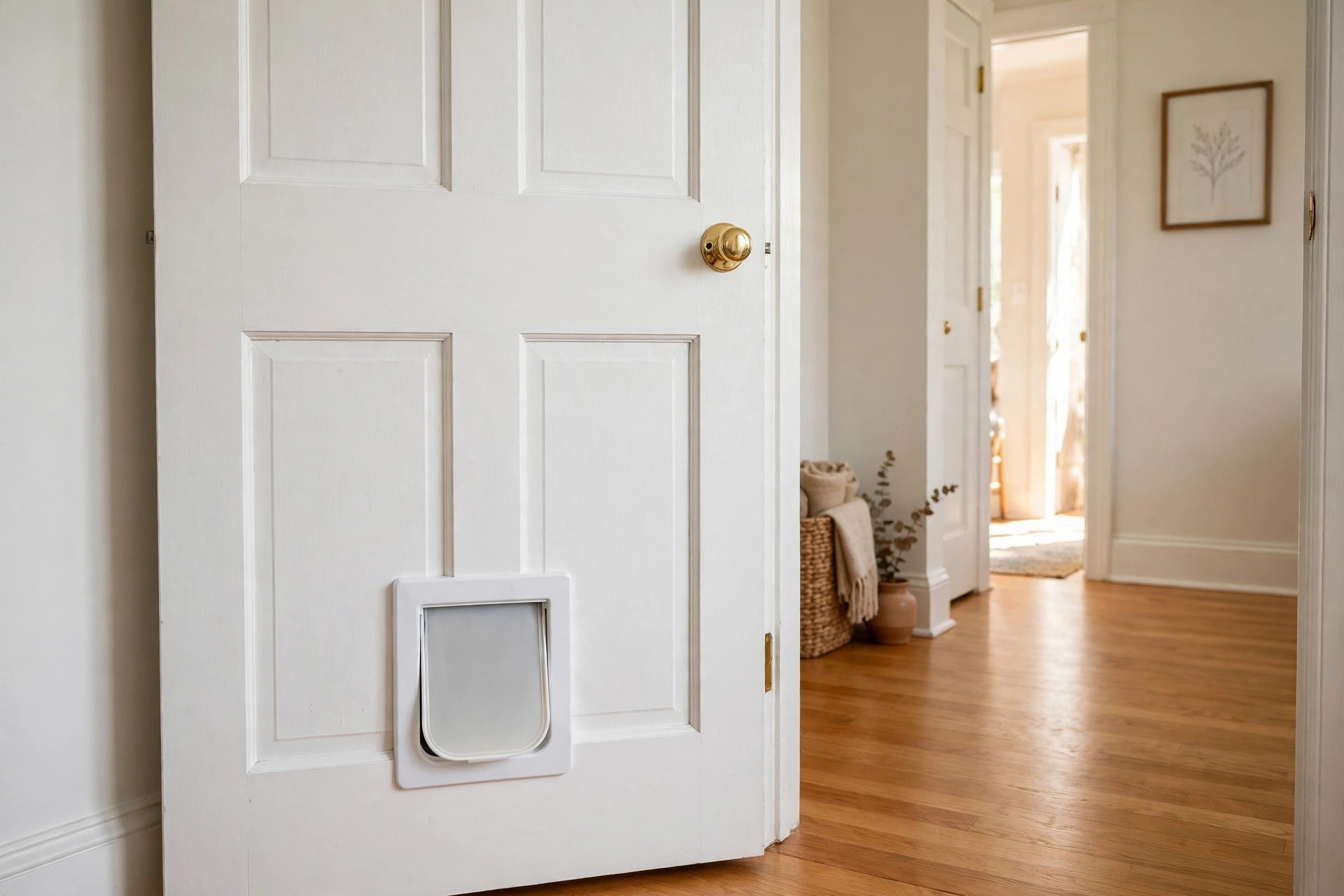

A cat door for interior door installation easy enough for a beginner sounds like a tall order, but it is not. Cats like to roam. They like to come and go as they please. A closed door does not stop a determined cat for long. Most cats will scratch, paw, or cry at a shut door. That noise wears on owners and damages paint and wood. A small pet door fitted low in an interior door solves the problem. It gives the cat free passage between rooms. It keeps the home quiet. And the job is simpler than most people expect. With a basic template, a saw, and a steady hand, most owners finish in one afternoon.
This guide walks through every part of the task. It covers why an interior cat door is worth doing, how to pick the right flap, the types on the market, typical cost, care of the finished door, and safety points. It closes with answers to the questions owners ask most.
Why an Interior Cat Door Matters
Freedom for the Cat
Cats are independent animals. A closed door cuts their world in half. When a cat cannot reach its food bowl, its water, or its litter box, stress builds. Stress can show up as scratching at doors, vocalizing at night, or accidents outside the litter box. A pet door restores the cat’s routine. The animal comes and goes on its own terms. Veterinary writers at PetMD note that steady access to food, water, and litter reduces common household behavior problems in indoor cats.
Peace for the Household
Most owners get tired of playing doorkeeper. A cat that wants into the laundry room at two in the morning will ask again and again. A fitted flap ends that cycle. Parents of young children gain too. A pet door can keep a curious toddler away from a room with a litter box while still letting the cat pass. That is why many families pair a door flap with a pet gate with a cat door for stairway safety — the gate blocks small children while the built-in cat door keeps pets moving.
Protection for the Door Itself
Scratch marks are expensive. A cat that claws at a painted door frame can ruin the finish in weeks. Repainting, re-staining, or replacing a door costs far more than a pet flap. Animal welfare guidance from the ASPCA points out that cats scratch and paw at barriers out of need, not malice. Give them a way through and the scratching often stops on its own.
How to Choose the Right Cat Door: Cat Door for Interior Door Installation Easy
Picking the right flap is the most important step. A flap that is too small annoys the cat. One that is too large weakens the door. Here is what to check before you buy.
Size of the Flap
Measure your cat. Have the animal stand at the door and note its height at the shoulder and its width at the hips. Most standard cat flaps suit cats up to about 15 pounds. Large breeds, such as Maine Coons, need an oversized flap. Retailers such as Chewy and Petco list opening dimensions clearly, so compare them to your measurements before ordering.
The Door Itself
Check what your door is made of. A hollow-core door is the easiest to cut. A solid wood door takes more work but holds a flap well. Avoid cutting into metal fire doors or doors with built-in fire ratings. Also check the door’s thickness. Most flaps fit doors between one and two inches thick. A flap with an adjustable tunnel works best when you are unsure of the exact thickness.
How the Flap Closes
Simple two-way flaps swing both directions. That suits most homes. Lockable flaps add a slide that limits entry or exit. Some locks close the flap fully. Others set one-way or two-way modes. If you want to keep the cat out of a nursery at night but let it roam by day, a lockable model is worth the small extra cost. Electronic flaps that read a collar key or a microchip add security, though they cost more and need batteries.
Types and Options
Basic Plastic Flap
The basic model is a square or rectangular plastic flap set in a frame. It is cheap, light, and simple to fit. Two-way versions are the most common. They suit renters and first-time buyers. The main downside is weather sealing, but indoors that hardly matters.
Lockable Flap
Lockable flaps add a sliding panel on the inside face. The panel can block the flap, set it to one-way, or leave it free. This is useful for homes with two cats on different feeding schedules, or for owners who want the cat shut out of one room at night. Pet supply outlets such as PetSmart stock several lockable models with clear instructions.
Screen and Panel Inserts
If you do not want to cut a hole at all, a panel insert is another route. These sliding panels fit into an existing track, usually in a sliding patio door. They hold a pet flap at the bottom. They need no cutting and remove without damage. Readers looking at exterior options can also see our guide to the best dog door for sliding glass door installation for related ideas.
Electronic and Microchip Flaps
High-end flaps open only for a registered pet. A collar key or the cat’s existing microchip triggers the lock. These doors stop stray animals from wandering in through a flap that leads outside. For a purely interior door, the extra electronics are rarely needed, but some owners like the control they give.
A Simple Step-by-Step Fitting Guide
An easy fit starts with good marking. Remove the door from its hinges and lay it flat on sawhorses. This is the safest way to cut and it is the step most beginners skip.
Mark the opening using the paper template that comes in the box. Center the template on the width of the door. Place the bottom of the flap opening about five to six inches from the bottom of the door. That height suits most cats. Check the template twice before you cut.
Drill a starter hole inside each corner of the marked rectangle. Then cut along the lines with a jigsaw. Take it slow. A fine wood blade gives the cleanest cut. Once the hole is out, test-fit the flap frame. The frame should sit flush on both faces. Sand the cut edges lightly so no splinters catch the flap.
Fit the two halves of the frame together through the hole. Most models screw together from both sides. Tighten the screws evenly. Do not over-tighten, or the frame can bow. Rehang the door and let the cat investigate. Many cats walk through within minutes. A nervous cat may need coaxing with a treat held on the far side. Home improvement stores such as Home Depot and Lowe’s carry the basic jigsaws, drill bits, and sanding blocks this job needs.
For a fuller picture of pet gear sizing across your home, our look at the best cat tree for large cats sturdy tall pairs well with this project. A comfortable cat with free room access and a good climbing spot is a settled cat.
Cost and Price
An easy interior fit is one of the cheapest pet projects. A basic two-way flap costs between fifteen and thirty-five dollars. Lockable models run from thirty to sixty dollars. Electronic and microchip flaps start near seventy-five dollars and can reach one hundred fifty. A jigsaw, if you do not own one, can be rented or bought for forty to eighty dollars. Drill bits and sandpaper add a few dollars more.
Total outlay for most owners falls between twenty-five and ninety dollars, assuming they own or borrow a jigsaw. Professional fitting, for those who prefer not to cut, typically adds one hundred to two hundred dollars in labor. Prices shift over time, and broad online marketplaces such as Amazon make it easy to compare current prices across brands before buying.
Care and Upkeep
A cat flap needs little care, but a small routine keeps it working well.
Wipe the flap and frame with a damp cloth every few weeks. Pet hair and dust gather in the hinge line. Clean the hinge pins once or twice a year. A drop of food-safe silicone keeps the swing smooth. Check the screws twice a year. Door movement can loosen them. Snug them gently when needed.
Inspect the flap itself. Cats push through hundreds of times a month. A cracked or warped flap should be replaced. Most makers sell replacement flaps without a new frame, which keeps the repair cheap. If the flap starts to stick in cold weather, check that nothing has swollen or warped in the frame. The Spruce Pets care guides remind owners that regular small checks prevent most pet-door failures.
Safety Points
Cutting a door is simple, but safety still matters. Wear safety glasses when drilling and sawing. Clamp the door firmly before cutting. Keep fingers well clear of the jigsaw blade. If the door is heavy, ask someone to help you lift it off the hinges and put it back.
Think about the room the flap opens into. A flap into a utility room with stored chemicals should stay lockable, or the chemicals should be stored high and sealed. If toddlers live in the home, consider which rooms the cat can now enter freely. A flap is small, but small children are curious. The American Kennel Club and similar pet bodies stress that pet doors should fit the household’s whole picture, including children and other animals.
Check the door for wiring or pipes before cutting, especially in older homes. Drill a small test hole inside the marked area first and look through before making the full cut. This caution costs a minute and can save a repair bill.
FAQ
How long does an easy installation take?
Plan one to two hours. Marking and measuring take about thirty minutes. Cutting takes twenty to forty minutes depending on the door. Fitting the frame and rehanging the door take the rest. First-timers should allow an extra hour and not rush.
Can I fit a cat door in a hollow-core door?
Yes. Hollow-core doors are among the easiest to cut. The flap frame covers the cut edges, so the hollow interior does not show. Just cut carefully and sand the edges smooth.
What if my cat refuses to use the flap?
Give it time. Most cats adapt within a day or two. Prop the flap open at first so the cat learns the route. Then let the flap swing freely. Place treats or a favorite toy on the far side. Avoid pushing the cat through, which can frighten it.
Will a cat door ruin my door?
A properly fitted flap does not ruin the door. The frame trims the opening cleanly. If you move out, the frame can be left in place as a finished feature, or the hole can be patched by a handyman. Renters should get written permission from the landlord before cutting.
Can I fit a flap in a glass door?
Glass doors need a different approach. Cutting glass at home is not advised. For sliding glass doors, a panel insert with a built-in flap is the safer choice, since cutting glass at home is not advised.
Does a cat door hurt home security?
An interior cat flap does not affect security. It sits inside the home between rooms. If the flap ever leads to an attached garage or an exterior door, choose a lockable or electronic model and lock it at night.
A Final Word
A cat door for interior door installation easy enough for a weekend is a small project with a daily payoff. The cat gains freedom. The household gains quiet. The doors stay free of scratch marks. Take time with the measuring, cut slowly, and test the fit before tightening the frame. The result is a clean, professional-looking flap that serves the whole household for years.
References
Amazon. (n.d.). Online shopping. https://www.amazon.com American Kennel Club. (n.d.). Dog care and training resources. https://www.akc.org ASPCA. (n.d.). Pet care and animal welfare resources. https://www.aspca.org Chewy. (n.d.). Pet supplies. https://www.chewy.com Lowe’s. (n.d.). Home improvement products. https://www.lowes.com Petco. (n.d.). Pet supplies and services. https://www.petco.com PetMD. (n.d.). Pet health information. https://www.petmd.com PetSmart. (n.d.). Pet supplies and services. https://www.petsmart.com The Home Depot. (n.d.). Home improvement products. https://www.homedepot.com The Spruce Pets. (n.d.). Pet care guides and product reviews. https://www.thesprucepets.com
Was this guide helpful?

About James Carter
The My Garden US editorial team writes practical, in-depth home and garden guides for American homeowners — tested advice, no fluff.
You May Also Like
Dog Pen for Garage and Basement Containment: A Practical Guide
July 4, 2026 0 views
The Best Pet Water Fountain for Dogs: Large Capacity Models That Keep Water Fresh
April 27, 2026 0 views
Heated Dog House for Winter Cold Climates: A Complete Buyer’s Guide
June 7, 2026 0 views