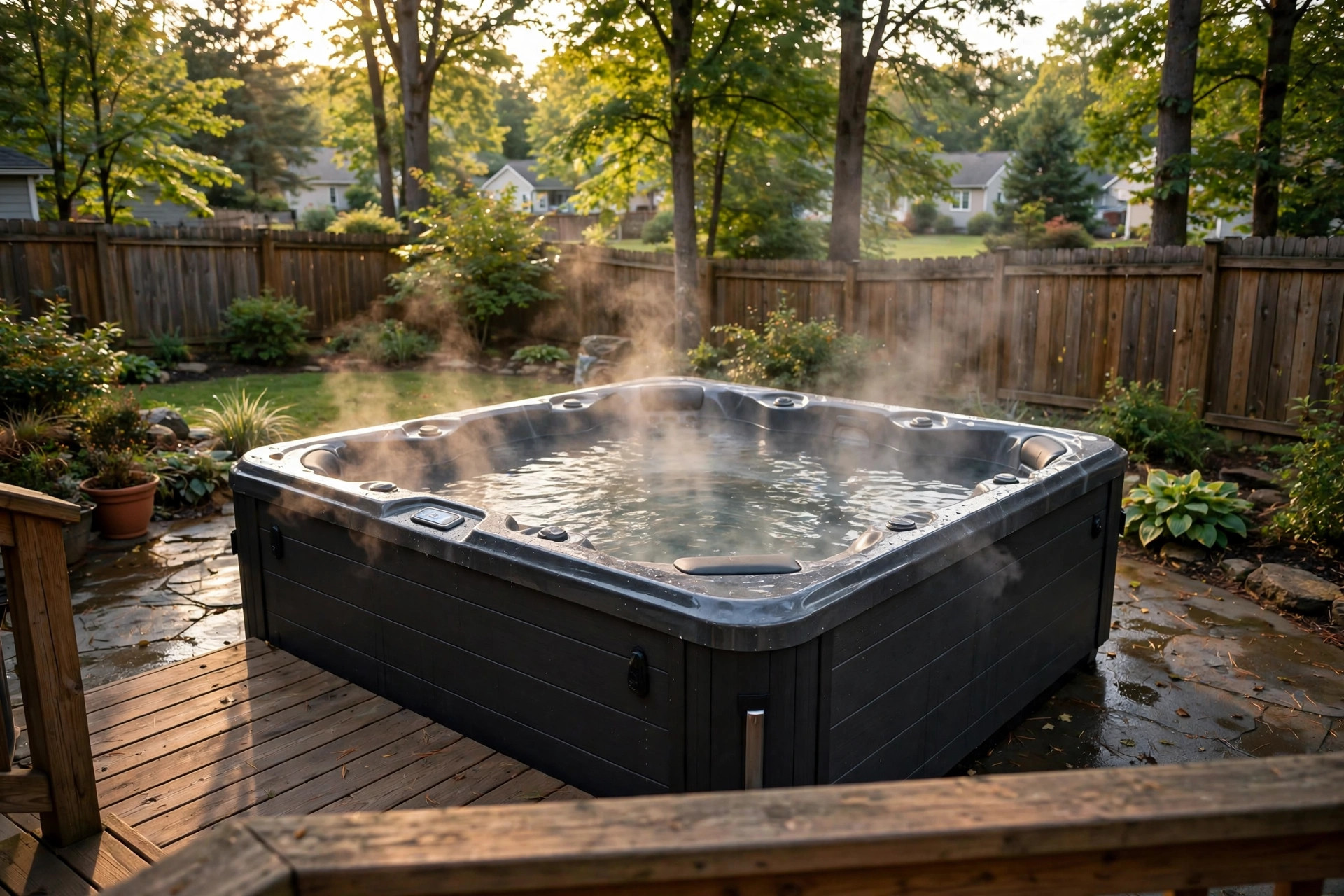

Finding the best hot tub for muscle recovery takes more than a quick look at a price tag. After a hard run, a long day on your feet, or a weekend of yard work, sore muscles need steady warm water, strong but gentle jets, and a seat that holds your body in a relaxed pose. This guide walks through each choice in plain language so you can buy with confidence.
Why Hot Water Helps Sore Muscles
Warm water has been used for tired bodies for thousands of years. The heat opens blood vessels near the skin. More blood reaches the muscles. More blood means more oxygen and faster removal of waste that builds up after hard work.
Doctors call this kind of treatment heat therapy. Health sites such as the Mayo Clinic note that warm baths can ease stiff joints and sore muscles. A hot tub works on the same idea, only stronger. The water stays at one warm temperature. Jets push streams of water against the legs, back, and shoulders. The push acts like a light massage. The buoyancy of the water takes weight off sore joints at the same time. A body that weighs 180 pounds on land feels close to 20 pounds in a hot tub. That sudden lightness lets tight muscles let go. Many physical therapists use this same mix of heat, pressure, and floating in their clinics. A home tub brings a simpler version of that care to the backyard.
Muscle soreness after exercise is common. Health guides on WebMD explain that mild soreness often fades in a day or two. Warm soaks do not replace rest. They make rest feel better. Twenty minutes in warm water can lower the ache enough for a good night of sleep.
The best hot tub for muscle recovery is not a luxury toy. It is a simple tool. Used with care, it helps the body do what it already knows how to do: heal.
What to Look for in a Recovery Hot Tub: Best Hot Tub for Muscle Recovery
Not every hot tub suits sore muscles. Some are built for parties. Some are built for quiet therapy. Look at these points before you buy.
Jet Count and Jet Type
Jets matter most. A tub with thirty weak jets may feel less useful than a tub with twelve strong, well-placed jets. Look for jets aimed at the lower back, the calves, and the feet. These are the spots that ache after running and lifting.
Adjustable jets are worth the extra cost. You can turn the pressure up for a deep massage or down for a gentle wash. Some tubs mix jet styles: spinning jets for the back, pulsing jets for the legs, wide jets for the shoulders. A mix lets each person find a setting that fits.
Seating and Ergonomics
The seat shape decides how long you will stay in the water. Look for deep seats with raised armrests and a molded back. A lounge seat, where the body leans back with legs stretched out, is popular for muscle recovery. It takes pressure off the lower back.
Try before you buy when you can. Sit dry in the empty tub at the dealer. Your knees should rest below the water line. Your head should rest above it without strain. If the seat feels wrong while dry, it will feel worse while wet.
Temperature Control and Heat Recovery
Muscle recovery works best in water between 100 and 104 degrees Fahrenheit. The best hot tub for muscle recovery should hold that heat without long waits. Check the heater size. A tub with a strong heater warms up faster after the cover comes off.
Good insulation matters too. Thick foam inside the cabinet keeps heat in and power bills down. Many buyers in cold regions also read our guide to the best hot tub for cold climates for insulation tips that apply here as well.
Size and Capacity
Think about how many people will use the tub. A four-person tub fits most families. A two-person tub warms faster and costs less to run. A six-person tub gives room to stretch, which helps leg recovery.
Measure your yard or patio before you shop. Leave room around the tub for the cover to lift and for a service worker to reach the equipment panel. A tub that does not fit its space will never feel right.
Types of Hot Tubs for Recovery
Hot tubs come in several forms. Each form has a place. Match the form to your budget and your body.
Acrylic Portable Spas
These are the most common tubs. They have a hard acrylic shell, a cabinet, and a full heater and pump system. They sit on a concrete pad or a deck. Prices run from about $5,000 to $15,000.
For muscle recovery, this type wins. The seats are molded. The jets are powerful. The heater keeps water at full temperature all year. Well-known spa makers such as Hot Spring and Bullfrog Spas build models aimed at therapy and comfort.
Swim Spas
A swim spa is part hot tub, part small pool. One end holds exercise jets that push a current to swim against. The other end holds warm water and therapy seats. These units cost $15,000 to $35,000 or more.
A swim spa suits an athlete who wants both exercise and recovery in one unit. It needs a large flat space and often a crane for delivery. For most home users, it is more than needed.
Plug-and-Play Spas
These small tubs plug into a normal wall outlet. They heat slower and run fewer jets at once. Prices start near $3,000. They fit small patios and renters with limited power.
For mild soreness, a plug-and-play spa does the job. For deep muscle recovery after hard training, the weaker jets may disappoint. Renters and couples may also like our notes on the best inflatable hot tub for couples.
Inflatable Hot Tubs
Inflatable tubs cost the least, often under $1,000. They set up in an hour and drain for winter. The water stays warm, but the jets are only air bubbles. They do not massage like real water jets.
An inflatable tub is a good first step. It tells you whether you enjoy hot tub recovery before you spend real money. It will not match a true spa for muscle work.
Cost and Price Guide
Prices for the best hot tub for muscle recovery fall into clear bands.
– Under $1,000: inflatable tubs. Warm water, weak jets. Fine for testing the idea. – $3,000 to $6,000: plug-and-play spas. Real jets, modest power. Good for light recovery. – $6,000 to $12,000: mid-range acrylic spas. Strong jets, good seats, full insulation. This is where most recovery buyers land. – $12,000 and up: premium spas with many therapy jets, salt-water systems, and smart controls.
Running costs add up too. A well-insulated tub costs about $30 to $60 a month in power, depending on climate and rates. Water care chemicals cost $20 to $40 a month. A solid cover, which every tub needs, costs $300 to $600 to replace every few years.
Home improvement retailers such as Home Depot carry entry-level spas and all the supplies. Specialty dealers offer better seats for testing and stronger warranties. Compare both before you decide.
Care and Upkeep
Clean water is safe water. A tub used for muscle recovery gets heavy use, and heavy use clouds water fast. Follow a simple routine.
Test the water two or three times a week. Keep chlorine or bromine at the level your test strips show as safe. Keep pH between 7.2 and 7.8. Rinse the filter once a week. Deep-clean or replace the filter every few months.
Drain and refill the tub every three to four months. Wipe the shell with a soft cloth while it is empty. Check the cover for cracks and waterlogging. A heavy cover lets heat escape and drives up the power bill. Once a year, flush the pipes with a spa line cleaner before a drain. This clears oils and film that hide inside the plumbing. Keep spare filters on hand so a dirty one can be swapped out in minutes.
If water care feels confusing at first, start with a kit. Our guide to the best hot tub chemicals starter kit lists what a new owner needs on day one. Pool and spa supply stores such as Leslie’s and Pool Warehouse also sell parts and chemicals. Learning sites like Swim University explain water chemistry in plain terms.
Safety First
Hot water demands respect. The U.S. Consumer Product Safety Commission sets safety standards for pools and spas, and its rules are worth knowing.
Keep water at or below 104 degrees Fahrenheit. Soak for 15 to 20 minutes at a time. Get out sooner if you feel dizzy or lightheaded. Never use a hot tub alone if you have a heart condition without asking your doctor first.
Do not mix hot tubs with alcohol. Alcohol dulls judgment and raises the risk of fainting. Pregnant women should ask a doctor before soaking in hot water. Children need close watching, since small bodies overheat faster.
Keep the cover locked when the tub is not in use. A locked cover stops children and pets from climbing in. Keep a phone nearby in case of trouble. These steps are simple, and they prevent most accidents.
FAQ
How hot should the water be for muscle recovery?
Set the water between 100 and 104 degrees Fahrenheit. Start at 100 if you are new to hot tubs. Raise it slowly. Never go above 104.
How long should I soak after a workout?
Fifteen to twenty minutes is enough for most people. Longer soaks can cause dizziness. Wait at least an hour after hard exercise before getting in, and drink water before and after.
Do jets really help sore muscles?
Yes, in a mild way. Jets press water against tired muscles, which feels like a light massage. This can ease stiffness and help you relax. Jets do not heal torn muscle, so see a doctor for sharp or lasting pain.
Is a salt-water hot tub better for recovery?
Salt-water systems feel softer on the skin and eyes. They still use a form of chlorine to keep water clean. The recovery benefit is about the same. Choose salt water for comfort, not for stronger therapy.
Can I use a hot tub every day?
Daily use is fine for healthy adults who follow the rules: short soaks, safe temperature, clean water. Daily use means more chemical testing and faster filter wear, so budget a little extra time for upkeep.
What is the cheapest good option for muscle recovery?
A mid-range plug-and-play spa near $4,000 gives real jets at the lowest real price. An inflatable tub under $1,000 gives warm water only. Skip the inflatable if deep jet massage is your main goal.
A Short Final Word
The best hot tub for muscle recovery is the one that fits your body, your yard, and your budget. Test the seats. Count the useful jets, not the total jets. Check the insulation. Then set a routine: warm soak, short session, clean water, rest. Your muscles will thank you for years. Home guides such as The Spruce offer more buying checklists if you want a second opinion before you sign.
References
Bullfrog Spas. (n.d.). Hot tubs and spas. https://www.bullfrogspas.com Hot Spring Spas. (n.d.). Hot tubs and spas. https://www.hotspring.com Leslie’s Pool Supplies. (n.d.). Pool supplies and equipment. https://www.lesliespool.com Mayo Clinic. (n.d.). Diseases and conditions. https://www.mayoclinic.org Pool Warehouse. (n.d.). Pool equipment and supplies. https://www.poolwarehouse.com Swim University. (n.d.). Pool and hot tub care guides. https://www.swimuniversity.com The Home Depot. (n.d.). Home improvement products. https://www.homedepot.com The Spruce. (n.d.). Home and garden advice. https://www.thespruce.com U.S. Consumer Product Safety Commission. (n.d.). Product safety information. https://www.cpsc.gov WebMD. (n.d.). Health and wellness information. https://www.webmd.com
Was this guide helpful?

About James Carter
The My Garden US editorial team writes practical, in-depth home and garden guides for American homeowners — tested advice, no fluff.
You May Also Like
Best Pool Test Strips: Accurate Reviews and a Simple Buying Guide
May 13, 2026 0 views
Best Pool Vacuum Head for Vinyl: A Complete Buyer’s Guide
January 8, 2026 0 views
Finding a Good Pool Heater Repair Service Near Me
August 5, 2026 0 views