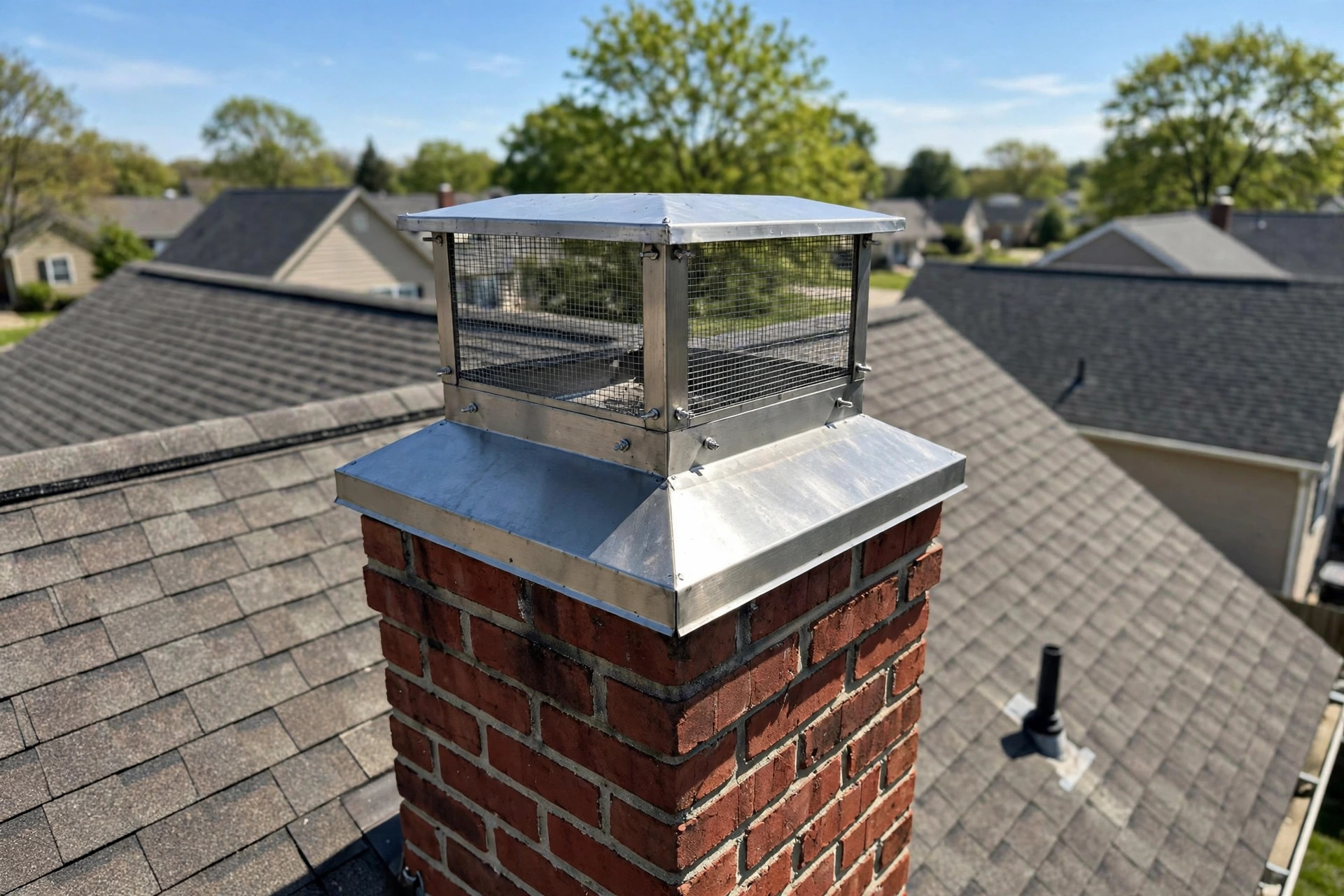

A chimney cap is a small metal cover that sits on top of your chimney flue. It costs less than most people expect. This budget friendly chimney caps and covers buying guide will show you how to pick one that fits, holds up to weather, and stays within a tight budget.
A cap is one of the cheapest forms of protection for your house. It keeps rain out of the flue. It stops birds and squirrels from nesting inside. It blocks stray sparks from leaving the chimney and landing on your roof. An uncovered chimney can let large amounts of water into the masonry over a single wet season. That water breaks down mortar from the inside out. Repairing a damaged chimney can cost thousands of dollars. A good cap often costs less than a tank of heating oil.
Why a Chimney Cap Matters
Water is the main enemy of a chimney. When rain enters an open flue, it soaks the inside of the chimney. Freeze and thaw cycles then crack the brick and mortar. Over time, the damage spreads to the chimney crown, the liner, and even the walls of the house. A cap acts like a small umbrella. It sheds water away from the flue opening and protects the masonry below.
Animals are the second reason to cap your chimney. Birds, raccoons, and squirrels see an open chimney as a ready-made home. A nest can block the flue. A blocked flue can push smoke and carbon monoxide back into your living room. A cap with a mesh screen stops animals from getting in while still letting smoke escape. If you have ever listened to a raccoon scratching inside a chimney at night, you will understand why this matters.
Sparks are the third reason. When you burn wood, small embers rise up the flue. Wind can carry them onto the roof or into the yard. A cap with a spark screen traps most of these embers. Local fire codes in many towns now require a spark arrestor on wood-burning chimneys. The EPA also publishes guidance on safe wood burning practices, and its Burn Wise pages are a solid starting point for any homeowner learning about wood heat.
What to Look for Before You Buy: Budget Friendly Chimney Caps and Covers Buying Guide
The first step is to measure your flue. This takes five minutes and prevents most buying mistakes. Measure the inside opening of each flue tile. Measure both the length and the width if the flue is square or rectangular. Measure the inside diameter if the flue is round. Write the numbers down. A cap that is one size too small will fall into the flue. A cap that is far too large will wobble in the wind.
Next, note the shape of your flue. Most masonry chimneys use square or rectangular clay tiles. Some older homes have round clay liners. Metal chimneys usually have round pipe. The cap you choose must match this shape. A round cap cannot sit on a square flue, and a square cap cannot sit on a round pipe.
Also check how much space sits above the flue. Some chimneys have a crown that rises high above the tiles. Others have a flat wash. Measure the gap if you can. Most caps mount either inside the flue opening or bolt onto the crown. Knowing your chimney layout helps you pick the right mount style.
How a Cap Mounts to Your Chimney
Three mounting styles cover almost every home. Slip-in caps press inside a round flue and tighten with screws. Leg caps have legs that slip inside square or rectangular tile flues and tighten against the walls. Top-mount caps sit on the chimney crown and bolt down over the whole flue area. For most budget buyers, a leg-mount or slip-in cap is the easiest choice. They need no tools beyond a screwdriver.
Types of Budget Chimney Caps and Covers
Single-Flue Caps
The single-flue cap is the most common type. It covers one flue opening. It has a lid, a wire mesh screen, and legs or bolts for mounting. The mesh usually has openings of about three-quarters of an inch. That size blocks animals and most sparks without choking the draft. Single-flue caps cost the least and fit most standard fireplaces. If your chimney has one flue, this is almost always the right choice.
Multi-Flue and Crown-Mount Covers
Some chimneys have two or three flues in one structure. You can cap each flue with its own single cap, or you can buy one large top-mount cover. The large cover bolts to the chimney crown and shelters every flue at once. It also shields the crown itself from rain. A single large cover often costs less than three separate caps. It also cuts the time you spend on the roof.
Top-Sealing Damper Caps
A top-sealing damper cap does two jobs at once. It works as a chimney cap and as a fireplace damper. The damper sits at the top of the flue. It opens when you burn wood and closes when the fire is out. A closed top damper stops warm house air from escaping up the chimney all winter. These caps cost more than basic single-flue caps, but they can pay for themselves in lower heating bills.
Wind and Draft Caps
Tall chimneys and windy sites can suffer from downdrafts. Smoke blows back into the room instead of rising out. A wind cap has a shaped lid that turns with the wind. It pulls air up and out of the flue. These caps cost more than plain caps. Try a standard cap first. Move up to a wind cap only if downdrafts persist.
Materials: What Holds Up and What Does Not
The metal a cap is made from decides how long it lasts. Four metals dominate the budget market.
Galvanized steel is the cheapest option. It is plain steel with a zinc coating. It works for a few years, but the coating wears off. Once bare steel shows, rust follows. In wet climates, a galvanized cap can rust through in two to four years. It is fine as a stopgap, but it is not a long-term answer.
Stainless steel is the best value for most buyers. It resists rust and stands up to heat and acid from wood smoke. A good stainless cap can last fifteen to twenty years. It costs more than galvanized steel at the counter, but it costs far less over the life of the chimney. When you shop for affordable chimney caps for brick fireplaces, stainless steel gives you the longest service per dollar.
Copper is the premium choice. It lasts for decades and weathers to an attractive dark patina. It costs several times more than stainless steel. It is not a budget choice, but it is worth knowing about.
Aluminum is light and rust-proof, but it is soft. A hard hailstorm can dent it. It suits mild climates where ice and falling limbs are rare.
The screen mesh matters too. Galvanized mesh rusts faster than the lid. Many budget caps pair a stainless lid with a cheap mesh. Ask about the mesh before you buy. A full stainless cap, lid and mesh together, is the sweet spot for budget buyers who want the cap to last.
Cost and Price: What a Fair Price Looks Like
Budget chimney caps fall into clear price bands. A basic galvanized single-flue cap often sells for twenty to forty dollars. A stainless steel single-flue cap runs forty to ninety dollars for common sizes. Large or odd sizes push past one hundred dollars. Top-mount multi-flue covers run eighty to two hundred dollars depending on size. Top-sealing damper caps start around one hundred dollars and rise from there.
Installation adds to the total if you hire help. A chimney sweep or roofer may charge seventy-five to one hundred fifty dollars to fit a cap. Most handy homeowners can fit a leg-mount or slip-in cap themselves in under thirty minutes. If you go up on the roof, wear shoes with good grip and work on a dry, calm day. Never work on a steep roof alone.
Watch for hidden costs. Some caps need a separate adapter for round metal pipe. Others need masonry screws for a top mount. Add these parts to your budget before you compare prices. Large home improvement stores such as Home Depot and Lowe’s stock a wide range of caps in store and online, which makes price comparison easy. If you shop locally, call ahead with your flue measurements so the staff can pull the right size.
Buying a cap online can save money, but shipping a large top-mount cover adds cost. Compare the delivered price, not just the shelf price. Also check the return policy. A cap that does not fit is useless, and you want a free return if your measurements are off.
Care and Upkeep
A chimney cap needs little care, but a yearly check keeps it working. Look at the cap each fall before heating season. Check that the lid sits level and the bolts are snug. Look for rust spots, bent mesh, or loose screws. Clear away leaves and twigs that collect around the base.
Clean the mesh screen at least once a year. Wood smoke leaves a sticky residue called creosote. Creosote can clog the mesh and choke the draft. A stiff brush and warm soapy water remove most buildup. The guides at Family Handyman include step-by-step chimney cleaning projects that pair well with this yearly check.
Inspect the seal where the cap meets the chimney. Top-mount caps rely on a good seal against the crown. A tube of high-temperature silicone reseals most gaps. Leg-mount caps need the legs tight against the flue walls. Snug them with a screwdriver if they loosen.
Safety Notes
Never climb onto a wet or icy roof. Never work near power lines that run close to the chimney. If your roof is steep or the chimney is very tall, hire a professional.
Let the fire cool fully before you touch anything on the chimney. Metal parts stay hot long after the flames die. Wear work gloves when you handle a cap. Cut mesh edges can be sharp.
If you smell smoke in the house or see soot stains around the fireplace, stop and call a chimney sweep. These signs can point to a blocked flue or a cracked liner. A new cap cannot fix a blocked flue. Clean the chimney first, then fit the cap. The EPA offers plain-language advice on safe wood burning and chimney care that every wood burner should read.
Building codes vary by town. Some areas require spark arrestor screens with specific mesh sizes. Check your local code before you buy. A cap that meets code everywhere uses a three-quarter-inch mesh, which satisfies most local rules.
Frequently Asked Questions
Do I really need a chimney cap?
Yes, in almost every case. An open chimney lets in rain, animals, and debris. It also lets warm air escape in winter. A cap solves all three problems for a modest price. The only chimneys that skip caps are some vented gas units, and even those often benefit from a cover.
What size cap should I buy?
Measure the inside of your flue. For a square tile flue, buy a cap that matches the outside tile size, usually in two-inch steps such as 9 by 9 or 13 by 13 inches. For a round flue, match the inside diameter. When in doubt, round up slightly. A cap that is a touch large still works. A cap that is too small does not.
How long does a budget chimney cap last?
It depends on the metal. Galvanized steel lasts two to five years. Stainless steel lasts fifteen to twenty years. Copper lasts thirty years or more. Cheap chimney covers that last are almost always stainless. Pay a little more at the start and you will replace the cap far less often.
Can I install a chimney cap myself?
Most people can. Leg-mount and slip-in caps need only a screwdriver and a ladder. Read the instructions, keep three points of contact on the ladder, and do the job on a dry day. Call a pro if the roof is steep or you feel uneasy at height.
Will a cap hurt my fireplace draft?
A good cap will not. The mesh is open enough to let smoke rise freely. If smoke starts backing into the room after you fit a cap, the mesh may be clogged with creosote, or the cap may be too small. Clean the mesh first. If the problem stays, check that the cap matches your flue size.
Should the cap cover the whole chimney crown?
Not always. A single-flue cap covers only the flue opening. That is enough for most homes. A full crown-mount cover shields the crown too, which helps if your crown is cracked or aging. If the crown is in good shape, a single-flue cap is the cheaper and simpler choice.
A Final Word
A chimney cap is a small purchase that guards a large investment. Measure your flue, pick stainless steel for the best long-term value, and fit the cap before the rainy season starts. You will keep water out of the masonry, animals out of the flue, and sparks off the roof.
If your project grows beyond the cap, the same careful shopping applies. Homeowners comparing where to buy fire pit tables in Arizona or browsing ventless fireplace remote controls for sale will find the same rule holds: measure first, compare materials, and read the fine print. Even a luxury fireplace screens with doors buying guide starts with the same simple steps. Good information from trusted sources such as This Old House, The Spruce, Heatilator, and Napoleon will keep every hearth project on budget.
References
Family Handyman. (n.d.). DIY home repair and maintenance. https://www.familyhandyman.com Heatilator. (n.d.). Fireplaces and fireplace products. https://www.heatilator.com Lowe’s. (n.d.). Home improvement products. https://www.lowes.com Napoleon. (n.d.). Fireplaces, grills, and heating products. https://www.napoleon.com The Home Depot. (n.d.). Home improvement products. https://www.homedepot.com The Spruce. (n.d.). Home and garden advice. https://www.thespruce.com This Old House. (n.d.). Home renovation guidance. https://www.thisoldhouse.com U.S. Environmental Protection Agency. (n.d.). Protecting human health and the environment. https://www.epa.gov
Was this guide helpful?

About Emily Rodriguez
The My Garden US editorial team writes practical, in-depth home and garden guides for American homeowners — tested advice, no fluff.
You May Also Like
Buy Fireplace Glass Doors Online in Arizona: A Simple Buying Guide
March 16, 2026 0 views
Luxury Fireplace Screens With Doors Buying Guide
September 21, 2026 0 views
EPA Certified Reclaimed Wood Mantels for Sale: A Complete Buying Guide
June 24, 2026 0 views