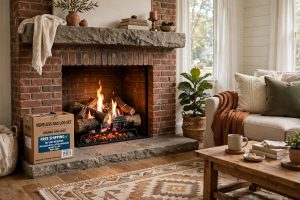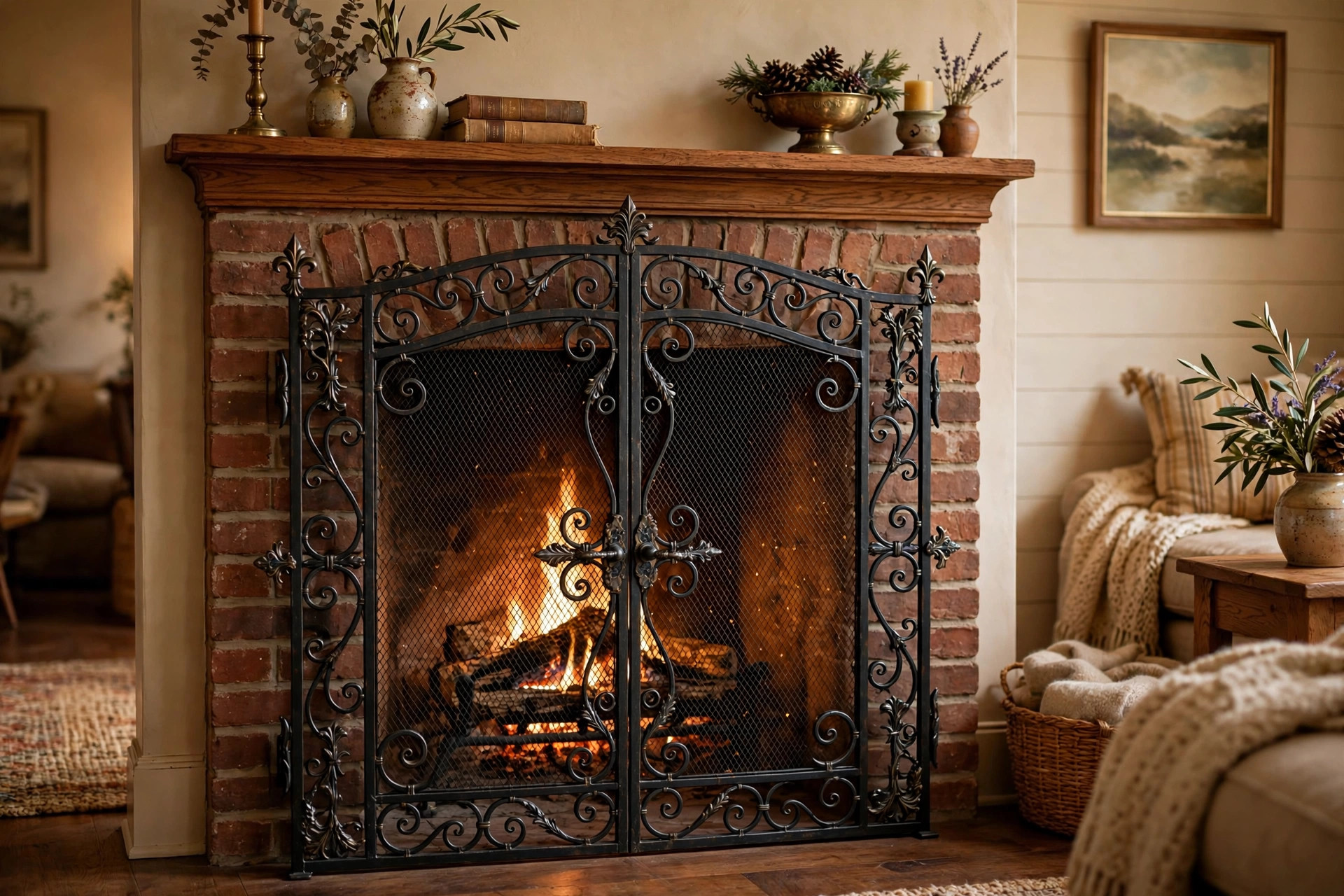

A fireplace is the heart of a living room. A good screen with doors protects that heart. This luxury fireplace screens with doors buying guide will help you pick the right one for your home. We will cover the reasons to buy one, the styles on the market, the costs, and the care they need. We will also answer the questions that buyers ask most.
Why It Matters
An open fire throws sparks and embers. A spark can travel far across a room. A rug or a chair can catch fire in seconds. A screen with doors stands between the flames and your floor. The mesh stops the sparks. The doors let you tend the fire without lifting a heavy flat screen.
Children and pets add another reason. A toddler walks toward the bright flames. A dog naps too close to the hearth. A closed set of doors gives you a layer of calm. You can watch the fire and still keep little ones at a safe distance. Guides on fireplace glass doors reviews and buying guide note the same safety point for glass models.
Luxury models do more than protect. They frame the fire like a picture. Wrought iron scrolls, brass frames, and hand-forged hinges turn a plain brick opening into a showpiece. A fine screen can raise the look of the whole room. It can even lift the value of the home at sale time.
Heat control is a third gain. Open doors let heat pour out of the room and up the chimney. Closing the doors after the fire dies down slows that loss. The room stays warmer for longer. It is a small saving, but it adds up over a long winter.
What To Look For And How To Choose: Luxury Fireplace Screens with Doors Buying Guide
Measure First
Start with a tape measure. Measure the width of the fireplace opening. Measure the height from the floor to the top of the opening. Write both numbers down. Most luxury screens sit flat against the face of the fireplace. The screen should overlap the opening by two to three inches on each side and on top. A screen that is too small leaves gaps. A screen that is too large will not sit flat.
Note the depth of the hearth too. The screen feet must rest fully on the hearth stone. If the feet hang over the edge, the screen will wobble.
Frame Material
Wrought iron is the classic choice. It is heavy, strong, and lasts for decades. Many fireplace screens with doors buying guides rate it as the top pick for wood-burning fireplaces. Steel is a close second. It is lighter and costs less. It still holds up well to heat.
Brass and bronze give a warm, rich look. They suit formal rooms and colonial homes. True brass costs more than iron. Some screens use an iron frame with a brass finish. Read the label. A plated finish can fade or chip with hard use. Solid brass will patina over time, which many owners enjoy.
Mesh Quality
The mesh does the real work of spark control. Look for fine, tight weave. You should not see daylight gaps when you hold it up. Steel mesh holds its shape. Stainless mesh resists rust near the coast. Cheaper screens use loose mesh that sags. A sagging mesh lets embers slip through.
Doors And Hinges
Doors should swing free and close flat. Open them fully. They should stay open without drifting shut. Check the hinge pins. Solid steel pins last longer than thin wire loops. Some luxury models use hidden hinges for a cleaner face.
Look for doors that overlap at the center. A center overlap blocks the gap where sparks can escape. Magnetic catches hold the doors shut. They are simple and quiet. Latch handles give a more traditional feel.
Finish
Powder-coated black is the most common finish. It hides soot and matches most rooms. Matte black looks modern. A high-heat paint coat matters more than the color. Cheap paint peels after one hot season. Quality brands bake the finish on. It should stand up to years of radiant heat.
If you want a bright metal look, ask whether the finish is solid metal or plated. Plated brass on a wood-burning fireplace will darken and need polish. Solid brass ages to a deep brown-gold that many owners love.
Weight And Stability
Pick the screen up. A luxury model feels heavy. Weight means thick metal. Thick metal means long life. It also means stability. A light screen can tip when a door swings open. The feet should be wide and flat. Some models add adjustable levelers for uneven hearths.
Types And Options
Three-Panel Screens
Three panels fold like an accordion. The side wings angle forward. This style fits hearths of many widths. It also stands on its own. If you want to move the screen for cleaning, three-panel models are easy to lift aside.
Flat Front Screens
A flat screen with doors covers the opening straight on. It sits flush against the fireplace face. It gives the cleanest look. It also seals the opening best against sparks. Flat models need exact measurements. A poor fit leaves open edges.
Arched And Shaped Tops
Some luxury screens copy the arch of the fireplace opening. An arched screen suits stone and brick faces. The doors follow the curve of the frame. These models cost more. They are often made to order.
Bowed Screens
A bowed screen curves out toward the room. It stands farther from the fire. That distance keeps the mesh cooler. Bowed models also throw more heat into the room. They need a deep hearth to hold the curve.
Spark Guards Vs. Full Screens
A full screen covers the whole opening with doors. A spark guard is a low flat panel for the front edge. Some owners use both. The full screen handles daily use. The spark guard adds a low line of defense during a big fire.
Related buyers often pair a screen with other hearth goods. Guides on where to buy fireplace grates in colorado and top rated electric fireplace mantels for american homes cover matching pieces for the same hearth.
Cost And Price
Luxury fireplace screens with doors start near two hundred dollars. The true luxury range runs from four hundred to over a thousand dollars. Custom hand-forged models can pass two thousand.
What drives the price? Metal thickness comes first. A heavy gauge iron screen costs more to make and lasts longer. Finish quality comes second. Baked powder coat and real brass add cost. Hand work comes third. Scrollwork shaped by a smith costs more than stamped parts.
Size matters too. A forty-inch screen uses far more metal than a thirty-inch one. Extra width adds to the price in a straight line.
Watch for hidden costs. Freight shipping for a heavy screen can add fifty to a hundred dollars. Custom sizes carry a longer wait and a restocking fee if you return them.
Value is not the same as price. A seven-hundred-dollar screen that lasts twenty years costs less per year than a two-hundred-dollar screen that warps in three. Read buyer reviews. Check the warranty. A maker that stands behind the product for five years or more trusts its own work.
Care And Upkeep
Clean the mesh once a month in the burning season. Let the fireplace cool fully first. Use a soft brush or a dry cloth. Brush the mesh from the back side. That pushes soot out toward you instead of into the weave.
For the frame, wipe with a damp cloth. Dry it right away. Water left on iron will rust. Never use oven cleaner or harsh chemicals. They strip the finish. A light coat of stove polish once a year keeps black iron deep and even.
Brass doors need different care. Use a brass cleaner made for fireplace heat. Polish with the grain, not in circles. Wear gloves. Oils from bare hands leave marks that heat will bake in.
Check the hinges twice a year. A drop of high-heat oil on each pin keeps the doors swinging smooth. Tighten any loose screws. Replace a bent pin before it scores the hinge.
If a leg wobbles, do not bend it back by force. Set the screen on a flat floor and check which foot is short. Slip a felt pad under the short foot. The screen should stand firm with no rocking.
Store the screen in place all year. Removing it for summer invites dents and lost parts. If you must store it, wrap it in an old blanket and stand it upright. Never stack heavy items against the mesh.
Safety
A screen is a guard, not a cure. Follow the basic rules of fire safety. The U.S. Environmental Protection Agency publishes guidance on burning clean wood and keeping indoor air safe, and its advice is worth a look before your first fire of the season. You can find it at U.S. Environmental Protection Agency.
Keep flammable items at least three feet from the opening. That means wood baskets, newspapers, and throw blankets. Teach children that the screen gets hot. The metal stays warm long after the flames die.
Never close the doors and walk away from a roaring fire without a damper check. Screens slow sparks. They do not put out fires. Keep a fire extinguisher rated for home use within reach of the room.
Have the chimney swept once a year. Creosote buildup causes chimney fires. A clean chimney and a good screen work as a team. Home how-to libraries such as Www.thisoldhouse.com and Www.familyhandyman.com carry step-by-step chimney care articles for owners who want to learn more.
Install smoke and carbon monoxide alarms on every floor. Test them each month. A screen cannot warn you of a smoldering problem. Alarms can.
Frequently Asked Questions
Will a screen with doors fit my odd-shaped fireplace?
Most luxury makers offer standard sizes that cover common openings. Measure the opening and add two to three inches per side. If your opening is arched or extra wide, ask about custom work. Custom screens take four to eight weeks. They cost more, but the fit is exact.
Can I use a luxury screen with a gas fireplace?
Yes, in most cases. Gas fireplaces make less heat and fewer sparks than wood fires. The screen is mostly decorative there. Check the manual for your fireplace. Some direct-vent units state a minimum clearance. Keep the screen at least the stated distance from the glass front.
Do the doors get too hot to touch?
The doors get hot during a strong fire. That is normal. Use the handles, not the mesh, to open and close them. Keep a pair of hearth gloves nearby. After the fire dies, the metal cools within an hour.
Iron or brass: which is better?
Both are fine. Iron suits rustic and modern rooms. It hides soot well. Brass suits formal rooms. It needs more polish. Pick the one that matches your room and your care habits. Honest reviews on sites like Www.thespruce.com can help you compare finishes side by side.
Where can I buy a quality screen?
Start with established home centers such as Www.lowes.com and Www.homedepot.com. They carry a wide range and clear return policies. Specialty hearth makers such as Www.napoleon.com and Www.heatilator.com offer higher-end lines with strong warranties. Compare the metal gauge, finish, and warranty before you decide.
How long should a luxury screen last?
A well-made iron or steel screen should last fifteen to twenty-five years. Brass can last longer still. Cheap thin models may warp in three to five years. Weight and warranty length are the best signs of a long life.
Final Word
A luxury fireplace screen with doors is a simple purchase with a long payoff. Measure twice. Choose thick metal and a baked finish. Check the hinges and the mesh. Care for it once a year. The screen will guard your home, frame your fire, and look fine doing it for decades. Follow this luxury fireplace screens with doors buying guide, and you will buy once and enjoy the choice every winter night.
References
Family Handyman. (n.d.). DIY home repair and maintenance. https://www.familyhandyman.com Heatilator. (n.d.). Fireplaces and fireplace products. https://www.heatilator.com Lowe’s. (n.d.). Home improvement products. https://www.lowes.com Napoleon. (n.d.). Fireplaces, grills, and heating products. https://www.napoleon.com The Home Depot. (n.d.). Home improvement products. https://www.homedepot.com The Spruce. (n.d.). Home and garden advice. https://www.thespruce.com This Old House. (n.d.). Home renovation guidance. https://www.thisoldhouse.com U.S. Environmental Protection Agency. (n.d.). Protecting human health and the environment. https://www.epa.gov Www. (n.d.). Home and garden information. https://www
Was this guide helpful?

About Robert Taylor
The My Garden US editorial team writes practical, in-depth home and garden guides for American homeowners — tested advice, no fluff.
You May Also Like
Buy Fireplace Blowers and Fans Online in Texas: A Complete Guide
March 29, 2026 0 views
Tile Fireplace Surrounds Price Comparison USA: A Homeowner’s Guide
April 15, 2026 0 views
Smart Smart Electric Fireplaces Buying Guide
January 28, 2026 0 views