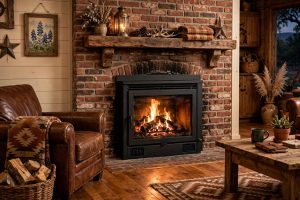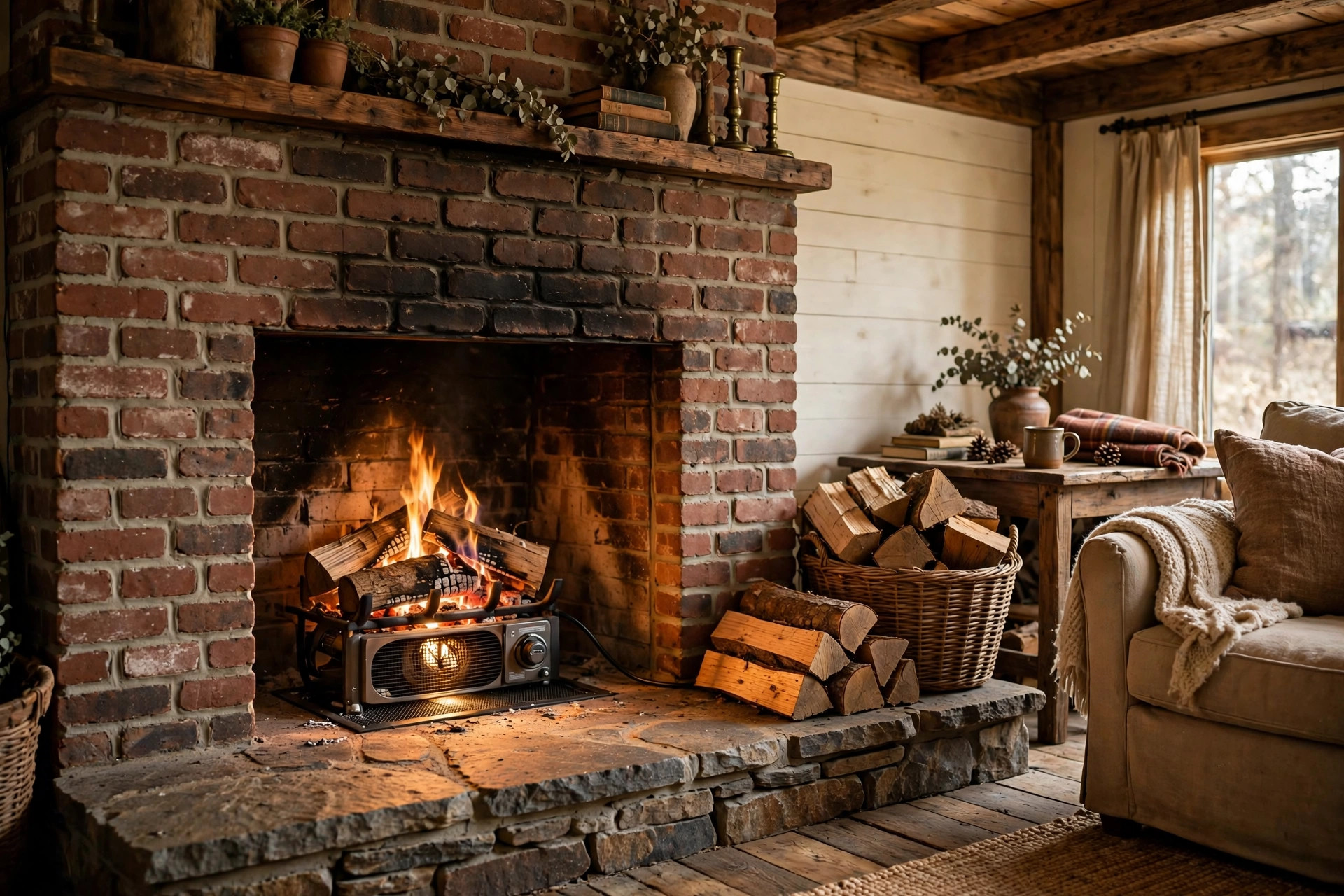
When you plan to buy fireplace blowers and fans online in Texas, you want heat that reaches the room, not the chimney. A fireplace blower is a small electric fan kit. It sits at the base of the fireplace or inside an insert. It pulls cool room air in, pushes it past the hot firebox, and blows warm air back out. The result is simple. Your fire heats more of the house. Your furnace runs less. Your winter bills fall a little.
Many homes in Texas have fireplaces that look nice but heat little. An open fireplace can pull warm air out of the house and send it up the flue. A blower changes that. It turns a pretty fire into a working source of heat.
Why It Matters
A fireplace without a blower is mostly decoration. Most of the heat from an open fire goes straight up the chimney. Tests and field experience over many years show the same point. The room feels warm right in front of the flames. The rest of the house stays cold. A blower pulls that trapped heat out of the firebox and spreads it across the room.
For Texas homes, this matters in a practical way. Winters in Texas are short but sharp. Cold fronts can drop temperatures twenty or thirty degrees in a few hours. Many Texas homes have large open living areas with high ceilings. Heat rises and pools near the ceiling. A blower pushes warm air down and out, where people actually sit. It can make a den or living room comfortable without turning up the thermostat.
There is also a money reason. A blower kit is one of the least costly ways to get more heat from a fireplace you already own. A new insert or stove costs far more. A blower often costs less than a tank of gas for a pickup truck. If you burn wood through the winter, the savings on furnace fuel can pay for the blower in one season.
Comfort is another reason. Without a blower, you sit close to the fire and feel hot on one side and cold on the other. With a blower, the warm air mixes through the room. The whole space reaches an even temperature. Families use the room more. Evenings by the fire become more pleasant.
Blowers also help with inserts and stoves. Many wood burning fireplace inserts made for Texas homes come with blower kits or accept them as add-ons. An insert already keeps more heat in the room than an open fire. A blower makes the gain larger still. If your insert came without one, adding a kit is a common upgrade.
What to Look for When You Choose a Blower: Buy Fireplace Blowers and Fans Online in Texas
Not every blower fits every fireplace. Before you buy fireplace blowers and fans online in Texas, measure and check a few things. A careful buyer gets a kit that fits on the first try.
Fit and Size
Start with the fireplace opening. Measure the width of the firebox at the front, where the blower will sit. Most blower kits list the firebox widths they fit. Standard kits fit openings from about twenty-four to forty-four inches. Measure twice and write the number down. A blower that is too long will not sit flat.
Also check the depth under the firebox. Some fireplaces have an ash pit or a shallow hearth at the base. The blower needs a flat spot with clearance for air to flow. Look at the product diagram before you order. Compare the diagram to your fireplace.
Airflow Rating
Blowers are rated in cubic feet per minute, called CFM. A higher CFM number means more air moved. Small kits move about one hundred CFM. Large kits move two hundred CFM or more. For a small room, a lower rating is fine. For a large open living area, choose a higher rating. Texas homes often have open floor plans. When in doubt, choose a bit more airflow rather than less. Most kits let you turn the speed down.
Power and Controls
Most fireplace blowers plug into a standard wall outlet. Check that you have an outlet near the fireplace. Some kits include a rheostat, which is a dial that changes fan speed. Others include a thermal switch. The switch turns the fan on when the firebox gets hot and turns it off when the fire dies down.
Noise Level
Fans make some noise. Good kits run quiet on low speed and hum a bit on high. Product listings often state the decibel level. If the fireplace sits in a room where you watch television or talk, look for kits described as quiet or low-noise. Reading buyer reviews helps here. People often comment on how loud a blower runs.
Power Cord and Wiring
Look at the cord length. The kit must reach your outlet without an extension cord. Extension cords near a fireplace are a bad idea. Some kits are made to be hardwired by an electrician. If you are not sure about wiring, choose a plug-in kit. It is the simpler and safer choice for most homeowners.
Types of Fireplace Blowers and Fans
Several kinds of blowers exist. Each fits a different fireplace setup. Knowing the types helps you pick the right one.
Firebox Blower Kits
These are the most common. They are flat fan units that slide into the bottom of an existing firebox. They work with masonry fireplaces and with many factory-built fireplaces. The kit usually includes the fan, a mounting bracket, a power cord, and sometimes a speed control. This is the kit most people mean when they buy fireplace blowers and fans online in Texas. If you have a standard open fireplace, start here.
Insert Blowers
Fireplace inserts are metal boxes that slide into an existing fireplace opening. They burn wood, gas, or pellets more efficiently than an open fire. Many inserts have a dedicated blower made for that exact model. These blowers mount to the front or the side of the insert. If you own an insert, buy the blower made for your brand and model. A universal kit may fit, but the factory kit fits better and often runs quieter. You can read reviews of gas fireplace inserts to see which models include blowers.
Stove Fans
These small fans sit on top of a wood stove or near a fireplace. Some run on electricity. Others are heat-powered and need no cord at all. Heat-powered fans use a small motor that runs on the temperature difference between the hot stove and the cooler room air. They move less air than electric blowers. They work best in small rooms. They are silent, which some people prefer.
Replacement Blowers
If your fireplace or insert already has a blower that stopped working, you can buy a replacement. Many brands sell exact replacement kits. Heatilator’s replacement parts are one example for owners of that brand. Before you order a replacement, find the model number of your fireplace or insert. It is usually on a metal plate inside the firebox or behind a lower panel. Match the number to the kit. A wrong kit wastes time and shipping money.
Universal Kits
Universal blower kits fit many fireplaces. They cost less than brand-specific kits. The trade-off is fit. You may need to adjust brackets. For many buyers, the lower price makes this a fair trade.
Cost and Price
Fireplace blower kits are not costly compared with most hearth products. Simple universal kits sell for about forty to ninety dollars. Kits with speed controls and thermal switches run from about eighty to one hundred and fifty dollars. Brand-specific insert blowers cost more, often one hundred and fifty to three hundred dollars. Heat-powered stove fans fall in the middle range.
Shipping matters when you order online. Some sellers offer free shipping on orders over a set amount. Others charge flat rates. Since blower kits are small and light, shipping costs stay modest. Watch for Texas-based sellers if you want fast delivery. A kit shipped from Dallas or Houston can reach most Texas addresses in one or two days.
Installation cost is another question. Most plug-in kits are do-it-yourself jobs. You slide the unit in, connect the cord, and test it. No tools beyond a screwdriver are needed in most cases. If you need hardwiring or an electrician to add an outlet, budget for that separately. A simple outlet installation by an electrician is a small job.
Compare total cost, not just the sticker price. Look at warranty length. A two-year warranty on a one-hundred-dollar kit is reasonable. Buyer feedback on long life is worth more than a small price cut.
Sales tax applies to online orders shipped to Texas addresses. Sellers with a Texas presence collect it at checkout. Factor this into your budget. It is a small amount on a blower kit, but it is part of the true cost.
Care and Upkeep
A fireplace blower needs little care. A few simple habits keep it running well for many years.
Dust is the main enemy. The fan pulls room air through the unit. Dust builds up on the blades and the motor. Once a year, before the heating season, unplug the blower and wipe the blades with a dry cloth. Use a soft brush on the motor vents. Do not use water. Do not oil the motor unless the instructions say to. Most modern blower motors are sealed and need no oil.
Check the power cord each year. Heat and age can make cords brittle. Look for cracks or bare wire. If the cord looks damaged, stop using the blower until the cord is replaced. This is a safety matter, not a minor one.
Keep the area around the blower clear. Do not push logs, kindling, or log holders built for Texas homes against the fan. The blower needs open space to pull air in and push air out. Blocking the airflow makes the motor work harder and shortens its life.
Listen to the fan when it runs. A new rattle or grinding sound often means a loose screw. Unplug the unit and look. Tighten what is loose. If the noise stays, replacement usually costs less than repair.
Run the blower only when the fire is burning or the firebox is still hot. Running it cold moves room-temperature air and wastes electricity. A thermal switch handles this for you. If your kit lacks one, you can add a switch kit later. Many sellers stock them as add-ons.
Store nothing on top of the blower during the off season. Cover the fireplace opening with a screen or glass doors to keep dust out. When fall comes, wipe the unit again and test it before the first cold night. Practical maintenance walkthroughs from Family Handyman show these steps in plain detail.
Safety
Blowers are safe when used as directed. A few rules keep them safe.
First, keep all wiring away from heat. The power cord must not touch hot surfaces. Route it along the hearth to the outlet. If the cord must cross near the firebox, use a cord rated for heat or add a heat shield. Never let the cord rest on hot metal.
Second, plug the blower directly into a wall outlet. Do not use extension cords. Do not plug it into a power strip shared with other heaters. A blower draws little power, but a direct connection removes one point of failure.
Third, turn the blower off before you clean the fireplace. Unplug it. Ash and soot get everywhere during cleaning. You do not want the fan pulling ash into the motor. You also do not want your hands near moving blades.
Fourth, keep children and pets from touching the blower while it runs. The housing can get warm. The blades are covered, but little fingers do not belong near any fan. A fireplace screen or gate adds a layer of safety.
Fifth, use only kits made for fireplace use. A regular room fan or a computer fan is not built for heat. Fireplace blowers use heat-rated parts. The motor, the wiring, and the housing are all made to sit near a fire. Do not improvise with parts from other devices.
Sixth, follow local rules. Texas has no statewide ban on wood burning in homes, but some cities limit burning on bad air days. Check your city rules during winter. The federal guidance at energy.gov also covers efficient home heating and can help you plan your whole heating setup.
If you smell burning plastic or see smoke from the blower, unplug it at once. Do not use it again until you know the cause. A failed motor is rare, but it can happen. When in doubt, replace the unit. A new blower costs far less than a house fire.
Frequently Asked Questions
Will a blower work with my gas fireplace?
In most cases, yes. Many gas fireplaces and gas inserts accept blower kits. Some ship with a blower already installed. Check your owner’s manual for the correct kit. If you are unsure, call the fireplace maker with your model number before you order.
How much heat does a blower really add?
A blower does not make the fire hotter. It moves heat that would have gone up the chimney into the room. Homeowners often report that the room feels ten to fifteen degrees warmer with the blower on.
Can I install a blower myself?
Most plug-in kits are made for homeowners to install. You place the unit, secure the bracket, and plug it in. The job takes under an hour. If the kit needs hardwiring or a new outlet, hire an electrician. If you feel unsure at any step, stop and call a professional. A bad wiring job near a fireplace is not worth the risk.
Do blowers use much electricity?
No. A typical fireplace blower uses about the same power as a light bulb or two. Running it all evening costs only a few cents. The heat it moves into the room saves far more in furnace fuel than the blower costs in electricity. This is one of the best value upgrades in home heating.
Where is the best place to order one online?
Large home improvement retailers stock many kits with clear specs and fast shipping. You can compare models at Lowe’s and check independent test notes at Consumer Reports, and read plain buying advice at Bob Vila before you decide. Brand makers like Napoleon sell kits made for their own units. Repair guides at This Old House and seasonal care tips from The Spruce round out the picture.
How long does a fireplace blower last?
A good blower lasts eight to twelve years with basic care. Dust and heat wear the motor over time. Kits with sealed motors last longer. If your blower is over ten years old and runs loud or weak, replacement is the sensible move. Newer kits are often quieter and more efficient than old ones.
A Final Word
A fireplace blower is a small purchase with a large payoff. It takes heat you already make and puts it where you live. When you buy fireplace blowers and fans online in Texas, measure your firebox, pick a kit with the right airflow, and choose a seller with a fair return policy. Install it before the first cold front. Clean it once a year. Then sit back and enjoy a room that is truly warm.
References
Bob Vila. (n.d.). Home improvement advice. https://www.bobvila.com Consumer Reports. (n.d.). Product reviews and ratings. https://www.consumerreports.org Family Handyman. (n.d.). DIY home repair and maintenance. https://www.familyhandyman.com Heatilator. (n.d.). Fireplaces and fireplace products. https://www.heatilator.com Lowe’s. (n.d.). Home improvement products. https://www.lowes.com Napoleon. (n.d.). Fireplaces, grills, and heating products. https://www.napoleon.com The Spruce. (n.d.). Home and garden advice. https://www.thespruce.com This Old House. (n.d.). Home renovation guidance. https://www.thisoldhouse.com U.S. Department of Energy. (n.d.). Energy efficiency and renewable energy. https://www.energy.gov
Was this guide helpful?

About Robert Taylor
The My Garden US editorial team writes practical, in-depth home and garden guides for American homeowners — tested advice, no fluff.