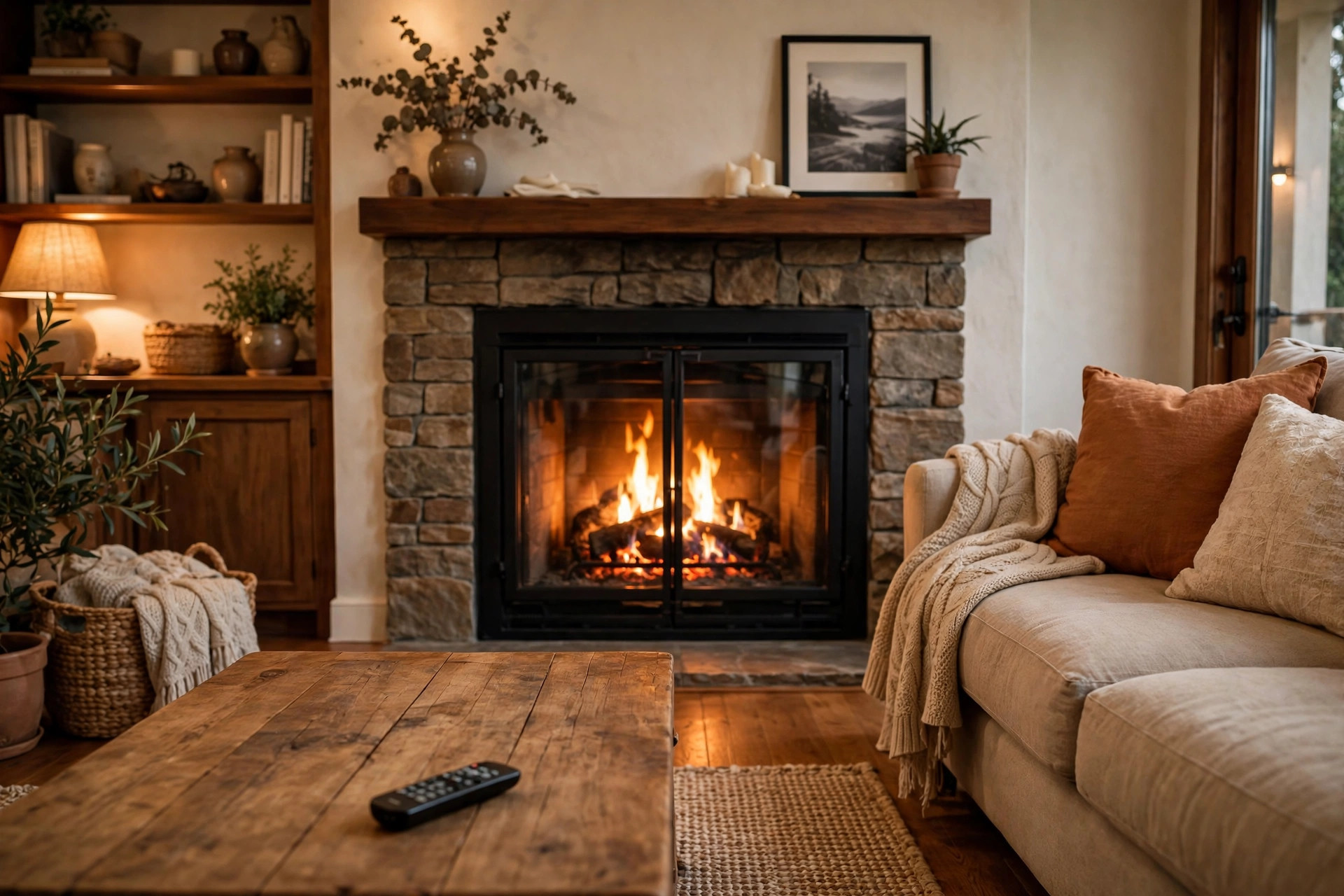

A cold house at dusk is an old American problem, and a warm house at the push of a button is a newer American answer. Shoppers who search for epa certified fireplace remote controls with free shipping want two things at once: a remote that works with a clean-burning stove, and delivery that does not add to the bill. This guide explains what these remotes are, which types fit which fireplaces, what they cost, how to keep them working, and how to use them safely. It uses plain words. It keeps sentences short. It asks only one thing of the reader: match the remote to the fireplace before buying.
Why It Matters
The remote is a small part of a large promise. The Environmental Protection Agency sets limits on how much smoke a wood stove or fireplace insert may send up the chimney. Stoves that meet the standard are called EPA certified. They burn less wood, send out less smoke, and keep more heat in the room. That matters for two reasons. First, many towns and counties only allow certified stoves. Second, a certified stove can cut a wood pile by a third or more. The EPA explains these rules in plain terms on its own pages.
A remote control fits into this picture by making the certified stove easy to run. Many gas fireplace inserts that carry EPA-style clean-burn labels use a pilot light and a gas valve. The remote opens and closes that valve. The owner never touches a match. Older wood stoves cannot take a remote at all, because no remote can load wood. Gas inserts, gas fireplaces, and some pellet stoves can. For a person who is older, or who has trouble bending, a remote turns a chore into a comfort. For a family with a busy evening routine, a remote keeps the fire steady without repeated trips across the room.
Free shipping matters too. These remotes weigh little, but retailers often add a delivery fee that equals a quarter of the price. A listing that includes free shipping lets the buyer compare true prices. The buyer sees one number and pays one number. That is a fair way to shop.
What to Look For and How to Choose: Epa Certified Fireplace Remote Controls with Free Shipping
Start with the fireplace, not the remote. Read the nameplate on the stove or the manual that came with it. Find the brand and the model number. Then check which remote kits the maker lists for that model. Makers such as Napoleon and Heatilator publish lists of parts that fit their units. A universal remote can work, but a kit made for the brand is the safer bet.
Next, decide what the remote must do. The simple kind has two buttons: on and off. It lights the fire and kills it. The next kind adds a flame-height button. It lets the owner raise or lower the flames. The finest kind is thermostatic. It reads the room temperature and holds it. The owner sets a number, and the stove works to keep that number. A thermostatic remote suits a room that swings from cold to warm through the evening.
Check the signal type. Most of these remotes use radio waves, not infrared light. Radio waves pass through wood mantels and reach around corners. Infrared needs a clear line of sight. For a fireplace behind glass doors, radio is the better choice.
Check the battery type. Many remotes take two AAA batteries. The receiver inside the fireplace takes four AA batteries. Some kits use a wall outlet adapter instead. Batteries keep working in a power outage. An adapter saves the cost of batteries. Pick the one that fits the home.
Check the range. A stated range of 20 feet is enough for most living rooms. Large open rooms may need more. Walls cut range short. Keep the receiver away from metal shields when installing.
Types and Options
Four broad types cover nearly every listing a buyer will meet.
On-off remotes. These are the plainest kind. One button starts the fire. One button stops it. They suit owners who want the least fuss. Prices run low. Batteries last long because the unit does almost nothing.
Flame-height remotes. These add a high and low control. The owner can soften the flames for mood or raise them for heat. Many gas inserts sold today support this feature. It gives the most pleasure for the money.
Thermostatic remotes. These carry a small temperature sensor. The owner dials in a room temperature, often between 65 and 75 degrees. The remote talks to the gas valve and holds that level. It is the closest thing a fireplace has to a central thermostat. It uses more battery power than the simple kinds.
Smart fireplace remote controls. A newer group connects to a home network or a phone app. The smart fireplace remote controls for sale category covers these in detail. They can tie into timers and voice assistants. They cost more. They need a steady home Wi-Fi signal. Some buyers love them. Some buyers find them needless.
A note on the word “EPA certified” in listings. The remote itself is not what the EPA certifies. The stove or insert carries the certification. Sellers write “EPA certified fireplace remote controls” as shorthand for “remote controls that fit EPA certified fireplaces.” A careful buyer reads it that way. The label tells the buyer the remote is meant for a clean-burning unit, not that the remote passed a smoke test.
Related gear often appears beside the remote in the same cart. Shoppers who look at high efficiency childproof fireplace screens for american homes want both convenience and safety around children. Owners who plan the whole hearth may also read a best fireplace tv stands buying guide before they mount a set above the mantel.
Cost and Price
Prices are modest compared with the stove itself. A basic on-off kit lists between 50 and 90 dollars. A flame-height kit runs 80 to 150 dollars. A thermostatic kit runs 120 to 200 dollars. Smart models run 150 to 300 dollars. These are store prices before any sale.
Free shipping changes the math. A 60-dollar remote with 12-dollar shipping costs 72 dollars. A 68-dollar remote with free shipping costs 68 dollars. The second listing is cheaper even though the first number looked smaller. Big home stores such as Home Depot and Lowe’s often ship small parts free to the store or the door. That makes them worth checking before buying from a small shop.
Installation can add cost. A handy owner can fit most kits in an hour. The steps are simple: place the receiver near the gas valve, connect two wires, load batteries, and pair the remote. An owner who does not trust gas work should hire a hearth shop or a gas fitter. A service call often runs 75 to 150 dollars. That is money well spent when gas is involved.
Battery cost is small but steady. Plan on new batteries once a year, at the start of the heating season. Buy them with the remote so the kit is ready on day one.
Care and Upkeep
A remote is a simple machine, and simple machines last when they get light care. Keep the remote dry. Do not set it on the mantel where heat rises. Heat shortens battery life and warps plastic. Keep it on a side table or a shelf a few feet from the fire.
Change batteries each fall. Dead batteries are the most common cause of a “broken” remote. When the fire will not light, change the batteries first. Then check that the receiver switch is set to “remote” and not to “off” or “on.” Many service calls end with that small fix.
Dust the receiver once a year. The receiver sits inside the fireplace cabinet where ash and dust gather. Pull it out, wipe it with a dry cloth, and set it back. Do not use water. Do not use oil.
Test the remote each month in winter. Press on, wait for the pilot to catch, press off. A monthly test catches weak batteries early. It also keeps the gas valve moving freely through the season.
Store the manual with the stove papers. The pairing steps differ by brand. A lost manual means a long search later. A folder near the stove solves the problem.
For broader hearth care, This Old House, Family Handyman, and The Spruce all carry plain guides on cleaning and tending fireplaces through the year.
Safety
A remote makes fire easy, and easy fire still demands respect. Read the stove manual before the first use. Know where the gas shutoff valve sits. Every adult in the house should know its place.
Keep children away from the hot glass. A gas fireplace front can reach 400 degrees or more. A screen or a gate keeps small hands off. Never leave a lit fireplace running when no adult is home. A remote makes it easy to forget the fire is on. Set a habit: last person to bed checks the fire.
Watch for odd smells. A faint gas smell at lighting is normal for a moment. A lasting smell is not. Turn the fire off, leave the room, and call the gas company from outside. Do not hunt for the leak with a match.
Keep paper, curtains, and furniture at least three feet from the firebox. The manual may ask for more. Heat builds slowly and can scorch what sits too close.
Have the chimney and the gas parts checked once a year by a trained sweep or fitter. A remote cannot spot a cracked liner or a tired valve. A yearly visit can. The cost is small against the risk.
FAQ
Will any remote work with my fireplace? No. The remote must match the gas valve and the control system in the unit. Check the maker list for the model number. A universal kit may work, but a brand kit is surer.
Does the remote itself carry EPA certification? No. The EPA certifies the stove or insert, not the remote. Sellers use the phrase to mean the remote fits certified units. Read listings with that in mind.
Can I install the kit myself? Many owners do. The job takes about an hour and needs no special tools. An owner who is uneasy around gas lines should pay a fitter. Gas deserves care.
How long do the batteries last? About one heating season for the remote and the receiver. Change them each fall. A thermostatic or smart remote may need fresh cells sooner.
What if the remote stops working in winter? Change the batteries first. Then check the receiver switch position. Then re-pair the remote to the receiver using the manual steps. Most failures are one of these three.
Does free shipping mean the remote is cheaper? Not always. Compare the total delivered price. A higher shelf price with free shipping can beat a lower price with a fee. Do the addition before buying.
A Short Final Word
A good remote does not change the fire. It changes the owner. The fire stays clean, the stove stays certified, and the room stays warm. The owner stays seated. That is the whole point of the purchase. Pick a kit that fits the model, pay the true delivered price, change the batteries each fall, and treat the gas with respect. The winter will do the rest.
References
Family Handyman. (n.d.). DIY home repair and maintenance. https://www.familyhandyman.com Heatilator. (n.d.). Fireplaces and fireplace products. https://www.heatilator.com Lowe’s. (n.d.). Home improvement products. https://www.lowes.com Napoleon. (n.d.). Fireplaces, grills, and heating products. https://www.napoleon.com The Home Depot. (n.d.). Home improvement products. https://www.homedepot.com The Spruce. (n.d.). Home and garden advice. https://www.thespruce.com This Old House. (n.d.). Home renovation guidance. https://www.thisoldhouse.com U.S. Environmental Protection Agency. (n.d.). Protecting human health and the environment. https://www.epa.gov
Was this guide helpful?

About Sarah Mitchell
The My Garden US editorial team writes practical, in-depth home and garden guides for American homeowners — tested advice, no fluff.
You May Also Like
Budget Friendly Fireplace Hearth Rugs Buying Guide
March 24, 2026 0 views
Premium Vented Gas Log Sets for Small Apartments
January 4, 2026 0 views
Affordable Heat Powered Stove Fans With Free Shipping
April 10, 2026 0 views