
Introduction
When rain washes soil down a slope, a yard loses its shape. Grass dies. Mud spreads across sidewalks and patios. A good retaining wall stops that loss. It holds the earth in place and gives you flat space to enjoy. Many homeowners search for affordable retaining wall builders near me when a slope gets too steep to mow or when soil keeps sliding after every storm. This article will help you find a builder who does strong work at a fair price. You will learn what a retaining wall does, how to judge a builder, which types of walls are common, what they cost, and how to keep them in good shape. With a little care, the process is simple. You can hire with confidence and enjoy a yard that looks better and lasts longer.
Why a Retaining Wall Matters: Affordable Retaining Wall Builders near Me
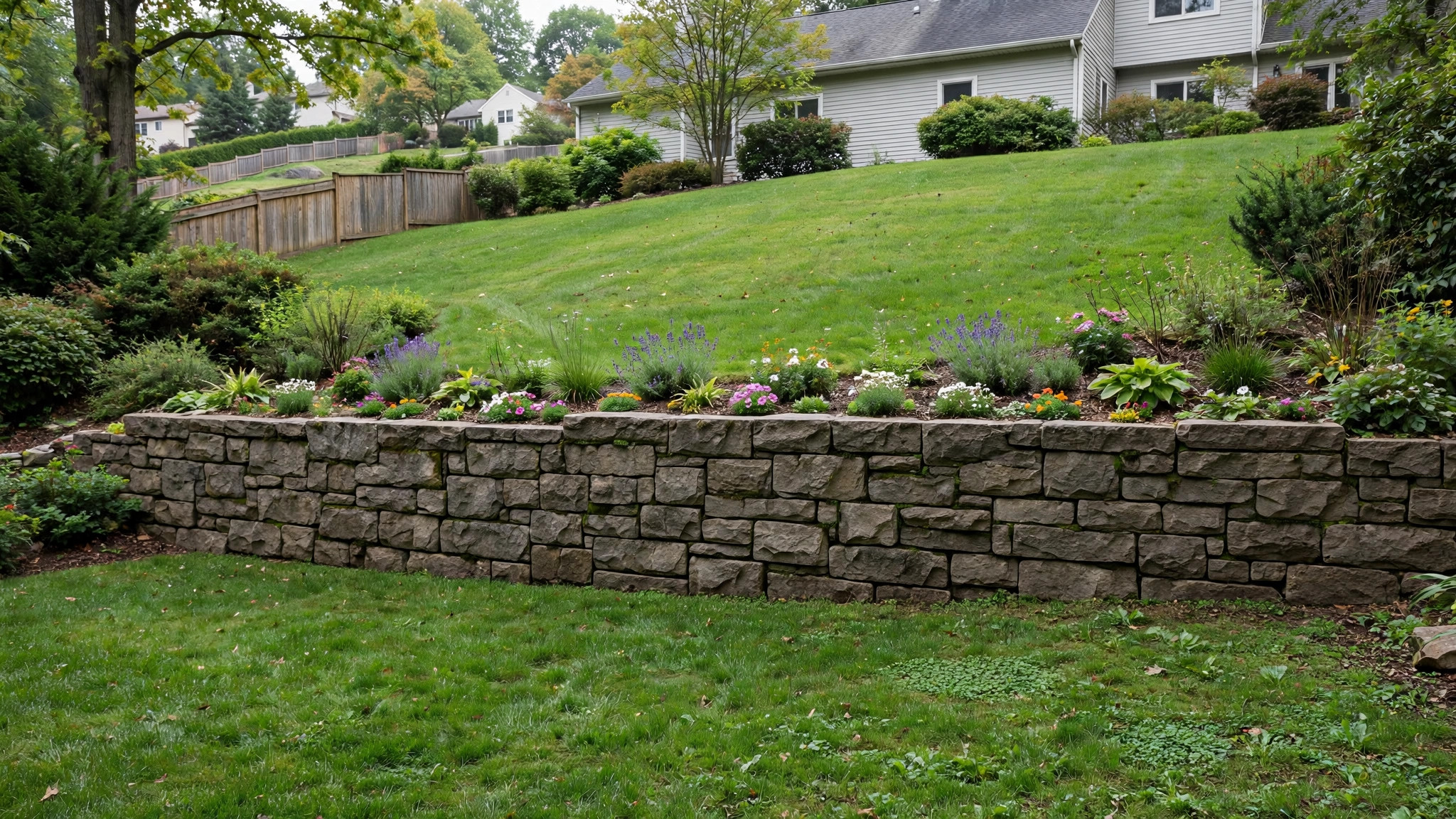
A retaining wall is a structure that holds back soil on a slope. It turns a steep bank into level ground. That level ground can become a patio, a garden bed, or a safe play area for children. Without a wall, heavy rain can pull soil down the hill a little at a time. Over the years, this erosion can damage a lawn, clog drains, and even threaten the base of a house.
A wall also adds value to a home. A neat stone or block wall shows that the owner took the land seriously. It can make a small yard feel larger because the flat areas are easier to use. A wall can also fix lawn drainage solutions for soggy yards by guiding water to a safe place instead of letting it pool.
There is a safety side too. A wall is not just decoration. It is a working part of the yard.
How to Choose the Right Builder
The builder matters more than the material. A strong wall with weak labor will fail. A modest wall built by skilled hands can stand for decades. Take time to pick the right person for the job.
What to Look For
Start with local experience. A builder who works in your area knows the soil, the rain patterns, and the local rules. Ask how many walls they have built and how tall those walls were. A person who mostly builds small garden beds may not be ready for a six-foot wall.
Check for a license and insurance. Rules differ by state and county, but most areas want some form of license for structural work. Insurance protects you if a worker is hurt on your land. Ask to see proof. A serious builder will show it without complaint.
Look at past work. Ask for photos of finished walls. Even better, ask for the address of a wall built a few years ago so you can see how it aged. A wall that still stands straight after three winters tells you more than any sales pitch. Online reviews help too, but read them with care. Look for patterns, not single complaints.
Get a written estimate. A clear bid lists the length and height of the wall, the material, the drainage plan, the start date, and the finish date. It should also state the price and what might change it. Consumer Reports gives plain guidance on how to hire home contractors and read bids, which can help first-time owners avoid common traps.
Questions to Ask Before You Sign
Ask who will do the work. Some companies sell the job and send a different crew. Meet the crew leader if you can. Ask how the builder handles drainage behind the wall. Water is the main cause of wall failure, so the answer matters most. A good builder will explain gravel backfill and drain pipe without being asked. Ask about permits. Many towns require a permit for walls over three or four feet tall. A good local builder will know the rule and handle the paperwork. If a builder tells you to skip the permit, take that as a warning sign. Ask about a warranty and get it in writing.
Types of Retaining Walls and Options
Walls come in several styles. Each has a cost, a look, and a life span. The right choice depends on your budget, the height of the slope, and the style of your home.
Timber walls are the most affordable option. Builders use treated wood beams stacked and pinned together. A timber wall suits short walls, usually three feet or less. It has a warm, natural look that fits wooded lots. The downside is life span. Even treated wood breaks down in wet soil. Most timber walls last ten to twenty years.
Concrete block walls, often called segmental walls, are the most popular choice for homes. The blocks lock together without mortar. They come in many colors and textures. A block wall can reach greater heights than timber, and it can last fifty years or more with good drainage. Many affordable retaining wall builders suggest this type because it balances cost and strength.
Natural stone walls cost more but look the best. Builders stack cut stone or fieldstone by hand. Each wall is one of a kind. Stone suits high-end homes and gardens. It needs a skilled builder, which raises the labor cost. A well-built stone wall can last a lifetime.
Poured concrete walls are strong and plain. They work well where looks matter less, such as along a driveway or behind a garage. They can be faced with stone or stucco later to improve the look.
Gabion walls are wire baskets filled with rock. They have a modern, rugged look. Water passes through them easily, which makes drainage simple. They work well on large properties.
Brick walls match older brick homes. They cost more than block and need a mason with real skill. For most owners, block or stone gives a better return on the money. Wall height changes everything. Most experts say walls over four feet need an engineer to design them. This step costs money, but it keeps a tall wall from leaning or falling. Never stack a second wall on top of a failing first wall. Fix the base problem instead.
Cost and Price: What You Will Pay
Price is the main reason people search for affordable retaining wall builders near me. Knowing the normal range helps you spot a fair bid and avoid a bad one.
Most home walls cost between fifteen and sixty dollars per square foot of wall face. A small timber wall may sit at the low end. A tall natural stone wall may sit at the high end. A typical project, a wall about three feet tall and thirty feet long, often runs between two thousand and six thousand dollars. Larger and taller walls can run far higher.
Several things move the price. Material is the biggest one. Timber costs least. Block sits in the middle. Stone costs most. Height matters too. A wall twice as tall needs more than twice the work because the base must be wider and deeper. Soil type matters. Rocky ground is hard to dig. Soft, wet ground needs more drainage work. Access matters as well. If machines cannot reach the site, workers must carry material by hand, and labor hours rise. Drainage adds cost but saves money later. A proper drain pipe, gravel backfill, and filter fabric may add a few hundred dollars. Skip them and the wall may fail in a few years.
To keep the cost down, get at least three bids. Make sure each bid covers the same work so you can compare fairly. Schedule the work in the off season if you can. Late fall and early spring are slower times for landscapers, and some offer better rates. Keep the design simple. Curves and steps look nice but add labor. A straight wall of standard block is the best value.
Be careful with bids that are far below the rest. A very low price can mean the builder plans to skip drainage, use thin material, or rush the base work. The cheapest wall is not affordable if it falls down. Ask each builder the same questions and compare answers, not just prices.
If you plan to finish the yard after the wall goes in, think about the full project. Many owners add cheap sod installation cost per pallet above a new wall, or learn how to plant sod on slope for the bank below it. Planning these steps together can save a second round of labor.
Care and Upkeep
A retaining wall needs little care, but it should not be ignored. Walk the wall once or twice a year. Look for leaning, bulging, or cracked blocks. Small shifts early are easy to fix. Big shifts later mean a rebuild.
Keep the top of the wall clear. Do not pile heavy soil, firewood, or equipment against it. Extra weight pushes on the wall and can cause it to lean. Keep gutters and downspouts aimed away from the wall. Water pouring on one spot will wash out the base. Watch the drainage outlets. The drain pipe behind the wall should have a clear exit. If water no longer flows out after rain, the pipe may be clogged. Clear weeds from the joints of block walls. Roots can widen small gaps over time.
For timber walls, check for rot each spring. Press a screwdriver into the wood. If it sinks in easily, the timber is failing. Plan for replacement before the wall gives way. For block and stone walls, replace any cracked cap stones. A tube of masonry adhesive and a new cap is a cheap fix.
Do not plant large trees close to the wall. Roots push against the structure and can crack it. Small shrubs and flowers are fine. Their roots hold the soil on top without harming the wall.
Safety Around Retaining Walls
Never let children climb on a tall wall. The top edge can be a long fall. A simple rail or fence on top of walls over three feet is a smart add, and some local codes require it. Do not dig at the base of the wall. The base sits in a trench of packed gravel, and digging there can undercut the wall. If you need to run a pipe or cable nearby, call the builder first. After a very heavy storm, check the wall. Look for new leaning or water pouring over the top. These are signs that drainage is blocked. Fix drainage fast. Water pressure behind a wall is the most common cause of failure. If a wall starts to lean badly, keep people away and call a professional. Do not try to push it back. A leaning wall can fall without warning.
Do not dig at the base of the wall. The base sits in a trench of packed gravel. Digging there can undercut the wall. If you need to run a pipe or cable near the wall, call the builder first.
After a very heavy storm, check the wall. Look for new leaning or water pouring over the top. These are signs that drainage is blocked. Fix drainage fast. Water pressure behind a wall, which builders call hydrostatic pressure, is the most common cause of failure.
If a wall starts to lean badly, keep people away and call a professional. Do not try to push it back. A leaning wall can fall without warning. A builder can tell you if it can be saved or must be rebuilt. For very tall walls, an engineer should check the design. This is not a place to guess.
Frequently Asked Questions
How tall can a retaining wall be without a permit?
It depends on your town, but many areas require a permit for walls over three or four feet tall. Always check with your local building office before work starts. A local builder will usually know the rule.
How long does a retaining wall last?
It depends on the material and the drainage. Timber walls last ten to twenty years. Concrete block walls can last fifty years or more. Natural stone walls can last a lifetime. Good drainage is the key in every case.
Do I need drainage behind the wall?
Yes, in almost every case. Water builds up behind a wall and pushes it forward. A drain pipe at the base, gravel backfill, and filter fabric let water escape safely. This drainage work is a normal part of a professional job. If a bid leaves it out, ask why.
Can I build a retaining wall myself to save money?
A low garden wall, two feet or less, is a fair do-it-yourself project for a handy owner. Taller walls are different. They need proper base work, drainage, and sometimes an engineer. A failed wall costs more to fix than a pro would have charged. For walls over three feet, hire a builder.
What is the best time of year to build a retaining wall?
Spring and fall are best in most of the country. The ground is workable and rain is moderate. Summer heat makes the labor harder. Winter frost can stop digging in cold states. Booking in the slower season may also get you a better price.
Final Word
A retaining wall is a long-term part of your home. It protects your land, adds usable space, and lifts the look of the whole yard. Choose a builder with local experience, a clear written bid, and a real drainage plan. Avoid the lowest bid if it skips the basics. Care for the wall with simple yearly checks, and it will stand straight for decades. For yard prep tools and grading equipment ideas, makers like Toro and Briggs & Stratton publish helpful guides for homeowners.
References
Briggs & Stratton. (n.d.). Power equipment for home and garden. https://www.briggsandstratton.com Consumer Reports. (n.d.). Home and garden product reviews. https://www.consumerreports.org Toro. (n.d.). Lawn and garden equipment. https://www.toro.com
Was this guide helpful?

About James Carter
The My Garden US editorial team writes practical, in-depth home and garden guides for American homeowners — tested advice, no fluff.
You May Also Like

Hydroseeding Cost Per Square Foot USA: A Plain Guide for Homeowners
July 10, 2026 0 views
Best Broadcast Spreader for Large Lawns: A Buyer’s Guide
February 22, 2026 0 views
Solar Landscape Lights That Actually Work: A Practical Guide for Homeowners
March 31, 2026 0 views