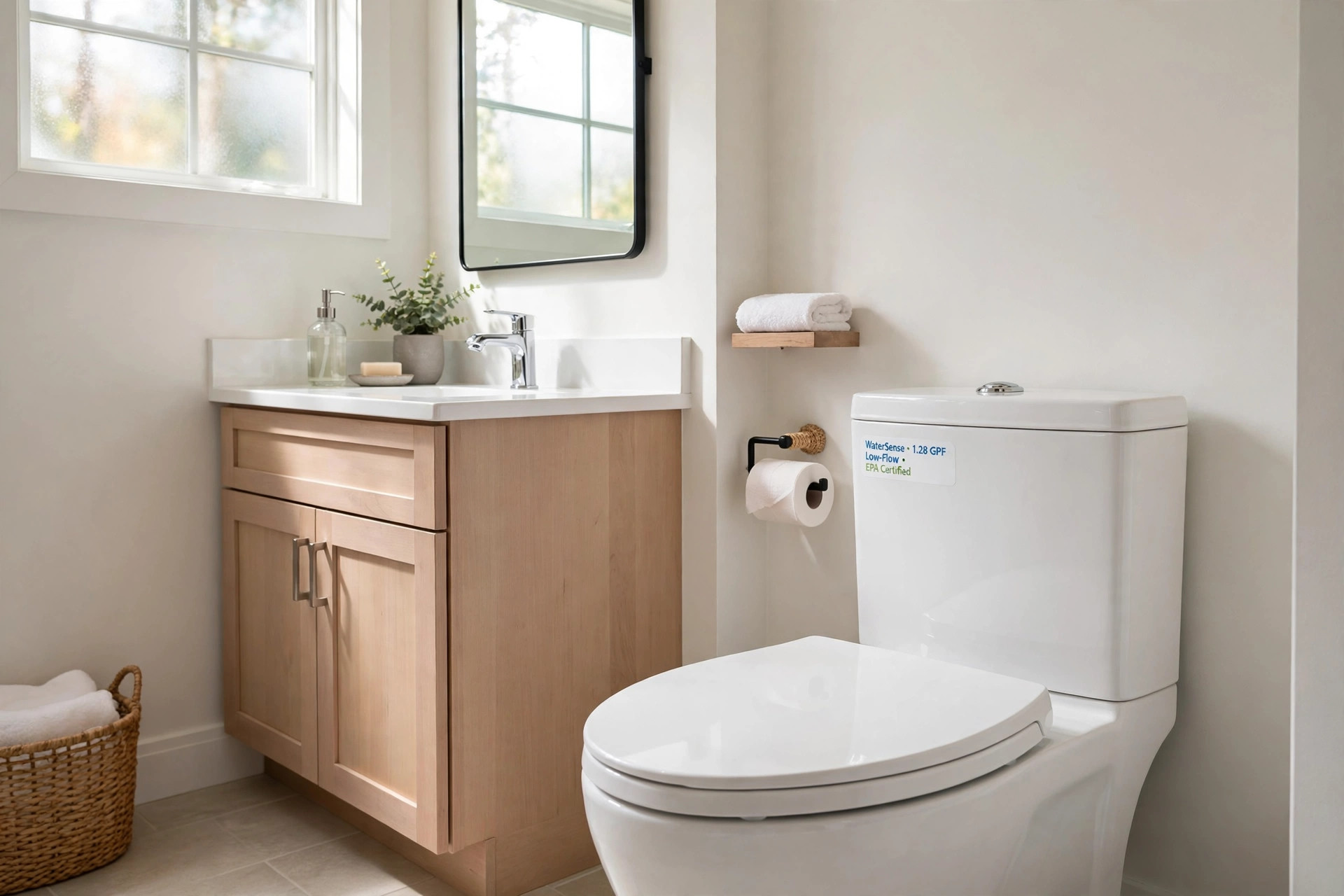

Toilets use more water than any other fixture in the house. An old toilet can use three and a half to seven gallons per flush. A new low flow model uses one point two eight gallons or less. That change saves thousands of gallons per year for one family. It also lowers the monthly water bill.
Many water agencies in the United States want homes to use less water. They offer low flow toilet rebates by state USA programs that pay part of the cost of a new toilet. Some rebates pay fifty dollars. Some pay one hundred dollars or more. A few programs give a free toilet. This guide explains how these rebates work in each part of the country, who can get them, and what steps to take to claim the money.
Why Low Flow Toilet Rebates Matter
Water is not free. Pumping, cleaning, and moving water costs cities a great deal of money. When people use less water, cities can put off building new plants and pipelines. That saves taxpayers money too. Rebates are one way cities push homes toward lower use.
The flush in an old toilet is the single largest water use in most homes. Studies by federal water programs show that toilets account for about thirty percent of home water use. A family that swaps two old toilets for low flow models can save more than thirteen thousand gallons of water each year. The yearly water bill drops by about one hundred and forty dollars in many areas. The rebate then covers part of the cost of the new toilet, so the payback time gets short.
These programs also help in dry regions. States in the West face drought in many years. Water agencies there pay higher rebates because each saved gallon matters more. Even in wet states, cities use rebates to slow demand as populations grow. The idea is simple. The city pays a small amount now to avoid a large cost later.
How Rebate Programs Work From State to State: Low Flow Toilet Rebates By State Usa
There is no single federal rebate for toilets. The federal government sets water use rules, but the money comes from states, cities, counties, and local water utilities. That is why the search for low flow toilet rebates by state usa always leads back to the local water provider.
Most programs share the same basic rules. The old toilet must be replaced, not added. The new toilet must meet a water use limit, often one point two eight gallons per flush or less. Many programs ask that the new toilet carry the WaterSense label. The home must sit inside the service area of the agency that pays the rebate. The owner applies after the new toilet is installed, though some programs ask for approval before the purchase.
Rebate amounts differ by place. In the Southwest, rebates often run from seventy five to one hundred and twenty five dollars per toilet, with a limit of two or three toilets per home. In the Pacific Northwest and parts of the Midwest, rebates often run from fifty to one hundred dollars. In the Southeast and Northeast, amounts vary more, and some programs run only for a few months each year. A few cities run direct install programs. A worker comes to the home and swaps the toilet at no charge.
Programs change. A city may run out of money and pause its program. A state may start a new drought program with larger amounts. The right move is to check the local water utility site before buying. Many utilities keep a rebate page with the current amount, the rules, and the form. The federal EPA site explains the WaterSense label that many programs use, and it is a good place to learn what the label means.
What To Look For in a Qualifying Low Flow Toilet
Not every toilet sold in a store meets rebate rules. Check three things before buying.
First, look at gallons per flush. The number is printed on the box and inside the tank. Programs almost always ask for one point two eight gallons per flush or less. Some older programs allowed one point six gallons. Newer programs trend toward one point two eight. Buy a model at or below the limit stated in your program rules.
Second, look for the WaterSense label. This is a federal mark for products that use less water and still perform well. Many rebate programs ask for it by name. If your program asks for the label, buy a labeled model. If the program does not ask for it, a labeled model is still a safe pick. Toilet makers such as Kohler, Moen, and Delta Faucet mark their WaterSense models on their sites, which makes it easy to pick a model that meets rebate rules. Home water guides at Aquasana also show how much water a family can save by switching.
Third, keep the receipt. Almost every program asks for proof of purchase. Keep the store receipt and the model number. Take a photo of the new toilet after it is installed. Some programs ask for a photo of the old toilet before removal as well. Keep the old toilet model number too. A short record of dates helps if the agency asks questions later.
Types of Water Saving Toilets
Rebate programs cover more than one kind of toilet. The main types are single flush high efficiency models, dual flush models, and pressure assisted models.
Single flush high efficiency toilets are the most common. They use one point two eight gallons per flush. They look and work like a normal toilet. They fit most homes and most budgets. Many guides that review the best high efficiency toilet models in 2026 place these at the top for value.
Dual flush toilets give two buttons. One button gives a light flush for liquid waste. The other gives a full flush for solid waste. Used well, they save more water than a single flush model. But the savings depend on how people use the buttons. A household that always picks the full flush saves little. A look at a dual flush toilet pros and cons review page can help a buyer decide if this type fits the family.
Pressure assisted toilets use air pressure inside the tank to push water with force. They flush with a loud sound and clear the bowl well. They cost more. They are common in office buildings and in homes where the pipes need a strong flush. Some programs accept them. Some do not. Check the rules.
Bowl Shape and Height
Most rebate programs do not care about bowl shape. Round bowls fit small baths. Long bowls are more comfortable and cost a little more. Chair height models, about seventeen to nineteen inches high, suit older people and tall people. Comfort height is now standard in many homes. Pick what fits the room and the people who use it.
Cost and Price: What You Pay and What You Get Back
A basic low flow toilet costs from one hundred to two hundred and fifty dollars at a big store. Mid range models cost two hundred and fifty to four hundred dollars. High end models with soft close seats and better glaze cost four hundred to six hundred dollars and up. A plumber charges about one hundred and fifty to three hundred dollars to install one toilet if the home owner does not do the job.
A rebate cuts the real cost. With a one hundred dollar rebate, a one hundred and eighty dollar toilet costs eighty dollars in real terms. With a two toilet limit, a family can get two hundred dollars back. Free programs cut the cost to zero, though the family may pay for extra parts or repairs found during the swap.
The water savings pay back the rest. A family that saves one hundred and forty dollars a year on water bills pays back a one hundred and eighty dollar toilet in about a year and a half, even with no rebate. With a rebate, the payback can fall to a few months. After that, the savings are pure gain.
How to Apply for a Rebate Step by Step
The steps are much the same in most states. Follow them in order.
One, find the program. Go to the web site of the local water utility or city water department. Look for a page named rebates, conservation, or save water. Read the rules. Note the rebate amount, the limit per home, the gallons per flush rule, and the deadline. If the page is hard to find, call the utility and ask for the conservation office.
Two, check that the home is eligible. Most programs cover single family homes. Many also cover condos, townhomes, and small rental buildings. Some ask that the owner, not the renter, apply. Rental owners can often apply for their units.
Three, buy a qualifying toilet. Check the gallons per flush and the WaterSense label against the program rules. Keep the receipt. If the program offers pre approval, fill out the pre approval form first and wait for the yes.
Four, install the toilet. A handy owner can do it with basic tools. Turn off the water, drain the tank, remove the old toilet, set a new wax ring, set the new bowl, and connect the supply line. A plumber is the safe choice for older homes where the floor flange may be damaged. Many guides on sites like This Old House and Family Handyman walk through the steps in plain terms.
Five, send the application. Most forms ask for name, address, account number, the old toilet model, the new toilet model, the install date, and the receipt. Some ask for photos. Send it by mail or online, as the program directs. Keep a copy of everything.
Six, wait for the check. Most agencies pay in six to ten weeks. Some pay faster. If the check does not come, call the program office with the confirmation number.
Rebate Rules That Catch People by Surprise
A few common rules cause lost rebates. Watch for them.
Time limits are strict. Many programs give sixty to ninety days from the install date to apply. A form sent late is often denied. Apply soon after the install.
One rebate per toilet is the rule. A family cannot claim two rebates for the same toilet from two agencies. Some areas have both a city program and a regional program. Read both sets of rules. Often the family must pick one.
Old toilet disposal may be required. Some programs ask for proof that the old toilet was destroyed or recycled, not sold or reused. The agency wants the water use gone for good. A photo of the crushed bowl or a receipt from a recycling center may be needed.
New construction is often excluded. Many programs target old homes with old toilets. A new home that already meets the water code may not qualify. Check before assuming.
The toilet must stay in the home. Some programs ask the owner to keep the new toilet for a year or more. This stops people from claiming the rebate and then swapping back.
Care and Upkeep of a Low Flow Toilet
A low flow toilet needs little care, but a few habits keep it working well. Use toilet paper made for low flow systems. Heavy paper can cause slow drains in older pipes. Keep the tank parts in good shape. A worn flapper lets water leak into the bowl all day. That leak can waste hundreds of gallons a month and wipe out the savings. Check for leaks by putting a few drops of food color in the tank. If color shows in the bowl without a flush, the flapper needs a new seal. Many stores sell flapper kits for under ten dollars, and guides at Home Depot and Lowe’s explain the swap.
Clean the rim holes once or twice a year. Mineral buildup in the small holes under the rim weakens the flush. A small brush and vinegar clear them. Do not use harsh chemicals in the tank. Bleach tablets can damage rubber parts and shorten the life of the fill valve. A mild cleaner in the bowl is enough.
If the flush seems weak, check the water level in the tank first. It should sit at the marked line. A low level gives a weak flush. Adjust the float to raise the level. If the problem stays, the vent or drain line may need a plumber. Do not flush wipes, even wipes marked flushable. They cause clogs that no rebate can fix.
Safety Notes
Turn off the water before any toilet work. The shut off valve sits behind the toilet near the floor. Turn it clockwise until it stops. Flush once to drain the tank. Keep a bucket and towels near. Water left in the bowl can spill during removal.
A toilet is heavy. A one piece model can weigh over one hundred pounds. Lift with the legs, not the back. Ask for help. Set the old toilet on old towels or cardboard so it does not chip the floor.
The wax ring contains no poison, but old rings can hold germs. Wear gloves. Wash hands well after the job. Keep small children and pets out of the work area. The open drain pipe gives off sewer gas. Plug it with a rag while the toilet is off, and remove the rag before setting the new toilet.
Call a plumber if the floor around the toilet is soft, if the flange is broken, or if water stains show on the ceiling below. These signs point to larger damage that a new toilet will not fix.
Finding Programs Near You
Since low flow toilet rebates by state usa differ so much, the best search is local. Start with the water bill. It names the utility. Go to that utility site and search for toilet rebate. Many utilities link to regional programs that cover several cities at once.
State energy and water offices sometimes keep lists. Search the state name plus water conservation rebates. Big box stores also keep rebate finders. Both Home Depot and Lowe’s have pages that match products to local rebates. These tools can show what is open right now in a zip code.
For renters, ask the landlord. Some programs let the owner apply for all units in a building. A renter who pays the water bill may also be able to apply with the owner permission. For home buyers, ask the seller if the home still has old toilets. A rebate can fund the swap right after the move.
Readers hunting for watersense toilet rebates near me can use these same steps. The WaterSense label is the common thread in most programs, and knowing the label speeds the search.
Frequently Asked Questions
How much is a typical low flow toilet rebate?
Most rebates run from fifty to one hundred and twenty five dollars per toilet. Dry states and drought programs often pay at the high end. Some cities pay up to two hundred dollars. A few programs install a free toilet. Check the local utility for the current amount.
Do I need a WaterSense toilet to get the rebate?
In most programs, yes. The WaterSense label is the mark most agencies use to prove the toilet saves water and flushes well. Some programs accept any toilet at one point two eight gallons per flush or less. Read the program rules. When in doubt, buy a labeled model. It qualifies almost everywhere.
Can renters get the rebate?
It depends on the program. Many programs pay the account holder on the water bill. Some pay only the property owner. A renter should ask the landlord and the utility. In some cases the landlord applies and passes the savings on through the lease.
How long does it take to get the rebate check?
Six to ten weeks is normal. Some agencies pay in four weeks. Some take twelve. The agency mails a check or applies a credit to the water bill. Keep the confirmation number from the application. Call the program office if payment is late.
Can I get a rebate for more than one toilet?
Most programs allow two or three toilets per home. A few allow more for large homes. Each toilet needs its own receipt and model number. The home can only claim once per toilet. Check the limit before buying.
What if my state has no toilet rebate program?
Not every state runs one. Some states leave rebates to cities and utilities. Search the city and county water sites. If nothing is open, the new toilet still pays for itself through lower water bills. Programs also open and close, so check again in a few months.
A Short Final Word
Low flow toilets are one of the simplest upgrades a home owner can make. They cost little, they install in an afternoon, and they save water every single day. The rebates make the deal better. A check of fifty to one hundred and twenty five dollars per toilet, plus lower bills, turns a chore into a win.
The key is to check the rules first. Find the local program, buy a qualifying model, keep the receipt, and apply on time. With those steps, the search for low flow toilet rebates by state usa ends with money back in the pocket and a smaller water bill for years to come. Home owners who want to plan the full swap can start by comparing models in a trusted best high efficiency toilet guide, then match the pick to the local rebate rules before buying.
References
Aquasana. (n.d.). Water filtration systems. https://www.aquasana.com Delta Faucet. (n.d.). Kitchen and bathroom faucets. https://www.deltafaucet.com Family Handyman. (n.d.). DIY home repair and maintenance. https://www.familyhandyman.com Kohler. (n.d.). Bathroom and kitchen fixtures. https://www.kohler.com Lowe’s. (n.d.). Home improvement products. https://www.lowes.com Moen. (n.d.). Faucets and plumbing fixtures. https://www.moen.com The Home Depot. (n.d.). Home improvement products. https://www.homedepot.com This Old House. (n.d.). Home renovation guidance. https://www.thisoldhouse.com U.S. Environmental Protection Agency. (n.d.). Protecting human health and the environment. https://www.epa.gov
Was this guide helpful?

About Michael Thompson
The My Garden US editorial team writes practical, in-depth home and garden guides for American homeowners — tested advice, no fluff.
You May Also Like
What Is the Emergency Plumber Near Me 24 Hour Cost?
January 27, 2026 0 views
Best Sump Pump for Crawl Space USA: A Practical Homeowner Guide
February 28, 2026 0 views
Best Garbage Disposal for Septic System Homes in the USA
June 29, 2026 0 views